Recipe Card
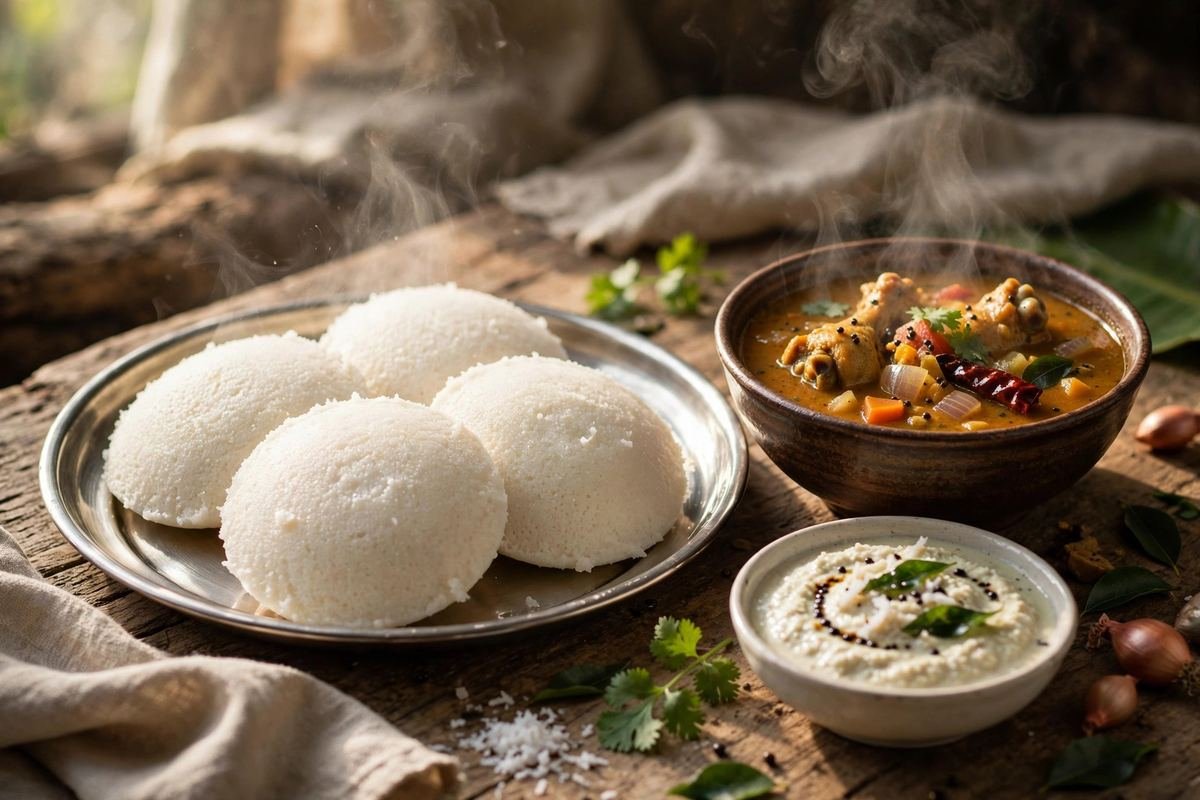
Pillowy steamed idlis paired with piping-hot lentil-and-vegetable sambar — the classic South Indian breakfast made soft and foolproof at home. Includes a full batter and fermentation guide plus a restaurant-style sambar.
Ingredients
- 3 cups idli rice (parboiled rice), rinsed
- 1 cup whole white urad dal (skinned black gram)
- 1/2 cup thick poha (flattened rice)
- 1 tsp fenugreek (methi) seeds
- 1.5 tsp salt, or to taste (add after fermentation)
- Water, as needed for grinding
- For the sambar:
- 1 cup (200g) toor dal (arhar dal), rinsed
- 1/2 tsp turmeric powder
- 1 lemon-sized ball of tamarind, soaked in 1.5 cups hot water (or 2 tsp tamarind paste)
- 2.5 tbsp sambar powder
- 2 cups mixed vegetables, chopped — drumstick pieces, carrot, brinjal, ash gourd, potato
- 1 large onion, chopped (optional)
- 2 tomatoes, chopped
- Salt to taste
- For the tempering:
- 2 tbsp oil or ghee
- 1 tsp mustard seeds
- 1/2 tsp cumin seeds
- 2 dried red chillies
- 1/4 tsp asafoetida (hing)
- 10-12 curry leaves
- 1 tbsp chopped coriander leaves, for garnish
Instructions
- Soak the rice and dal separately. Rinse the idli rice well and soak it in plenty of water for 5-6 hours. In a separate bowl, soak the urad dal with the fenugreek seeds for 4-5 hours — the dal needs less time. Soak the poha for just 20-30 minutes before grinding. The dal should roughly double in size and break easily between your fingers when ready.
- Grind the urad dal first, to a cloud. Drain the dal and methi, reserving the soaking water. Grind in batches with as little water as possible — sprinkle in a tablespoon at a time. You are aiming for a smooth, thick, almost whipped paste that holds soft peaks and feels silky between your fingers, with no grit at all. This takes 15-20 minutes in a wet grinder or 8-10 minutes in a good mixer (rest the mixer every couple of minutes so it does not heat up). Transfer to your large fermentation vessel.
- Grind the rice and poha. Drain the rice and poha and grind to a slightly coarse paste — it should feel like fine semolina, not perfectly smooth. A little texture is correct and traditional; it gives the idli structure. Use the reserved soaking water as needed. Mix the rice batter into the dal batter.
- Mix and ferment. Whisk the two batters together thoroughly with your hand for 2-3 minutes — the warmth of your hand and the aeration both help fermentation. The batter should be thick but pourable, like a thick pancake batter; it should ribbon off a spoon. Cover and leave in a warm, draught-free spot for 8-12 hours or overnight. In summer 8 hours is enough; in winter, place the vessel inside an oven with the light on, or near a warm appliance, and give it 12-14 hours. The batter is ready when it has nearly doubled, looks bubbly and aerated, and smells pleasantly sour.
- Salt and prep the steamer. Only now stir in the salt — adding it earlier can slow fermentation. Add a little water if the batter is very thick. Grease the idli plates lightly with oil (or line with a damp cloth). Fill your steamer or cooker with 2-3 inches of water and bring it to a rolling boil before the idlis go in.
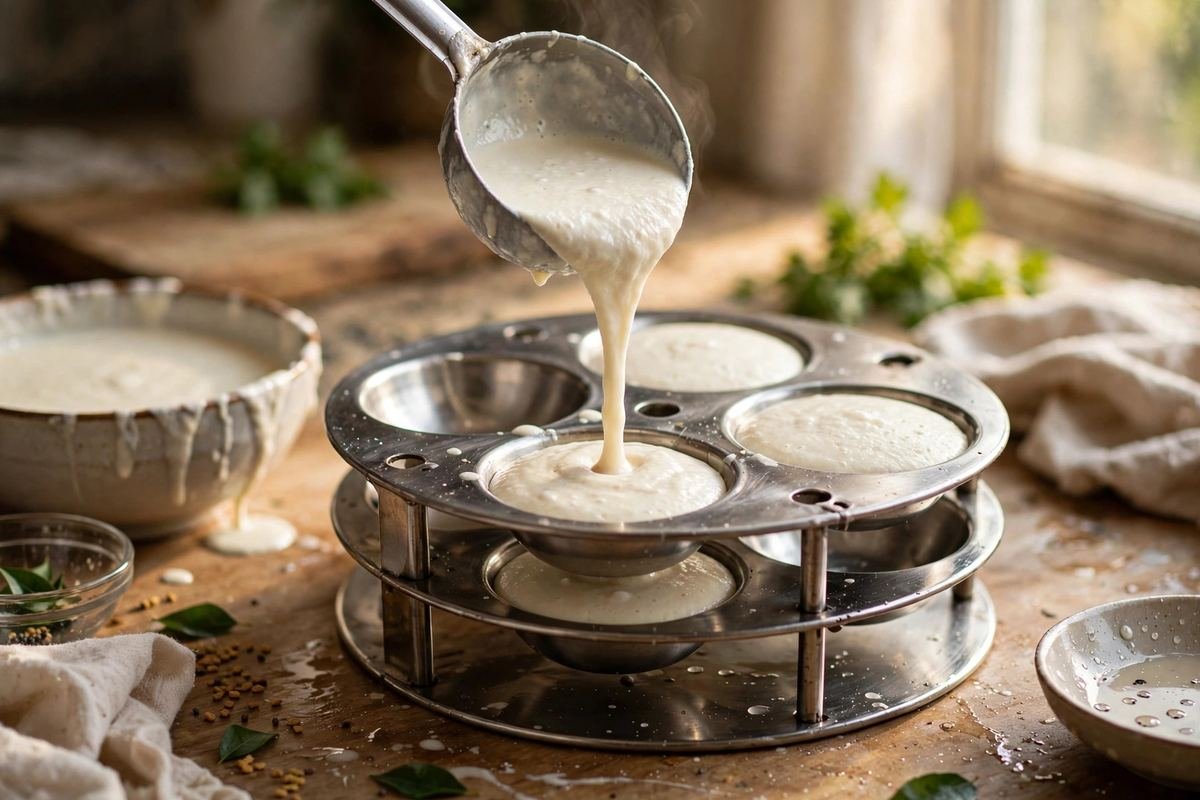
- Steam the idlis. Pour batter into each mould, filling about three-quarters full — they will puff up. Stack the plates in the steamer, cover with the lid, and steam on medium-high heat for 10-12 minutes. Do not open the lid in the first 8 minutes. They are done when a toothpick inserted in the centre comes out clean and the tops look set and slightly domed, not wet.
- Rest, then unmould. Let the plates sit for 3-4 minutes — idlis release much more cleanly after a short rest. Run a wet spoon around each idli and lift out. Keep them covered with a clean cloth so they stay soft and do not dry out.
- Cook the dal for the sambar. While the batter ferments or the idlis steam, pressure-cook the toor dal with turmeric and 3 cups of water for 4-5 whistles until completely soft and broken down. Let the pressure release naturally, then whisk or mash the dal until creamy.
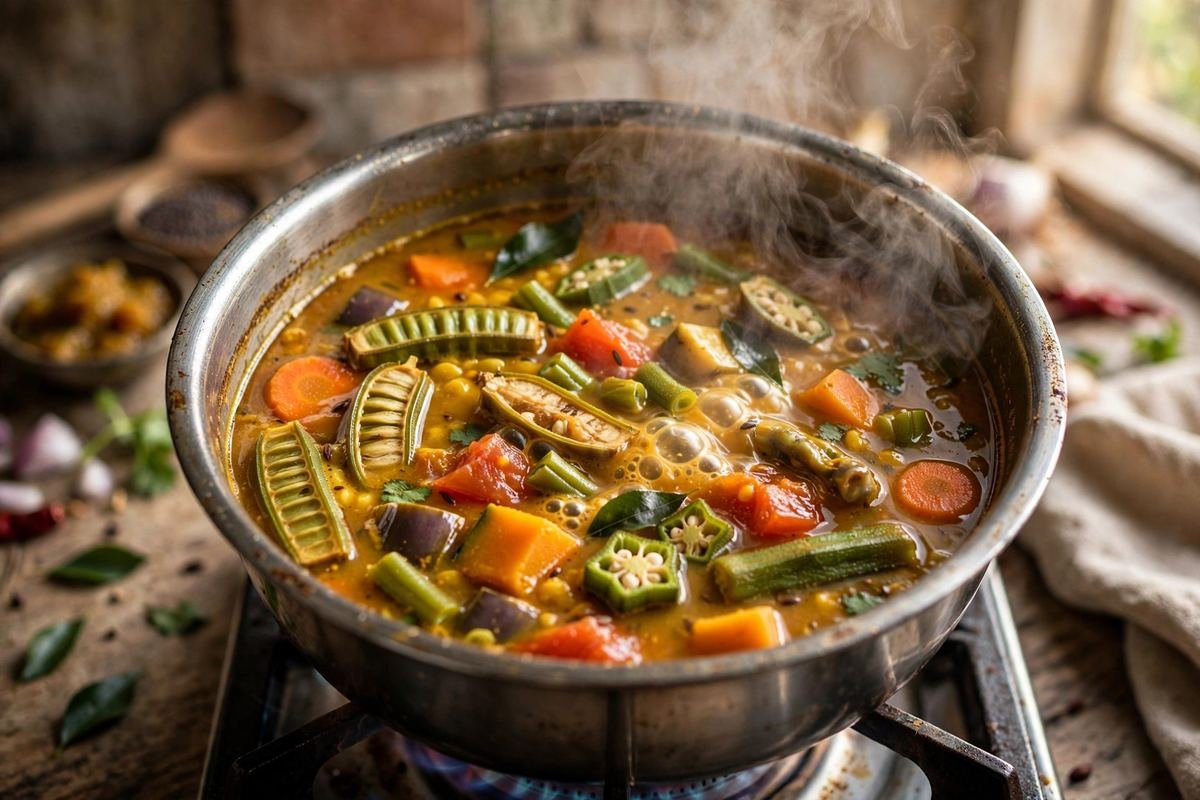
- Build the sambar. In a large pan, bring the mashed dal to a simmer with the chopped vegetables, onion, tomatoes, sambar powder, and salt. Add enough water for a medium consistency — sambar for idli should be slightly thinner than sambar for rice, so it soaks in beautifully. Simmer 12-15 minutes until the vegetables are tender. Strain in the tamarind water and simmer 5 more minutes so the raw edge of the tamarind cooks out. Taste and adjust: it should be tangy, lightly spicy, and deeply savoury.
- Temper and finish. Heat the oil or ghee in a tadka pan until shimmering. Add mustard seeds and let them pop fully — wait until the sputtering stops. Add cumin, dried red chillies, hing, and curry leaves (stand back; they splutter). Pour this crackling tempering over the sambar, stir, garnish with coriander, and serve immediately, piping hot, ladled generously over the idlis.
Tip: Read through the full post below for step-by-step photos, pro tips, variations and FAQs before you start cooking.
There is a particular kind of morning happiness that only a plate of idli-sambar can deliver. The steam rising off the idlis as you lift the lid of the steamer, the gentle wobble of each little cake as you nudge it, the aroma of hot sambar with its tempering of mustard seeds and curry leaves drifting across the kitchen — this is the breakfast that half of South India wakes up to, and once you learn to make it well at home, you will understand why it has never needed to change.
Idli is one of the oldest recorded foods of the Indian subcontinent. Stone inscriptions at the Kedareshwara temple in Balligavi, Karnataka, mention iddalige as far back as 920 CE, and early texts describe it as a steamed cake made from fermented black gram. Over a thousand years later, the dish looks almost the same — rice and urad dal, soaked, ground, fermented overnight, and steamed into soft white pillows. It travelled from Karnataka across Tamil Nadu, Kerala, and Andhra Pradesh, becoming the definitive tiffin: the light, satisfying mid-morning or breakfast meal that sits easy on the stomach and keeps you going for hours.
What makes idli special is the fermentation. As the batter rests overnight, wild yeasts and lactic acid bacteria get to work, aerating the batter and giving idli its characteristic faint tang and honeycomb crumb. It also makes the idli easier to digest and adds B-vitamins — which is why doctors, grandmothers, and nutritionists all agree that idli is one of the healthiest breakfasts you can eat. No oil, no deep frying, just steam.
And then there is the sambar. A good sambar is not just a side dish; it is the soul of the plate. Cooked toor dal simmered with vegetables, tamarind for tang, and a fragrant sambar powder, finished with a crackling tempering — when it is hot and just the right consistency, idlis practically melt into it. This recipe gives you both: a foolproof idli batter method with all my fermentation troubleshooting, and a homestyle vegetable sambar that tastes like the ones served in the great tiffin rooms of Chennai and Bengaluru.
Why You’ll Love This Recipe
- Guaranteed soft, spongy idlis — the exact rice-to-dal ratio and grinding technique that gives you a honeycomb texture every time.
- Complete fermentation guide — what to do in winter, in summer, and how to rescue a batter that refuses to rise.
- Restaurant-style sambar at home — a balanced, aromatic sambar with vegetables, the right tang, and a proper tempering.
- Healthy and light — steamed, not fried; fermented for gut-friendly goodness; naturally gluten-free and vegan.
- Make-ahead friendly — the batter keeps for days in the fridge, so fresh idlis are minutes away all week.
- One batter, many breakfasts — leftover batter makes dosa, uttapam, and paniyaram too.
Key Ingredients Explained
The magic of idli lives in just a handful of ingredients, but each one has a job, and getting them right is the difference between pillowy idlis and sad, flat discs.
Idli rice (parboiled rice) is the backbone. Unlike raw rice, parboiled rice has been partially cooked in its husk before milling, which changes its starch structure and gives idli its characteristic firm-yet-soft bite. If you cannot find rice labelled “idli rice,” any short or medium-grain parboiled rice works. In a pinch, regular raw rice (like sona masoori) will do, but the idlis will be slightly less fluffy. Use 3 cups of rice to 1 cup of urad dal — this 3:1 ratio is the classic home standard.
Whole urad dal (skinned black gram) is what makes the batter ferment and the idli soft. Use whole white urad dal (the un-split kind) if you can; it grinds fluffier than the split variety. Old dal ferments poorly, so buy from a shop with good turnover and use it within a few months. The dal must be ground to a silky, cloud-like paste — this is where the air that lifts your idli comes from.
Poha (flattened rice) is my not-so-secret softness insurance. Half a cup of thick poha, soaked and ground with the rice, keeps idlis soft even hours after steaming and gives leftover idlis a better texture the next day. Cooked rice (a handful) does the same job if you have no poha.
Fenugreek (methi) seeds — just a teaspoon — aid fermentation, especially in cooler weather, and add a subtle aroma. Do not skip them in winter.
For the sambar, toor dal (arhar dal) provides the body; cook it until completely soft and mash it well so the sambar is creamy rather than watery. Tamarind gives the signature tang — use a lemon-sized ball soaked in hot water, or 2 teaspoons of tamarind paste. A good sambar powder is worth its weight; homemade is best, but a fresh store-bought one works if it smells fragrant when you open the packet. Stale sambar powder is the number one reason homemade sambar tastes flat.
Equipment You’ll Need
- Idli steamer or idli plates that fit inside a large pot or pressure cooker (without the whistle/weight)
- Wet grinder or a powerful mixer grinder
- Large bowl or vessel for fermentation (steel or food-grade plastic, never too small — batter doubles)
- Pressure cooker or large deep pan for cooking the sambar
- Small tadka pan for tempering
- Muslin or cotton cloth for lining idli plates (optional but traditional)
- 3 cups idli rice (parboiled rice), rinsed
- 1 cup whole white urad dal (skinned black gram)
- 1/2 cup thick poha (flattened rice)
- 1 tsp fenugreek (methi) seeds
- 1.5 tsp salt, or to taste (add after fermentation)
- Water, as needed for grinding
- For the sambar:
- 1 cup (200g) toor dal (arhar dal), rinsed
- 1/2 tsp turmeric powder
- 1 lemon-sized ball of tamarind, soaked in 1.5 cups hot water (or 2 tsp tamarind paste)
- 2.5 tbsp sambar powder
- 2 cups mixed vegetables, chopped — drumstick pieces, carrot, brinjal, ash gourd, potato
- 1 large onion, chopped (optional)
- 2 tomatoes, chopped
- Salt to taste
- For the tempering:
- 2 tbsp oil or ghee
- 1 tsp mustard seeds
- 1/2 tsp cumin seeds
- 2 dried red chillies
- 1/4 tsp asafoetida (hing)
- 10-12 curry leaves
- 1 tbsp chopped coriander leaves, for garnish
- Soak the rice and dal separately. Rinse the idli rice well and soak it in plenty of water for 5-6 hours. In a separate bowl, soak the urad dal with the fenugreek seeds for 4-5 hours — the dal needs less time. Soak the poha for just 20-30 minutes before grinding. The dal should roughly double in size and break easily between your fingers when ready.
- Grind the urad dal first, to a cloud. Drain the dal and methi, reserving the soaking water. Grind in batches with as little water as possible — sprinkle in a tablespoon at a time. You are aiming for a smooth, thick, almost whipped paste that holds soft peaks and feels silky between your fingers, with no grit at all. This takes 15-20 minutes in a wet grinder or 8-10 minutes in a good mixer (rest the mixer every couple of minutes so it does not heat up). Transfer to your large fermentation vessel.
- Grind the rice and poha. Drain the rice and poha and grind to a slightly coarse paste — it should feel like fine semolina, not perfectly smooth. A little texture is correct and traditional; it gives the idli structure. Use the reserved soaking water as needed. Mix the rice batter into the dal batter.
- Mix and ferment. Whisk the two batters together thoroughly with your hand for 2-3 minutes — the warmth of your hand and the aeration both help fermentation. The batter should be thick but pourable, like a thick pancake batter; it should ribbon off a spoon. Cover and leave in a warm, draught-free spot for 8-12 hours or overnight. In summer 8 hours is enough; in winter, place the vessel inside an oven with the light on, or near a warm appliance, and give it 12-14 hours. The batter is ready when it has nearly doubled, looks bubbly and aerated, and smells pleasantly sour.
- Salt and prep the steamer. Only now stir in the salt — adding it earlier can slow fermentation. Add a little water if the batter is very thick. Grease the idli plates lightly with oil (or line with a damp cloth). Fill your steamer or cooker with 2-3 inches of water and bring it to a rolling boil before the idlis go in.
- Steam the idlis. Pour batter into each mould, filling about three-quarters full — they will puff up. Stack the plates in the steamer, cover with the lid, and steam on medium-high heat for 10-12 minutes. Do not open the lid in the first 8 minutes. They are done when a toothpick inserted in the centre comes out clean and the tops look set and slightly domed, not wet.
- Rest, then unmould. Let the plates sit for 3-4 minutes — idlis release much more cleanly after a short rest. Run a wet spoon around each idli and lift out. Keep them covered with a clean cloth so they stay soft and do not dry out.
- Cook the dal for the sambar. While the batter ferments or the idlis steam, pressure-cook the toor dal with turmeric and 3 cups of water for 4-5 whistles until completely soft and broken down. Let the pressure release naturally, then whisk or mash the dal until creamy.
- Build the sambar. In a large pan, bring the mashed dal to a simmer with the chopped vegetables, onion, tomatoes, sambar powder, and salt. Add enough water for a medium consistency — sambar for idli should be slightly thinner than sambar for rice, so it soaks in beautifully. Simmer 12-15 minutes until the vegetables are tender. Strain in the tamarind water and simmer 5 more minutes so the raw edge of the tamarind cooks out. Taste and adjust: it should be tangy, lightly spicy, and deeply savoury.
- Temper and finish. Heat the oil or ghee in a tadka pan until shimmering. Add mustard seeds and let them pop fully — wait until the sputtering stops. Add cumin, dried red chillies, hing, and curry leaves (stand back; they splutter). Pour this crackling tempering over the sambar, stir, garnish with coriander, and serve immediately, piping hot, ladled generously over the idlis.
Pro Tips for Perfect Results
- Grind the dal with minimal water. Watery dal batter never whips up properly. Add water a spoonful at a time — the paste should be thick enough to hold its shape briefly.
- Never add salt before fermentation. Salt inhibits the microbes that ferment your batter. Always stir it in after the batter has risen.
- Control your fermentation temperature. The sweet spot is 28-32°C. In cold weather, the oven-with-light-on trick is the most reliable method; avoid placing batter directly on a cold stone floor.
- Do not overfill the idli moulds. Three-quarters full is the rule — overfilled idlis stick to the plate above and tear when you unmould them.
- Keep the steamer at a full boil before loading. Idlis that go into a lukewarm steamer turn out dense. You want an immediate blast of steam.
- Use fresh sambar powder. If your packet has been open for months and smells dusty rather than fragrant, your sambar will taste flat no matter what else you do. Grind small batches at home if you can.
- Mash the dal thoroughly. A sambar with intact, grainy dal never achieves that creamy, restaurant-style body. Whisk it until it looks almost like a purée.
- Serve sambar truly hot. Lukewarm sambar over idli is a tragedy. Keep it at a bare simmer until the moment you ladle it.
Variations to Try
Once the basic batter is in your fridge, a week of breakfasts takes care of itself. Rava idli is the instant, no-fermentation cousin — roasted semolina mixed with curd, vegetables, and eno, steamed the same way. Masala idli fry rescues leftover idlis: cube them, toss in a hot pan with mustard seeds, curry leaves, onion, and a spoon of sambar powder until crisp-edged and addictive. Button idlis (mini cocktail idlis) dunked in sambar are party-perfect finger food. For the sambar, try a pumpkin and drumstick version in winter, add a spoon of jaggery for the Karnataka-style sweet-sour balance, or make a radish sambar when white radish is in season. A spoon of ghee melted over the sambar just before serving is never wrong.
Serving Suggestions
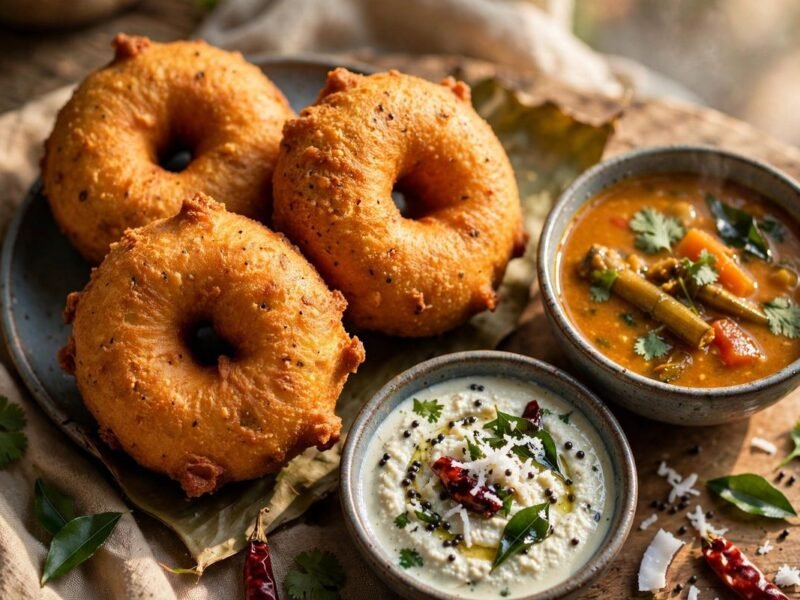
Serve three to four idlis per person in a wide, shallow bowl — never a flat plate, because you want the sambar to pool around them. Ladle the hot sambar generously right over the top so each idli soaks it up. The classic accompaniments are coconut chutney and tomato chutney on the side, plus a spoon of gunpowder (idli podi) mixed with sesame oil for those who like heat. A tumbler of strong filter coffee afterwards is not optional in my house — it is the law. For a full tiffin spread, add medu vada and a small bowl of pongal.
Storage and Reheating
Idli batter (unsalted portions) keeps 4-5 days in the refrigerator in a covered container — remember it continues to ferment slowly, so leave headspace and salt only the portion you are about to steam. Steamed idlis keep 2 days in the fridge in an airtight box; sprinkle a few drops of water over them and steam for 3-4 minutes or microwave covered for a minute to restore their softness. Day-old idlis are actually ideal for idli fry or idli upma. Sambar keeps 2-3 days refrigerated and freezes beautifully for up to a month — thaw overnight and bring to a rolling boil, adding a fresh tempering to wake it up. It will thicken on standing; loosen with hot water.
Frequently Asked Questions
Why are my idlis flat and dense instead of fluffy?
Nine times out of ten, it is under-fermentation or a thin batter. Check that your batter nearly doubled and looks bubbly before steaming, grind the dal to a truly smooth paste, and make sure the steamer was at a full boil when the idlis went in. Old urad dal is another common culprit.
My batter did not rise at all. What went wrong?
Usually temperature. Below about 24°C, fermentation slows dramatically. Move the vessel to a warmer spot — inside an oven with just the light on works wonders — and give it more time, up to 16-18 hours. The methi seeds help, and grinding the batter slightly warm (not hot) gives the microbes a head start. If the batter smells fine but just has not risen, it is almost always cold, not dead.
Can I use store-bought idli batter?
Absolutely, and there is no shame in it — many good South Indian brands sell excellent batter. Buy it fresh (check the date), let it come to room temperature for 30 minutes, stir in salt, and steam as above. You will still need to make the sambar yourself for the full experience.
Why did my sambar turn out bland?
Check three things: the freshness of your sambar powder, whether you added enough tamarind and salt, and whether the dal was properly mashed. Sambar needs assertive seasoning — it should taste slightly too tangy and salty on its own, because the bland idlis will balance it on the plate.
Can I make idli without a special steamer?
Yes. Any large pot with a tight lid works — place a small steel bowl or ring at the bottom, add water, set the greased idli plates on top, and cover. You can even steam idlis in small steel katoris or silicone muffin moulds. A pressure cooker works too; just steam without the whistle or weight.
Is idli really healthy?
Genuinely, yes. It is steamed (no oil), fermented (easier to digest, with beneficial bacteria and extra B-vitamins), low in fat, and the rice-dal combination gives a complete amino acid profile. Paired with vegetable-loaded sambar, it is one of the most balanced breakfasts in Indian cooking.
Make this on a slow Sunday morning, when there is nowhere to be and the whole house can gather around the steam. There is something deeply comforting about food that has been made the same way for a thousand years — and when that first soft idli soaks up the hot sambar, you will taste exactly why it never needed to change.