Recipe Card
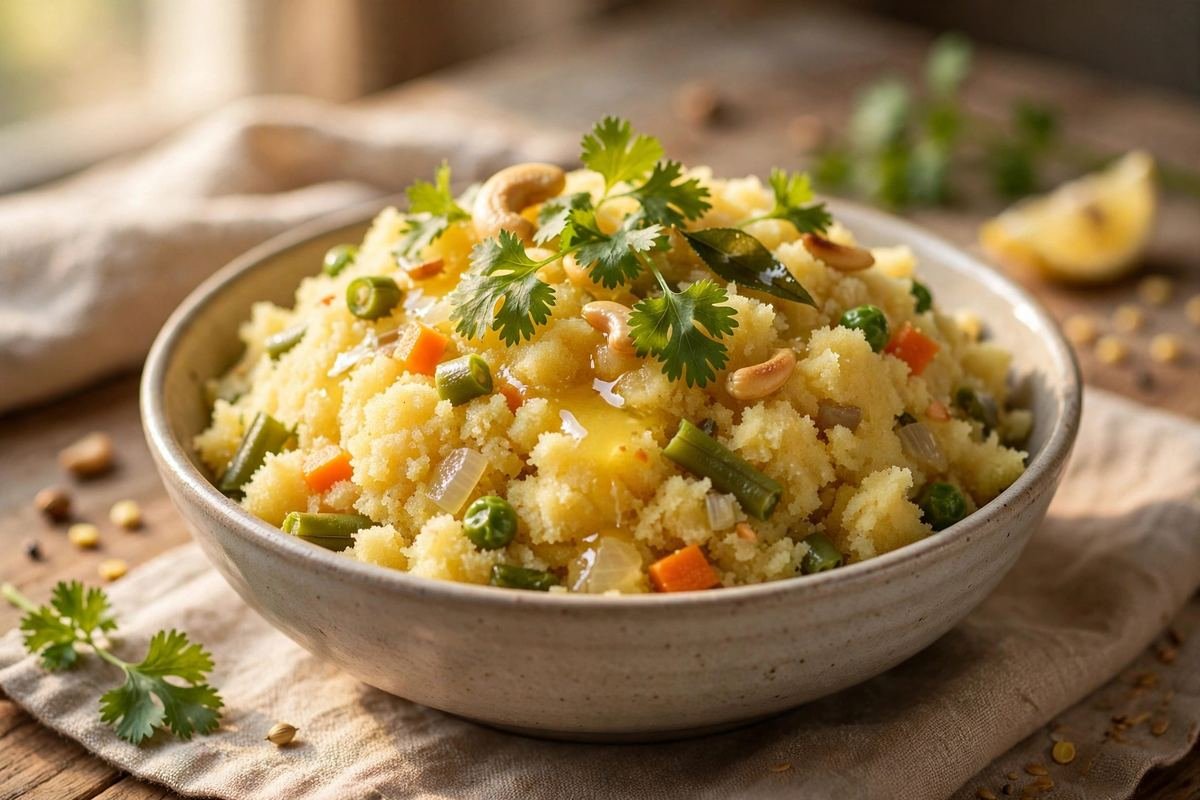
Golden, fluffy rava upma studded with vegetables, cashews, and curry leaves — the comforting South Indian semolina breakfast. Learn the lump-free technique and the exact water ratio.
Ingredients
- 1 cup (160g) coarse rava / sooji (semolina)
- 3 cups water
- 2 tbsp ghee, plus 1 tsp extra to finish
- 1 tbsp oil
- 1 tsp mustard seeds
- 1 tsp urad dal
- 1 tsp chana dal
- 10-12 cashew nuts, halved
- 8-10 curry leaves
- 2 green chillies, slit or finely chopped
- 1-inch piece of ginger, finely chopped
- 1 large onion, finely chopped
- 1 medium carrot, finely diced
- 1/4 cup green peas (fresh or frozen)
- 1/4 cup finely chopped beans (optional)
- 1 small tomato, finely chopped (optional)
- 1 tsp salt, or to taste
- 1/2 tsp sugar (optional, balances flavours)
- 1 tbsp lemon juice
- 3 tbsp chopped fresh coriander leaves
- 2 tbsp grated fresh coconut, to garnish (optional)
Instructions
- Boil the water first. Put 3 cups of water on to boil in a kettle or separate pan and keep it at a rolling boil. Having boiling water ready before the rava is roasted is the single most important piece of mise en place in this recipe — you will need it the instant the roasting is done.
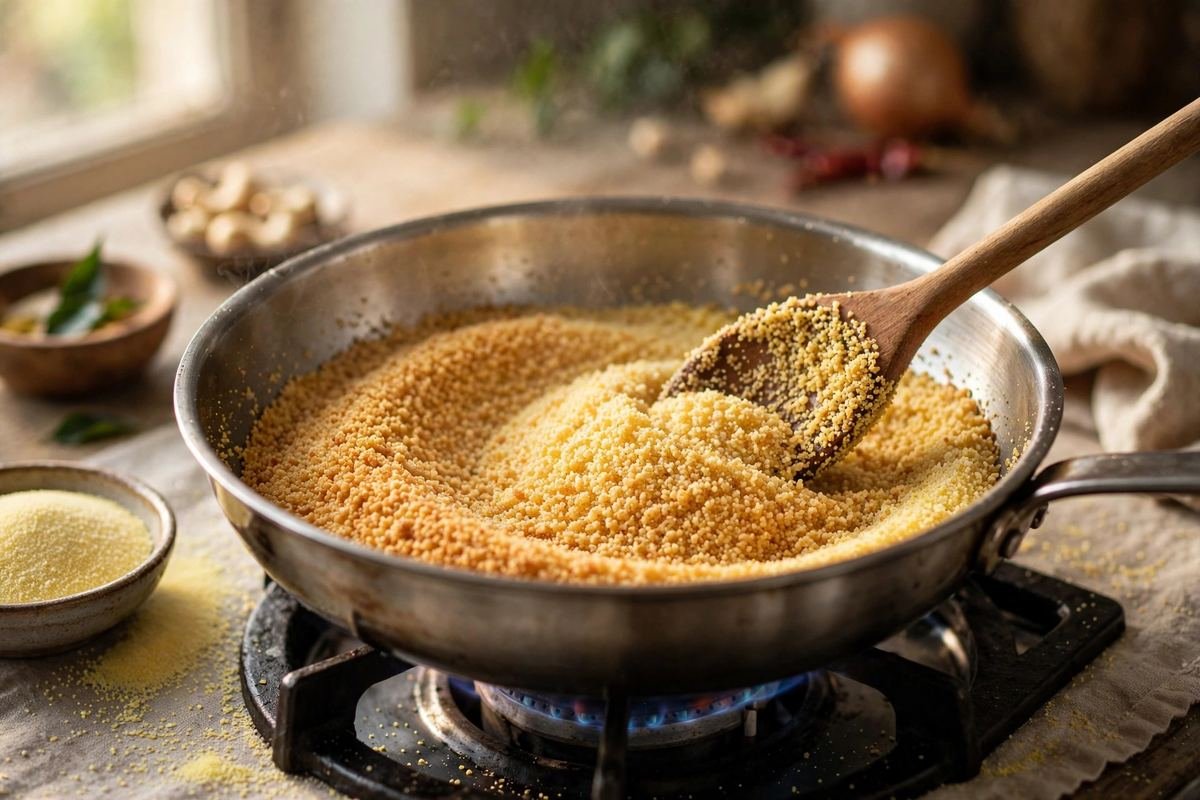
- Roast the rava until golden and nutty. Heat a heavy kadhai over medium heat and add the dry rava — no oil yet. Roast, stirring continuously, for 5-6 minutes until it turns a pale golden colour (like beach sand), feels lighter and grainier in the spoon, and smells distinctly nutty and toasted. Do not let it brown deeply or it will taste bitter. Tip the roasted rava onto a plate and set aside; this pause also prevents it from continuing to cook in the hot pan.
- Temper the spices. In the same kadhai, heat the oil and 1 tablespoon of ghee over medium heat. Add the mustard seeds and let them pop fully. Add the urad dal, chana dal, and cashews; fry, stirring, for 1-2 minutes until the dals turn golden and the cashews are lightly browned. Add the curry leaves, green chillies, and chopped ginger; sauté 30 seconds until fragrant.
- Soften the onion and vegetables. Add the chopped onion and cook 3-4 minutes until soft and translucent. Add the carrot, peas, and beans (and tomato if using) with a pinch of salt, and sauté 3-4 minutes until the vegetables are just tender — they will cook a little more with the rava, so keep some bite. Stir in the salt and sugar.
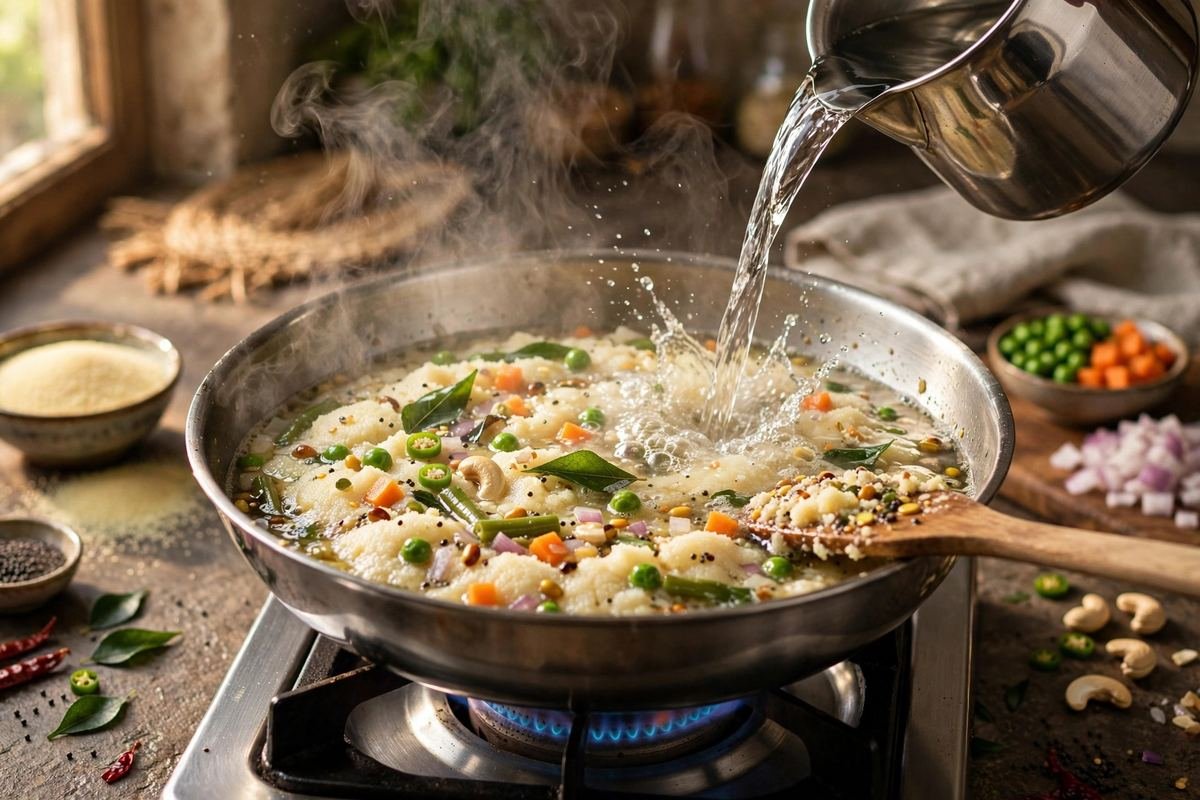
- Add the boiling water. Pour the full 3 cups of boiling water into the pan with the vegetables. It will bubble furiously — this is correct. Let it come back to a full, rolling boil, and taste the water: it should taste distinctly salty, like seawater. The rava itself is bland, so the water must carry all the seasoning. Adjust salt now; you cannot fix it later.
- Stream in the rava — this is the lump-free moment. Reduce the heat to low. With one hand, pour the roasted rava into the boiling water in a thin, steady stream; with the other, stir continuously with a wooden spoon. Do not dump it in all at once — the steady stream is what keeps every grain separate. Keep stirring for 1-2 minutes as the mixture thickens dramatically and pulls away from the sides of the pan.
- Steam to finish. Drizzle over the remaining tablespoon of ghee, stir it through, then cover with a tight lid and cook on the lowest possible heat for 3-4 minutes. This steaming step lets the grains swell fully and turns the texture from merely cooked to fluffy. Turn off the heat and let it rest, covered, for 5 minutes — the upma will continue to absorb moisture and set.
- Fluff and finish. Uncover, add the lemon juice and chopped coriander, and fluff gently with a fork or spoon, lifting the grains rather than mashing them. Each grain should be separate, soft, and glistening. Garnish with grated coconut if you like, and serve immediately while hot and steamy.
Tip: Read through the full post below for step-by-step photos, pro tips, variations and FAQs before you start cooking.
Every South Indian household has an upma story. It is the breakfast of busy mornings, the dish that appears when guests arrive unannounced, the comfort food that mothers make when someone is under the weather. Rava upma — coarse semolina cooked with water into a soft, savoury porridge, studded with onions, vegetables, cashews, and a crackling tempering — is humble to the point of invisibility, and yet ask anyone who grew up with it and watch their face soften. This is food as care, in a bowl.
The word “upma” comes from the Tamil uppu (salt) and mavu (flour) — salted flour, which tells you everything about its origins as simple, sustaining fare. It likely began as a way to cook broken wheat or rice flour into an easy meal, and the semolina version became the standard across Tamil Nadu, Karnataka, Kerala, and Andhra Pradesh. In Karnataka it stars in the legendary chow chow bath — a plate split between kesari bath (sweet) and khara bath (savoury upma), served in old Bengaluru tiffin rooms to customers who would riot if either half disappeared.
Upma has an unfair reputation in some circles as boring — usually from people who have only met it as a lumpy, gluey mess from a hostel mess or a rushed hotel buffet. Proper upma is nothing like that. When the rava is roasted to a deep golden, the water ratio is right, and each grain stays separate and fluffy, upma is genuinely delicious: nutty from the roasted semolina, rich with ghee, bright with ginger and lemon, and textured with crunchy cashews and soft vegetables. It is also one of the most forgiving dishes in Indian cooking and a true one-pot, thirty-minute breakfast.
The two things that make or break upma are the roasting and the lumps. Roast the rava patiently until it smells nutty and turns the colour of sand, and add the water correctly — poured in a steady stream while stirring — and you will never see a lump again. This recipe walks you through both, with the exact 1:3 rava-to-water ratio that works every time.
Why You’ll Love This Recipe
- Truly lump-free — the roasting plus the stream-and-stir method gives separate, fluffy grains every time.
- One pot, 30 minutes — minimal chopping, minimal washing up, maximum comfort.
- Pantry staple ingredients — rava, onion, and basic spices; vegetables are whatever you have.
- Endlessly customisable — from plain classic to vegetable-loaded to masala versions.
- Gentle and wholesome — soft-textured, easy to digest, and loved by toddlers and grandparents alike.
- Great for tiffins and travel — packs well, tastes good warm or at room temperature.
Key Ingredients Explained
Rava (sooji/semolina) is the heart of the dish, and the grind matters. Use coarse rava (labelled “bombay rava” or “coarse sooji”) — fine semolina turns pasty and dense. If your rava smells musty or has been sitting open for months, it may have absorbed moisture and could taste off; buy fresh and store airtight. Some cooks prefer pre-roasted rava, but roasting it yourself takes five minutes and gives far better flavour and colour control.
The water ratio is the science of upma: 1 cup of rava to 3 cups of water gives soft, fluffy upma. Less water (2.5 cups) gives a drier, grainier texture some prefer; more (3.5 cups) gives a softer, almost porridge-like upma. Use boiling water, not cold — adding cold water to hot rava is the fastest route to lumps. I keep the water at a rolling boil in a separate kettle or pan while the rava roasts.
Ghee does heavy lifting here: a spoon in the tempering and a spoon stirred in at the end gives upma its characteristic richness and aroma. Oil works, but ghee is what makes it taste like home. Ginger — finely chopped, not paste — adds warmth and freshness; green chillies give gentle heat. Urad dal and chana dal fried in the tempering turn golden and nutty, adding little crunchy surprises throughout. Cashews fried golden are the luxury touch — in many homes, the presence of cashews marks the difference between everyday upma and guest-worthy upma. Curry leaves, mustard seeds, and a final squeeze of lemon complete the classic flavour profile.
Equipment You’ll Need
- A heavy-bottomed kadhai or deep pan with a tight-fitting lid
- A kettle or second pan for boiling water
- A wooden spoon or flat spatula
- 1 cup (160g) coarse rava / sooji (semolina)
- 3 cups water
- 2 tbsp ghee, plus 1 tsp extra to finish
- 1 tbsp oil
- 1 tsp mustard seeds
- 1 tsp urad dal
- 1 tsp chana dal
- 10-12 cashew nuts, halved
- 8-10 curry leaves
- 2 green chillies, slit or finely chopped
- 1-inch piece of ginger, finely chopped
- 1 large onion, finely chopped
- 1 medium carrot, finely diced
- 1/4 cup green peas (fresh or frozen)
- 1/4 cup finely chopped beans (optional)
- 1 small tomato, finely chopped (optional)
- 1 tsp salt, or to taste
- 1/2 tsp sugar (optional, balances flavours)
- 1 tbsp lemon juice
- 3 tbsp chopped fresh coriander leaves
- 2 tbsp grated fresh coconut, to garnish (optional)
- Boil the water first. Put 3 cups of water on to boil in a kettle or separate pan and keep it at a rolling boil. Having boiling water ready before the rava is roasted is the single most important piece of mise en place in this recipe — you will need it the instant the roasting is done.
- Roast the rava until golden and nutty. Heat a heavy kadhai over medium heat and add the dry rava — no oil yet. Roast, stirring continuously, for 5-6 minutes until it turns a pale golden colour (like beach sand), feels lighter and grainier in the spoon, and smells distinctly nutty and toasted. Do not let it brown deeply or it will taste bitter. Tip the roasted rava onto a plate and set aside; this pause also prevents it from continuing to cook in the hot pan.
- Temper the spices. In the same kadhai, heat the oil and 1 tablespoon of ghee over medium heat. Add the mustard seeds and let them pop fully. Add the urad dal, chana dal, and cashews; fry, stirring, for 1-2 minutes until the dals turn golden and the cashews are lightly browned. Add the curry leaves, green chillies, and chopped ginger; sauté 30 seconds until fragrant.
- Soften the onion and vegetables. Add the chopped onion and cook 3-4 minutes until soft and translucent. Add the carrot, peas, and beans (and tomato if using) with a pinch of salt, and sauté 3-4 minutes until the vegetables are just tender — they will cook a little more with the rava, so keep some bite. Stir in the salt and sugar.
- Add the boiling water. Pour the full 3 cups of boiling water into the pan with the vegetables. It will bubble furiously — this is correct. Let it come back to a full, rolling boil, and taste the water: it should taste distinctly salty, like seawater. The rava itself is bland, so the water must carry all the seasoning. Adjust salt now; you cannot fix it later.
- Stream in the rava — this is the lump-free moment. Reduce the heat to low. With one hand, pour the roasted rava into the boiling water in a thin, steady stream; with the other, stir continuously with a wooden spoon. Do not dump it in all at once — the steady stream is what keeps every grain separate. Keep stirring for 1-2 minutes as the mixture thickens dramatically and pulls away from the sides of the pan.
- Steam to finish. Drizzle over the remaining tablespoon of ghee, stir it through, then cover with a tight lid and cook on the lowest possible heat for 3-4 minutes. This steaming step lets the grains swell fully and turns the texture from merely cooked to fluffy. Turn off the heat and let it rest, covered, for 5 minutes — the upma will continue to absorb moisture and set.
- Fluff and finish. Uncover, add the lemon juice and chopped coriander, and fluff gently with a fork or spoon, lifting the grains rather than mashing them. Each grain should be separate, soft, and glistening. Garnish with grated coconut if you like, and serve immediately while hot and steamy.
Pro Tips for Perfect Results
- Roast the rava properly. Under-roasted rava gives pasty upma; properly roasted rava smells nutty and looks like sand. This one step is half the recipe.
- Always use boiling water. Cold or lukewarm water hitting hot rava seizes into lumps instantly. Keep the kettle boiling until the moment you pour.
- Stream, do not dump. The thin-steady-stream-while-stirring technique is the entire secret to lump-free upma. It feels slow; it takes thirty seconds.
- Season the water, not the rava. Taste the boiling water before adding rava — it should be assertively salty. Bland water means bland upma, guaranteed.
- Do not skip the resting step. Those 5 covered minutes off the heat transform the texture from wet to fluffy as the grains finish absorbing moisture evenly.
- Keep vegetables small and few. Overloading with chunky vegetables throws off the water ratio and turns upma into vegetable curry with rava in it. Fine dice, modest quantity.
- Finish with ghee and lemon off the heat. Both lose their aroma with prolonged cooking; stirred in at the end, they perfume the whole bowl.
Variations to Try
Khara bath is the Karnataka tiffin-room legend: upma made with a spoon of vangi bath or sambar powder and extra ghee, served with coconut chutney. Tomato upma uses two chopped tomatoes cooked down with the onion for a tangy, rosy version. Masala upma adds turmeric, garam masala, and peas for a pulao-like twist. Vermicelli upma swaps the rava for roasted vermicelli (same technique, slightly less water). Oats upma uses rolled oats for a higher-fibre version — roast them lightly and use 2.5 cups water. For a richer rava kichdi, cook the rava with moong dal for extra protein. And the beloved chow chow bath pairing — half upma, half kesari bath — is mandatory if you ever want to understand Bengaluru.
Serving Suggestions
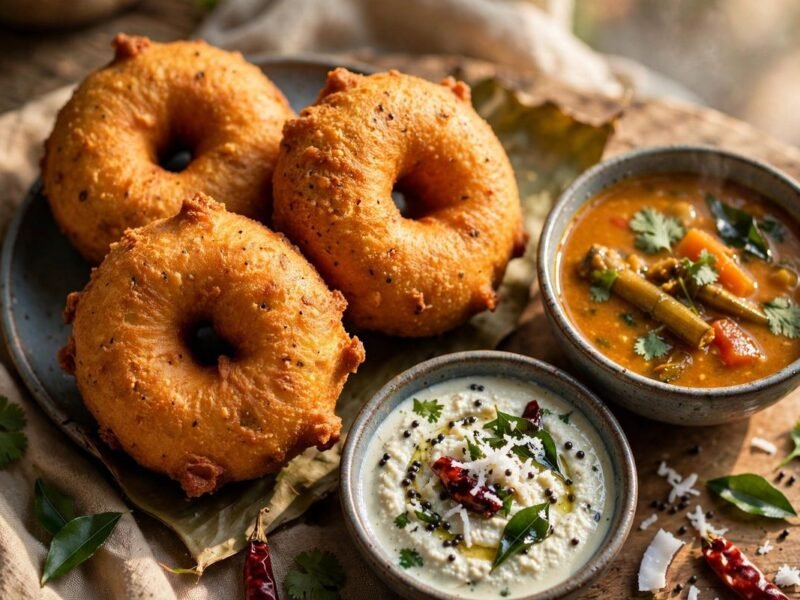
Serve upma hot in bowls with coconut chutney on the side — the combination is classic for a reason, the cool fresh chutney against the warm savoury rava. A spoon of pickle (mango or lime) and a small bowl of curd turn it into a complete meal. For breakfast, pair with filter coffee or chai; for a tiffin spread, serve small portions alongside idli and vada. A banana on the side is the traditional South Indian breakfast-table companion and genuinely works. Leftover upma, incidentally, makes an excellent base for upma cutlets — shape, pan-fry, and serve with chutney.
Storage and Reheating
Upma keeps 2 days in an airtight container in the refrigerator, though it firms up considerably as the starch sets. To reheat, sprinkle 2-3 tablespoons of water over it, cover, and warm in a pan over low heat for 4-5 minutes, breaking it up gently with a spoon — or microwave covered for 2 minutes, stirring halfway. A fresh squeeze of lemon and a drizzle of ghee after reheating bring it back to life. Upma does not freeze well; the texture turns grainy and watery on thawing. It is best made fresh, which is easy since the whole recipe takes 30 minutes.
Frequently Asked Questions
Why is my upma lumpy?
Lumps come from two mistakes: adding the rava all at once instead of in a thin stream, or using water that was not at a full boil. Roasting the rava well also helps enormously — roasted grains stay separate while raw ones clump. Follow the stream-and-stir method and lumps become nearly impossible.
What is the correct rava to water ratio?
The standard is 1:3 — one cup of rava to three cups of water — for soft, fluffy upma. Use 2.5 cups for a drier, grainier texture, or 3.5 for a softer, porridge-like consistency. Measure both; eyeballing the water is the most common cause of upma that is too dry or too wet.
Can I make upma without onion and garlic?
Easily. Skip the onion and add extra vegetables — carrot, peas, and beans carry the dish fine. Some Jain versions also skip ginger; add a little extra lemon and coriander at the end to keep the flavours bright. The tempering of mustard, dals, and curry leaves provides plenty of flavour on its own.
Is upma healthy?
It is a reasonable, balanced breakfast: semolina provides energy, the vegetables add fibre and vitamins, and it is cooked in very little oil. It is not particularly high in protein, so pairing it with curd, or adding peas and cashews, rounds it out nutritionally. Using minimal ghee and loading the vegetables makes it lighter.
Can I use fine sooji instead of coarse rava?
You can, but the texture will be denser and more porridge-like, and it needs slightly less water (about 2.5 cups). Coarse rava gives the classic fluffy, separate-grain upma. If fine sooji is all you have, roast it very carefully — it browns faster.
Why does my upma taste bland even with salt?
Because the salt went in late or the water was under-seasoned. The fix is structural: salt the boiling water assertively before the rava goes in, and finish with lemon juice — acidity makes salt taste saltier. A pinch of sugar also rounds out the flavours surprisingly well.
Upma will never win a beauty contest, and it does not need to. It is the bowl you reach for on a rainy morning, the thing you make when someone you love needs feeding, the breakfast that asks for nothing and gives everything. Roast the rava, mind the water, and give it the care it deserves — it has been taking care of South India for centuries, after all.