Recipe Card
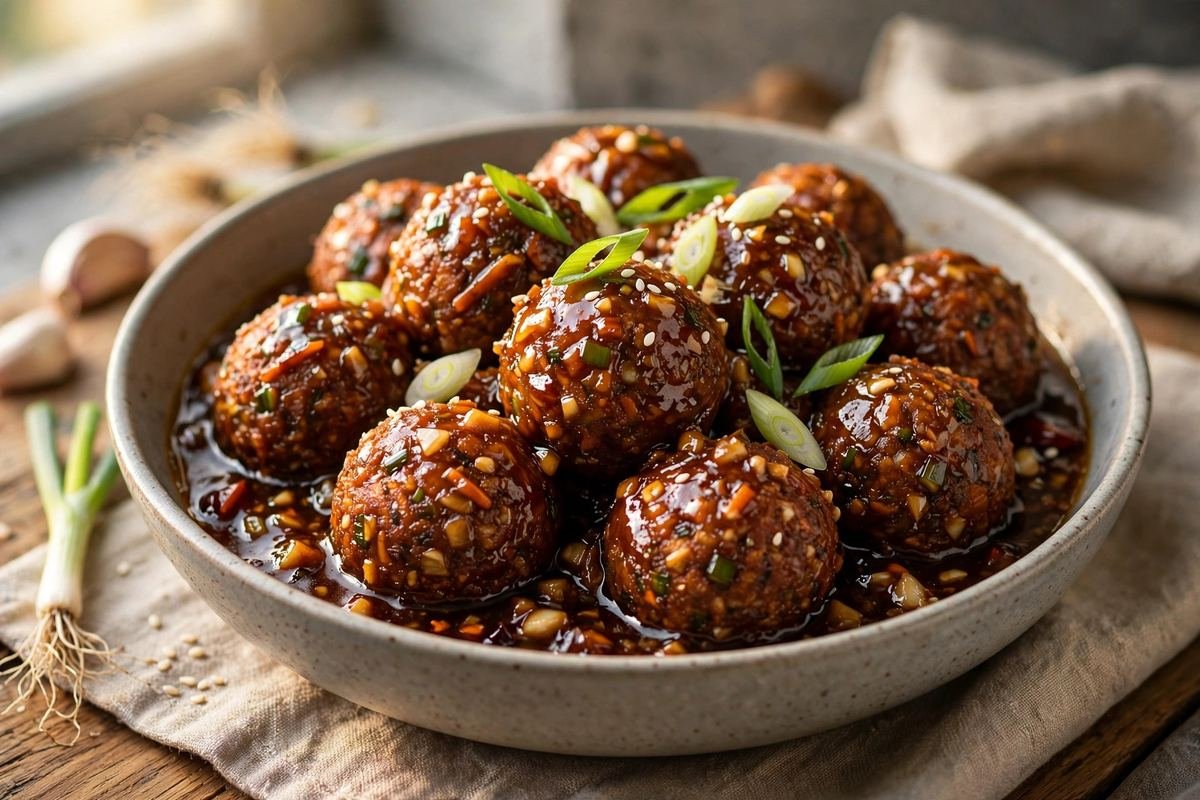
Crisp golden vegetable dumplings tossed in a glossy garlic-soy gravy — this veg manchurian tastes better than takeaway. Includes dry and gravy versions, with pro tips for dumplings that never fall apart.
Ingredients
- 2 cups (about 200 g) cabbage, very finely chopped
- 1 cup (about 120 g) carrot, finely grated
- ½ cup (about 60 g) French beans, finely chopped
- ½ cup (about 75 g) capsicum, finely chopped
- 2 tbsp spring onion whites, finely chopped (greens reserved for garnish)
- 1 tbsp ginger, finely minced
- 1 tbsp garlic, finely minced
- 1 green chilli, finely chopped (optional)
- 6 tbsp cornflour (cornstarch)
- 3 tbsp all-purpose flour (maida)
- 1 tsp soy sauce
- ½ tsp black pepper, freshly crushed
- ¾ tsp salt (adjust to taste)
- Oil, for deep-frying
- 2 tbsp oil
- 1 tbsp garlic, finely chopped
- 1 tbsp ginger, finely chopped
- 2 green chillies, slit lengthwise
- ¼ cup spring onion whites, chopped
- ½ cup capsicum, cut into small squares
- 2 tbsp soy sauce
- 1 tbsp white vinegar
- 1 tsp sugar
- ½ tsp black pepper powder
- 1½ cups (360 ml) water or vegetable stock (for gravy version; use ¼ cup for dry version)
- 2 tbsp cornflour mixed with 3 tbsp cold water (slurry)
- Salt to taste (go easy — soy sauce is salty)
- ¼ cup spring onion greens, chopped, for garnish
Instructions
- Mix the dumpling dough. Combine all the chopped vegetables, spring onion whites, ginger, garlic, and green chilli in a large bowl. Add the soy sauce, black pepper, and salt, and toss well. Now sprinkle over the cornflour and all-purpose flour and mix with your hands, squeezing gently, until the mixture comes together into a firm, slightly sticky dough that holds its shape when rolled into a ball. The vegetables will release a little moisture as you mix — that is exactly what binds it, so do not add any water. If the mixture feels too wet to shape, add cornflour one teaspoon at a time; if it feels dry and crumbly, squeeze a small handful of the vegetable mix hard to release more juice and work it in.
- Shape and test-fry one dumpling. Roll the mixture into small balls about the size of a walnut (roughly 1 inch / 2.5 cm) — you should get 18 to 20. Here is the crucial step most recipes skip: fry ONE test dumpling first. Heat oil in a kadhai to 175°C (350°F) — a small piece of the mixture dropped in should sizzle immediately and rise to the surface within a few seconds. Fry the test ball for 3 to 4 minutes until deep golden. If it holds together and tastes crisp outside and cooked inside, your binding is perfect. If it breaks apart, work another tablespoon of cornflour into the remaining mixture and test again.
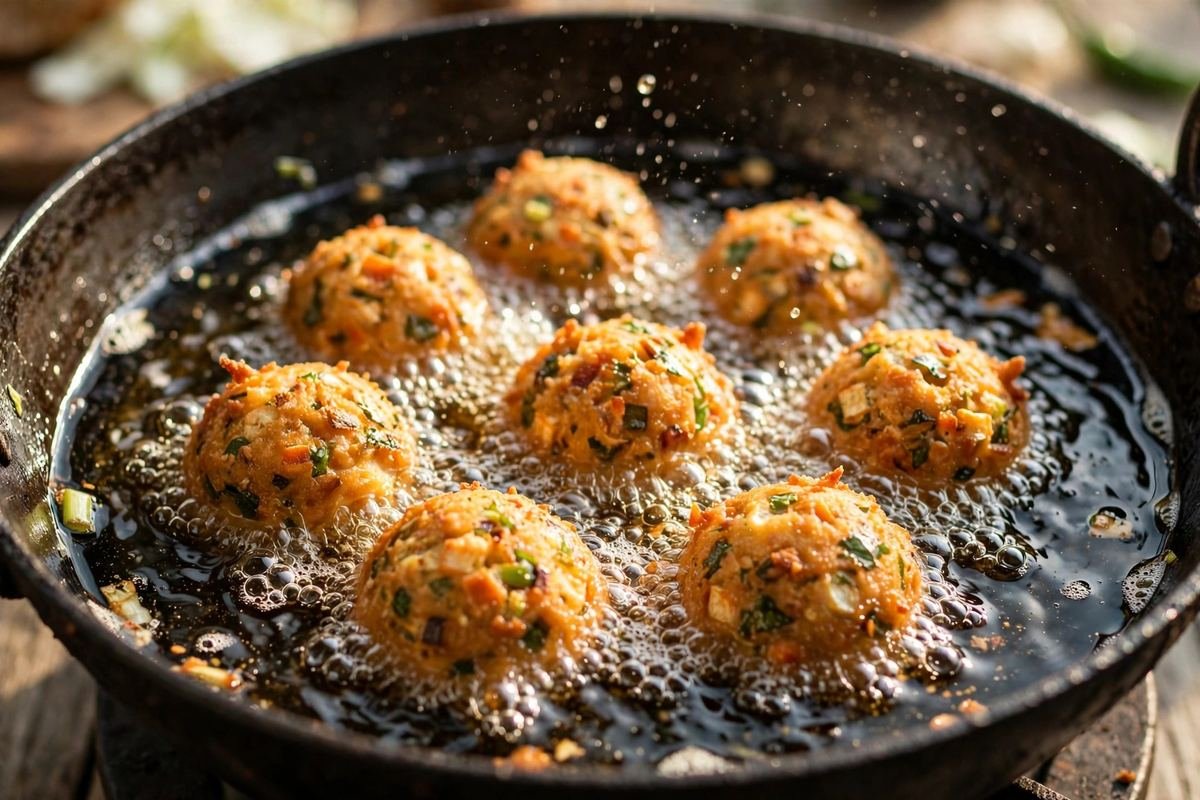
- Fry the dumplings. Working in batches of 6 to 8 so you do not crowd the kadhai (crowding drops the oil temperature and causes greasiness), slide the balls gently into the hot oil. Do not touch them for the first 60 seconds — let the crust set. Then turn them occasionally with a slotted spoon for even browning. Fry for 4 to 5 minutes per batch until deep golden brown and crisp all over. Lift out with the slotted spoon, drain on a wire rack or paper towels, and keep warm. Taste one — it should be crunchy outside, tender and savoury inside. Try not to eat them all before the sauce is ready.
- Build the sauce base. Heat 2 tablespoons of oil in a wok or large kadhai over the highest heat your stove can manage — Indo-Chinese cooking demands fierce heat. When the oil is smoking lightly, add the garlic, ginger, slit green chillies, and spring onion whites. Stir-fry for 45 to 60 seconds, tossing constantly, until the garlic turns golden at the edges and the raw smell disappears. You want colour and aroma here, not browning — keep everything moving. Add the capsicum squares and toss for another minute so they stay crisp-tender with bright colour.
- Make the gravy. Pour in the soy sauce — it will hiss and caramelise against the hot wok, which is exactly what you want — then add the water or stock, vinegar, sugar, black pepper, and a small pinch of salt. Bring it to a rolling boil. Now give your cornflour slurry a good re-stir (it settles fast) and drizzle it into the boiling sauce while stirring continuously. Within 30 seconds the sauce will turn glossy and thicken enough to coat the back of a spoon. For the dry version, use only ¼ cup of water and a teaspoon of slurry — you want just enough sauce to glaze the dumplings. Taste and adjust: more soy for salt, a touch more vinegar for tang, a pinch more sugar if it tastes harsh.
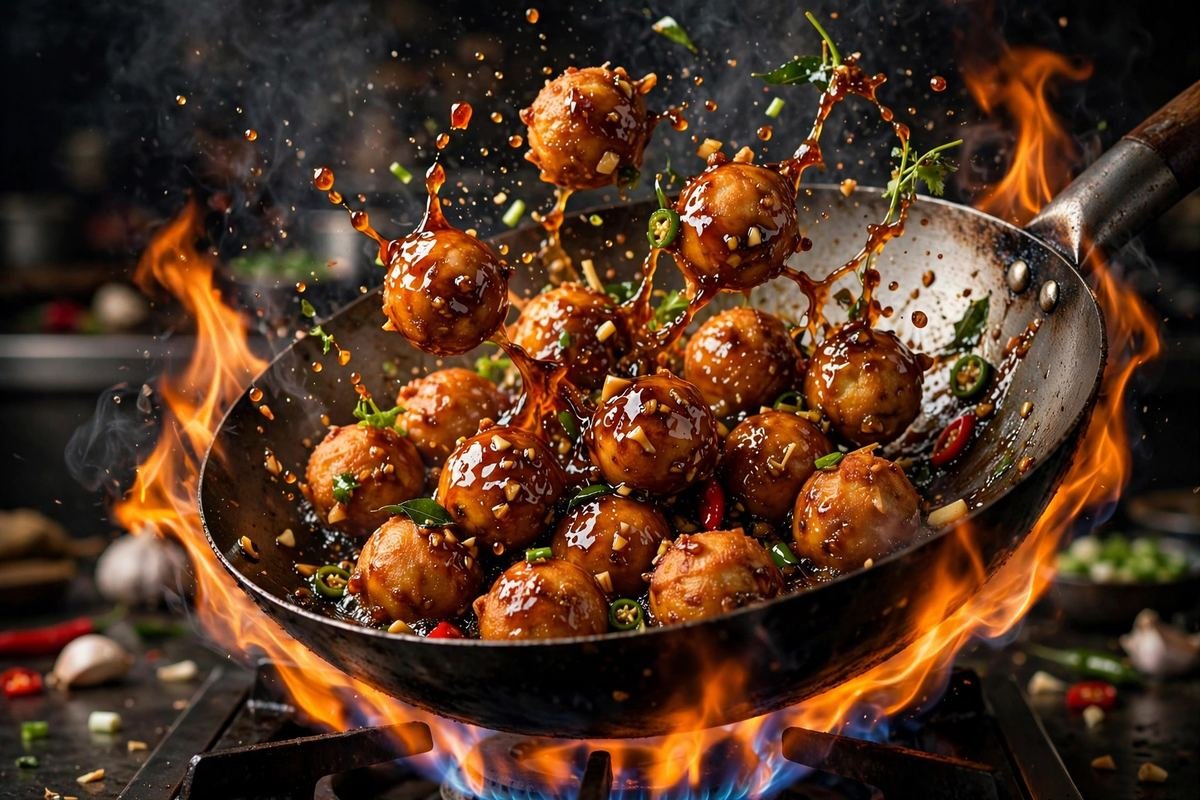
- Toss and serve immediately. Add the fried dumplings to the wok and toss vigorously for 60 to 90 seconds, until every dumpling is lacquered in the glossy sauce. This final toss should happen over high heat and fast — the longer the dumplings sit in the sauce, the softer they get, so work quickly. Transfer to a serving bowl, shower with spring onion greens, and serve steaming hot. Manchurian waits for no one: the crisp-to-sauce contrast is at its peak in the first 10 minutes.
Tip: Read through the full post below for step-by-step photos, pro tips, variations and FAQs before you start cooking.
Every Indian who grew up in the nineties has a Manchurian memory. Mine is a roadside Chinese van in the evening, the cook’s kadhai roaring over a high flame, and the smell — that unmistakable blast of garlic, soy, and burnt wok breath — travelling half a street before you even saw the cart. He would toss the golden dumplings in the glossy brown gravy with two ladles, shouting over the noise, and hand you a paper plate of veg manchurian with a plastic fork that would immediately lose the battle against a piping-hot dumpling. It was perfect.
Manchurian is the undisputed king of Indo-Chinese food, the cuisine born in the kitchens of Kolkata’s Chinese immigrant community and then enthusiastically adopted, adapted, and amplified across India. The story goes that a Chinese chef named Nelson Wang, cooking in Mumbai in the 1970s, improvised a dish for a customer who wanted something new: he cubed chicken, dusted it in cornflour, fried it crisp, and tossed it in a sauce of garlic, ginger, soy, and vinegar. The customer loved it, the dish was named after Manchuria in a fit of exotic branding, and a legend was born. The vegetarian version followed naturally — because in India, any great dish must exist in a veg avatar — replacing the chicken with finely chopped mixed vegetables bound into dumplings.
What makes veg manchurian so beloved is the contrast. The dumplings themselves are crisp outside and tender inside, packed with the sweetness of cabbage and carrot, the bite of beans, the warmth of ginger and garlic. Then they get tossed in that gravy — salty from soy, sharp from vinegar, sweet from a touch of sugar, slick and glossy from a cornflour slurry, and loaded with garlic. It is bold, it is saucy, it is unapologetically flavourful, and it hits every craving at once. Done right, the dumplings stay crisp even under the gravy; done wrong, they go soggy and fall apart — and this recipe is engineered so that never happens to you.
This version gives you both styles: the dry manchurian that works as a starter or party snack, and the gravy version that demands to be eaten with fried rice or hakka noodles. The dumpling recipe is the same for both. Let us cook.
Why You’ll Love This Recipe
- Better than takeaway — fresher, crispier, and you control the oil and salt
- Dumplings that hold together — the binding technique in this recipe means no crumbling in the kadhai
- Two dishes in one — make it dry for a starter or with gravy for a main course
- Restaurant-style wok flavour at home — high-heat technique tips included
- Packed with vegetables — a genuinely veggie-heavy dish that even picky eaters devour
- Party-perfect — scales up easily and the dry version is an ideal finger food
Key Ingredients Explained
The dumplings live or die on the vegetables, so chop them fine — really fine, almost minced. Cabbage forms the bulk and gives sweetness and body; carrots add colour and a gentle sweetness; French beans add bite; capsicum adds that characteristic Indo-Chinese aroma. Squeeze the chopped vegetables lightly after salting them for 10 minutes? No — actually, for this recipe, do not salt and squeeze. You want the vegetable moisture to stay in the mix because it helps the dumplings steam-tender from inside while the outside crisps. What you must control is the binding: cornflour for crispness and all-purpose flour (maida) for structure, in roughly a 2:1 ratio. Too much flour and the dumplings turn dense and doughy; too little and they fall apart in the oil.
The sauce is built on the holy trinity of Indo-Chinese cooking: garlic, ginger, and spring onions, used generously. Soy sauce brings salt and colour — use a naturally brewed light soy, not the thick dark kind, for the cleanest flavour. Vinegar (plain white vinegar) adds the sharp tang that defines the cuisine; add it at the end so its punch does not cook off. A pinch of sugar balances the salt and sour — do not skip it, it rounds everything out. Black pepper, preferably freshly crushed, adds warmth. The cornflour slurry is what gives the gravy its signature glossy, clinging texture — mix it completely smooth with cold water before it goes anywhere near the pan, because lumps in the slurry mean lumps in the gravy.
For frying, use a neutral oil with a high smoke point — sunflower, groundnut, or canola. The oil must be properly hot (around 175°C / 350°F) before the dumplings go in; too cool and they absorb oil and turn greasy, too hot and they brown outside while raw inside. If you are avoiding deep-frying, the air-fryer and pan-fried variations below work well.
Equipment You’ll Need
- Large kadhai or wok for frying and tossing
- Slotted spoon or spider strainer
- Large mixing bowl
- Sharp knife and chopping board (a food processor with a chopping blade saves time)
- Small bowl for the cornflour slurry
- Paper towels or a wire rack for draining
For the vegetable dumplings:
- 2 cups (about 200 g) cabbage, very finely chopped
- 1 cup (about 120 g) carrot, finely grated
- ½ cup (about 60 g) French beans, finely chopped
- ½ cup (about 75 g) capsicum, finely chopped
- 2 tbsp spring onion whites, finely chopped (greens reserved for garnish)
- 1 tbsp ginger, finely minced
- 1 tbsp garlic, finely minced
- 1 green chilli, finely chopped (optional)
- 6 tbsp cornflour (cornstarch)
- 3 tbsp all-purpose flour (maida)
- 1 tsp soy sauce
- ½ tsp black pepper, freshly crushed
- ¾ tsp salt (adjust to taste)
- Oil, for deep-frying
For the manchurian sauce:
- 2 tbsp oil
- 1 tbsp garlic, finely chopped
- 1 tbsp ginger, finely chopped
- 2 green chillies, slit lengthwise
- ¼ cup spring onion whites, chopped
- ½ cup capsicum, cut into small squares
- 2 tbsp soy sauce
- 1 tbsp white vinegar
- 1 tsp sugar
- ½ tsp black pepper powder
- 1½ cups (360 ml) water or vegetable stock (for gravy version; use ¼ cup for dry version)
- 2 tbsp cornflour mixed with 3 tbsp cold water (slurry)
- Salt to taste (go easy — soy sauce is salty)
- ¼ cup spring onion greens, chopped, for garnish
- Mix the dumpling dough. Combine all the chopped vegetables, spring onion whites, ginger, garlic, and green chilli in a large bowl. Add the soy sauce, black pepper, and salt, and toss well. Now sprinkle over the cornflour and all-purpose flour and mix with your hands, squeezing gently, until the mixture comes together into a firm, slightly sticky dough that holds its shape when rolled into a ball. The vegetables will release a little moisture as you mix — that is exactly what binds it, so do not add any water. If the mixture feels too wet to shape, add cornflour one teaspoon at a time; if it feels dry and crumbly, squeeze a small handful of the vegetable mix hard to release more juice and work it in.
- Shape and test-fry one dumpling. Roll the mixture into small balls about the size of a walnut (roughly 1 inch / 2.5 cm) — you should get 18 to 20. Here is the crucial step most recipes skip: fry ONE test dumpling first. Heat oil in a kadhai to 175°C (350°F) — a small piece of the mixture dropped in should sizzle immediately and rise to the surface within a few seconds. Fry the test ball for 3 to 4 minutes until deep golden. If it holds together and tastes crisp outside and cooked inside, your binding is perfect. If it breaks apart, work another tablespoon of cornflour into the remaining mixture and test again.
- Fry the dumplings. Working in batches of 6 to 8 so you do not crowd the kadhai (crowding drops the oil temperature and causes greasiness), slide the balls gently into the hot oil. Do not touch them for the first 60 seconds — let the crust set. Then turn them occasionally with a slotted spoon for even browning. Fry for 4 to 5 minutes per batch until deep golden brown and crisp all over. Lift out with the slotted spoon, drain on a wire rack or paper towels, and keep warm. Taste one — it should be crunchy outside, tender and savoury inside. Try not to eat them all before the sauce is ready.
- Build the sauce base. Heat 2 tablespoons of oil in a wok or large kadhai over the highest heat your stove can manage — Indo-Chinese cooking demands fierce heat. When the oil is smoking lightly, add the garlic, ginger, slit green chillies, and spring onion whites. Stir-fry for 45 to 60 seconds, tossing constantly, until the garlic turns golden at the edges and the raw smell disappears. You want colour and aroma here, not browning — keep everything moving. Add the capsicum squares and toss for another minute so they stay crisp-tender with bright colour.
- Make the gravy. Pour in the soy sauce — it will hiss and caramelise against the hot wok, which is exactly what you want — then add the water or stock, vinegar, sugar, black pepper, and a small pinch of salt. Bring it to a rolling boil. Now give your cornflour slurry a good re-stir (it settles fast) and drizzle it into the boiling sauce while stirring continuously. Within 30 seconds the sauce will turn glossy and thicken enough to coat the back of a spoon. For the dry version, use only ¼ cup of water and a teaspoon of slurry — you want just enough sauce to glaze the dumplings. Taste and adjust: more soy for salt, a touch more vinegar for tang, a pinch more sugar if it tastes harsh.
- Toss and serve immediately. Add the fried dumplings to the wok and toss vigorously for 60 to 90 seconds, until every dumpling is lacquered in the glossy sauce. This final toss should happen over high heat and fast — the longer the dumplings sit in the sauce, the softer they get, so work quickly. Transfer to a serving bowl, shower with spring onion greens, and serve steaming hot. Manchurian waits for no one: the crisp-to-sauce contrast is at its peak in the first 10 minutes.
Pro Tips for Perfect Results
- Chop vegetables truly fine. Chunky pieces make dumplings that fall apart. Aim for a fine mince — a food processor pulsed in short bursts gets you there in a minute.
- Always test-fry one dumpling. This 4-minute insurance policy tells you whether your binding is right before you commit the whole batch to hot oil.
- Do not crowd the kadhai. Fry in batches of 6 to 8. Overcrowding drops the oil temperature, and cool oil means greasy, soggy dumplings.
- Keep the oil at 175°C (350°F). No thermometer? Drop in a tiny bit of mixture — it should sizzle vigorously and rise within seconds. Adjust the flame between batches.
- Maximum heat for the sauce. Indo-Chinese flavour comes from fierce heat and fast tossing. Get the wok smoking before the aromatics go in, and keep everything moving.
- Slurry into boiling sauce, never the reverse. The sauce must be at a full boil when the cornflour slurry goes in, and the slurry must be re-stirred smooth — otherwise you get lumps instead of gloss.
- Toss at the last second. Combine dumplings and sauce only when everyone is ready to eat. For parties, keep dumplings and sauce separate and toss in batches as guests serve themselves.
- Taste the sauce before the dumplings go in. Once tossed, you cannot adjust. The sauce should taste slightly too bold on its own — the mild dumplings will balance it.
Variations to Try
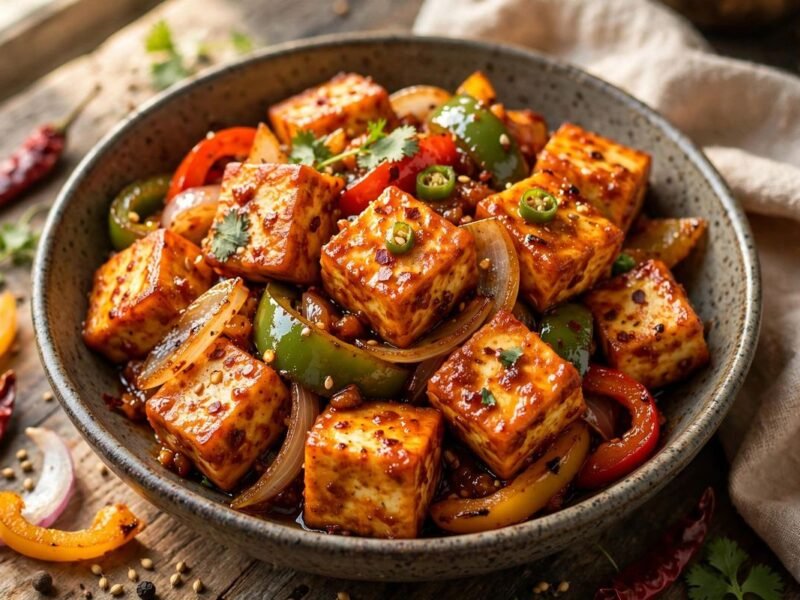
The manchurian formula is endlessly adaptable. Paneer manchurian swaps the vegetable dumplings for crisp-fried paneer cubes — same sauce, richer result. Mushroom manchurian uses battered, fried button mushrooms and is deeply savoury. For a healthier take, air-fry the dumplings at 200°C (400°F) for 12 to 15 minutes, brushing lightly with oil halfway — you lose a little crunch but keep all the flavour. Schezwan manchurian stirs a tablespoon of schezwan sauce into the gravy for a fiery red version. You can also shape the same vegetable mix into small patties for manchurian burgers, or crumble leftover dumplings into fried rice for a quick manchurian fried rice. And for a Jain version, skip the onion, garlic, and root vegetables — cabbage, capsicum, and beans alone still make excellent dumplings.
Serving Suggestions
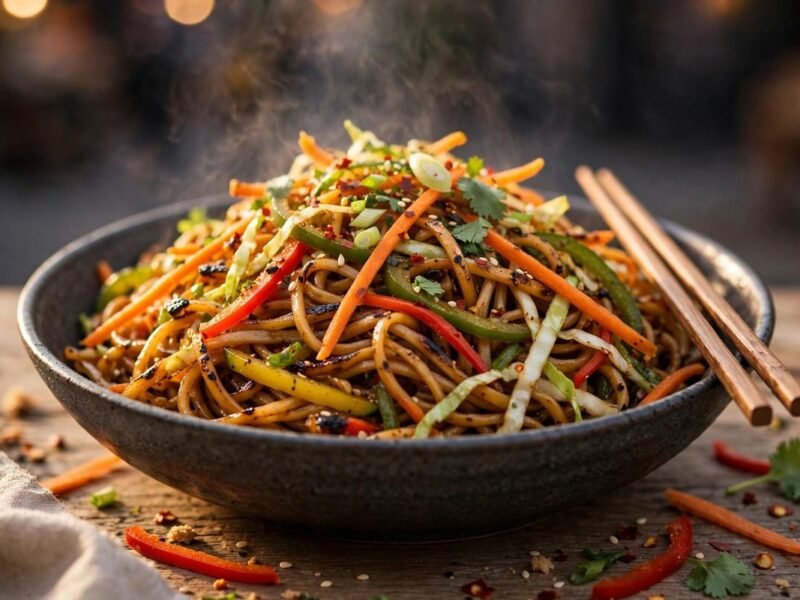
The gravy version of veg manchurian is made to be ladled over vegetable fried rice — that is the classic pairing, and the gravy soaking into the rice is half the pleasure. It is equally good with hakka noodles or schezwan noodles, tossed together so the noodles catch the sauce. The dry version shines as a starter or party snack — serve it on toothpicks with the glossy glaze, alongside chilli paneer and spring rolls for a full Indo-Chinese spread. For a fun fusion meal, stuff dry manchurian into wraps or kathi rolls with sliced onions and mint chutney. And a simple cucumber salad on the side adds a cool crunch that balances the rich, garlicky sauce.
Storage and Reheating
Store leftover dumplings and sauce separately in airtight containers in the refrigerator for up to 2 days — this is the golden rule, because dumplings stored in sauce turn soggy. Re-crisp the dumplings in a hot oven or air fryer at 200°C (400°F) for 5 to 7 minutes until crunchy again. Reheat the sauce in a pan over medium heat, adding a splash of water if it has thickened too much, and bring it back to a simmer. Toss together just before serving. Do not freeze the finished dish; the dumplings turn mushy on thawing. You can, however, freeze the uncooked shaped dumplings on a tray, then bag them — fry straight from frozen, adding 2 extra minutes to the frying time.
Frequently Asked Questions
Why do my manchurian dumplings fall apart while frying?
This is the number one manchurian problem, and it is always about binding or temperature. Either there is not enough cornflour and maida holding the vegetables together, the vegetables were chopped too coarsely, or the oil was not hot enough when the dumplings went in. The fix: chop finer, make sure the mixture holds a firm ball shape, and always test-fry one dumpling first. If the test breaks, mix in another tablespoon of cornflour.
Can I make veg manchurian without deep-frying?
Yes. The best alternative is the air fryer: 200°C (400°F) for 12 to 15 minutes with a light oil brush, turning halfway. Pan-frying in a shallow layer of oil also works — flatten the balls slightly into patties so they cook through. You can even steam the dumplings for 10 minutes and then crisp them in a hot pan with a little oil. Deep-frying gives the crispiest result, but all three alternatives taste great in the sauce.
What is the difference between dry and gravy manchurian?
Only the amount of sauce. Dry manchurian uses just enough sauce to glaze and coat the dumplings — it is served as a starter or snack. Gravy manchurian has a generous amount of glossy sauce, meant to be eaten with fried rice or noodles as a main course. The dumpling recipe and the sauce recipe are identical; you simply scale the water/stock and slurry up or down.
My gravy tastes flat. How do I fix it?
Flat manchurian gravy usually needs one of three things: more heat in the wok (the smoky char is a flavour, not just theatre), more vinegar for tang, or a pinch of sugar to round out the soy sauce’s harshness. Also check your soy sauce — old, cheap soy can taste dull. Taste the sauce before adding the dumplings and adjust boldly; it should taste punchy on its own.
Can I make the dumplings ahead for a party?
Absolutely — this is the smart way to serve manchurian to guests. Fry the dumplings up to 4 hours ahead and keep them uncovered at room temperature (covering traps steam and softens them). Make the sauce ahead and refrigerate. When guests arrive, reheat the sauce to a boil, re-crisp the dumplings for 5 minutes in a hot oven, toss together, and serve. Nobody will know it was not all done fresh.
Is veg manchurian gluten-free?
Not as written, because of the all-purpose flour and regular soy sauce. To make it gluten-free, replace the maida with rice flour (which actually fries up beautifully crisp) and use tamari or a certified gluten-free soy sauce. Cornflour is naturally gluten-free, but check the label for cross-contamination if you are cooking for someone with coeliac disease.
That is veg manchurian — crisp, glossy, garlicky, and gone in minutes. Master the test-fry, respect the high heat, and toss at the last second, and you will never order it in again. Now heat up that kadhai and make the whole street smell amazing.