Recipe Card
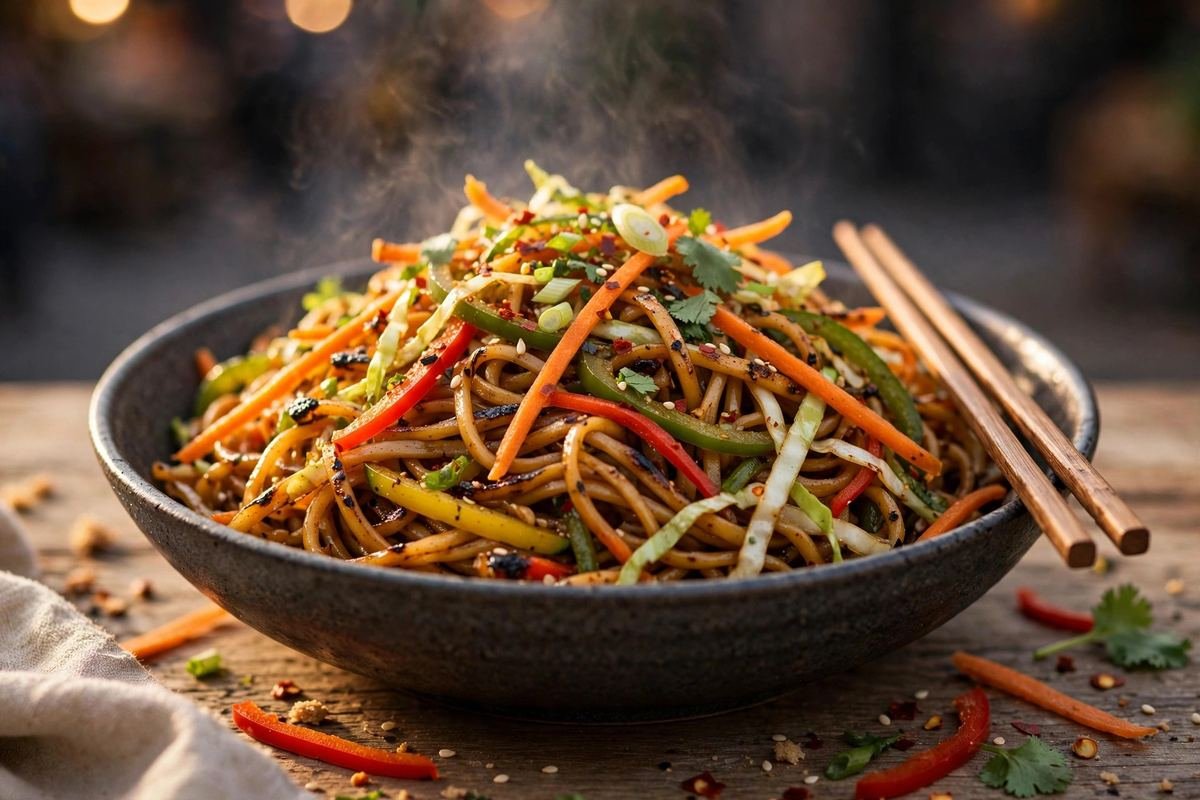
Smoky wok-tossed hakka noodles loaded with crunchy julienned vegetables, tossed in soy sauce and vinegar just like your favourite street cart. Ready in under 25 minutes, this is weeknight comfort at its finest.
Ingredients
- 200g hakka noodles (about 2 nests)
- 1 tbsp oil, for boiling the noodles, plus 3 tbsp for the wok
- 1 tbsp finely minced garlic (4-5 cloves)
- 1 tsp finely grated ginger (optional but lovely)
- 1 medium onion, thinly sliced (about 3/4 cup)
- 2 cups shredded cabbage (about 150g)
- 1 large carrot, julienned (about 1 cup)
- 1 medium green capsicum, julienned (about 3/4 cup)
- 4-5 spring onions, whites and greens separated and chopped
- 2 green chillies, slit lengthwise (adjust to taste)
- 2 tbsp soy sauce
- 1 1/2 tbsp white vinegar
- 1 tsp red chilli sauce (optional, for heat)
- 1 tsp white pepper powder
- 1/2 tsp sugar
- 1 tsp toasted sesame oil
- Salt to taste (go easy — the soy sauce is already salty)
Instructions
- Boil the noodles perfectly. Bring a large pot of water to a rolling boil, add a generous teaspoon of salt and a tablespoon of oil. Drop in the noodles and cook them 1 minute less than the packet suggests — usually 4 to 5 minutes — until just al dente with a slight bite. Overcooked noodles are the single biggest reason home hakka noodles turn mushy, so err on the firmer side; they will cook a little more in the wok. Drain immediately in a colander, rinse under cold water to stop the cooking, toss with a teaspoon of oil to prevent sticking, and spread them out on a wide plate to cool slightly while you prep the rest.
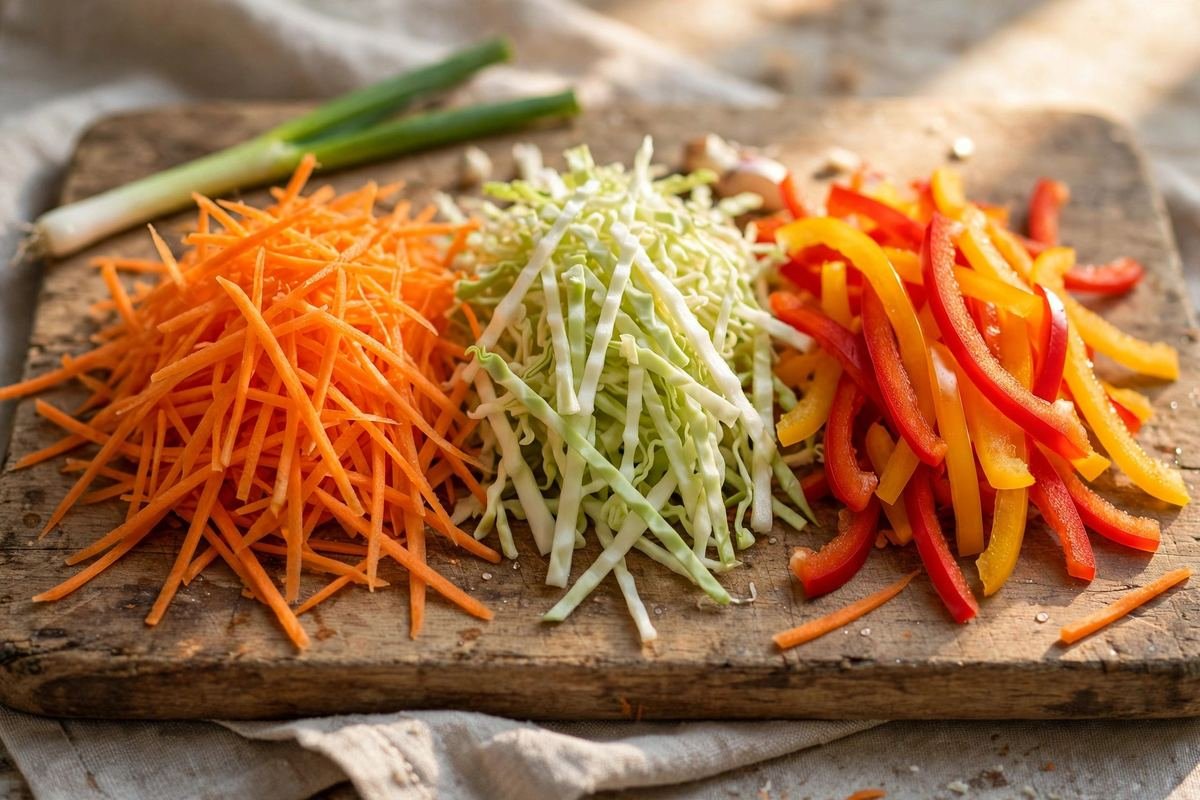
- Prep everything before lighting the flame. Julienning the vegetables into thin, even matchsticks is worth the effort: thin pieces cook in seconds and mingle with the noodles instead of sitting on top as chunks. Separate the spring onion whites from the greens — the whites go in early with the aromatics, the greens are a garnish at the end. Measure your soy sauce, vinegar, chilli sauce, pepper, sugar, and sesame oil into small bowls. Once the wok is hot, you will have no time to measure or chop, so a proper mise en place is non-negotiable.
- Get the wok screaming hot. Place your wok or widest kadai on the highest flame your stove can manage and let it heat for 1 to 2 minutes until it just starts to smoke. Add 3 tablespoons of oil and swirl it around — it should shimmer and ripple immediately. This fierce heat is what creates the smoky wok flavour and keeps the vegetables crisp; a lukewarm pan will steam everything into sogginess, which is the exact opposite of what you want.
- Bloom the aromatics in seconds. Toss in the minced garlic, grated ginger, slit green chillies, and the spring onion whites. Stir-fry for just 20 to 30 seconds until the garlic turns fragrant and lightly golden at the edges — do not let it brown, or it will turn bitter. You should smell that unmistakable garlicky perfume rising from the wok; that aroma is the foundation of the entire dish, so give it those few seconds of undivided attention.
- Add the hard vegetables first. Throw in the sliced onion and julienned carrot and toss vigorously for about 1 minute. These take slightly longer than the others, so they get a head start. Keep everything moving constantly — lift and fold the vegetables over themselves with your tongs, letting them kiss the hot metal of the wok. You want them to soften just slightly while staying crunchy; if you see them wilting or releasing water, your flame is too low or you have overcrowded the pan.
- Add the quick-cooking vegetables. Add the shredded cabbage and julienned capsicum and toss for another 1 to 1 1/2 minutes. The cabbage should just begin to wilt at the edges while staying bright and crunchy in the centre, and the capsicum should turn vivid green and glossy. At this stage, sprinkle the white pepper powder and the pinch of sugar over the vegetables and toss through — seasoning the vegetables before the noodles go in ensures every strand picks up flavour.
- Sauce the wok, then add the noodles. Push the vegetables to the sides of the wok, pour the soy sauce and vinegar directly onto the hot metal in the centre, and let them sizzle for 5 seconds — this quick sear in the hot wok caramelises the sauce slightly and adds depth. Then add the drained noodles all at once, along with the red chilli sauce if using. Now toss, toss, toss: lift the noodles from underneath, fold them over the vegetables, and repeat for 2 to 3 minutes until every strand is coated in glossy sauce and heated through. If the noodles seem dry, add a splash of water — just a tablespoon — to help the sauce coat everything.
- Finish and serve immediately. Taste and adjust: a little more salt if needed (remember the soy sauce is salty), a touch more vinegar for tang, or another pinch of pepper for warmth. Drizzle the teaspoon of sesame oil over the top, scatter the spring onion greens generously, and give one final toss. Transfer to a serving platter right away — hakka noodles wait for no one, and they are at their absolute best steaming hot, eaten within minutes of leaving the wok.
Tip: Read through the full post below for step-by-step photos, pro tips, variations and FAQs before you start cooking.
There is a particular smell that pulls you towards a street-side Chinese cart in India — the hiss of a screaming-hot wok, the smoky breath of oil and garlic, and then that unmistakable salty-sour perfume of soy sauce meeting vinegar. That is hakka noodles, and for millions of Indians it is the first dish that comes to mind when someone says Indo-Chinese. It is not quite Chinese and not quite Indian; it is something entirely its own, born in the Chinese settlements of Kolkata — in Tangra, where Hakka Chinese immigrants set up small eateries and carts more than a century ago — and perfected on roadside thelas across the country over decades.
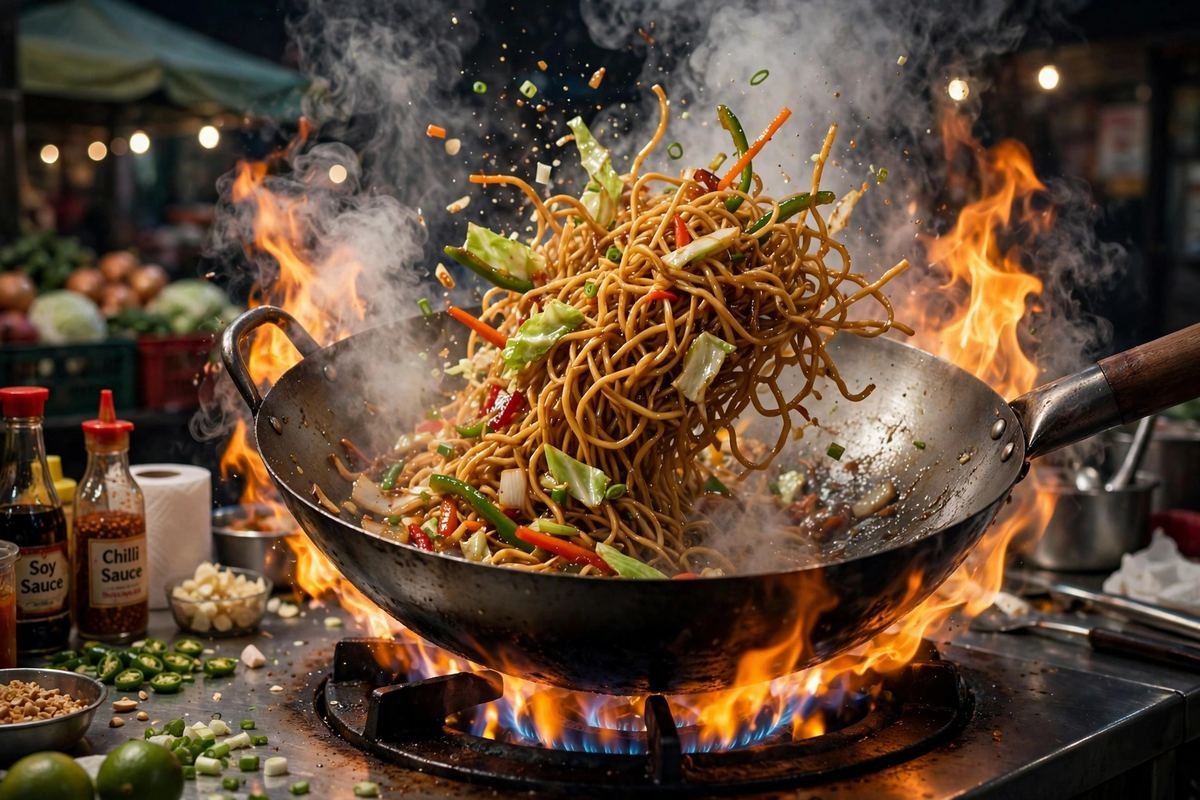
The street version of hakka noodles is a masterclass in contrast. The noodles themselves are soft and slippery, coated in a glossy soy-vinegar sauce, while the vegetables — cabbage, carrot, capsicum, spring onions — stay bright, crunchy, and barely cooked. Everything happens in a matter of minutes over fierce heat, which is what gives the dish its signature smokiness, the famous wok hei that street vendors achieve on those massive burners. At home, you can come remarkably close with a wide kadai or wok on your highest flame, as long as you keep a few technique secrets in mind.
What makes this recipe special is that it does not try to be a polite, health-food version of the dish. This is the real deal: glossy noodles, punchy seasoning, and vegetables that still have bite. The vinegar is non-negotiable — it is what cuts through the richness and gives hakka noodles their distinctive tang. And the tossing, that constant, quick flipping in a hot pan, is what keeps everything separate and springy instead of clumpy and steamed. Once you nail the method, you will find yourself making this on repeat: for quick dinners, for friends who show up unannounced, and for those late evenings when only noodles will do.
Why You’ll Love This Recipe
- Genuine street-cart flavour at home — the soy-vinegar balance, the smoky toss, the crunchy vegetables: all the signatures of the thela version, no compromises.
- Ready in under 25 minutes — with your vegetables chopped in advance, the actual cooking takes barely ten minutes of high-heat magic.
- Endlessly customisable — swap in whatever vegetables are in the fridge, add tofu or mushrooms, or crank up the chilli for a spicier kick.
- No fancy ingredients — everything you need is already in a typical Indian kitchen or one quick trip to a general store.
- Kid-approved comfort food — keep the spice mild and it becomes the dinner every child actually asks for.
- Better than takeaway — fresher, crunchier, and made with the exact salt and oil levels you want.
Key Ingredients Explained
The noodles are the soul of this dish, so start with proper hakka noodles — the long, thin, springy wheat noodles sold in most Indian grocery stores, often labelled simply “hakka noodles” or “chow mein noodles.” Avoid instant ramen-style noodles, which turn mushy, and avoid thick udon-style noodles, which are too heavy for this light toss. If you cannot find hakka noodles, thin spaghetti boiled very firmly (a minute less than the packet says) is a surprisingly good stand-in, though the texture is a touch softer.
Soy sauce brings the salty, savoury depth. Use a regular dark soy sauce — the kind in every Indian kitchen — not a low-sodium or sweet version. A little goes a long way; the noodles should look amber and glossy, never dark and drowning. Vinegar is the secret weapon of Indo-Chinese cooking. White distilled vinegar adds the sharp tang that defines hakka noodles, lifting the whole dish and cutting through the oil. Do not be tempted to skip it or reduce it to a whisper — the street version is unapologetically tangy.
For vegetables, cabbage and carrots are the classic base, julienned into thin matchsticks so they cook in seconds and distribute evenly. Capsicum adds a sweet crunch and colour, while spring onions — whites and greens used separately — give sharpness and freshness. Finely minced garlic is essential; it fries in seconds in hot oil and perfumes the entire dish. White pepper gives a gentle, warm heat that is different from black pepper or chillies — it is a hallmark of Indo-Chinese seasoning, so try not to substitute it.
Finally, sesame oil (just a teaspoon, added at the very end) brings a nutty aroma that rounds everything out. Use toasted sesame oil if you can find it, but ordinary sesame oil works fine. Sugar — a tiny pinch — balances the salt and vinegar; you will not taste sweetness, only a rounder flavour. And while restaurants often add ajinomoto (MSG), this recipe skips it entirely and still delivers full flavour, which many home cooks prefer.
Equipment You’ll Need
- A large wok or wide kadai — the wider the better, so the noodles spread out and fry rather than steam.
- Tongs or two wooden spatulas — for constant tossing; a fork and spatula pair works too.
- A sharp knife and chopping board — julienned vegetables are the hallmark here, so even matchsticks matter.
- A large pot for boiling noodles — with plenty of water and salt.
- A colander — to drain the noodles quickly and completely.
- Small bowls (mise en place) — everything must be chopped and measured before the wok gets hot, because once cooking starts there is no time to chop.
- 200g hakka noodles (about 2 nests)
- 1 tbsp oil, for boiling the noodles, plus 3 tbsp for the wok
- 1 tbsp finely minced garlic (4-5 cloves)
- 1 tsp finely grated ginger (optional but lovely)
- 1 medium onion, thinly sliced (about 3/4 cup)
- 2 cups shredded cabbage (about 150g)
- 1 large carrot, julienned (about 1 cup)
- 1 medium green capsicum, julienned (about 3/4 cup)
- 4-5 spring onions, whites and greens separated and chopped
- 2 green chillies, slit lengthwise (adjust to taste)
- 2 tbsp soy sauce
- 1 1/2 tbsp white vinegar
- 1 tsp red chilli sauce (optional, for heat)
- 1 tsp white pepper powder
- 1/2 tsp sugar
- 1 tsp toasted sesame oil
- Salt to taste (go easy — the soy sauce is already salty)
- Boil the noodles perfectly. Bring a large pot of water to a rolling boil, add a generous teaspoon of salt and a tablespoon of oil. Drop in the noodles and cook them 1 minute less than the packet suggests — usually 4 to 5 minutes — until just al dente with a slight bite. Overcooked noodles are the single biggest reason home hakka noodles turn mushy, so err on the firmer side; they will cook a little more in the wok. Drain immediately in a colander, rinse under cold water to stop the cooking, toss with a teaspoon of oil to prevent sticking, and spread them out on a wide plate to cool slightly while you prep the rest.
- Prep everything before lighting the flame. Julienning the vegetables into thin, even matchsticks is worth the effort: thin pieces cook in seconds and mingle with the noodles instead of sitting on top as chunks. Separate the spring onion whites from the greens — the whites go in early with the aromatics, the greens are a garnish at the end. Measure your soy sauce, vinegar, chilli sauce, pepper, sugar, and sesame oil into small bowls. Once the wok is hot, you will have no time to measure or chop, so a proper mise en place is non-negotiable.
- Get the wok screaming hot. Place your wok or widest kadai on the highest flame your stove can manage and let it heat for 1 to 2 minutes until it just starts to smoke. Add 3 tablespoons of oil and swirl it around — it should shimmer and ripple immediately. This fierce heat is what creates the smoky wok flavour and keeps the vegetables crisp; a lukewarm pan will steam everything into sogginess, which is the exact opposite of what you want.
- Bloom the aromatics in seconds. Toss in the minced garlic, grated ginger, slit green chillies, and the spring onion whites. Stir-fry for just 20 to 30 seconds until the garlic turns fragrant and lightly golden at the edges — do not let it brown, or it will turn bitter. You should smell that unmistakable garlicky perfume rising from the wok; that aroma is the foundation of the entire dish, so give it those few seconds of undivided attention.
- Add the hard vegetables first. Throw in the sliced onion and julienned carrot and toss vigorously for about 1 minute. These take slightly longer than the others, so they get a head start. Keep everything moving constantly — lift and fold the vegetables over themselves with your tongs, letting them kiss the hot metal of the wok. You want them to soften just slightly while staying crunchy; if you see them wilting or releasing water, your flame is too low or you have overcrowded the pan.
- Add the quick-cooking vegetables. Add the shredded cabbage and julienned capsicum and toss for another 1 to 1 1/2 minutes. The cabbage should just begin to wilt at the edges while staying bright and crunchy in the centre, and the capsicum should turn vivid green and glossy. At this stage, sprinkle the white pepper powder and the pinch of sugar over the vegetables and toss through — seasoning the vegetables before the noodles go in ensures every strand picks up flavour.
- Sauce the wok, then add the noodles. Push the vegetables to the sides of the wok, pour the soy sauce and vinegar directly onto the hot metal in the centre, and let them sizzle for 5 seconds — this quick sear in the hot wok caramelises the sauce slightly and adds depth. Then add the drained noodles all at once, along with the red chilli sauce if using. Now toss, toss, toss: lift the noodles from underneath, fold them over the vegetables, and repeat for 2 to 3 minutes until every strand is coated in glossy sauce and heated through. If the noodles seem dry, add a splash of water — just a tablespoon — to help the sauce coat everything.
- Finish and serve immediately. Taste and adjust: a little more salt if needed (remember the soy sauce is salty), a touch more vinegar for tang, or another pinch of pepper for warmth. Drizzle the teaspoon of sesame oil over the top, scatter the spring onion greens generously, and give one final toss. Transfer to a serving platter right away — hakka noodles wait for no one, and they are at their absolute best steaming hot, eaten within minutes of leaving the wok.
Pro Tips for Perfect Results
- Cook noodles a minute under. The wok adds another couple of minutes of heat, so noodles boiled to perfect doneness on their own will be overdone by the time they reach the plate.
- Never overcrowd the wok. If you are doubling the recipe, cook in two batches. A crowded pan steams instead of sears, and you lose the smoky flavour entirely.
- Julienne, don’t chop. Thin matchsticks cook fast and blend into the noodles so every bite has noodle and vegetable together — big chunks sit on top and feel like a separate sabzi.
- Sauce the hot metal, not the food. Pouring soy sauce onto the searing-hot wok surface for a few seconds before the noodles go in gives a subtle caramelised depth that stirring it in later cannot match.
- Taste before salting. Between the soy sauce and the salted noodle water, most of the salt is already in the dish. Add salt only at the very end, after tasting.
- Serve within minutes. Hakka noodles continue to soften as they sit. Plate them hot and get them to the table fast — this is not a dish that improves on standing.
- Keep the flame high throughout. The single most common home-cook mistake is a timid flame. Commit to full heat from the first aromatic to the final toss.
Variations to Try
Egg Hakka Noodles: Push the vegetables aside, scramble two beaten eggs in the hot wok until just set, then toss through with the noodles. The ribbons of egg add richness and protein, and this is a beloved street-cart upgrade.
Schezwan Hakka Noodles: Replace the red chilli sauce with 2 tablespoons of schezwan sauce and add a few dried red chillies with the aromatics. Fiery, garlicky, and deeply addictive — have water handy.
Mushroom Hakka Noodles: Add a cup of thinly sliced button mushrooms with the carrots. Their earthy, meaty quality makes the dish feel more substantial, and they soak up the soy sauce beautifully.
Paneer Hakka Noodles: Toss in a cup of small paneer cubes, lightly seared first, at the very end. A protein-packed version that turns the dish into a complete meal for vegetarians.
Singaporean-style twist: Add a teaspoon of curry powder with the pepper for the yellow-hued Singapore noodles vibe — a different dish entirely, but a fun weeknight experiment from the same base.
Serving Suggestions
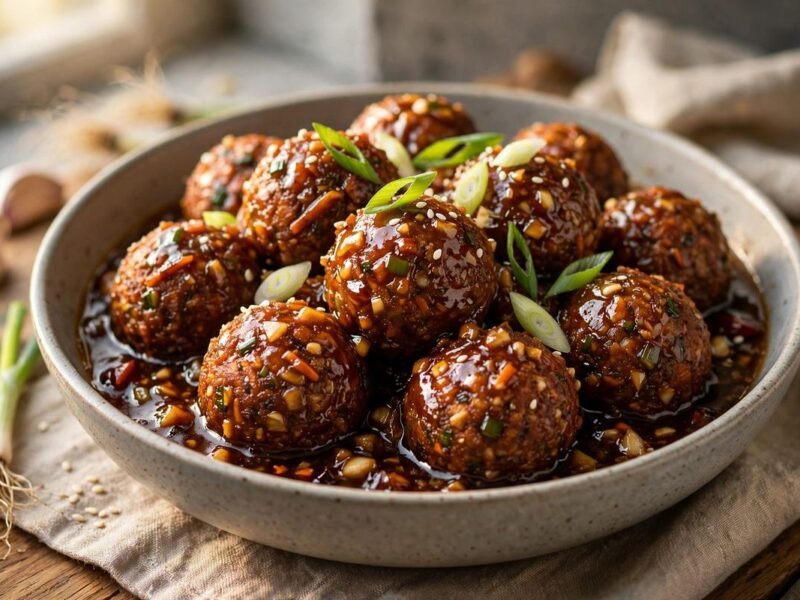
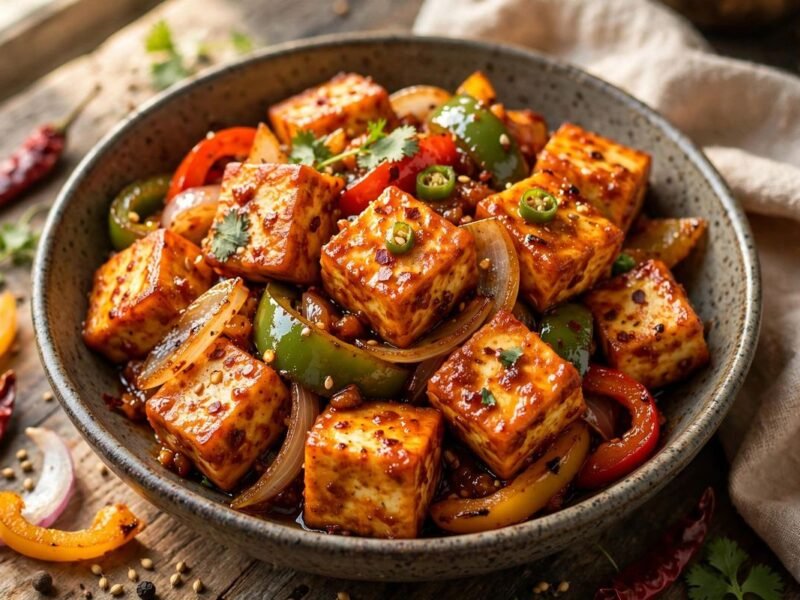
Hakka noodles are a complete meal on their own, but they shine brightest as part of an Indo-Chinese spread. Pair them with chilli paneer, veg manchurian, or gobi manchurian on the side, and you have a restaurant-style thali that will impress any guest. A bowl of hot and sour soup or sweet corn soup as a starter makes it a full feast. For drinks, keep it simple — chilled nimbu pani or a cold cola cuts through the richness perfectly. Garnish with extra spring onion greens and serve a small dish of chilli oil or schezwan sauce on the side for those who like it hotter. Leftovers, if any, make an excellent next-day lunchbox addition, though the noodles will have softened.
Storage and Reheating
Hakka noodles are best eaten fresh, but leftovers keep well in an airtight container in the refrigerator for up to 2 days. The noodles will absorb the sauce and soften as they sit — that is normal. To reheat, toss them in a hot wok or kadai with a teaspoon of oil and a splash of water for 2 to 3 minutes, stirring constantly; this revives much of the original texture. Avoid the microwave if you can, as it steams the noodles into mush and makes the vegetables limp. Do not freeze hakka noodles — the vegetables turn watery and the noodles become gummy on thawing. If you know you will have leftovers, slightly undercook the noodles so they hold up better.
Frequently Asked Questions
Why did my noodles turn sticky and clumpy?
Three usual culprits: overcooked noodles, not enough oil tossed through after draining, or letting the drained noodles sit in a pile for too long. Boil them a minute under, toss with a teaspoon of oil, and spread them on a wide plate so steam escapes. If they still clump in the wok, a splash of water while tossing will loosen them.
Can I make hakka noodles without a wok?
Yes — use the widest, thinnest kadai or frying pan you own on the highest flame. The key is surface area and heat, not the shape of the pan. Avoid deep, narrow vessels, which trap steam. If your pan is small, cook in two batches.
What is the difference between hakka noodles and chow mein?
In India the terms are often used interchangeably, but traditionally chow mein noodles are pan-fried until slightly crisp in places, while hakka noodles are tossed quickly and stay soft throughout. This recipe is the classic soft-tossed hakka style you get at street carts.
Can I make this gluten-free?
Swap the wheat noodles for rice noodles (flat or thin round ones) and use tamari or a gluten-free soy sauce. Rice noodles cook faster and are more delicate, so handle them gently and toss for less time. The flavour will be slightly different but still delicious.
How do I get the smoky street-cart flavour at home?
Maximum flame, minimal crowding, and constant tossing. A home burner will never match a thela’s jet burner, but a screaming-hot wok comes remarkably close. Some cooks add a drop of extra sesame oil at the end for a hint of that charred aroma.
Can I add protein to this recipe?
Absolutely. Scrambled egg, seared paneer cubes, sautéed mushrooms, or tofu tossed in cornflour and pan-fried until crisp all work beautifully. Add cooked proteins at the very end so they do not overcook in the wok.
There is something deeply satisfying about pulling off real street-cart hakka noodles in your own kitchen — that first smoky, tangy forkful, eaten standing up if you must, is its own small celebration. Make it once for the technique, then make it again for the joy of it. And when your family starts requesting it by name, you will know you have joined the long line of home cooks keeping this delicious Indo-Chinese classic alive, one hot wok at a time.