Recipe Card
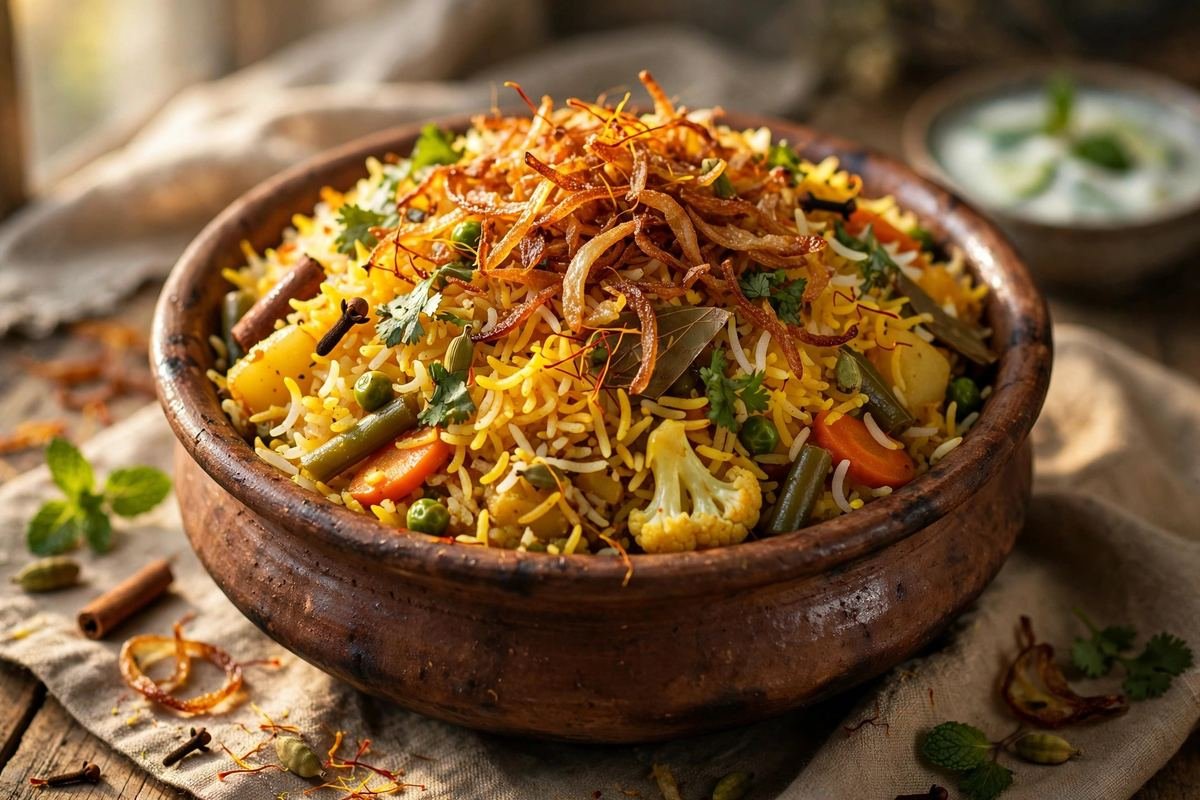
Layers of saffron-stained basmati, spiced vegetables and crisp onions, sealed and slow-steamed on dum. A showstopping vegetarian biryani that never plays second fiddle.
Ingredients
- 500g (2.5 cups) aged long-grain basmati rice, soaked 30 minutes
- 3 medium potatoes (about 350g), peeled and cut into 1.5-inch cubes, parboiled 5 minutes
- 250g cauliflower, cut into medium florets
- 150g carrots, cut into thick diagonal coins
- 100g green beans, cut into 1.5-inch pieces
- 100g (3/4 cup) green peas, fresh or frozen
- 200g paneer, cut into 1-inch cubes and lightly pan-fried golden
- 200g (about 3/4 cup + 1 tbsp) thick full-fat yoghurt, whisked smooth
- 2 tbsp ginger-garlic paste
- 2 tsp red chilli powder
- 1/2 tsp turmeric powder
- 2 tsp coriander powder
- 1.5 tsp garam masala
- 1/2 tsp cumin powder
- 4-5 green chillies, slit lengthwise
- 3 tbsp lemon juice
- 2 cups sliced onions (about 300g), for birista
- 1 cup neutral oil, for frying onions
- 4 tbsp ghee, melted
- 1/2 cup fresh mint leaves, torn
- 1/2 cup fresh coriander leaves, chopped
- 1 pinch saffron threads soaked in 1/4 cup warm milk
- 1 tsp kewra water
- 2 bay leaves
- 5 green cardamom pods
- 5 cloves
- 1 cinnamon stick (2 inches)
- 1 tsp shahi jeera (caraway seeds)
- 2.5 tsp salt for the masala, plus 2 tbsp for the rice water
Instructions
- Fry the birista: Heat the oil in a wide kadhai over medium-high heat until a test onion slice sizzles immediately. Add the sliced onions in two batches and fry, stirring often, for 8 to 10 minutes until deep golden brown. Lift out with a slotted spoon onto paper towels; they will crisp further as they cool. Reserve 3 tablespoons of this fragrant onion oil for layering.
- Build the vegetable masala: In the same kadhai, heat 2 tablespoons of the reserved onion oil over medium heat. Add the ginger-garlic paste and slit green chillies and sauté for 1 minute until the raw smell disappears. Stir in the red chilli powder, turmeric, coriander powder, cumin powder and half the garam masala; cook 30 seconds until the spices darken slightly and smell toasted.
- Add the yoghurt carefully: Lower the heat completely and whisk in the yoghurt one spoonful at a time, stirring constantly. This slow addition prevents splitting. Once incorporated, raise the heat to medium and cook for 3 to 4 minutes until the oil begins to glisten at the edges of the masala.
- Cook the vegetables: Add the parboiled potatoes, cauliflower, carrots and green beans with the salt and 3/4 cup of water. Cover and simmer for 8 to 10 minutes until the vegetables are about 80 percent tender, a knife should meet slight resistance. Stir in the peas, paneer, lemon juice, mint and coriander. Cook 2 minutes more, then switch off. The mixture should be thick, not watery.
- Par-cook the rice: Meanwhile, bring a large pot of water to a rolling boil with the bay leaves, cardamom, cloves, cinnamon, shahi jeera and 2 tablespoons of salt; the water should taste distinctly salty like seawater. Drain the soaked rice and add it to the boiling water. Cook for exactly 5 to 6 minutes until the grains are 70 percent done: soft outside, firm white core inside when bitten. Drain immediately in a strainer and spread on a tray to stop the cooking.
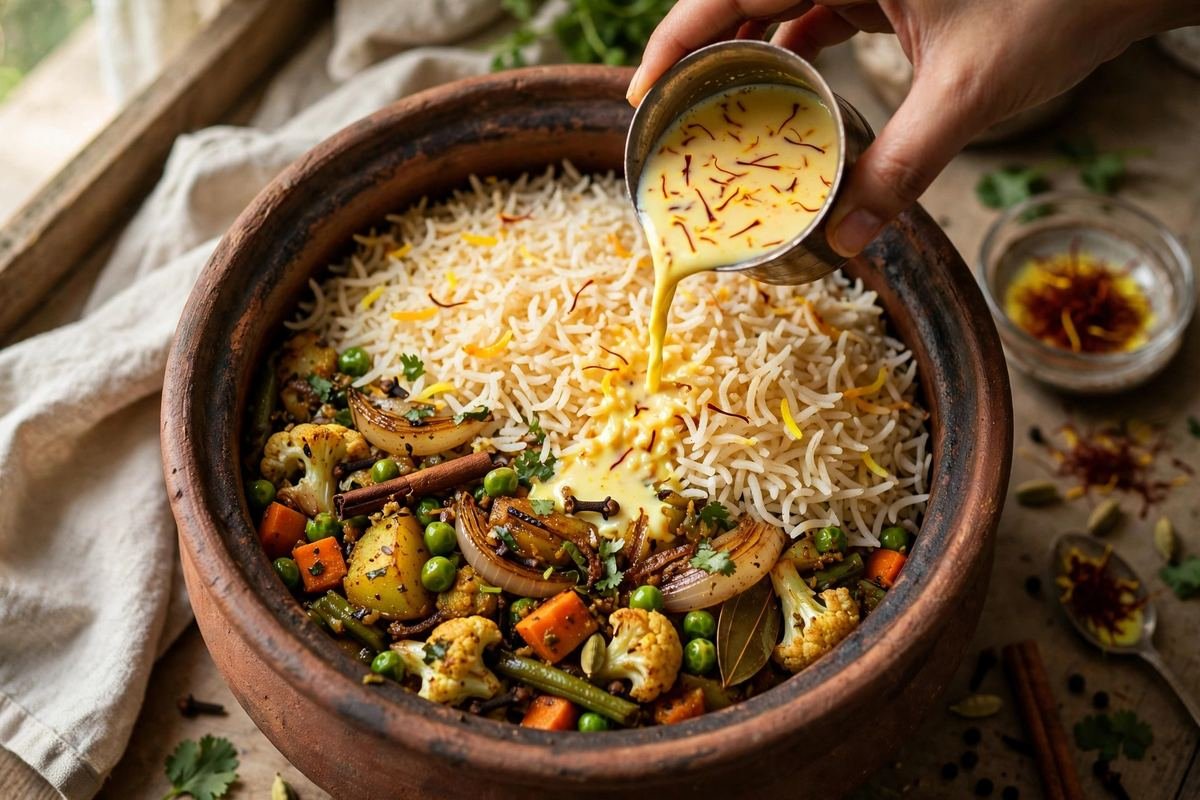
- Layer the biryani: Spread half the vegetable masala in the handi. Top with half the rice in an even layer. Drizzle with half the saffron milk, 1 tablespoon of the reserved onion oil, 1 tablespoon of ghee, half the birista, half the remaining mint and coriander, and half the kewra water. Repeat with the remaining masala and rice and the rest of the toppings. Finish with the remaining garam masala sprinkled over the top.
- Seal and dum: Drape a clean damp kitchen towel over the mouth of the handi and press the lid on tightly, or seal the rim with a rope of whole wheat dough. Place a flat tawa over low-medium heat and set the handi on it. Cook on high for the first 5 minutes until you hear a faint sizzle, then reduce to the lowest flame and dum for 25 minutes. Do not open the lid during this time.
- Rest and serve: Switch off the heat and let the handi rest, still sealed, for 10 to 15 minutes. This resting time lets the steam settle so the grains stay separate. Open the lid away from your face, fluff gently from the sides with a fork, and serve hot with the remaining birista scattered on top.
Tip: Read through the full post below for step-by-step photos, pro tips, variations and FAQs before you start cooking.
The Story Behind Vegetable Dum Biryani
Biryani carries a royal reputation, and for the longest time people assumed the vegetarian version was merely a consolation prize for those who skip meat. Anyone who has eaten a proper vegetable dum biryani knows how wrong that assumption is. This dish has its own distinguished lineage, tracing back to the teahouses and royal kitchens of Lucknow and Hyderabad, where courtly cooks learned that vegetables, treated with the same respect as meat, could carry the grand dum method just as gloriously. The Persian word dum means breath, and the technique is exactly that: the pot is sealed so the dish cooks in its own fragrant steam, and when the lid lifts, the biryani seems to exhale saffron, cardamom and rose.
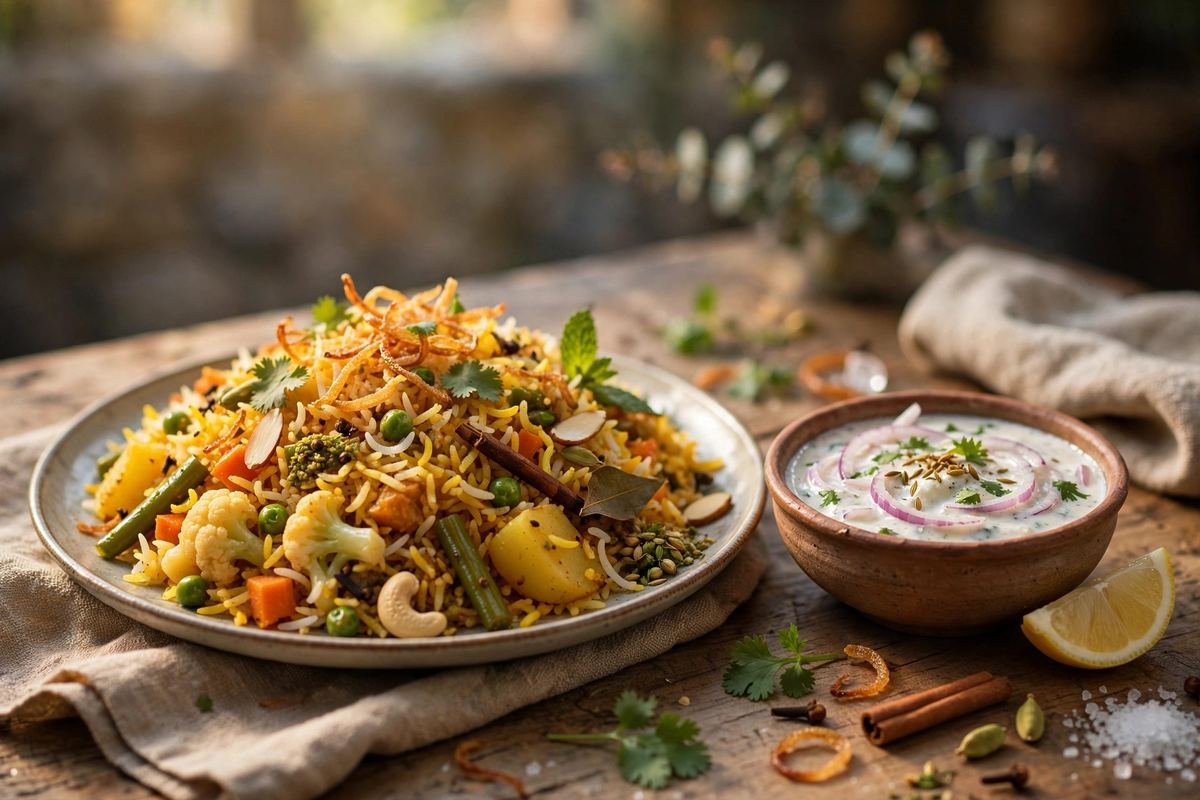
What makes vegetable biryani special is the layering. Unlike a pulao, where everything cooks together, a biryani keeps its components distinct. You par-cook fragrant basmati until it is seventy percent done, then build strata: a base of vegetables simmered in a rich, tangy masala, alternating blankets of rice stained with saffron milk, fried onions, fresh mint and coriander, and drizzles of ghee. On dum, the flavours mingle without the textures merging. Each spoonful gives you separate, elongated grains of rice alongside tender cauliflower, sweet carrots, peas that pop, and potatoes that have soaked up the spiced gravy like little sponges.
I have cooked this biryani for Diwali dinners, for a sceptical uncle who insisted biryani must have meat, and for weeknight cravings when only something spectacular would do. Every single time, the moment the seal breaks and that steam rises, the room goes quiet. The uncle, for the record, went back for thirds and asked for the recipe. That is the power of doing vegetables properly: choose sturdy vegetables that hold their shape, season the rice water like the sea, layer generously, and give the dum its full time. This recipe walks you through every stage with timings and visual cues, so your first vegetable dum biryani tastes like your fiftieth.
Why You’ll Love This Recipe
- True dum technique, vegetarian at heart: Sealed, slow-steamed layering gives you the authentic biryani experience with zero compromise on flavour.
- Vegetables that stay distinct: Careful cutting and timing keep every vegetable identifiable and tender, never mushy.
- Feeds a celebration: One handi serves six generously, making it perfect for festivals, potlucks and Sunday family lunches.
- Make-ahead friendly: Fry the onions and prep the vegetables a day ahead; assembly takes twenty minutes.
- Restaurant aroma at home: Saffron, kewra water and browned onions create that unmistakable biryani perfume.
- Balanced one-pot meal: Grains, vegetables, protein from paneer and peas, all in a single festive pot.
Key Ingredients Explained
Start with the rice, because biryani is, at its soul, a rice dish. Use aged long-grain basmati, the older the better. Aged basmati has lower moisture, so the grains stay separate, elongate dramatically, and develop that nutty aroma new rice simply cannot match. Soak it for exactly thirty minutes, then par-cook to seventy percent. That number matters more than anything else in this recipe: fully cooked rice disintegrates on dum, while undercooked rice stays chalky. Seventy percent means the grain is soft on the outside with a firm white core when you bite it.
The vegetable mix is your chance to build colour and texture. Cauliflower florets, carrots, green beans, peas and potatoes form the classic backbone, and cubes of paneer add richness and protein. Cut everything into similar, generous sizes, about one-and-a-half-inch pieces, so they cook evenly and stay proud in the layers. Slightly undercook the vegetable masala, because the vegetables get a second round of steaming on dum. Potatoes need a head start since they take longest; parboil them for five minutes before they join the masala.
Then the flavour architects. Thick, full-fat yoghurt forms the base of the vegetable masala, and it must be whisked smooth and added off fierce heat, or it will split into a grainy mess. Birista, crisp golden fried onions, are non-negotiable: they contribute sweetness, crunch and deep savoury notes. Fry your own in a cup of oil until deep golden, not pale, and save the flavoured oil for drizzling between layers. Saffron soaked in warm milk gives the signature golden streaks; a small pinch of real threads is enough. Kewra water adds the haunting floral note of a proper biryani, but use only a teaspoon, since too much turns soapy. Whole spices like bay leaves, green cardamom, cloves, cinnamon and shahi jeera perfume the rice water, which should be salted until it tastes like seawater. Ghee ties every layer together, so be generous but not reckless, about four tablespoons across the whole handi.
Equipment You’ll Need
- Heavy-bottomed handi or Dutch oven with a tight-fitting lid: Even heat distribution is critical; thin pots scorch the bottom layer during dum.
- Large wide pot: For par-cooking the basmati rice without crowding.
- Fine-mesh strainer: To drain the par-cooked rice instantly and stop the cooking.
- Flat tawa or griddle: Sits under the handi during dum to diffuse heat.
- Whole wheat dough or aluminium foil: For sealing the lid the traditional way.
Ingredients
- 500g (2.5 cups) aged long-grain basmati rice, soaked 30 minutes
- 3 medium potatoes (about 350g), peeled and cut into 1.5-inch cubes, parboiled 5 minutes
- 250g cauliflower, cut into medium florets
- 150g carrots, cut into thick diagonal coins
- 100g green beans, cut into 1.5-inch pieces
- 100g (3/4 cup) green peas, fresh or frozen
- 200g paneer, cut into 1-inch cubes and lightly pan-fried golden
- 200g (about 3/4 cup + 1 tbsp) thick full-fat yoghurt, whisked smooth
- 2 tbsp ginger-garlic paste
- 2 tsp red chilli powder
- 1/2 tsp turmeric powder
- 2 tsp coriander powder
- 1.5 tsp garam masala
- 1/2 tsp cumin powder
- 4-5 green chillies, slit lengthwise
- 3 tbsp lemon juice
- 2 cups sliced onions (about 300g), for birista
- 1 cup neutral oil, for frying onions
- 4 tbsp ghee, melted
- 1/2 cup fresh mint leaves, torn
- 1/2 cup fresh coriander leaves, chopped
- 1 pinch saffron threads soaked in 1/4 cup warm milk
- 1 tsp kewra water
- 2 bay leaves
- 5 green cardamom pods
- 5 cloves
- 1 cinnamon stick (2 inches)
- 1 tsp shahi jeera (caraway seeds)
- 2.5 tsp salt for the masala, plus 2 tbsp for the rice water
Instructions
- Fry the birista: Heat the oil in a wide kadhai over medium-high heat until a test onion slice sizzles immediately. Add the sliced onions in two batches and fry, stirring often, for 8 to 10 minutes until deep golden brown. Lift out with a slotted spoon onto paper towels; they will crisp further as they cool. Reserve 3 tablespoons of this fragrant onion oil for layering.
- Build the vegetable masala: In the same kadhai, heat 2 tablespoons of the reserved onion oil over medium heat. Add the ginger-garlic paste and slit green chillies and sauté for 1 minute until the raw smell disappears. Stir in the red chilli powder, turmeric, coriander powder, cumin powder and half the garam masala; cook 30 seconds until the spices darken slightly and smell toasted.
- Add the yoghurt carefully: Lower the heat completely and whisk in the yoghurt one spoonful at a time, stirring constantly. This slow addition prevents splitting. Once incorporated, raise the heat to medium and cook for 3 to 4 minutes until the oil begins to glisten at the edges of the masala.
- Cook the vegetables: Add the parboiled potatoes, cauliflower, carrots and green beans with the salt and 3/4 cup of water. Cover and simmer for 8 to 10 minutes until the vegetables are about 80 percent tender, a knife should meet slight resistance. Stir in the peas, paneer, lemon juice, mint and coriander. Cook 2 minutes more, then switch off. The mixture should be thick, not watery.
- Par-cook the rice: Meanwhile, bring a large pot of water to a rolling boil with the bay leaves, cardamom, cloves, cinnamon, shahi jeera and 2 tablespoons of salt; the water should taste distinctly salty like seawater. Drain the soaked rice and add it to the boiling water. Cook for exactly 5 to 6 minutes until the grains are 70 percent done: soft outside, firm white core inside when bitten. Drain immediately in a strainer and spread on a tray to stop the cooking.
- Layer the biryani: Spread half the vegetable masala in the handi. Top with half the rice in an even layer. Drizzle with half the saffron milk, 1 tablespoon of the reserved onion oil, 1 tablespoon of ghee, half the birista, half the remaining mint and coriander, and half the kewra water. Repeat with the remaining masala and rice and the rest of the toppings. Finish with the remaining garam masala sprinkled over the top.
- Seal and dum: Drape a clean damp kitchen towel over the mouth of the handi and press the lid on tightly, or seal the rim with a rope of whole wheat dough. Place a flat tawa over low-medium heat and set the handi on it. Cook on high for the first 5 minutes until you hear a faint sizzle, then reduce to the lowest flame and dum for 25 minutes. Do not open the lid during this time.
- Rest and serve: Switch off the heat and let the handi rest, still sealed, for 10 to 15 minutes. This resting time lets the steam settle so the grains stay separate. Open the lid away from your face, fluff gently from the sides with a fork, and serve hot with the remaining birista scattered on top.
Pro Tips for Perfect Results
- Nail the 70 percent rice: Set a timer for 5 minutes once the rice hits boiling water, then taste a grain every 30 seconds. The outside should be tender and the centre should still show a firm white dot. Drain the instant you hit it; carryover cooking continues even in the strainer.
- Salt the rice water aggressively: This is your only chance to season the rice itself. The boiling water should taste like seawater. Bland rice makes a bland biryani no matter how good the masala is.
- Keep the masala thick: A watery vegetable base steams the rice into mush on dum. If your masala looks loose, cook it uncovered for a few extra minutes until it clings to the vegetables.
- Never skip the tawa: Direct flame under a heavy handi for 30 minutes will scorch the bottom layer. The tawa diffuses heat so the base steams instead of burning.
- Do not peek during dum: Every time the lid lifts, precious steam escapes and the temperature drops. Trust the timing: 5 minutes on medium-high, 25 on the lowest flame, 10 to 15 resting.
- Fry onions to deep golden: Pale onions taste raw and turn soggy; dark brown ones taste bitter. The sweet spot is a rich amber, and they crisp as they cool, so pull them just before they look done.
- Rest before serving: Cutting into biryani straight off the flame gives you broken, sticky grains. Ten minutes of rest lets the starches set and the layers settle.
Variations to Try
For a Hyderabadi touch, add a tablespoon of fried cashews and a handful of raisins between the layers; the sweetness plays beautifully against the heat. If you love mushrooms, swap the cauliflower for 250g of quartered button mushrooms, added at the very end of the masala cooking since they release water quickly. A Lucknowi-style version skips the red chilli and leans on white pepper, extra saffron and a few drops of rose water for a milder, more floral biryani. For a protein boost without paneer, add a cup of cooked chickpeas or soy chunks simmered in the masala. And if you want a smoky restaurant-style finish, try the dhungar method: place a small steel bowl of live charcoal in the handi after dum, drizzle half a teaspoon of ghee over the coal, cover immediately for 2 minutes, then remove the bowl before serving.
Serving Suggestions
Vegetable dum biryani is a complete meal, but the right accompaniments elevate it from dinner to celebration. A cooling cucumber or boondi raita is almost mandatory; its chill and tang cut through the richness of the ghee and saffron. Mirchi ka salan, the tangy peanut-sesame curry of Hyderabad, is the classic biryani partner if you want to go all out. A simple kachumber of onion, tomato and cucumber with lemon keeps things fresh. For drinks, serve salted chaas or a sweet mango lassi in summer. To serve, bring the whole handi to the table and open it there, the rising steam is half the experience, then portion from the bottom so everyone gets masala, rice and toppings in every serving.
Storage and Reheating
Leftover biryani keeps beautifully. Cool it completely, then refrigerate in an airtight container for up to 3 days. To reheat, sprinkle 2 tablespoons of water over the rice, cover tightly, and warm in a heavy pan over low heat for 8 to 10 minutes; the steam revives the grains. The microwave works too: cover and heat in 2-minute bursts, fluffing between each. Biryani also freezes well for up to a month; thaw overnight in the fridge before reheating. The fried onions will soften in storage, so keep a small stash of fresh birista aside to scatter on top when serving leftovers, it makes all the difference.
Frequently Asked Questions
Can I make vegetable biryani without a handi?
Absolutely. Any heavy-bottomed pot with a tight lid works, a Dutch oven is ideal. The key is even heat and a good seal. If your lid is loose, place a sheet of foil over the pot before the lid, or use the damp towel trick described in the instructions. A pressure cooker base without the whistle also works well for dum.
Why did my rice turn mushy?
The most common culprit is overcooking the rice during par-boiling. Even one extra minute can push it past 70 percent, and dum finishes the job into mush. The second culprit is a watery masala, which adds excess steam. Keep the masala thick, time the rice carefully, and drain it the moment it hits 70 percent.
Can I use frozen vegetables?
Yes, with one adjustment: thaw them completely and pat dry before adding, or they will release water into the masala. Add frozen peas and corn in the last 2 minutes of masala cooking since they need almost no time. Avoid frozen cauliflower if you can; it tends to go soft and lose its bite.
Is kewra water essential? What can I substitute?
Kewra water gives biryani its signature floral note, but the dish will still be delicious without it. Rose water is the closest substitute, use half the quantity since it is stronger. You can also simply increase the saffron and mint and skip the floral note entirely for a cleaner flavour.
How do I scale this recipe for a party of 12?
Double everything and use a wider, not deeper, handi so the steam circulates evenly. Very deep layers cook unevenly, the bottom overcooks while the top stays firm. If you only have a deep pot, consider making two separate batches rather than one towering one.
Can I make this in an Instant Pot?
You can, using the pot-in-pot dum method, but honestly the stovetop handi gives better results. If you must, layer in a separate steel bowl, add half a cup of water to the inner pot, and steam on low pressure for 8 minutes with a natural release of 10 minutes. The texture will be slightly softer than true dum biryani.
There is something deeply satisfying about lifting the lid on a biryani you built layer by layer. The colours, the perfume, the way everyone leans in a little closer, it turns an ordinary evening into a small festival. Make it once for the people you love, and I promise it will become one of those recipes you are asked for again and again. Happy cooking, and may your grains always stay separate.