Recipe Card
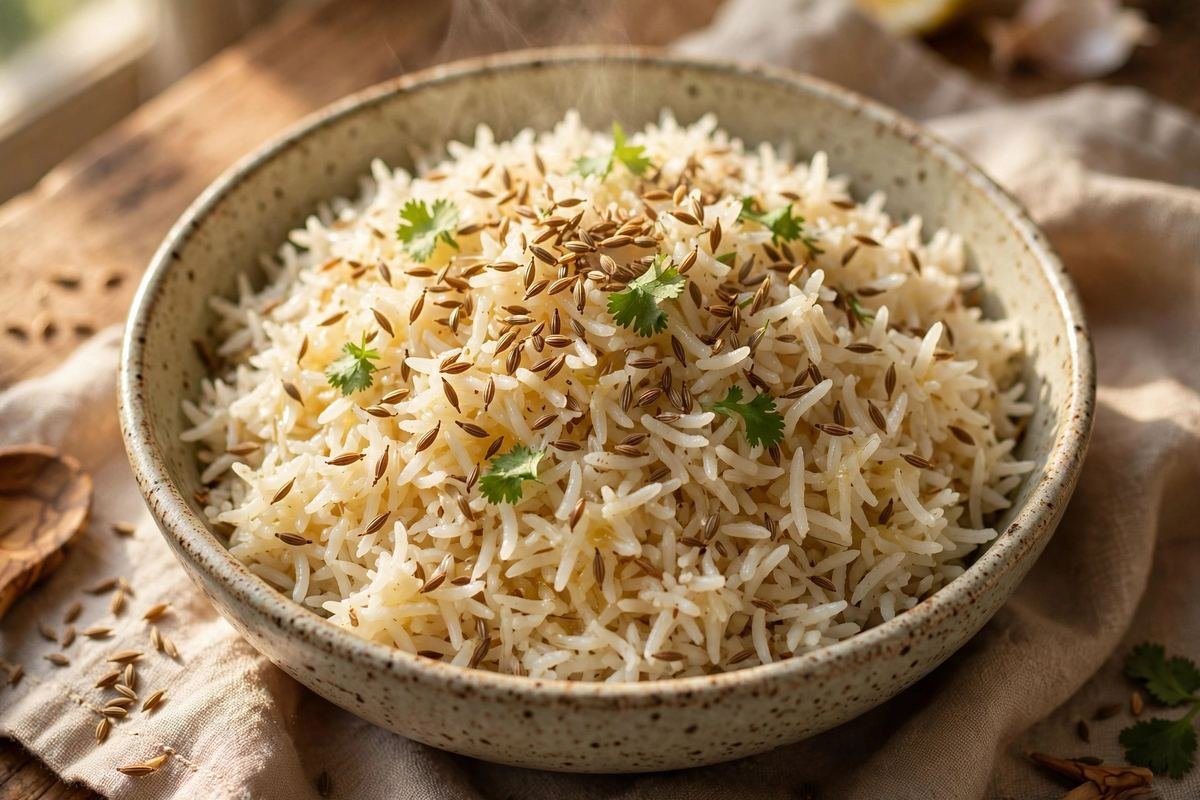
Fluffy basmati tossed with ghee-tempered cumin and whole spices. The simplest elegant rice side in Indian cooking, ready in 25 minutes.
Ingredients
- 1.5 cups (300g) basmati rice, rinsed until the water runs clear
- 3 cups (720ml) water, for cooking the rice
- 1 tsp salt, for the rice water, plus more to taste
- 2.5 tbsp ghee
- 2 tsp cumin seeds
- 1 bay leaf
- 3 green cardamom pods, lightly crushed
- 3 cloves
- 2 dried red chillies (optional, for warmth)
- 1/2 tsp turmeric powder (optional, for golden colour)
- 2 tbsp fresh coriander leaves, chopped
- 1 tsp lemon juice (optional)
Instructions
- Cook the rice: Bring 3 cups of water to a rolling boil in a medium pot with 1 teaspoon of salt. Add the rinsed rice, stir once, and reduce the heat to low. Cover with a tight lid and cook for 12 to 14 minutes until the water is absorbed and the grains are tender. Switch off the heat and rest, covered, for 10 minutes. Fluff gently with a fork and spread on a wide tray to cool slightly; the grains should be dry and separate.
- Heat the ghee: In a wide pan or kadhai, melt the ghee over medium heat until it shimmers and a tiny ripple moves across the surface. The ghee should be hot enough to sizzle spices on contact but not smoking; smoking ghee will scorch the cumin instantly.
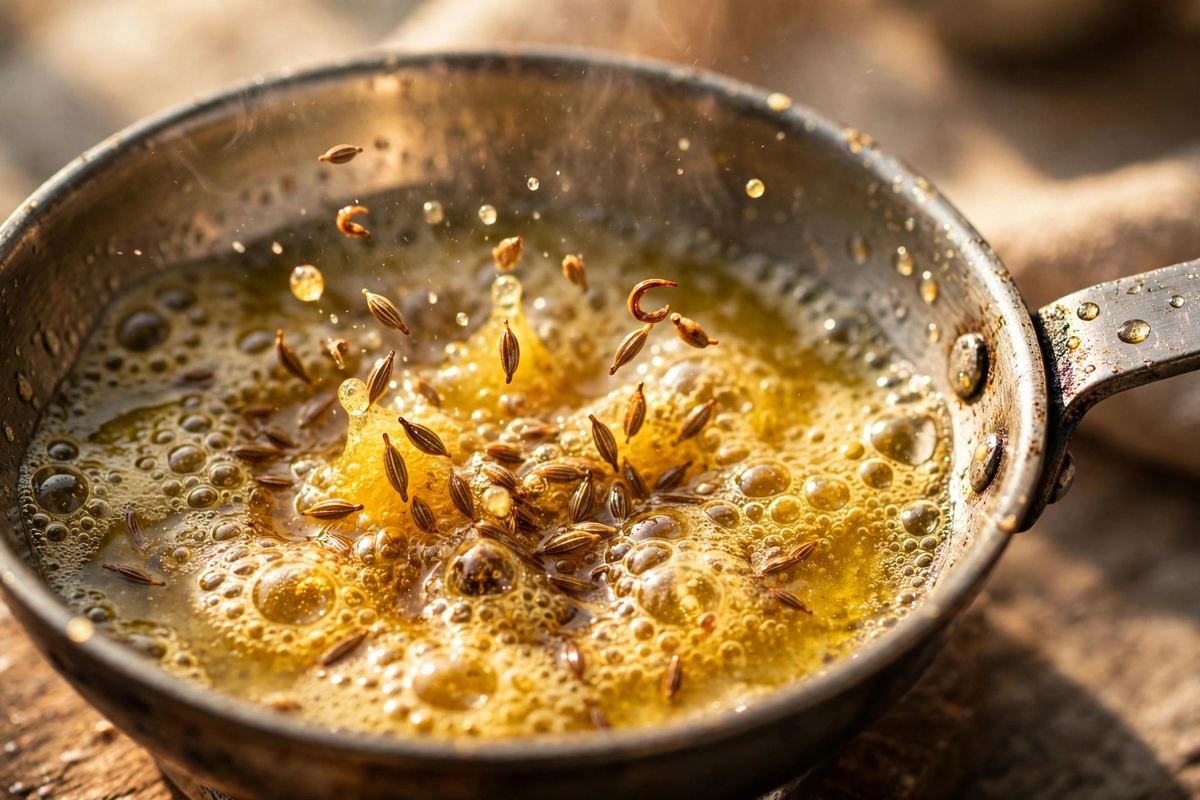
- Toast the cumin: Add the cumin seeds all at once. They should sizzle immediately and begin to crackle. Stir constantly for 30 to 45 seconds until the seeds darken one shade to a deep amber and release a strong nutty aroma. This is the critical moment: pull the pan off the heat the instant they smell fragrant, because they continue cooking in the residual heat.
- Add the supporting spices: Off the heat or on the lowest flame, add the bay leaf, cardamom, cloves and dried red chillies. Stir for 20 seconds until fragrant. If using turmeric, add it now and stir quickly; it colours the ghee a beautiful gold but burns in seconds, so keep the pan moving.
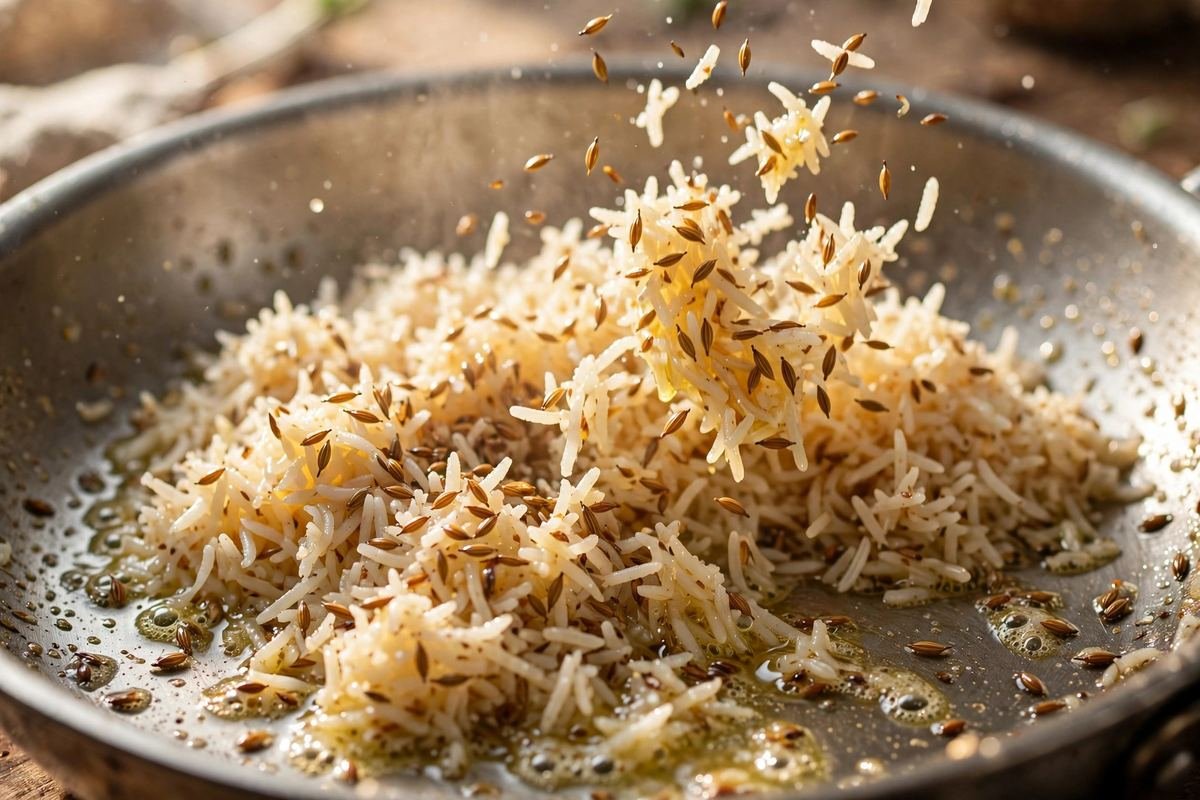
- Toss with the rice: Add the fluffed, slightly cooled rice to the pan. Using a gentle lifting motion with a spatula or two forks, toss the rice through the tempered ghee for 2 minutes over low heat until every grain glistens and is evenly coated. Do not stir vigorously or the grains will break.
- Finish and serve: Taste and adjust the salt. Sprinkle over the chopped coriander and lemon juice if using, toss once more, and serve immediately while the aroma is at its peak. Remove the bay leaf and whole spices as you serve, or warn your guests.
Tip: Read through the full post below for step-by-step photos, pro tips, variations and FAQs before you start cooking.
The Quiet Elegance of Jeera Rice
Some dishes shout; jeera rice whispers, and the whisper carries further. It is, on paper, almost absurdly simple: basmati rice tossed with cumin seeds bloomed in ghee. Yet ask any Indian home cook what belongs next to a bowl of dal tadka, and jeera rice will be the answer nine times out of ten. There is a reason restaurant menus list it as the default accompaniment to every curry. The nutty, earthy warmth of toasted cumin woven through fluffy, fragrant basmati does something magical: it makes the main dish taste better without ever competing for attention.
Cumin, or jeera, is one of the oldest spices in the Indian kitchen, used for thousands of years not just for flavour but in Ayurvedic tradition for digestion. That is no accident of pairing: the classic combination of jeera rice with rich dals and heavy curries is genuinely easier on the stomach, the cumin tempering cutting through richness the way a squeeze of lemon cuts through oil. The technique at the heart of this dish is tadka, the blooming of spices in hot fat, and jeera rice is perhaps the purest expression of it. When cumin seeds hit hot ghee, they crackle, darken, and release an aroma that is instantly, unmistakably home.
I learned to make jeera rice from watching my mother, who never measured anything and yet produced identical, perfect results every time. Her secret, which took me years to articulate, was twofold: the rice must be cooked separately until fluffy and cooled slightly, and the cumin must be toasted to the exact moment it turns fragrant but not a second longer. This recipe captures both of those lessons with precise timings, so your jeera rice comes out with distinct, glossy grains and cumin that tastes nutty and warm, never bitter. It takes twenty-five minutes, uses a handful of ingredients, and it will quietly become the most-requested side dish in your house.
Why You’ll Love This Recipe
- Ready in 25 minutes: Faster than ordering takeout, and infinitely better alongside your curry.
- Only a handful of ingredients: Rice, cumin, ghee and a few whole spices, nothing exotic required.
- The perfect curry companion: Designed to sit alongside dal, rajma, chole and every gravy you love.
- Foolproof technique: Cooking the rice separately guarantees fluffy, separate grains every time.
- Digestive and light: Cumin’s traditional digestive properties make rich meals feel balanced.
- Endlessly riffable: Add peas, fried onions or coriander to dress it up for guests.
Key Ingredients Explained
Basmati rice is the only real choice here. Its long, aromatic grains are the entire point of the dish; shorter rices turn the delicate tempering into a stodgy affair. Use aged basmati if you can find it, and cook it until just tender with distinct grains. The rice should be cooked separately and rested before the tempering, because tossing hot, wet rice with spices mashes the grains. Slightly cooled, drier rice absorbs the ghee beautifully and stays fluffy.
Cumin seeds are the star, so their quality matters enormously. Buy whole seeds, not ground, and check that they smell strongly earthy and warm when you open the jar; stale cumin is the number one reason homemade jeera rice tastes flat. The seeds need to be toasted in ghee until they darken one shade and release their aroma, about 30 to 45 seconds. Under-toasted cumin tastes raw and grassy; over-toasted cumin tastes bitter and acrid. That narrow window is the whole skill of this dish, and I will give you the visual cues to hit it.
Ghee is the traditional fat and it matters. Its nutty, caramel notes amplify the toasted cumin in a way neutral oil cannot. If you need a vegan version, use a good cold-pressed coconut oil or any neutral oil, but know that ghee is the authentic flavour. A few supporting whole spices, bay leaf, green cardamom and cloves, add background fragrance without stealing focus. Salt seasons the rice, fresh coriander adds colour and freshness at the end, and a squeeze of lemon is optional but lovely. That is the entire cast: simple, but each member earns its place.
Equipment You’ll Need
- Medium pot with lid: For cooking the basmati rice until fluffy.
- Wide pan or kadhai: For the tempering and tossing, wide enough that the rice spreads in a thin layer.
- Fine-mesh strainer: For rinsing the rice before cooking.
- Fork: For fluffing the rice without breaking grains.
Ingredients
- 1.5 cups (300g) basmati rice, rinsed until the water runs clear
- 3 cups (720ml) water, for cooking the rice
- 1 tsp salt, for the rice water, plus more to taste
- 2.5 tbsp ghee
- 2 tsp cumin seeds
- 1 bay leaf
- 3 green cardamom pods, lightly crushed
- 3 cloves
- 2 dried red chillies (optional, for warmth)
- 1/2 tsp turmeric powder (optional, for golden colour)
- 2 tbsp fresh coriander leaves, chopped
- 1 tsp lemon juice (optional)
Instructions
- Cook the rice: Bring 3 cups of water to a rolling boil in a medium pot with 1 teaspoon of salt. Add the rinsed rice, stir once, and reduce the heat to low. Cover with a tight lid and cook for 12 to 14 minutes until the water is absorbed and the grains are tender. Switch off the heat and rest, covered, for 10 minutes. Fluff gently with a fork and spread on a wide tray to cool slightly; the grains should be dry and separate.
- Heat the ghee: In a wide pan or kadhai, melt the ghee over medium heat until it shimmers and a tiny ripple moves across the surface. The ghee should be hot enough to sizzle spices on contact but not smoking; smoking ghee will scorch the cumin instantly.
- Toast the cumin: Add the cumin seeds all at once. They should sizzle immediately and begin to crackle. Stir constantly for 30 to 45 seconds until the seeds darken one shade to a deep amber and release a strong nutty aroma. This is the critical moment: pull the pan off the heat the instant they smell fragrant, because they continue cooking in the residual heat.
- Add the supporting spices: Off the heat or on the lowest flame, add the bay leaf, cardamom, cloves and dried red chillies. Stir for 20 seconds until fragrant. If using turmeric, add it now and stir quickly; it colours the ghee a beautiful gold but burns in seconds, so keep the pan moving.
- Toss with the rice: Add the fluffed, slightly cooled rice to the pan. Using a gentle lifting motion with a spatula or two forks, toss the rice through the tempered ghee for 2 minutes over low heat until every grain glistens and is evenly coated. Do not stir vigorously or the grains will break.
- Finish and serve: Taste and adjust the salt. Sprinkle over the chopped coriander and lemon juice if using, toss once more, and serve immediately while the aroma is at its peak. Remove the bay leaf and whole spices as you serve, or warn your guests.
Pro Tips for Perfect Results
- Cook the rice separately, always: Cooking rice directly in the tempering is tempting but it never gives the same fluffy result. Separately cooked, rested rice is the foundation of great jeera rice.
- Let the rice cool slightly: Rice that has rested 10 to 15 minutes after cooking is drier and firmer, so it tosses without breaking. Piping-hot, steamy rice turns gummy in the pan.
- Watch the cumin like a hawk: The window between fragrant and burnt is about 15 seconds. Keep your nose over the pan; the moment the aroma blooms strongly, move on. When in doubt, pull it early.
- Use enough ghee: Two and a half tablespoons may sound generous, but the ghee is the delivery vehicle for all the flavour. Skimpy fat means patchy, bland rice.
- Toss, do not stir: Use a lifting, folding motion with forks or a wide spatula. Stirring in circles snaps the long basmati grains and releases starch.
- Serve immediately: Jeera rice is at its aromatic peak in the first 20 minutes. The toasted cumin perfume fades as it sits, so time it to hit the table with the curry.
- Salt in two stages: Salt the rice cooking water, then taste and adjust after tossing. Rice needs more salt than you expect, and under-salted jeera rice tastes flat no matter how good the tempering is.
Variations to Try
For a restaurant-style upgrade, add half a cup of green peas: blanch them for 2 minutes and toss them in with the rice. Fried onions scattered on top add sweetness and crunch, turning simple jeera rice into something celebration-worthy. A South Indian-inspired version tempers with mustard seeds, curry leaves and a pinch of asafoetida alongside the cumin. For a festive golden rice, bloom a pinch of saffron in a tablespoon of warm milk and drizzle it over the finished rice. You can also make a garlic jeera rice by adding 6 thinly sliced garlic cloves to the ghee just before the cumin and frying until golden; it is intensely savoury and wonderful with dal makhani. And for a one-pot shortcut on busy nights, cook the rice with the tempering spices in the pot from the start, though the texture will be slightly less fluffy than the two-step method.
Serving Suggestions
Jeera rice exists to make other dishes shine. Its classic partners are dal tadka, dal makhani, rajma, chole and any paneer curry; the cumin echo in both rice and dal creates a harmony that plain rice cannot match. Serve it alongside kebabs or tandoori dishes as a fragrant base, or with a simple mixed vegetable curry for a light weeknight dinner. A small bowl of raita and some onion-laccha salad on the side complete the plate. For a thali-style spread, pair jeera rice with dal, a dry sabzi, papad, pickle and chaas. It also works beautifully as a bed for curry in a bowl-style meal, soaking up gravy in every bite.
Storage and Reheating
Jeera rice keeps well in the fridge for up to 4 days in an airtight container. Reheat in the microwave with a sprinkle of water, covered, for 2 minutes, fluffing halfway. On the stovetop, warm it in a covered pan over low heat with a teaspoon of water for 5 to 6 minutes. To revive the aroma, temper half a teaspoon of fresh cumin seeds in a teaspoon of ghee and toss through the reheated rice; it tastes freshly made. Jeera rice freezes well for up to 2 months; thaw overnight in the fridge before reheating. Avoid reheating more than once, as the grains dry out and harden with repeated warming.
Frequently Asked Questions
Why does my jeera rice taste bitter?
Bitterness almost always means burnt cumin. Cumin goes from perfectly toasted to bitter in seconds, especially in smoking-hot ghee. Keep the heat at medium, stir constantly, and pull the pan off the heat the moment the seeds smell nutty and darken one shade. If they turn dark brown or black, start over; there is no rescuing burnt cumin.
Can I make jeera rice with leftover rice?
Yes, and it is one of the best uses for day-old rice. Cold, refrigerated rice is actually ideal because the grains are firm and dry. Break up any clumps with your fingers before tossing, and warm it through in the tempered ghee for 2 to 3 minutes. Just make sure the leftover rice was refrigerated promptly and is no more than 2 days old.
Can I make it in a rice cooker?
You can cook the rice in the cooker, but do the tempering separately in a pan and toss it through afterwards. The tadka needs the direct, controllable heat of a pan to bloom the cumin properly. Combine the two and you get the best of both worlds with minimal effort.
Is jeera rice gluten-free and vegan?
Rice, cumin and whole spices are naturally gluten-free, so the dish is safe as long as your asafoetida, if used, is certified gluten-free. For a vegan version, replace ghee with coconut oil or any neutral oil; the flavour will be slightly different but still delicious.
How is jeera rice different from plain steamed rice?
Plain rice is a neutral canvas; jeera rice is a seasoned side dish in its own right. The ghee-toasted cumin and whole spices give it a nutty, aromatic character that complements curries, and the light coating of fat helps it pair with gravies without turning soggy.
Can I use brown rice or other grains?
You can, with adjusted cooking. Brown basmati needs about 35 minutes of simmering and a 1:2 rice-to-water ratio. The tempering method stays exactly the same. Quinoa and millets also take well to the cumin tadka; just cook them according to their own timings and toss through the tempering while warm.
Master this one small dish and you will understand the soul of Indian tempering: a handful of seeds, hot fat, perfect timing. Jeera rice asks for so little and gives so much, the kind of recipe that quietly holds a whole meal together. Make it often, serve it hot, and watch it disappear first.