
Recipe Card
Flat, shattering puris topped with potato, onion, tomato and both chutneys under a mountain of crunchy sev. Sev puri is Mumbai’s original chaat — simple, crisp, and impossible to eat just one plate of.
Ingredients
- 24 flat papdi puris
- 2 medium (300g) potatoes, boiled, peeled and mashed
- 1/2 tsp salt, plus more to taste
- 1/2 tsp roasted cumin powder
- 1 tsp chaat masala, plus extra for dusting
- 1 tbsp lemon juice
- 1 medium onion, sliced into paper-thin half-moons
- 1 medium tomato, deseeded and finely diced
- 1/4 cup raw mango, finely diced (optional, in season)
- 1/2 cup green mint-coriander chutney
- 1/2 cup tamarind-date chutney
- 1 1/2 cups fine nylon sev
- 2 tbsp fresh coriander leaves, finely chopped
- 1/2 tsp red chilli powder (optional)
- 1/4 cup pomegranate seeds (optional)
Instructions
- Make the potato base. Mash the boiled potatoes in a bowl with the salt, roasted cumin powder, chaat masala and lemon juice. Work them with a fork until spreadable with a rustic texture — not pureed, not chunky. Taste it: it should be bright, salty and lemony, because it has to flavor everything above it too. Keep covered at room temperature if serving within the hour.
- Prep the fresh toppings. Slice the onion into the thinnest half-moons you can manage — they should be almost translucent. Dice the tomato small, removing the watery seeds first so they don’t flood the papdi. If using raw mango, dice it fine. Chop the coriander. Put each in its own small bowl so assembly is a smooth production line.
- Arrange the papdis. Lay the papdis in a single layer on your serving trays, close together in neat rows or a spiral — six to seven per plate is the traditional serving. Check each papdi and discard any broken ones; a cracked papdi can’t hold toppings. This is your canvas, so take a moment to make it look good.
- Spread the potato layer. Using the back of a spoon, spread about a tablespoon of spiced potato mash onto each papdi in a thin, even layer, leaving a small clean border around the edge. This border is traditional and practical — it gives fingers something clean to hold. Work quickly and evenly; uniformity is what makes the platter look professional.
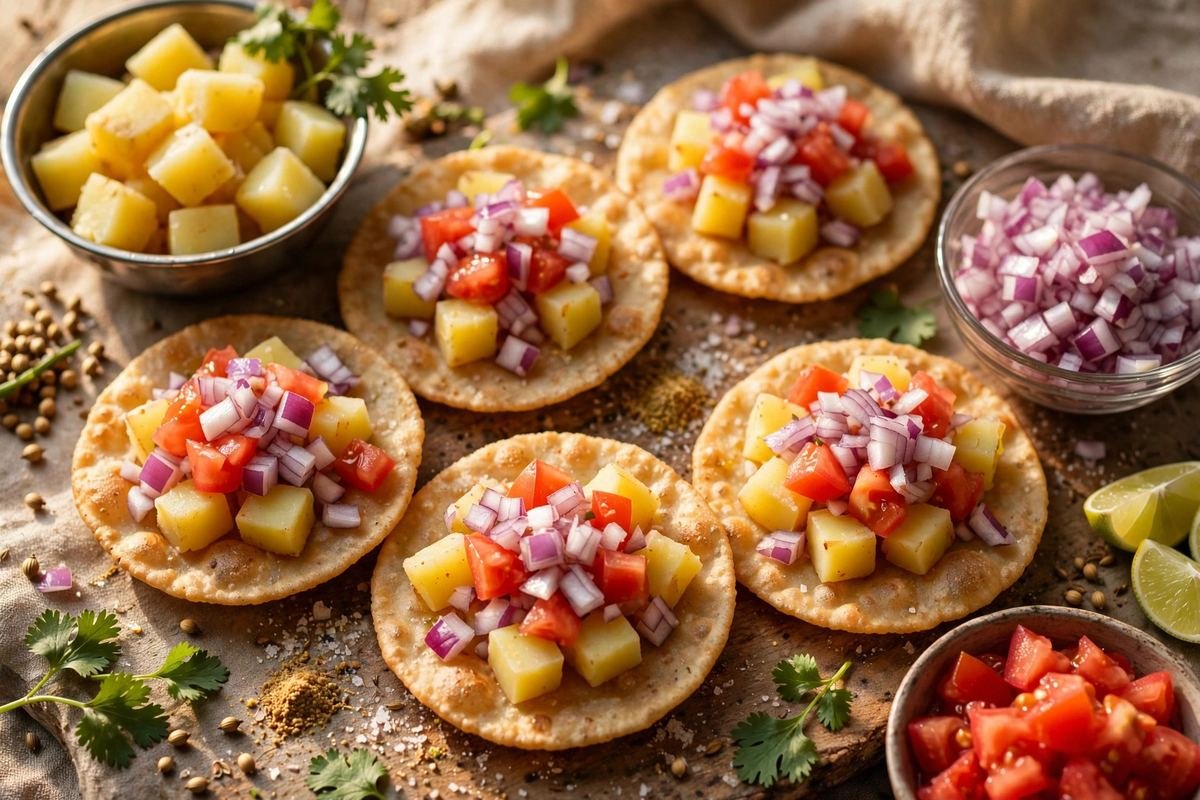
- Add onion and tomato. Scatter a pinch of thin onion slices and a few cubes of tomato over each papdi. Add the raw mango now if using. Keep the layer light — the papdi should still be visible between the pieces. These raw vegetables bring crunch, pungency and freshness that cut through the starch of the potato.
- Stripe the chutneys. Drizzle the green chutney in thin zigzags over each papdi, then the tamarind chutney. Use less green than tamarind — the green is hot and concentrated. Each papdi should show both colors. If using squeeze bottles, this step takes seconds and looks beautifully precise.
- Bury under sev. Now the signature move: grab handfuls of fine nylon sev and pile it generously over every papdi until the toppings are barely visible beneath a golden tangle. Do not be shy — a timid hand with the sev is the most common home mistake. The sev should form a crunchy roof that crackles when bitten.
- Garnish and serve immediately. Dust lightly with chaat masala and a whisper of red chilli powder if you like heat. Scatter chopped coriander and pomegranate seeds over the top. Serve within five minutes — sev puri waits for no one, and the papdis begin softening the moment the wet toppings land.
Tip: Read through the full post below for step-by-step photos, pro tips, variations and FAQs before you start cooking.
What Is Sev Puri?
If chaat has a firstborn, it is sev puri. Before the theatrics of pani puri and the creamy excess of dahi puri, there was this: a flat, crisp disc of puri — the papdi — spread with spiced potato, showered with onion and tomato, striped with green and tamarind chutneys, and buried under a tangled nest of golden sev. It is the chaat in its purest form, and in Mumbai it is practically a religion, eaten on beaches at Chowpatty, at corner carts in Dadar, and at home when the evening calls for something crunchy and alive.
What makes sev puri special is restraint. Each papdi is a single perfect bite — or two small ones — and the balance has to be right on every single disc. The potato layer is thin, just a smear of spiced mash. The onion must be sliced paper-thin, the tomato diced small, so no single element overwhelms the crisp base. The chutneys go on in fine ribbons, not floods. And the sev — fine, salty, shattering sev — forms a crunchy blanket over everything, the ingredient that gives the dish its name and its signature texture.
Sev puri is also the most forgiving chaat to make at home. There are no hollow shells to crack, no yogurt to hang, no water to season. Everything sits on top of the papdi in plain view, so assembly is intuitive and the results look impressive with almost no practice. It is the chaat I recommend to anyone making street food at home for the first time — thirty minutes from craving to plate, and the plate looks like you know secrets.
Why You’ll Love This Recipe
- The easiest chaat to master: No cracking shells, no balancing yogurt — just layer, drizzle and serve.
- Maximum crunch: Crisp papdi, raw onion, crunchy sev — this is the crunchiest chaat in the Mumbai canon.
- Fastest path to a party platter: Arrange forty papdis on a tray and assembly-line the toppings in minutes.
- Customizable per bite: Make some spicy, some mild, some extra-tangy — every papdi is its own little canvas.
- Kid-friendly and picnic-ready: No dripping yogurt, no spiced water — easy to eat outdoors and transport.
Key Ingredients Explained
The papdi — the flat puri — is everything here. It must be thin, completely crisp and sturdy enough to carry wet toppings for the few minutes between assembly and eating. Homemade papdis, rolled thin and fried to a deep golden, have an unbeatable flavor, but good store-bought papdis work wonderfully; just make sure they taste fresh and snappy, not stale or oily. Slightly thicker is better than paper-thin here, because thin ones collapse under the toppings.
The potato layer is a simple spiced mash: boiled potatoes, salt, cumin, chaat masala and lemon, mashed until spreadable but not gummy. It acts as the glue that holds the other toppings to the papdi, so its texture matters — too chunky and things slide off, too smooth and it feels like baby food. Aim for a rustic mash with some texture. The onion and tomato must be cut small and fine: thin half-moons of onion, tiny dice of tomato. Big chunks roll off the papdi and make eating awkward.
Then the two chutneys, the twin engines of all chaat. Green mint-coriander chutney for heat and freshness, tamarind-date chutney for sweet tang — neither can be skipped, and both should be vivid. Finally the sev: use fine nylon sev, the hair-thin variety, applied with an absolutely lavish hand. The sev is not a garnish here, it is a structural ingredient, the crunchy roof of the dish. Raw mango, when in season, adds a thrilling sour crunch — Mumbai vendors always ask “kacchi kairi?” in summer, and the answer should always be yes.
Equipment You’ll Need
- Deep kadhai or heavy pan for frying (if making papdis at home)
- Slotted spoon
- Mixing bowl for the potato mash
- Sharp knife and cutting board for fine chopping
- Small bowls or squeeze bottles for chutneys
- Large flat serving trays or thalis
- 24 flat papdi puris
- 2 medium (300g) potatoes, boiled, peeled and mashed
- 1/2 tsp salt, plus more to taste
- 1/2 tsp roasted cumin powder
- 1 tsp chaat masala, plus extra for dusting
- 1 tbsp lemon juice
- 1 medium onion, sliced into paper-thin half-moons
- 1 medium tomato, deseeded and finely diced
- 1/4 cup raw mango, finely diced (optional, in season)
- 1/2 cup green mint-coriander chutney
- 1/2 cup tamarind-date chutney
- 1 1/2 cups fine nylon sev
- 2 tbsp fresh coriander leaves, finely chopped
- 1/2 tsp red chilli powder (optional)
- 1/4 cup pomegranate seeds (optional)
How to Make Sev Puri
- Make the potato base. Mash the boiled potatoes in a bowl with the salt, roasted cumin powder, chaat masala and lemon juice. Work them with a fork until spreadable with a rustic texture — not pureed, not chunky. Taste it: it should be bright, salty and lemony, because it has to flavor everything above it too. Keep covered at room temperature if serving within the hour.
- Prep the fresh toppings. Slice the onion into the thinnest half-moons you can manage — they should be almost translucent. Dice the tomato small, removing the watery seeds first so they don’t flood the papdi. If using raw mango, dice it fine. Chop the coriander. Put each in its own small bowl so assembly is a smooth production line.
- Arrange the papdis. Lay the papdis in a single layer on your serving trays, close together in neat rows or a spiral — six to seven per plate is the traditional serving. Check each papdi and discard any broken ones; a cracked papdi can’t hold toppings. This is your canvas, so take a moment to make it look good.
- Spread the potato layer. Using the back of a spoon, spread about a tablespoon of spiced potato mash onto each papdi in a thin, even layer, leaving a small clean border around the edge. This border is traditional and practical — it gives fingers something clean to hold. Work quickly and evenly; uniformity is what makes the platter look professional.
- Add onion and tomato. Scatter a pinch of thin onion slices and a few cubes of tomato over each papdi. Add the raw mango now if using. Keep the layer light — the papdi should still be visible between the pieces. These raw vegetables bring crunch, pungency and freshness that cut through the starch of the potato.
- Stripe the chutneys. Drizzle the green chutney in thin zigzags over each papdi, then the tamarind chutney. Use less green than tamarind — the green is hot and concentrated. Each papdi should show both colors. If using squeeze bottles, this step takes seconds and looks beautifully precise.
- Bury under sev. Now the signature move: grab handfuls of fine nylon sev and pile it generously over every papdi until the toppings are barely visible beneath a golden tangle. Do not be shy — a timid hand with the sev is the most common home mistake. The sev should form a crunchy roof that crackles when bitten.
- Garnish and serve immediately. Dust lightly with chaat masala and a whisper of red chilli powder if you like heat. Scatter chopped coriander and pomegranate seeds over the top. Serve within five minutes — sev puri waits for no one, and the papdis begin softening the moment the wet toppings land.
Pro Tips for Perfect Results
- Deseed your tomatoes: Tomato seeds are little water bombs. Scoop them out and your papdis stay crisp twice as long.
- Slice onions thin or soak them: Paper-thin slices are mild and crisp; if your onions are pungent, soak the slices in cold water for ten minutes, then drain well.
- Warm the papdis: Five minutes in a 150°C oven refreshes store-bought papdis to shattering crispness. Let them cool before topping.
- The clean border matters: Leaving a rim of bare papdi isn’t just pretty — it’s how people pick them up without getting chutney on their fingers.
- Sev goes on last, always: Sev absorbs moisture from the chutneys below, so it must be the final layer, applied seconds before serving.
- Batch for a crowd: For twenty guests, assemble on big trays in waves of twelve plates — never more than you can serve in five minutes.
- Salt the potato, not the plate: Season the mash assertively; the onion, tomato and sev are essentially unsalted, so the potato carries the seasoning for everything.
- Keep a tasting papdi: Make one extra, taste it, and adjust chutney ratios before committing to the whole tray. Carts do this instinctively — so should you.

Variations to Try
For a protein boost, add a spoonful of boiled moong or kala chana under the potato layer — it turns sev puri into a genuinely filling snack. A “dahi sev puri” hybrid adds a spoonful of whisked yogurt between the potato and the onion, borrowing the cooling richness of dahi puri while keeping the papdi format. In mango season, replace the raw mango with tiny cubes of ripe mango and an extra drizzle of tamarind chutney for a sweet-savory version that children adore. For a Jain version, skip the onion and potato and use boiled raw banana mash with the same spices. And for a party showstopper, make mini sev puris on tiny papdis and serve them as passed canapés — they disappear in seconds.
Serving Suggestions
Sev puri is the ideal opening chaat for an evening of heavier street food — serve it first, followed by something creamy like dahi puri or hearty like ragda pattice. It pairs beautifully with cutting chai or a tall glass of masala soda. For a chaat party, set up a sev puri assembly line and let guests build their own papdis; provide the chutneys in squeeze bottles for precision. Garnish the tray with lemon wedges and extra coriander. Because it travels better than most chaats, sev puri is also excellent picnic food — pack components separately and assemble on site in under ten minutes.
Storage and Reheating
Assembled sev puri cannot be stored — the papdis soften within fifteen minutes. Store everything separately: papdis in an airtight container at room temperature for up to two weeks; potato mash in the fridge for two days; chutneys for a week; sev in a sealed bag at room temperature for a month. To re-crisp papdis, warm them in a 150°C oven for five to eight minutes. Leftover potato mash makes an excellent filling for sandwiches or aloo parathas the next day, so nothing goes to waste.
Frequently Asked Questions
What’s the difference between sev puri and papdi chaat?
They’re close cousins. Papdi chaat (the Delhi style) adds yogurt and is often heavier on potato and chickpeas. Sev puri (the Mumbai style) skips the yogurt, uses a thinner potato layer, and goes much heavier on the sev. Both are delicious; sev puri is crunchier and lighter.
Can I make the papdis at home?
Yes — knead a stiff dough of whole wheat flour, semolina, salt, ajwain and a little oil, rest it, roll thin discs, prick with a fork and deep-fry at 170°C until golden. They keep two weeks in an airtight container and taste noticeably better than store-bought.
My sev gets soggy fast. Why?
You’re likely adding it too early or your chutneys are too watery. Sev must be the last thing on the plate, applied right before serving. Also check your sev is fresh — stale sev goes soft even without moisture.
Is there a gluten-free option?
Use rice-flour or millet papdis, available at specialty grocers, or bake thin discs of gluten-free flour. The toppings are naturally gluten-free, and nylon sev is made from chickpea flour, so it’s already safe.
How spicy should sev puri be?
Medium-mild is traditional — the green chutney provides gentle heat, not a burn. It should make your lips tingle pleasantly. Always err on the milder side for guests and put extra green chutney on the side.
Can I prepare everything in the morning for an evening party?
Yes for components: mash the potato, chop vegetables (keep onion in water), make chutneys. Assemble no more than five minutes before serving. Enlist a helper for big batches — one person spreads potato, another does chutneys, a third does sev.
A Final Note
Sev puri is humble food that asks for nothing fancy — just crisp papdis, fresh chutneys and a generous hand with the sev. Master this one plate and you hold the key to the entire chaat universe, because every other chaat is just this same beautiful logic in a different costume.