Recipe Card
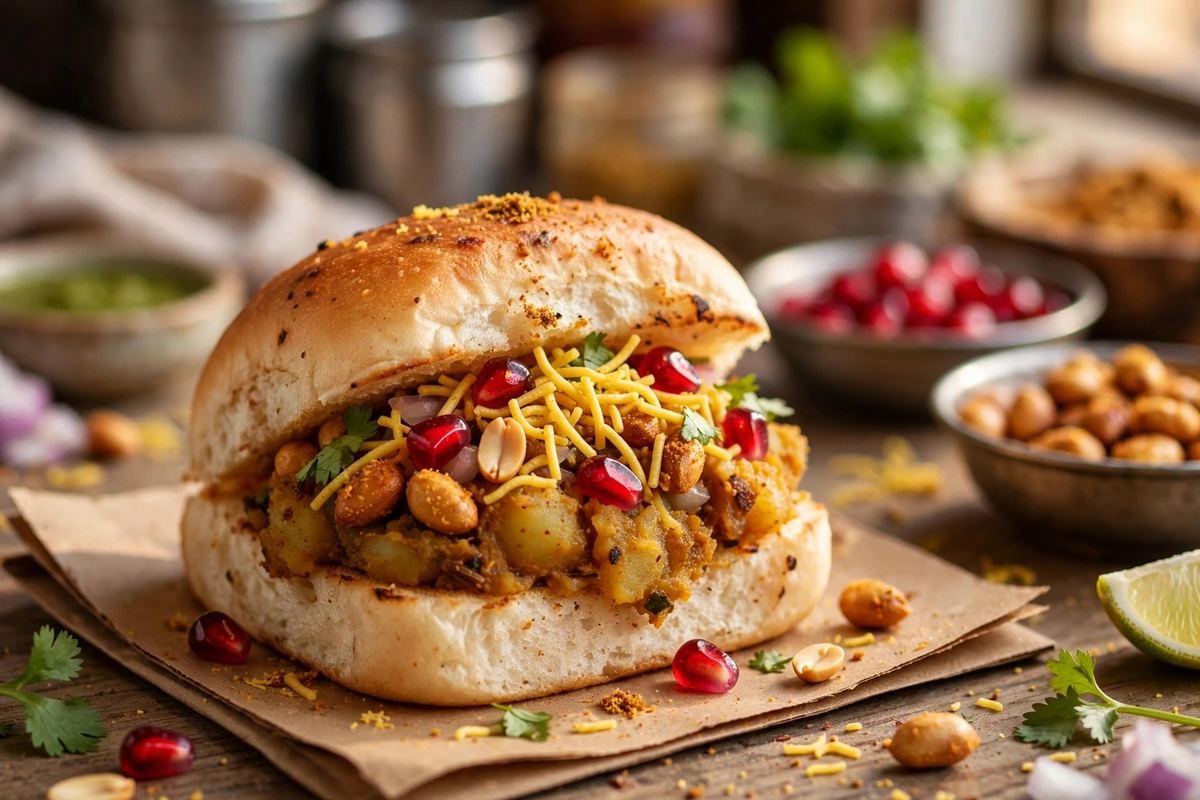
Buttery toasted pav stuffed with sweet-spicy potato masala, pomegranate, sev and chutneys. Born in Kutch and raised in Mumbai, dabeli is India’s answer to the burger — and it wins on flavor.
Ingredients
- 2 tbsp coriander seeds
- 1 tbsp cumin seeds
- 4 dried red chillies (adjust to heat preference)
- 4 cloves
- 1 inch cinnamon stick
- 1/2 tsp black peppercorns
- 2 tbsp dried coconut (kopra), grated
- 1 tsp sugar
- 1/2 tsp salt
- 4 medium (600g) potatoes, boiled, peeled and mashed smooth
- 2 tbsp oil
- 2 tbsp dabeli masala (from above)
- 3 tbsp tamarind-date chutney
- 1 tbsp jaggery or sugar
- 1 tsp salt, plus more to taste
- 1/2 cup roasted peanuts, roughly crushed
- 2 tbsp fresh coriander, chopped
- 6 ladi pav
- 4 tbsp butter, plus more as needed
- 1/2 cup green mint-coriander chutney
- 1/2 cup tamarind-date chutney
- 1 medium onion, thinly sliced
- 1/2 cup pomegranate seeds
- 1 cup fine nylon sev
- 2 tbsp roasted peanuts, whole
Instructions
- Grind the dabeli masala. Dry-roast the coriander seeds, cumin seeds, dried red chillies, cloves, cinnamon and peppercorns in a small pan over medium heat for two to three minutes, until deeply fragrant and a shade darker — the coriander should smell nutty, not raw. Let cool completely, then grind with the dried coconut, sugar and salt to a fine powder. Sieve out any coarse bits and re-grind them. Your kitchen should smell like a spice market; that’s how you know it’s right.
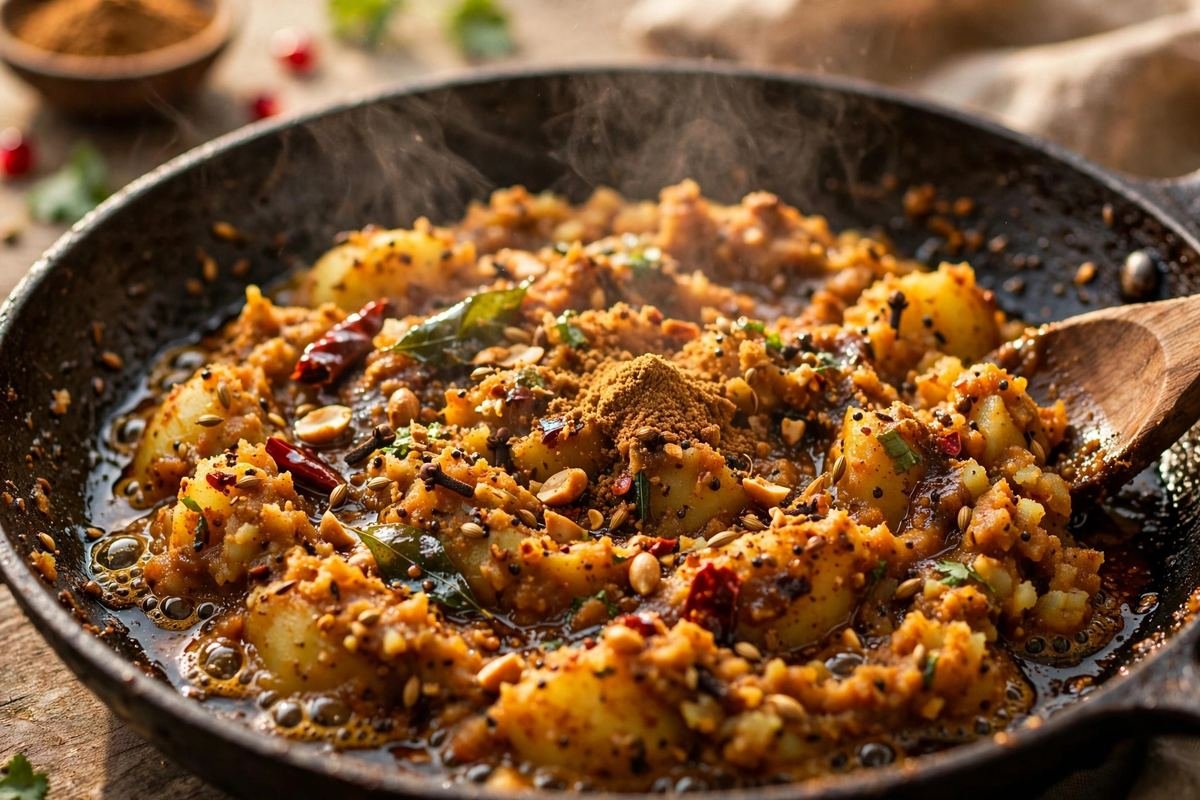
- Cook the potato masala. Heat the oil in a heavy kadhai over medium heat. Add two tablespoons of dabeli masala and stir for thirty seconds until it blooms and darkens slightly. Add the mashed potatoes, tamarind-date chutney, jaggery and salt. Mix thoroughly and cook for eight to ten minutes, stirring and mashing, until the mixture turns a deep reddish-brown, looks glossy, and pulls away from the sides of the pan. Taste: it should be sweet first, then tangy, then warmly spicy. Fold in the crushed roasted peanuts and coriander, then set aside. This filling keeps beautifully — in fact, it’s better the next day.
- Prep the assembly station. Slice each pav horizontally, keeping one edge hinged like a book — never cut all the way through. Lay out the chutneys, sliced onion, pomegranate, sev and whole peanuts in small bowls. Keep the potato masala warm in its pan, covered, so it spreads easily.
- Butter and toast the pav. Melt a generous knob of butter on a hot tawa. Place the slit pav cut-side down and press gently with a spatula for one to two minutes until the insides are golden and crisp. Flip and toast the outer crusts briefly — about thirty seconds. The pav should be crisp outside, soft inside, and smell unmistakably of butter. Toast all six before assembling so you can work fast.
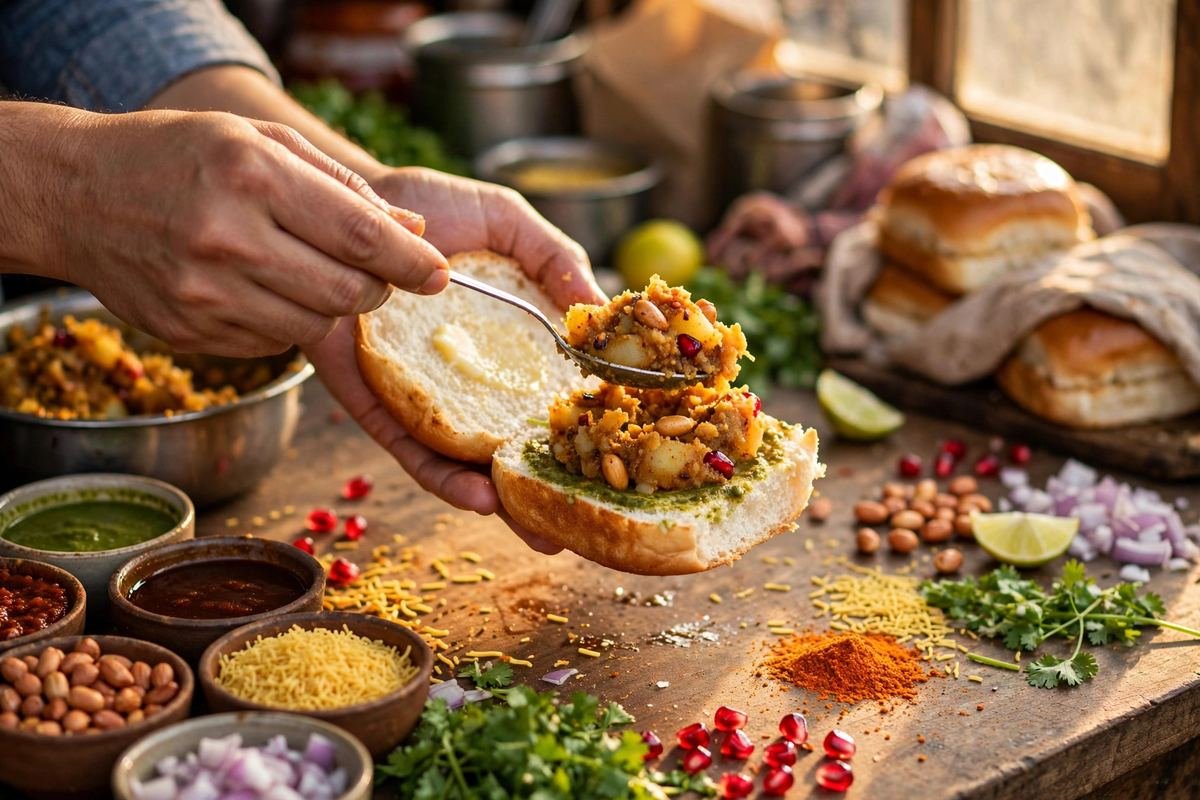
- Spread the chutneys. Open each toasted pav and spread green chutney on one cut side and tamarind chutney on the other — a thin but complete layer on each. This double-chutney lining is the flavor foundation; every bite should carry both. Be generous but not dripping.
- Stuff the masala. Pack a heaped two to three tablespoons of the warm potato masala into each pav, pressing it in firmly so the pav is plump and full. The filling should mound slightly above the rim — a skinny dabeli is a sad dabeli. Press the pav gently closed around it.
- Add the crunch layers. Tuck a pinch of sliced onion, a spoonful of pomegranate seeds and a few whole roasted peanuts into each pav, then roll the open edges in a plate of sev so the sticky masala picks up a crunchy coating — this sev-crusted rim is the authentic Kutch finishing touch. Drizzle a little extra tamarind chutney over the top.
- Press and toast again. Return the stuffed pavs to the buttered tawa, press down firmly with the spatula, and toast one to two minutes per side until the outside is deeply golden and crisp and the filling is heated through. This final pressing melds everything together. Serve immediately, with extra chutneys on the side.
Tip: Read through the full post below for step-by-step photos, pro tips, variations and FAQs before you start cooking.
What Is Dabeli?
Somewhere in the 1960s, in the town of Mandvi in Gujarat’s Kutch region, a vendor named Keshavji Gabha Chudasama did something small and revolutionary: he took the vada pav idea, swapped the fried vada for a sweet-spicy mashed potato masala, and stuffed it into a butter-toasted ladi pav with chutneys, sev and pomegranate. He called it dabeli — from the Gujarati word dababi, meaning “pressed” — because the filled pav is pressed shut and toasted. The snack traveled from Kutch to Mumbai, where the city’s chaat vendors adopted it, amplified it, and turned it into one of the great handheld foods of India.
A proper dabeli is a study in contrast. The pav is toasted in butter until the outside is golden and crisp while the inside stays soft and pillowy. The filling is a deep red-brown potato masala, sweet from dates and tamarind, warm from a special dabeli masala, and studded with roasted peanuts. Inside the pav it meets cool mint chutney, sweet tamarind chutney, crunchy raw onion, jewel-like pomegranate seeds and a tangle of sev — then the whole thing is pressed and toasted again so the flavors meld into one warm, buttery, sweet-spicy-crunchy bite.
What makes dabeli extraordinary is that it eats like a burger but tastes like nothing else on earth. The sweetness surprises first-timers — this is not shy food — but one bite converts skeptics. It is also deeply practical: cheap, filling, vegetarian, and endlessly customizable. Make it at home and you get to control the two things carts sometimes skimp on: the quality of the butter and the freshness of the dabeli masala, which loses its magic within months of grinding.
Why You’ll Love This Recipe
- The real dabeli masala: A from-scratch spice blend with the authentic sweet-warm profile — no bland shortcuts.
- Burger-format chaat: All the excitement of chaat in a neat, handheld package — perfect for lunchboxes and parties.
- Sweet-spicy balance: This recipe nails the signature Kutch sweetness without tipping into dessert territory.
- Make-ahead masala: The potato filling actually improves overnight as the spices bloom — ideal for entertaining.
- Crowd-pleaser: Vegetarian, affordable, and universally loved; the assembly is fun for kids too.
Key Ingredients Explained
Dabeli masala is the soul of the dish and worth making fresh. The authentic blend centers on coriander seeds, cumin, dried red chillies, cloves, cinnamon and black pepper, with the distinctive addition of dried coconut and a touch of sugar ground right in. Some versions include star anise or stone flower (dagad phool) for a mysterious depth. Grind it fresh and the aroma alone will tell you why pre-made packets taste flat — volatile oils fade fast. Make a double batch and store it airtight; it keeps its punch for about three months.
The potato filling needs to be smooth, deeply colored and distinctly sweet-tangy. Boiled potatoes are mashed fine and cooked with the masala, tamarind-date chutney and a little jaggery or sugar until the mixture turns a rich reddish-brown and pulls away from the pan. Roasted peanuts folded through at the end add crucial crunch — dabeli without peanuts tastes oddly soft and one-dimensional. The pav should be soft ladi pav, the pull-apart Mumbai rolls; they toast better and hold the filling more neatly than burger buns. Day-old pav actually toasts more crisply, so don’t worry about absolute freshness.
Butter is not optional garnish here — it is a cooking medium. The pav is slit and toasted in a generous slick of butter until golden, which gives dabeli its signature crisp-chewy crust and rich flavor. For the finishing, pomegranate seeds add bursts of tart juice, fine sev adds salty crunch, and thin-sliced onion adds pungent freshness. Use both chutneys inside: green for heat, tamarind for sweetness. Skipping either one flattens the whole experience.
Equipment You’ll Need
- Heavy kadhai or deep pan for the potato masala
- Spice grinder or mortar and pestle for dabeli masala
- Large flat tawa or griddle for toasting pav
- Potato masher
- Spatula and butter knife
- Small bowls for chutneys and toppings
For the dabeli masala (makes about 1/4 cup):
- 2 tbsp coriander seeds
- 1 tbsp cumin seeds
- 4 dried red chillies (adjust to heat preference)
- 4 cloves
- 1 inch cinnamon stick
- 1/2 tsp black peppercorns
- 2 tbsp dried coconut (kopra), grated
- 1 tsp sugar
- 1/2 tsp salt
For the potato filling:
- 4 medium (600g) potatoes, boiled, peeled and mashed smooth
- 2 tbsp oil
- 2 tbsp dabeli masala (from above)
- 3 tbsp tamarind-date chutney
- 1 tbsp jaggery or sugar
- 1 tsp salt, plus more to taste
- 1/2 cup roasted peanuts, roughly crushed
- 2 tbsp fresh coriander, chopped
For assembly (6 dabelis):
- 6 ladi pav
- 4 tbsp butter, plus more as needed
- 1/2 cup green mint-coriander chutney
- 1/2 cup tamarind-date chutney
- 1 medium onion, thinly sliced
- 1/2 cup pomegranate seeds
- 1 cup fine nylon sev
- 2 tbsp roasted peanuts, whole
How to Make Dabeli
- Grind the dabeli masala. Dry-roast the coriander seeds, cumin seeds, dried red chillies, cloves, cinnamon and peppercorns in a small pan over medium heat for two to three minutes, until deeply fragrant and a shade darker — the coriander should smell nutty, not raw. Let cool completely, then grind with the dried coconut, sugar and salt to a fine powder. Sieve out any coarse bits and re-grind them. Your kitchen should smell like a spice market; that’s how you know it’s right.
- Cook the potato masala. Heat the oil in a heavy kadhai over medium heat. Add two tablespoons of dabeli masala and stir for thirty seconds until it blooms and darkens slightly. Add the mashed potatoes, tamarind-date chutney, jaggery and salt. Mix thoroughly and cook for eight to ten minutes, stirring and mashing, until the mixture turns a deep reddish-brown, looks glossy, and pulls away from the sides of the pan. Taste: it should be sweet first, then tangy, then warmly spicy. Fold in the crushed roasted peanuts and coriander, then set aside. This filling keeps beautifully — in fact, it’s better the next day.
- Prep the assembly station. Slice each pav horizontally, keeping one edge hinged like a book — never cut all the way through. Lay out the chutneys, sliced onion, pomegranate, sev and whole peanuts in small bowls. Keep the potato masala warm in its pan, covered, so it spreads easily.
- Butter and toast the pav. Melt a generous knob of butter on a hot tawa. Place the slit pav cut-side down and press gently with a spatula for one to two minutes until the insides are golden and crisp. Flip and toast the outer crusts briefly — about thirty seconds. The pav should be crisp outside, soft inside, and smell unmistakably of butter. Toast all six before assembling so you can work fast.
- Spread the chutneys. Open each toasted pav and spread green chutney on one cut side and tamarind chutney on the other — a thin but complete layer on each. This double-chutney lining is the flavor foundation; every bite should carry both. Be generous but not dripping.
- Stuff the masala. Pack a heaped two to three tablespoons of the warm potato masala into each pav, pressing it in firmly so the pav is plump and full. The filling should mound slightly above the rim — a skinny dabeli is a sad dabeli. Press the pav gently closed around it.
- Add the crunch layers. Tuck a pinch of sliced onion, a spoonful of pomegranate seeds and a few whole roasted peanuts into each pav, then roll the open edges in a plate of sev so the sticky masala picks up a crunchy coating — this sev-crusted rim is the authentic Kutch finishing touch. Drizzle a little extra tamarind chutney over the top.
- Press and toast again. Return the stuffed pavs to the buttered tawa, press down firmly with the spatula, and toast one to two minutes per side until the outside is deeply golden and crisp and the filling is heated through. This final pressing melds everything together. Serve immediately, with extra chutneys on the side.
Pro Tips for Perfect Results
- Roast spices low and slow: Burnt coriander seeds turn the masala bitter. Medium heat, constant stirring, and pull them the moment they smell nutty.
- Mash the potatoes while hot: Hot potatoes mash smooth with no lumps; cold ones turn gummy. Rice them or mash them the minute they’re peeled.
- Don’t skip the jaggery: That distinctive Kutch sweetness comes from jaggery or sugar cooked into the masala. Without it, you have spiced potato — not dabeli.
- Toast in real butter: Oil works in a pinch, but butter gives the pav its signature golden crust and rich aroma. Be generous — this is street food, not diet food.
- Keep the hinge: Cutting the pav all the way through makes stuffing fiddly and the pav falls apart. The hinge holds everything together.
- Warm filling, crisp pav: Assemble with warm masala into freshly toasted pav and serve within minutes. Cold filling in a crisp pav is a texture mismatch.
- The sev rim is signature: Rolling the stuffed pav’s edges in sev isn’t decoration — it’s how Kutch vendors finish it, and the crunch contrast is essential.
- Make extra masala: The potato filling freezes well for a month and makes a brilliant sandwich spread, paratha stuffing or chaat topping on its own.
Variations to Try
For a cheese dabeli — a beloved Mumbai cart invention — lay a slice of processed cheese over the hot masala before closing the pav so it melts into gooey ribbons. A “dry fruit dabeli” folds chopped cashews, raisins and a pinch of extra sugar into the masala for a richer, festive version popular at weddings. For a healthier take, toast the pav with minimal butter on a non-stick tawa and use baked potato masala; you’ll lose some indulgence but keep the flavor architecture. Spice lovers can add a spoonful of garlic chutney inside for a fiery Kolhapuri twist. And for parties, make mini dabelis with small dinner rolls as passed appetizers — they’re gone in minutes.
Serving Suggestions
Serve dabeli hot off the tawa with small bowls of extra green and tamarind chutneys for drizzling, plus a simple onion-tomato salad on the side. It pairs perfectly with cutting chai or a cold glass of masala chaas. For a street-food platter night, serve dabeli alongside vada pav and let guests compare Mumbai’s two great pav sandwiches. Wrap individual dabelis in butter paper for picnics or lunchboxes — they hold their structure for an hour and re-toast beautifully. Garnish the serving plate with extra pomegranate and coriander for color.
Storage and Reheating
The potato masala keeps four to five days refrigerated in an airtight container and freezes for a month — thaw overnight and reheat in a pan with a splash of water. Dabeli masala powder stays potent for three months in a sealed jar away from light. Assembled dabelis are best fresh but can be wrapped in foil and refrigerated for a day; re-toast on a buttered tawa for three to four minutes per side to restore the crisp crust. Never microwave an assembled dabeli — the pav turns rubbery. Pav itself freezes well for a month.
Frequently Asked Questions
What does dabeli masala taste like?
Warm, sweet and complex — coriander and cumin forward, with clove and cinnamon warmth, mild chilli heat, and a distinctive sweetness from the sugar and coconut ground into the blend. It’s milder and sweeter than garam masala, designed specifically for this dish.
Can I use store-bought dabeli masala?
You can, and many good brands exist. But check the manufacturing date — ground masala fades fast. If it doesn’t smell intensely fragrant when you open it, double the quantity or, better, grind a fresh batch with this recipe.
Why is my dabeli too sweet?
Balance it with more tamarind chutney (tangy) and green chutney (heat), and a squeeze of lemon over the filling. Authentic dabeli is sweet-forward, but it should never taste like dessert — tang and heat must be present in every bite.
Can I make it less sweet for kids or elders?
Halve the jaggery and tamarind chutney in the masala, and let people add sweetness at the table. The structure of the dish survives fine with less sugar — it just becomes more savory.
My pav falls apart when stuffing. Help?
You’re likely overfilling or the pav is too fresh and soft. Use day-old pav, keep the hinge intact, and pack the filling firmly rather than loosely. A brief chill of the filling also makes it less crumbly to handle.
Is dabeli vegan?
Nearly — swap the butter for oil or vegan butter when toasting and it’s fully plant-based. The masala, pav (check for milk), chutneys and fillings are otherwise vegan.
A Final Note
Dabeli is proof that genius doesn’t need fancy ingredients — just a potato, a pav, a handful of spices and the confidence to make it sweet. Toast it in butter, press it with conviction, and serve it hot. Keshavji would approve.