Recipe Card
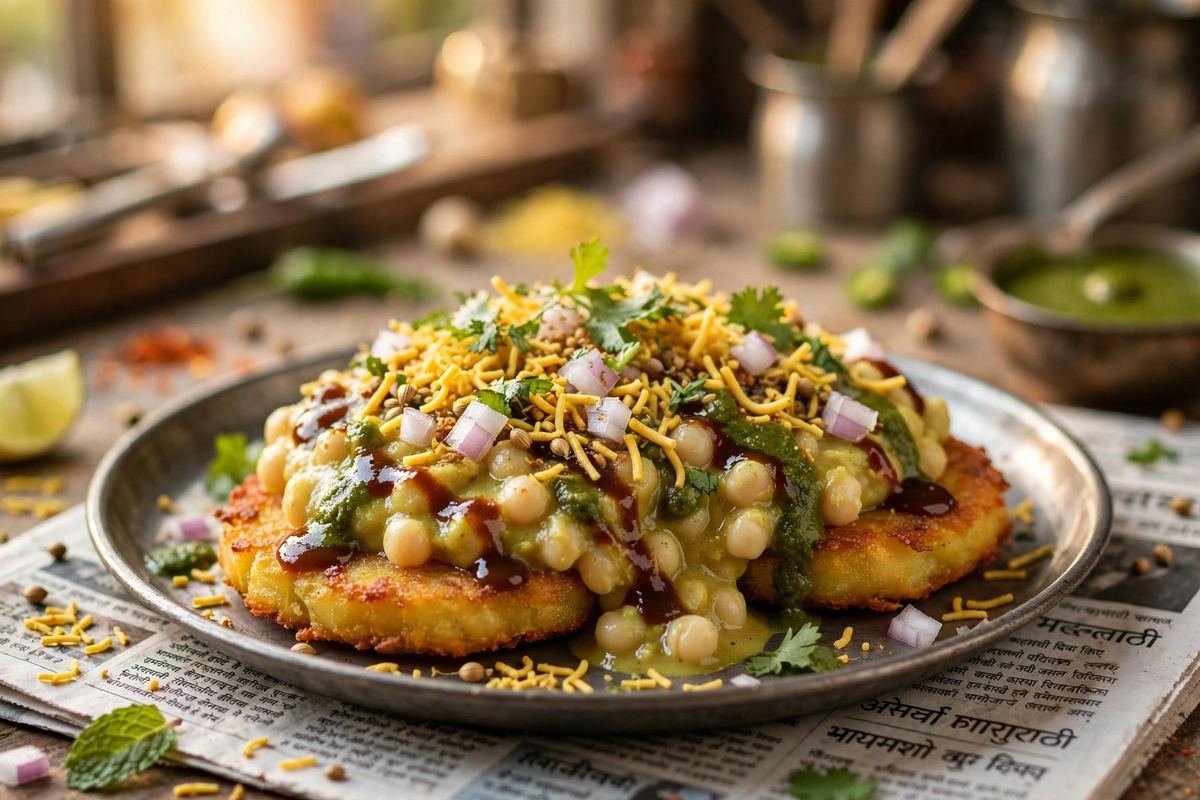
Crisp golden potato pattice drowned in a comforting dried-pea curry, layered with onion, chutneys, yogurt and sev. Ragda pattice is Mumbai’s most satisfying chaat — a full meal in a plate.
Ingredients
- 1 cup (200g) dried white peas (safed vatana), soaked overnight
- 1/2 tsp turmeric powder
- 1 tsp salt, plus more to taste
- 2 tbsp oil
- 1 tsp cumin seeds
- 1 large onion, finely chopped
- 1 tbsp ginger-garlic paste
- 2 medium tomatoes, finely chopped or pureed
- 1 tsp coriander powder
- 1/2 tsp cumin powder
- 1/2 tsp red chilli powder
- 1/2 tsp black salt (kala namak)
- 1/2 tsp chaat masala
- 2 cups water, plus more as needed
- 2 tbsp fresh coriander, chopped
- 4 medium (600g) starchy potatoes, boiled in skins and cooled
- 2 tbsp rice flour or cornflour
- 2 tbsp breadcrumbs (optional, for extra crispness)
- 1 green chilli, finely chopped
- 1 tsp roasted cumin powder
- 1 tsp chaat masala
- 1 tsp salt
- 2 tbsp fresh coriander, finely chopped
- 4-5 tbsp oil, for shallow frying
- 1 large onion, finely chopped
- 1/2 cup green mint-coriander chutney
- 1/2 cup tamarind-date chutney
- 1 cup (240g) thick curd, whisked with a pinch of salt
- 1 cup fine nylon sev
- 1 tsp chaat masala, for dusting
- 2 tbsp fresh coriander, chopped
- 1 lemon, cut into wedges
Instructions
- Cook the white peas. Drain the soaked peas and pressure cook with fresh water to cover by two inches, turmeric and salt, for five to six whistles — about twenty minutes — until completely soft. A pea pressed between your fingers should collapse with no resistance. Let the pressure release naturally. Do not drain; that starchy cooking liquid is liquid gold for the ragda’s body.
- Build the ragda base. Heat the oil in a heavy kadhai over medium heat. Add cumin seeds and let them sizzle and darken for twenty seconds. Add the chopped onion and cook for six to eight minutes, stirring, until soft and golden at the edges. Add the ginger-garlic paste and cook two minutes more until the raw smell disappears. Stir in the tomatoes, coriander powder, cumin powder and red chilli powder, and cook until the oil glistens at the edges — eight to ten minutes. The masala should look jammy and smell sweet.
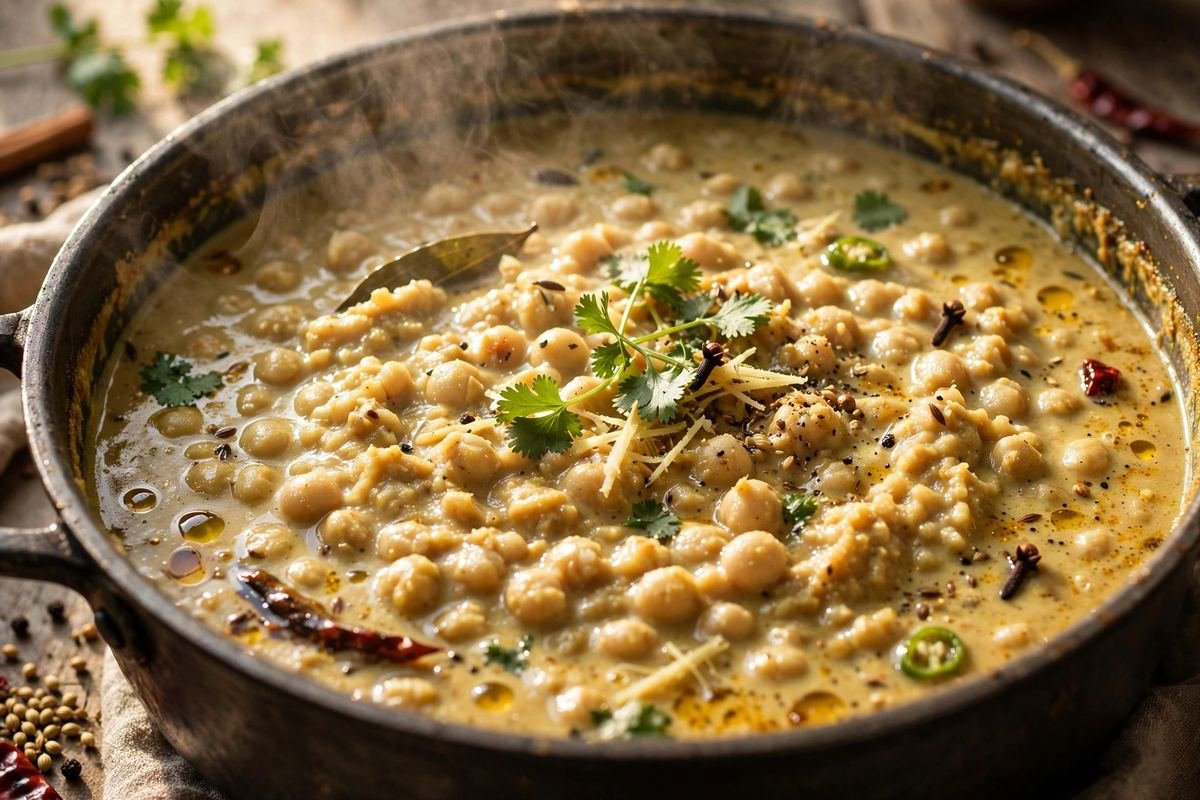
- Simmer the ragda. Add the cooked peas with all their liquid plus two cups of water. Mash a ladleful of peas against the side of the pan — this is what thickens the ragda naturally. Simmer on low for fifteen to twenty minutes, stirring occasionally, until the curry is thick enough to coat a spoon but still flows and pools. Stir in the black salt, chaat masala and coriander. Taste: it should be savory, mildly tangy and deeply comforting. Keep hot, covered — ragda must be served steaming.
- Make the pattice mixture. Peel the completely cooled boiled potatoes and mash or rice them until smooth with no lumps. Add the rice flour, breadcrumbs if using, green chilli, roasted cumin powder, chaat masala, salt and coriander. Mix gently with your hands until just combined — overworking makes the pattice dense. The mixture should hold together when squeezed; if it feels wet, add another spoon of rice flour.
- Shape the pattice. Divide into eight equal portions and shape each into a thick disc about three inches across and half an inch thick, with smooth edges — cracks will open during frying. Wet your hands lightly to prevent sticking. A slightly thicker patty stays fluffy inside; too thin and it dries out. Rest the shaped pattice for ten minutes so the surface dries slightly, which improves crisping.
- Shallow-fry until crisp. Heat the oil on a large tawa or non-stick griddle over medium heat — the oil should shimmer but not smoke. Fry the pattice in batches without crowding, four to five minutes per side, pressing gently with the spatula, until deeply golden and crisp with lacy brown edges. Resist the urge to move them early; the crust needs uninterrupted contact to form. Drain briefly on a rack, not paper, so the bottoms stay crisp. Keep warm in a low oven while you fry the rest.
- Assemble the plates. Place two hot pattice in each wide, shallow bowl or plate. Ladle a generous amount of steaming ragda over and around them — the pattice should be half-submerged, swimming in curry. Spoon over the whisked curd, drizzle both chutneys in ribbons, and shower with chopped onion, sev, chaat masala and coriander. Serve with lemon wedges.
- Serve immediately. Ragda pattice waits for no one — the pattice are at their crispiest in the first five minutes under the hot ragda. Hand each guest a spoon and plenty of napkins. Encourage everyone to break the pattice apart and mix everything together; the perfect bite has a bit of everything.
Tip: Read through the full post below for step-by-step photos, pro tips, variations and FAQs before you start cooking.
What Is Ragda Pattice?
Every chaat has a personality, and ragda pattice is the warm hug of the family. Where pani puri is a firecracker and sev puri is a crisp postcard, ragda pattice is a full, steaming plate of comfort: two golden potato pattice — crisp-edged, soft-centered patties — submerged in ragda, a soulful curry of dried white peas simmered with onion, tomato and gentle spices, then dressed with all the classic chaat finery: raw onion, green and tamarind chutneys, cool yogurt, nylon sev and fresh coriander.
The dish is Mumbai’s answer to hunger itself. It likely evolved from the North Indian aloo tikki, but the ragda — that ladle of hot, soupy pea curry — transforms it from a snack into a meal. Office workers eat it for lunch, families order it for Sunday evenings, and monsoon rains practically demand it: there is something about hot ragda on a wet Mumbai evening that feels like the city taking care of you. The contrast is the whole point — crisp pattice against silky curry, hot against cool yogurt, soft peas against crunchy sev.
Making ragda pattice at home is deeply rewarding because the two components are simple but technique-driven. The pattice must be crisp outside and fluffy inside, which comes down to the right potato, proper binding and a confident shallow fry. The ragda must be thick enough to coat but soupy enough to pool — a curry you could almost drink. Get those two right, and the toppings practically assemble themselves. This is weekend cooking at its best: a little time, a lot of aroma, and a plate that feeds both body and nostalgia.
Why You’ll Love This Recipe
- A complete meal: Protein from peas, carbs from potato, vegetables and yogurt — this chaat eats like dinner.
- Real tawa-crisped pattice: This recipe gives you shatteringly crisp patties that stay crisp under the ragda.
- Deeply flavored ragda: Slow-simmered white peas with a proper onion-tomato base — no watery, bland curry.
- Feeds a crowd cheaply: Dried peas and potatoes are among the most economical ingredients in the Indian kitchen.
- Customizable heat: Keep the ragda mild and let each eater tune the spice with chutneys at the table.
Key Ingredients Explained
Dried white peas (safed vatana) are the heart of ragda, and they are not the same as fresh or frozen green peas. White peas are starchier and creamier when cooked, breaking down slightly to thicken the curry naturally. They need an overnight soak — eight hours minimum — and then pressure cooking until completely soft but still holding shape, about five to six whistles. Undercooked peas make a thin, disappointing ragda; the peas should be soft enough to mash against the roof of your mouth.
For the pattice, choose starchy, floury potatoes — the kind that bake fluffy, not waxy salad potatoes. Boil them whole in their skins until just tender, then cool completely before peeling and mashing; warm potatoes turn gluey. The binding is minimal: a little rice flour or cornflour and maybe a spoon of breadcrumbs, just enough to hold the patty together. Over-bound pattice are dense and heavy. Season the potato mixture boldly with salt, cumin, chaat masala, green chilli and coriander — the patty must taste great on its own.
The ragda’s flavor base is a simple onion-tomato masala with ginger, garlic, turmeric, coriander and cumin — no heavy garam masala, because ragda should taste fresh and light, not like a restaurant curry. A pinch of black salt in the finished ragda adds the faint sulfurous depth that makes chaat taste like chaat. And as always, the chutneys must be fresh: bright green mint-coriander for heat, glossy tamarind-date for sweet tang.
Equipment You’ll Need
- Pressure cooker for the white peas
- Large heavy-bottomed pan or kadhai for the ragda
- Large flat tawa or non-stick griddle for the pattice
- Potato masher
- Mixing bowls
- Slotted spoon and spatula
For the ragda:
- 1 cup (200g) dried white peas (safed vatana), soaked overnight
- 1/2 tsp turmeric powder
- 1 tsp salt, plus more to taste
- 2 tbsp oil
- 1 tsp cumin seeds
- 1 large onion, finely chopped
- 1 tbsp ginger-garlic paste
- 2 medium tomatoes, finely chopped or pureed
- 1 tsp coriander powder
- 1/2 tsp cumin powder
- 1/2 tsp red chilli powder
- 1/2 tsp black salt (kala namak)
- 1/2 tsp chaat masala
- 2 cups water, plus more as needed
- 2 tbsp fresh coriander, chopped
For the pattice (makes 8):
- 4 medium (600g) starchy potatoes, boiled in skins and cooled
- 2 tbsp rice flour or cornflour
- 2 tbsp breadcrumbs (optional, for extra crispness)
- 1 green chilli, finely chopped
- 1 tsp roasted cumin powder
- 1 tsp chaat masala
- 1 tsp salt
- 2 tbsp fresh coriander, finely chopped
- 4-5 tbsp oil, for shallow frying
For serving:
- 1 large onion, finely chopped
- 1/2 cup green mint-coriander chutney
- 1/2 cup tamarind-date chutney
- 1 cup (240g) thick curd, whisked with a pinch of salt
- 1 cup fine nylon sev
- 1 tsp chaat masala, for dusting
- 2 tbsp fresh coriander, chopped
- 1 lemon, cut into wedges
How to Make Ragda Pattice
- Cook the white peas. Drain the soaked peas and pressure cook with fresh water to cover by two inches, turmeric and salt, for five to six whistles — about twenty minutes — until completely soft. A pea pressed between your fingers should collapse with no resistance. Let the pressure release naturally. Do not drain; that starchy cooking liquid is liquid gold for the ragda’s body.
- Build the ragda base. Heat the oil in a heavy kadhai over medium heat. Add cumin seeds and let them sizzle and darken for twenty seconds. Add the chopped onion and cook for six to eight minutes, stirring, until soft and golden at the edges. Add the ginger-garlic paste and cook two minutes more until the raw smell disappears. Stir in the tomatoes, coriander powder, cumin powder and red chilli powder, and cook until the oil glistens at the edges — eight to ten minutes. The masala should look jammy and smell sweet.
- Simmer the ragda. Add the cooked peas with all their liquid plus two cups of water. Mash a ladleful of peas against the side of the pan — this is what thickens the ragda naturally. Simmer on low for fifteen to twenty minutes, stirring occasionally, until the curry is thick enough to coat a spoon but still flows and pools. Stir in the black salt, chaat masala and coriander. Taste: it should be savory, mildly tangy and deeply comforting. Keep hot, covered — ragda must be served steaming.
- Make the pattice mixture. Peel the completely cooled boiled potatoes and mash or rice them until smooth with no lumps. Add the rice flour, breadcrumbs if using, green chilli, roasted cumin powder, chaat masala, salt and coriander. Mix gently with your hands until just combined — overworking makes the pattice dense. The mixture should hold together when squeezed; if it feels wet, add another spoon of rice flour.
- Shape the pattice. Divide into eight equal portions and shape each into a thick disc about three inches across and half an inch thick, with smooth edges — cracks will open during frying. Wet your hands lightly to prevent sticking. A slightly thicker patty stays fluffy inside; too thin and it dries out. Rest the shaped pattice for ten minutes so the surface dries slightly, which improves crisping.
- Shallow-fry until crisp. Heat the oil on a large tawa or non-stick griddle over medium heat — the oil should shimmer but not smoke. Fry the pattice in batches without crowding, four to five minutes per side, pressing gently with the spatula, until deeply golden and crisp with lacy brown edges. Resist the urge to move them early; the crust needs uninterrupted contact to form. Drain briefly on a rack, not paper, so the bottoms stay crisp. Keep warm in a low oven while you fry the rest.
- Assemble the plates. Place two hot pattice in each wide, shallow bowl or plate. Ladle a generous amount of steaming ragda over and around them — the pattice should be half-submerged, swimming in curry. Spoon over the whisked curd, drizzle both chutneys in ribbons, and shower with chopped onion, sev, chaat masala and coriander. Serve with lemon wedges.
- Serve immediately. Ragda pattice waits for no one — the pattice are at their crispiest in the first five minutes under the hot ragda. Hand each guest a spoon and plenty of napkins. Encourage everyone to break the pattice apart and mix everything together; the perfect bite has a bit of everything.
Pro Tips for Perfect Results
- Soak peas properly: Eight hours minimum, twelve is better. Under-soaked peas never cook evenly, no matter how long you pressure cook them. Add a pinch of baking soda to the soak water for extra-soft peas.
- Cool potatoes completely: Mashing warm potatoes releases starch and makes gummy pattice. Boil them ahead, refrigerate, and mash cold — the texture difference is dramatic.
- Don’t over-bind: The pattice should barely hold together. Too much flour or breadcrumb makes them dense and bready instead of crisp-fluffy.
- Medium heat, patience: Frying too hot browns the outside before the inside heats through; too cool and they absorb oil. Medium heat and a full four to five minutes per side is the sweet spot.
- Mash some peas: That one ladleful of mashed peas is what separates restaurant-style thick ragda from thin, watery home versions. Don’t skip it.
- Black salt is the secret: That faint eggy depth in chaat-cart ragda is kala namak. A half teaspoon transforms the whole pot.
- Keep ragda hot, pattice crisp: Time it so the pattice come off the tawa as the ragda finishes simmering. Assemble in under two minutes.
- Season in layers: Salt the peas, salt the masala, salt the pattice — each component seasoned on its own means the final plate needs nothing.

Variations to Try
Stuff the pattice with a spoonful of spiced green peas or grated paneer before shaping for a “bharwan” version with a surprise center. For a Delhi-style twist, skip the ragda and serve the pattice as aloo tikki with chole instead — same technique, different curry. Make a “ragda pattice sizzler” by assembling on a screaming-hot iron plate so the ragda bubbles dramatically at the table. For a lighter version, bake the pattice at 200°C for twenty-five minutes, flipping once, brushing lightly with oil — you lose some shattering crispness but keep the comfort. And for parties, make mini pattice and serve ragda pattice in small kulhads as an elegant finger-food version.
Serving Suggestions
Serve ragda pattice as a complete lunch or dinner — it needs no accompaniment beyond lemon wedges and maybe a glass of masala chaas. For a chaat-night spread, it makes the perfect hearty centerpiece between lighter starters like sev puri and a sweet finish like kulfi. Set out the chutneys, onion and sev in bowls so guests can adjust their own plates. It also packs well for potlucks if you transport the ragda hot in a thermos-style container and the pattice separately, assembling on arrival. A simple kachumber salad on the side adds freshness.
Storage and Reheating
Ragda keeps beautifully — refrigerate for up to four days, and it actually tastes better on day two as the flavors meld. It also freezes well for two months; thaw overnight and reheat with a splash of water, stirring well. Pattice are best fresh but can be refrigerated for two days and re-crisped on a hot tawa with a little oil, or in a 200°C oven for ten minutes. Never microwave pattice — they turn soggy. Assembled plates do not keep; always store components separately and assemble fresh.
Frequently Asked Questions
Can I use canned chickpeas instead of dried white peas?
You can in a pinch, but the texture will be different — chickpeas don’t break down into that creamy ragda body. If you must, mash a third of them thoroughly and simmer longer. Dried white peas are worth seeking out at any Indian grocer.
Why are my pattice falling apart in the pan?
Three likely causes: the potato mixture was too wet, you skipped the resting time, or the oil wasn’t hot enough when they went in. Chill the shaped pattice for fifteen minutes and make sure the oil shimmers before frying.
My pattice are crisp but raw-tasting inside. What happened?
The heat was too high. The crust formed before the center heated through. Use medium heat, give them the full time per side, and keep them thick enough — at least half an inch.
Can I make ragda without a pressure cooker?
Yes — simmer the soaked peas in a heavy pot for sixty to ninety minutes until completely soft, topping up water as needed. It’s slower but works fine. A pinch of baking soda in the cooking water speeds things up.
Is ragda pattice gluten-free?
Use rice flour or cornflour (not wheat-based breadcrumbs) in the pattice and it’s naturally gluten-free. Nylon sev is chickpea-flour based, so it’s safe too — just check labels for cross-contamination if celiac.
How do I keep pattice crisp for a party?
Fry them fully, then hold in a 120°C oven on a wire rack for up to an hour. Assemble in batches as guests are ready to eat — never pre-assemble more than you can serve in five minutes.
A Final Note
Ragda pattice is the kind of food that makes a house feel like a home — the smell of peas simmering, pattice crackling on the tawa, chutneys lined up like paint. Take the time, make the full plate, and eat it steaming hot. Some recipes feed you; this one looks after you.