Recipe Card
Mumbai’s iconic buttery bhaji — a luscious mash of vegetables simmered in pav bhaji masala, served with crisp butter-toasted pav. Rich, smoky, and utterly addictive.
Ingredients
- For the bhaji:
- 4 medium (500g) potatoes, peeled and quartered
- 1 small (300g) cauliflower, broken into florets
- 1 cup (150g) green peas, fresh or frozen
- 1 large capsicum (green bell pepper), finely chopped
- 4 medium tomatoes, roughly chopped
- 1 small piece (30g) beetroot, peeled (optional, for colour)
- 4 tablespoons butter, plus more for serving
- 1 tablespoon oil
- 1 teaspoon cumin seeds
- 2 medium onions, finely chopped
- 1 tablespoon ginger-garlic paste
- 2–3 tablespoons pav bhaji masala (good quality)
- 1 teaspoon Kashmiri red chilli powder
- 1/2 teaspoon turmeric powder
- 1 1/2 teaspoons salt, or to taste
- 2 cups (480 ml) hot water, as needed
- For the pav and serving:
- 8–12 ladi pav
- 4–5 tablespoons butter, for toasting (plus extra knobs for the bhaji)
- 1 large onion, finely chopped
- 1 lemon, cut into wedges
- 1/4 cup chopped fresh coriander leaves
Instructions
- Boil the vegetables. Put the potatoes, cauliflower, peas, beetroot (if using), and half the chopped tomatoes into a pressure cooker with 1 1/2 cups of water and a teaspoon of salt. Pressure-cook for 3–4 whistles (about 12 minutes), or boil in a covered pot for 20–25 minutes, until everything is completely soft and falling apart. Drain, reserving the cooking liquid — it is full of flavour. Mash coarsely with a potato masher, leaving some texture; you want a rustic mash, not a smooth purée.
- Build the tawa base. Heat a very large tawa or wide skillet over medium-high heat. Melt 2 tablespoons of butter with the oil, then add the cumin seeds and let them sizzle for 20 seconds. Add the finely chopped onions and sauté, stirring, for 5–6 minutes until soft and golden at the edges. Stir in the ginger-garlic paste and the finely chopped capsicum, and cook for 3–4 minutes until the capsicum softens but still has bite — it should stay bright green and aromatic.
- Bloom the masala. Push the vegetables to the sides, add another tablespoon of butter to the cleared centre, and add the pav bhaji masala, Kashmiri chilli powder, and turmeric directly into the hot butter. Stir for 30–45 seconds until deeply fragrant and the butter turns brick-red. This blooming step is critical — raw masala tastes flat and dusty, bloomed masala tastes like a Mumbai street corner.
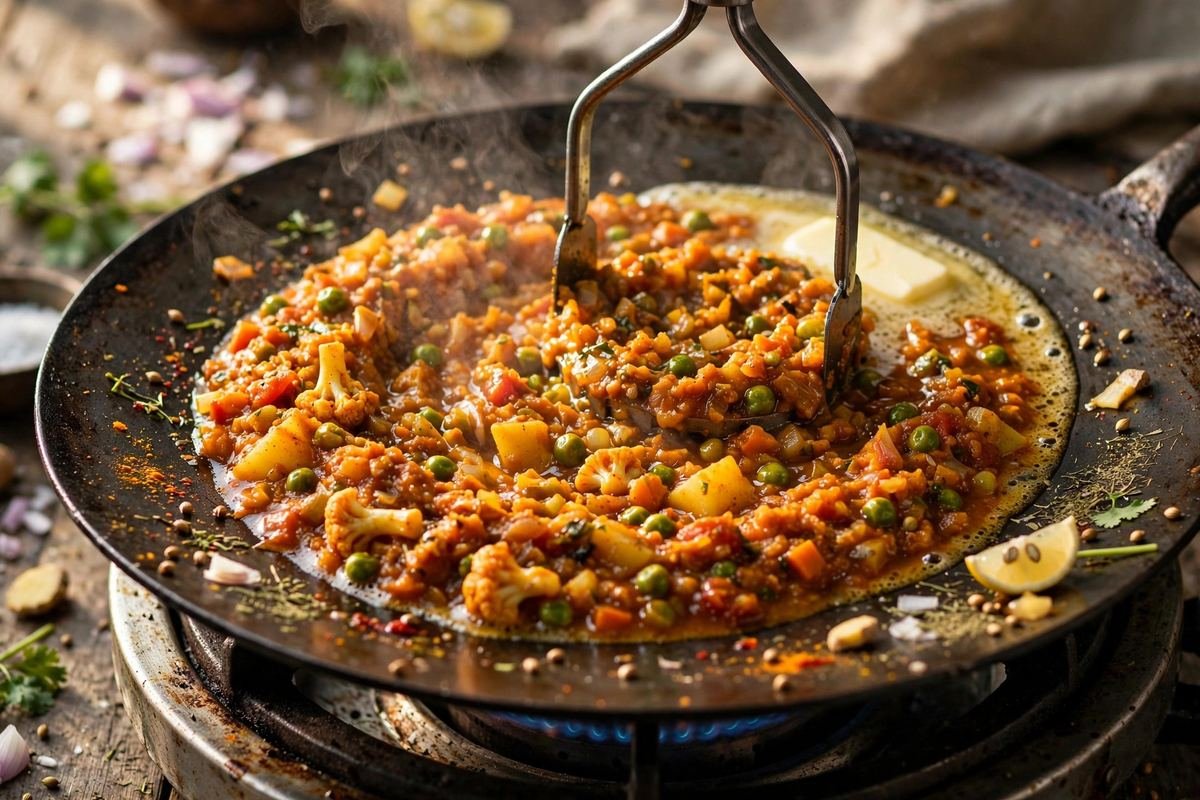
- Combine and chop-mash. Add the remaining chopped tomatoes and cook for 4–5 minutes until they break down into a jammy sauce. Now add the mashed boiled vegetables and a cup of the hot reserved cooking liquid. Using two spatulas (or a masher), chop and fold the mixture on the tawa, mashing any lumps against the hot surface. Work it for 8–10 minutes, adding splashes of hot water as needed, until you have a thick, glossy, homogeneous bhaji that holds soft peaks. Season with salt — it should taste boldly spiced, buttery, and tangy.
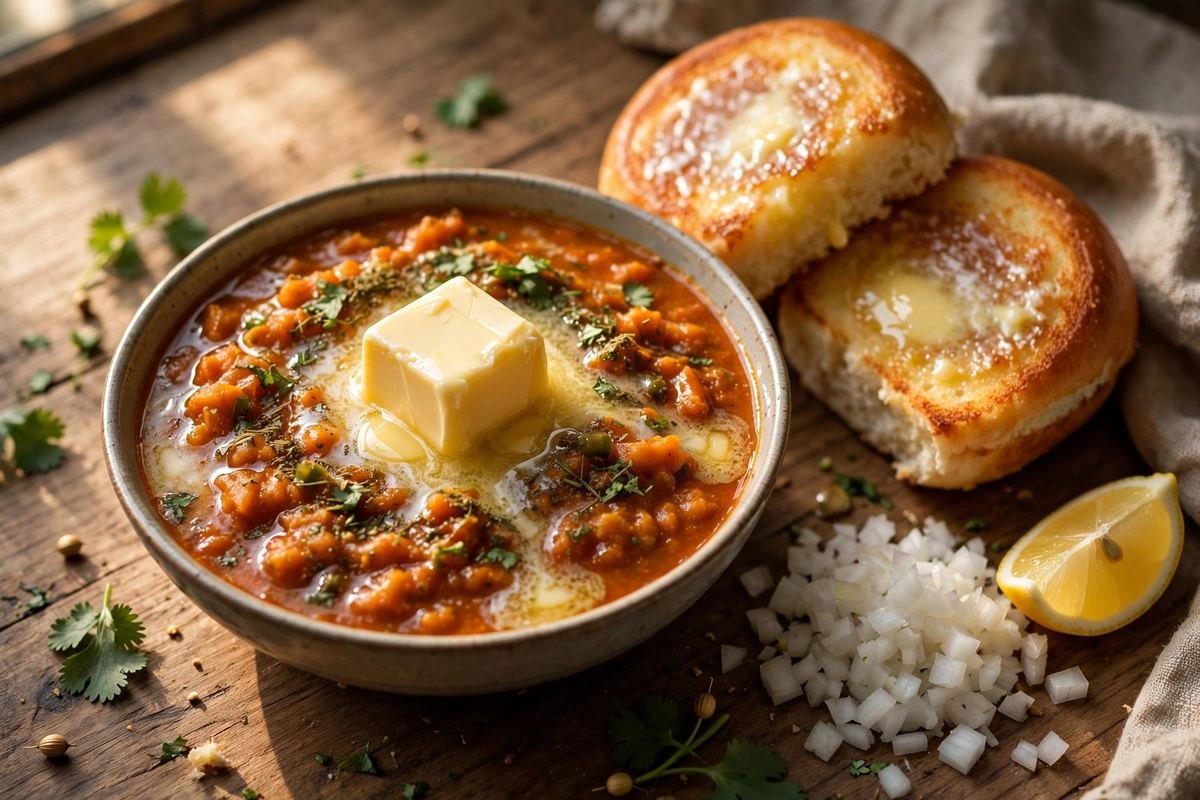
- Finish the bhaji. Reduce the heat to low, stir in a final tablespoon of butter, and let the bhaji simmer gently for 5 minutes so the flavours marry and the butter emulsifies in, giving that characteristic sheen. Keep warm on the lowest heat, stirring occasionally. Just before serving, place a generous knob of butter in the centre to melt into a golden pool — the classic presentation.
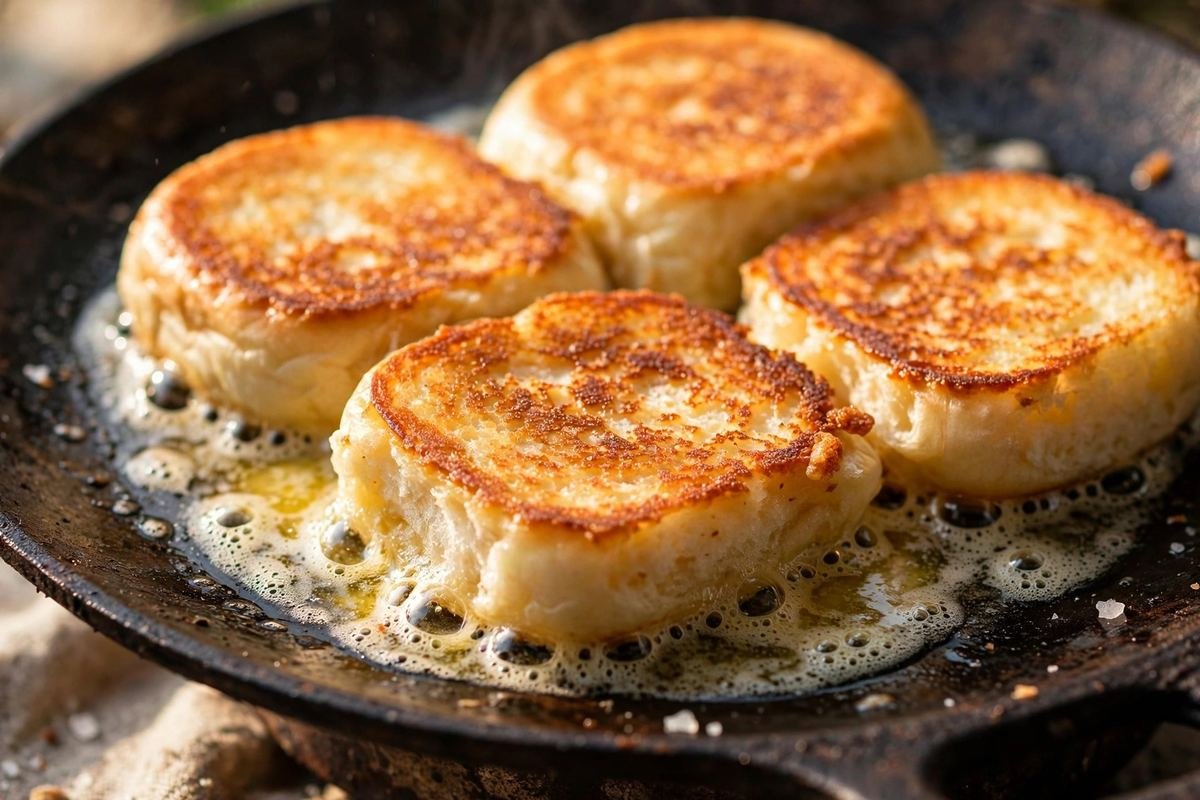
- Toast the pav. Slit each pav horizontally almost all the way through. Melt butter on the tawa over medium-high heat and place the pavs cut-side down, pressing gently with the spatula. Toast for 1–2 minutes until deeply golden and crisp, adding more butter as needed — street vendors are famously liberal here. Flip briefly to crisp the outer crust if you like. Keep the toasted pavs warm wrapped in a clean cloth.
- Serve the Mumbai way. Ladle a generous portion of bhaji onto each plate with its melting butter knob. Scatter finely chopped raw onion and coriander over the top, add lemon wedges on the side, and arrange 2–3 butter-crisped pavs per person. Encourage everyone to squeeze lemon over the bhaji, scoop with torn pav, and alternate bites of cool onion against the hot, rich mash. Serve immediately — pav bhaji waits for no one.
Tip: Read through the full post below for step-by-step photos, pro tips, variations and FAQs before you start cooking.
The Tawa That Feeds Mumbai
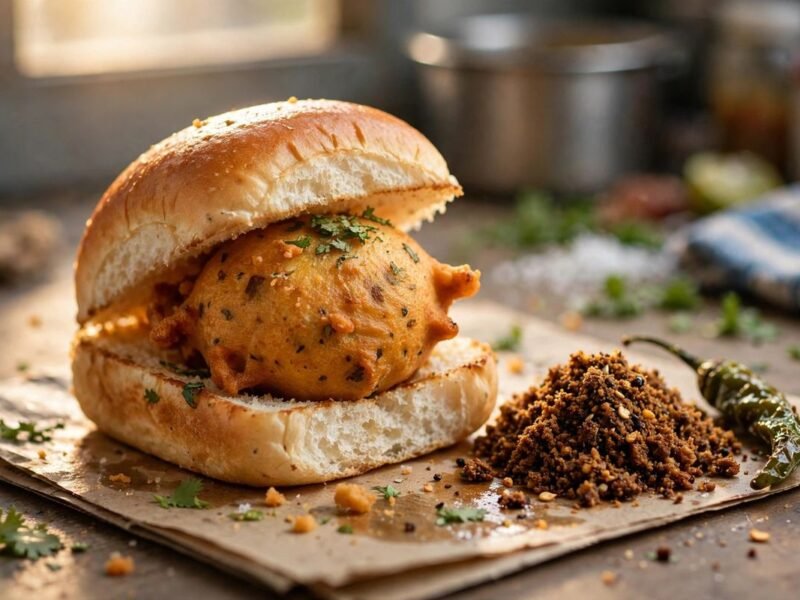
If you stand near any busy Mumbai street corner at dusk, you will hear it before you see it: the rhythmic clang-clang of a flat metal spatula against a giant iron tawa, working a glistening mound of orange-red bhaji. That sound is the heartbeat of pav bhaji, a dish born — like the vada pav — from the genius of feeding hungry workers fast. Legend traces it to the 1850s, when textile mill workers in Bombay needed a quick midnight meal, and a vendor mashed leftover vegetables with butter and spices, scooped the whole thing up with soft bread rolls, and created an icon.
The bhaji is a masterclass in controlled chaos. Potatoes, cauliflower, peas, capsicum, and tomatoes are boiled soft, then mashed directly on the screaming-hot tawa with a special spice blend — pav bhaji masala — and an almost indecent amount of butter. The vendor works it with two spatulas, chopping and folding, adding water to keep it silky, until the vegetables surrender into a thick, brick-red, glossy curry that is somehow both rustic and luxurious. The final flourish is a knob of butter melting into a crater on top, and the whole thing is served with ladi pav that have been slit, buttered, and griddled on the same tawa until crisp and golden, often pressed right into the bhaji’s buttery edges.
What makes great pav bhaji is layering: the sweetness of peas and capsicum against the tang of tomatoes, the earthiness of the masala, the richness of butter, and the brightness of raw onion, lemon, and coriander scattered on top at the last moment. Every legendary stall — Sardar Pav Bhaji at Tardeo, with its famously excessive butter, or the late-night tawas of Juhu Beach — has its own ratio and its own loyalists who will argue about it for hours.
This home recipe captures the tawa technique on a regular large pan or griddle: properly mashed (never puréed) vegetables, a well-bloomed masala, and the butter discipline that makes pav bhaji taste like the street rather than like mixed veg curry. The pav-toasting method alone will change how you eat bread with curry forever.
Why You’ll Love This Recipe
- Authentic tawa flavour: the chop-and-mash technique on a hot griddle builds the smoky, caramelised depth of street stalls.
- Perfect bhaji texture: thick, scoopable, and glossy — mashed, never blended into baby food.
- Balanced spice: homemade-feeling depth from bloomed pav bhaji masala, adjustable to your heat preference.
- That butter pav: crisp-edged, golden, and shatteringly buttery — worth the recipe alone.
- One-pan friendly: everything comes together on one large tawa or skillet after a quick pressure-cooker step.
- Crowd-pleaser: universally loved by kids and adults, easy to scale for parties.
Key Ingredients Explained
The vegetable base follows a classic ratio: potatoes for body and creaminess, cauliflower for bulk and sweetness, green peas for pops of sweetness, capsicum for its distinctive sharp-green aroma, and tomatoes for tang and colour. Potatoes should be floury so they mash smoothly; capsicum must be fresh and firm — a limp capsicum contributes nothing. Some vendors add a little beetroot for that signature deep red colour; a small piece is optional but traditional in many stalls. Avoid watery vegetables like bottle gourd, which dilute the bhaji.
Pav bhaji masala is the defining spice blend — a warm, complex mix of coriander, cumin, dried mango, black cardamom, and other spices with a distinctive tangy-smoky character. Buy a good brand (Everest and MDH are the Mumbai street standards) or make your own, but do not substitute garam masala — the flavour profile is different, and pav bhaji masala’s sourness is essential. The masala must be bloomed in butter on the hot tawa, not just stirred in raw, to wake up its aroma.
Butter is not a garnish here; it is a structural ingredient. Pav bhaji is built on butter — for sautéing, for blooming the masala, for enriching the mash, and for griddling the pav. Use real butter, salted or unsalted, and be generous: this is not diet food, and attempts to make it with minimal fat produce a sad, dry mash. The final melting knob served on top is traditional and should not be skipped.
Ladi pav should be fresh and soft. Day-old pav toasts better than very fresh ones, which can go gummy. The pav is slit almost through, buttered inside and out, and griddled cut-side down until deeply golden — many vendors also griddle the outer crust briefly for all-over crispness.
The fresh finishers — finely chopped raw onion, lemon wedges, and coriander leaves — are essential, not optional. They cut the richness with crunch, acid, and freshness. Add them only at serving, never cooked into the bhaji.
Equipment You’ll Need
- A very large flat tawa, griddle, or wide heavy skillet — surface area is everything; the bhaji needs room to spread and caramelise.
- Two flat spatulas or a potato masher — for the signature chop-and-mash action on the tawa.
- A pressure cooker or large pot — for boiling the vegetables soft before they hit the tawa.
- A sharp knife and chopping board — fine, even vegetable chopping for the toppings.
- For the bhaji:
- 4 medium (500g) potatoes, peeled and quartered
- 1 small (300g) cauliflower, broken into florets
- 1 cup (150g) green peas, fresh or frozen
- 1 large capsicum (green bell pepper), finely chopped
- 4 medium tomatoes, roughly chopped
- 1 small piece (30g) beetroot, peeled (optional, for colour)
- 4 tablespoons butter, plus more for serving
- 1 tablespoon oil
- 1 teaspoon cumin seeds
- 2 medium onions, finely chopped
- 1 tablespoon ginger-garlic paste
- 2–3 tablespoons pav bhaji masala (good quality)
- 1 teaspoon Kashmiri red chilli powder
- 1/2 teaspoon turmeric powder
- 1 1/2 teaspoons salt, or to taste
- 2 cups (480 ml) hot water, as needed
- For the pav and serving:
- 8–12 ladi pav
- 4–5 tablespoons butter, for toasting (plus extra knobs for the bhaji)
- 1 large onion, finely chopped
- 1 lemon, cut into wedges
- 1/4 cup chopped fresh coriander leaves
- Boil the vegetables. Put the potatoes, cauliflower, peas, beetroot (if using), and half the chopped tomatoes into a pressure cooker with 1 1/2 cups of water and a teaspoon of salt. Pressure-cook for 3–4 whistles (about 12 minutes), or boil in a covered pot for 20–25 minutes, until everything is completely soft and falling apart. Drain, reserving the cooking liquid — it is full of flavour. Mash coarsely with a potato masher, leaving some texture; you want a rustic mash, not a smooth purée.
- Build the tawa base. Heat a very large tawa or wide skillet over medium-high heat. Melt 2 tablespoons of butter with the oil, then add the cumin seeds and let them sizzle for 20 seconds. Add the finely chopped onions and sauté, stirring, for 5–6 minutes until soft and golden at the edges. Stir in the ginger-garlic paste and the finely chopped capsicum, and cook for 3–4 minutes until the capsicum softens but still has bite — it should stay bright green and aromatic.
- Bloom the masala. Push the vegetables to the sides, add another tablespoon of butter to the cleared centre, and add the pav bhaji masala, Kashmiri chilli powder, and turmeric directly into the hot butter. Stir for 30–45 seconds until deeply fragrant and the butter turns brick-red. This blooming step is critical — raw masala tastes flat and dusty, bloomed masala tastes like a Mumbai street corner.
- Combine and chop-mash. Add the remaining chopped tomatoes and cook for 4–5 minutes until they break down into a jammy sauce. Now add the mashed boiled vegetables and a cup of the hot reserved cooking liquid. Using two spatulas (or a masher), chop and fold the mixture on the tawa, mashing any lumps against the hot surface. Work it for 8–10 minutes, adding splashes of hot water as needed, until you have a thick, glossy, homogeneous bhaji that holds soft peaks. Season with salt — it should taste boldly spiced, buttery, and tangy.
- Finish the bhaji. Reduce the heat to low, stir in a final tablespoon of butter, and let the bhaji simmer gently for 5 minutes so the flavours marry and the butter emulsifies in, giving that characteristic sheen. Keep warm on the lowest heat, stirring occasionally. Just before serving, place a generous knob of butter in the centre to melt into a golden pool — the classic presentation.
- Toast the pav. Slit each pav horizontally almost all the way through. Melt butter on the tawa over medium-high heat and place the pavs cut-side down, pressing gently with the spatula. Toast for 1–2 minutes until deeply golden and crisp, adding more butter as needed — street vendors are famously liberal here. Flip briefly to crisp the outer crust if you like. Keep the toasted pavs warm wrapped in a clean cloth.
- Serve the Mumbai way. Ladle a generous portion of bhaji onto each plate with its melting butter knob. Scatter finely chopped raw onion and coriander over the top, add lemon wedges on the side, and arrange 2–3 butter-crisped pavs per person. Encourage everyone to squeeze lemon over the bhaji, scoop with torn pav, and alternate bites of cool onion against the hot, rich mash. Serve immediately — pav bhaji waits for no one.
Pro Tips for Perfect Results
- Mash, never blend. A blender or food processor makes the bhaji gluey and baby-food smooth. Hand-mashing on the tawa gives the rustic, scoopable texture that defines the dish.
- Use the biggest pan you own. Crowding the bhaji in a small pan steams it instead of caramelising it. Surface area lets moisture evaporate and builds the smoky tawa flavour.
- Bloom the masala in butter. Adding pav bhaji masala to hot fat for 30–45 seconds transforms it from dusty to deeply aromatic. This single step separates good bhaji from great bhaji.
- Capsicum goes in late and stays green. Overcooked capsicum turns bitter and loses its fresh aroma. It should be just tender and still bright when the bhaji is done.
- Adjust consistency with hot water. The bhaji should be thick enough to mound on a spoon but loose enough to scoop easily. Always use hot water or hot reserved cooking liquid — cold water shocks the emulsion and dulls the flavour.
- Be generous with butter — then add more. Pav bhaji is a celebration dish. Skimping on butter produces a dry, flat result that tastes like mixed vegetable curry. This is not the dish for restraint.
- Serve everything piping hot. The magic is the temperature contrast between the steaming bhaji, the crisp hot pav, and the cool raw onion. Lukewarm pav bhaji is a pale shadow of itself.
Variations to Try
Cheese pav bhaji: grate a generous handful of processed cheese over the hot bhaji just before serving and let it melt into strings — a Juhu Beach favourite.
Khada pav bhaji: leave the vegetables in distinct chunks instead of mashing, for a rustic version where you can taste each vegetable.
Paneer pav bhaji: fold in 200g of crumbled paneer at the end for extra protein and richness.
Jain pav bhaji: replace onion and garlic with extra capsicum and a pinch of asafoetida, and swap potato for raw banana — all the flavour, within Jain dietary customs.
Pav bhaji fondue: serve the bhaji in a fondue pot with toasted pav cubes for dipping — a fun party reinvention that always disappears first.
Serving Suggestions
Classic service is bhaji in a wide plate or shallow bowl with the butter knob melting on top, chopped onion and coriander scattered over, lemon wedges alongside, and 2–3 butter-toasted pavs per person. For a full Mumbai street-food spread, precede it with pani puri and follow with kulfi. It pairs beautifully with masala chaas or fresh lime soda to cut the richness. For parties, keep the bhaji warm in a slow cooker on the low setting and toast pavs to order — guests love the theatre of a sizzling tawa. Leftover bhaji makes a spectacular filling for dosas, sandwiches, and even pizza topping the next day.
Storage and Reheating
The bhaji keeps beautifully: cool completely and refrigerate in an airtight container for up to 4 days, or freeze for up to 2 months. In fact, many cooks swear the flavour improves overnight as the spices meld. Reheat gently in a pan over medium heat with a splash of water, mashing again as it warms, and finish with a fresh knob of butter and a pinch of pav bhaji masala to wake it up. Toast pavs fresh each time — reheated pav is never as good. Do not freeze assembled plates; freeze only the bhaji. The chopped onion topping should always be fresh.
Frequently Asked Questions
Why is my bhaji pale instead of deep red?
Colour comes from three things: ripe red tomatoes, Kashmiri red chilli powder (which adds colour more than heat), and the optional small piece of beetroot that many street vendors use. If your tomatoes were pale, add an extra teaspoon of Kashmiri chilli powder or a tablespoon of tomato paste while blooming the masala.
Can I make pav bhaji without a big tawa?
Yes — a wide, heavy skillet or even a large wok works. What matters is surface area and high heat. Work in two batches if your pan is small rather than crowding it; a crowded pan steams the vegetables instead of caramelising them.
My bhaji tastes flat. What is missing?
Usually one of three things: the masala was not bloomed in butter (raw masala tastes dusty), there is not enough salt (potatoes need assertive seasoning), or it needs acid — a squeeze of lemon or a little extra tomato at the end brightens everything. Also check your pav bhaji masala is fresh; stale spice blends lose their punch within months of opening.
How is pav bhaji different from mixed vegetable curry?
Technique and intent. Pav bhaji is chopped and mashed directly on a searing-hot tawa with butter-bloomed masala, giving it caramelised, smoky depth and a thick, scoopable texture designed to be eaten with bread. A mixed veg curry is simmered in gravy. Same vegetables, completely different dish.
Can I make the bhaji ahead for a party?
Absolutely — it is ideal for making ahead. Prepare the bhaji fully, refrigerate, and reheat with a splash of water and fresh butter. Toast the pavs just before serving. Set up a toppings station with onion, lemon, coriander, and extra butter so guests customise their plates.
Is pav bhaji very unhealthy?
It is indulgent — butter is central to the dish. For a lighter version, reduce the butter by half, use a non-stick tawa, and load up on extra vegetables. It will not taste like the street original, but it will still be a delicious, wholesome vegetable meal. Save the full-butter version for celebrations.
There is a reason the clang of the tawa draws crowds across Mumbai every evening — pav bhaji is comfort, celebration, and street theatre in a single plate. Master the mash, respect the butter, toast the pav until it shatters, and you will understand why this humble dish has fed a megacity for over a century and a half.