
Recipe Card
The king of chaat — shatteringly crisp puris filled with spiced potatoes, chickpeas, tangy tamarind, and ice-cold mint water. Make the whole pani puri experience at home.
Ingredients
- For the puris (makes about 40):
- 1 cup (160g) fine semolina (sooji/rava)
- 3 tablespoons whole wheat flour (atta)
- 1/4 teaspoon baking soda
- 1/2 teaspoon salt
- 1/2 cup (120 ml) warm water, approximately
- 1 teaspoon oil, for the dough
- Oil for deep frying
- For the spicy mint pani (teekha pani):
- 1 cup tightly packed fresh mint leaves
- 1/2 cup fresh coriander leaves with tender stems
- 3–4 green chillies (adjust to taste)
- 2.5 cm piece of ginger
- 1 teaspoon roasted cumin seeds, ground
- 1 1/2 teaspoons black salt (kala namak)
- 1 teaspoon regular salt, or to taste
- 2 tablespoons amchur (dried mango powder) or 3 tablespoons lemon juice
- 1/2 teaspoon chaat masala
- 5 cups (1.2 litres) ice-cold water
- Ice cubes, to serve
- For the meethi (sweet) chutney:
- 1/2 cup (100g) seedless tamarind pulp
- 1/2 cup (100g) chopped dates or jaggery
- 2 cups (480 ml) water
- 1 teaspoon roasted cumin powder
- 1/2 teaspoon black salt
- 1/2 teaspoon dry ginger powder
- For the filling:
- 3 medium (400g) potatoes, boiled, peeled, and mashed
- 1 cup (170g) boiled chickpeas (kabuli chana), lightly mashed
- 1 small onion, finely chopped
- 2 tablespoons chopped coriander leaves
- 1 teaspoon roasted cumin powder
- 1 teaspoon chaat masala
- 1/2 teaspoon black salt, plus regular salt to taste
- 1 tablespoon lemon juice
Instructions
- Make the puri dough. Combine the semolina, wheat flour, baking soda, and salt. Add warm water a little at a time, kneading into a stiff, firm dough — noticeably firmer than chapati dough. Knead for 5–6 minutes until smooth, coat with a teaspoon of oil, cover with a damp cloth, and rest for 30 minutes. This rest is non-negotiable: it lets the semolina fully hydrate, which is what makes the puris puff and stay crisp.
- Roll and cut the puris. Divide the dough into 3 portions, keeping the rest covered so it never dries out. Roll one portion thin — about 2 mm, almost translucent — on a lightly floured surface. Cut 5 cm rounds with a cutter or the rim of a glass, re-rolling scraps once. Keep the cut rounds covered with a damp cloth at all times; even a few minutes of air exposure dries the surface and prevents puffing.
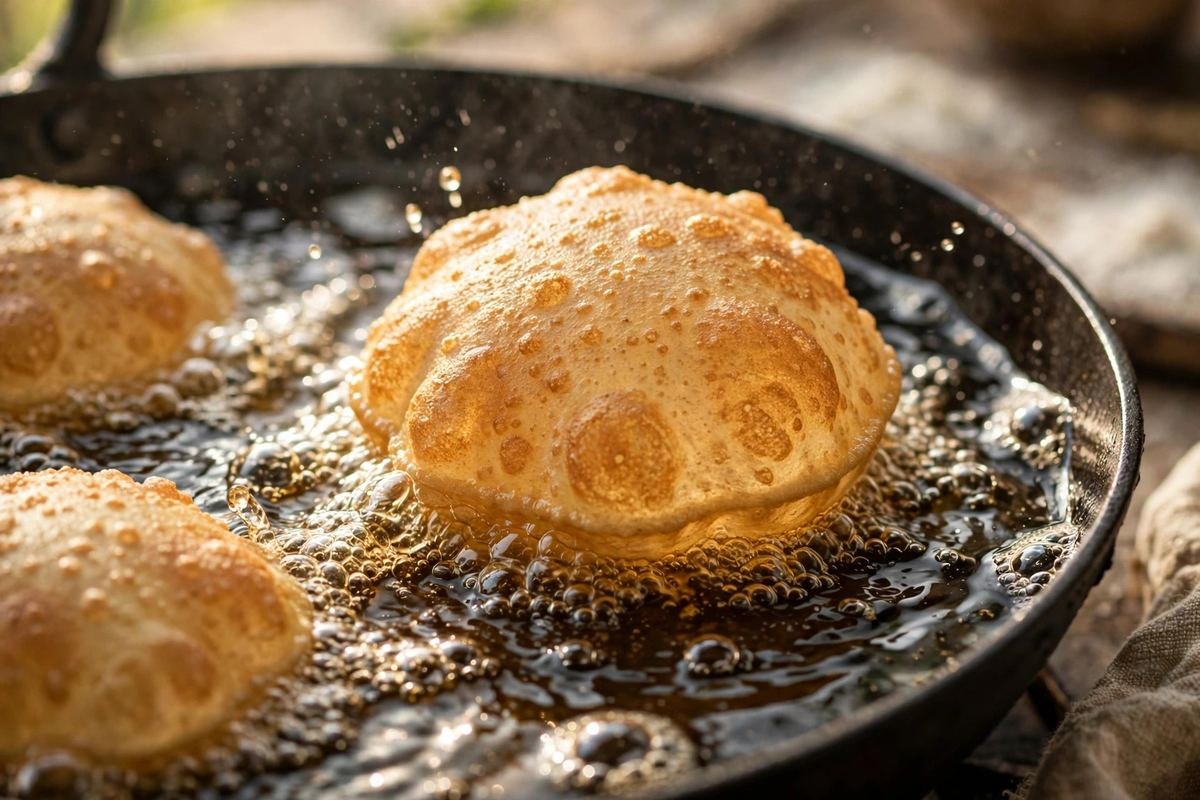
- Fry the puris. Heat oil to 180–190°C (355–375°F) — hotter than for most frying. Slide in 4–5 puris; they should sizzle fiercely and begin puffing within 5 seconds. Gently press each with the back of the slotted spoon to encourage it to balloon. Flip once and fry until pale golden and blistered all over, about 45–60 seconds total — they continue crisping as they cool, so do not wait for deep brown. Drain on a wire rack or paper towel. Cool completely before storing airtight; they stay crisp for 4–5 days.
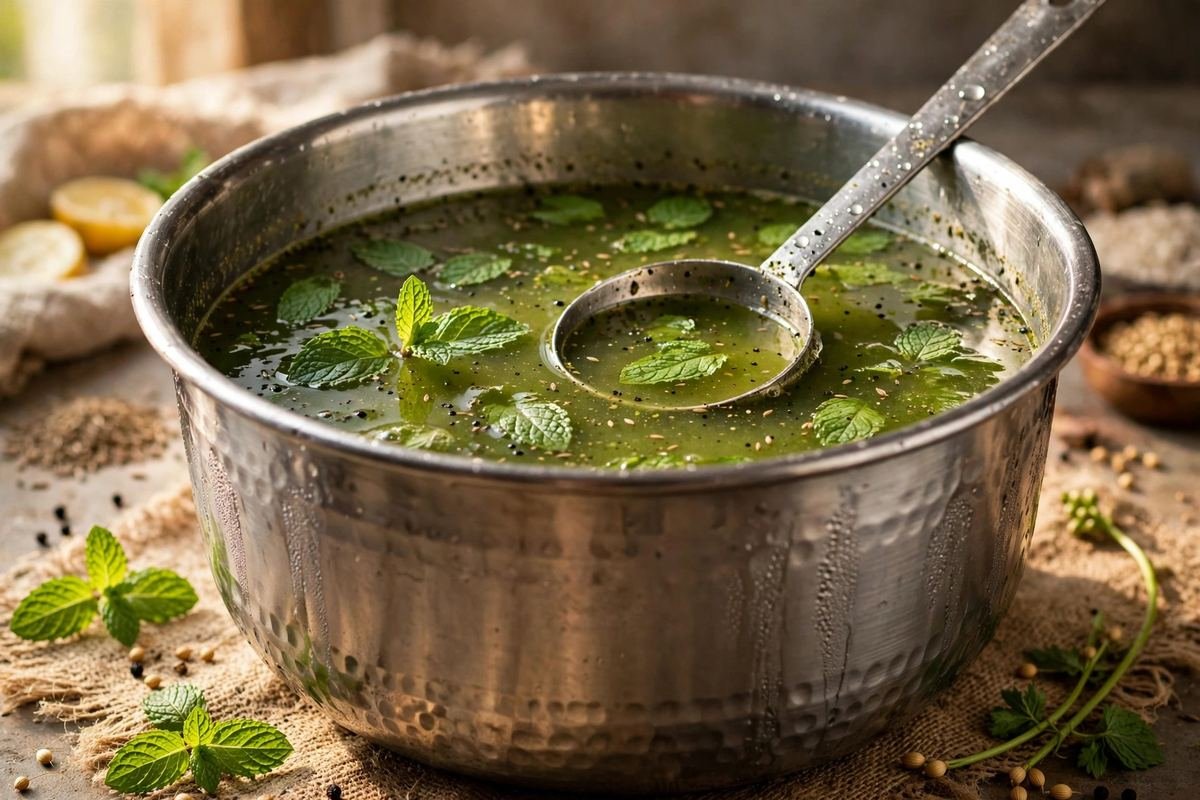
- Blend the teekha pani. Blend the mint, coriander, green chillies, and ginger with 1 cup of water into a completely smooth, vivid green paste — any fibrous bits will feel unpleasant in the pani. Strain through a fine sieve if you want it silky (traditional vendors often do). Whisk the paste into the remaining ice-cold water with roasted cumin, black salt, regular salt, amchur, and chaat masala. Taste boldly: it should be intensely sour, salty, and spicy — the puri and filling will dilute it. Chill for at least 1 hour; the flavours meld and deepen. Serve with ice cubes.
- Cook the meethi chutney. Simmer the tamarind, dates or jaggery, and water for 12–15 minutes until everything breaks down and the mixture thickens enough to coat a spoon. Blend smooth, strain out any fibres, and return to the pan with roasted cumin, black salt, and dry ginger powder. Simmer 3–4 more minutes until glossy and thick like honey. Cool completely — it thickens further as it cools. This keeps 2–3 weeks refrigerated.
- Mix the filling. Combine the mashed potatoes, lightly crushed chickpeas, onion, coriander, roasted cumin, chaat masala, black salt, regular salt, and lemon juice. Mix well and taste — it should be tangy, salty, and well spiced on its own. Keep the filling on the drier side; squeeze out any excess moisture so it does not soften the puris.
- Assemble and serve immediately. Set out the puris, filling, both chutneys, and the ice-cold pani. For each puri: crack a small hole in the top with your thumb, stuff in a spoonful of filling, add a few drops of meethi chutney, then dunk or spoon in the teekha pani until nearly full. Hand it over and eat in one bite — immediately. The whole pleasure is the race between crunch and collapse, so assemble only what will be eaten in the next 30 seconds.
Tip: Read through the full post below for step-by-step photos, pro tips, variations and FAQs before you start cooking.
The Crown Jewel of Chaat
Ask any Indian to name the single most beloved street food in the country and the answer comes back instantly, almost reflexively: pani puri. Known as golgappa in Delhi and the north, puchka in Bengal, and gupchup in parts of Odisha and Bihar, this is the dish that unites a subcontinent of fierce regional loyalties. It is theatre as much as food — the vendor’s hands moving in a blur, cracking a crisp puri with a flick of the thumb, stuffing it with spiced filling, dunking it in ice-cold spiced water, and handing it over to be eaten in exactly one bite before it collapses.
The genius of pani puri is contrast engineered into a two-bite package. The puri itself must shatter — thin, hollow, blistered from hot oil, made from a semolina and wheat dough that puffs into perfect spheres. Inside goes a filling of spiced mashed potatoes and chickpeas, earthy and comforting. Then two chutneys: a sweet-tart tamarind-date chutney and the signature pani — water pounded with fresh mint, coriander, green chillies, roasted cumin, black salt, and raw mango or amchur for sourness, served ice cold. The first sensation is cold and fiery, then sour, then sweet, then the warm spice of the potato, all wrapped in crunch. It is a full flavour symphony in about three seconds.
There are few foods surrounded by as much ritual. Regulars have their vendor, their preferred spice level, their count — “bhaiya, ek teekha, ek meetha” (one spicy, one sweet). Competitions over who can eat the most are a rite of passage. And the pani — every vendor guards their recipe, adjusting mint, cumin, and chilli through the day as the ice melts and the crowd’s mood shifts.
Making pani puri at home is deeply satisfying because you control every element: puris fried to your preferred thinness, pani spiced exactly to your taste, and the freedom to eat thirty without anyone counting. This recipe covers everything from scratch — crisp puris, two kinds of pani (classic spicy mint and sweet), tamarind chutney, and the potato-chickpea filling — plus the assembly technique that keeps every puri crisp until the moment it meets your mouth.
Why You’ll Love This Recipe
- Puris that actually puff and stay crisp: the semolina-wheat ratio and frying technique give hollow, blistered shells that shatter properly.
- Two pani styles: fiery classic mint pani and a milder version, so everyone finds their perfect spice level.
- Complete from scratch: puri, both chutneys, and filling — no store-bought shortcuts needed (though shortcuts are offered).
- Party-perfect: set up a pani puri station and let guests assemble their own — it is interactive, fun, and always a hit.
- Make-ahead friendly: pani and chutneys taste better the next day; puris stay crisp for days in an airtight box.
- Naturally vegetarian: a crowd-pleasing chaat that suits almost every diet at the table.
Key Ingredients Explained
Fine semolina (sooji/rava) is the backbone of a crisp puri. Combined with a smaller proportion of whole wheat flour, it produces shells that puff hollow and fry up blistered and sturdy. The dough must be stiff — much firmer than roti dough — and rested so the semolina hydrates fully. Roll the puris thin and even; thick spots will not puff, and uneven rolling gives you half-moons instead of spheres. A pinch of baking soda in the dough helps the blistering, but the real secret is oil hot enough to make the puri puff within seconds.
Fresh mint and coriander make the pani — there is no substitute for fresh herbs here. Use tender mint leaves (discard thick stems, which turn bitter) and fresh coriander with its roots’ worth of flavour in the stems. The herbs are pounded or blended with green chillies into a paste, then thinned with ice-cold water. Black salt (kala namak) is essential — its sulphurous tang is the signature flavour of chaat pani and cannot be replaced by regular salt. Roasted cumin powder, ground fresh from dry-roasted seeds, adds smoky depth.
Sourness in the pani traditionally comes from raw mango in summer or from amchur (dried mango powder) and lemon juice year-round. Taste and balance are everything: the pani should make your mouth water instantly — assertively sour, salty, spicy, and cold, with the herbs aromatic rather than bitter. Always serve it ice cold, with ice cubes floating in it; lukewarm pani is a tragedy.
Tamarind-date chutney (meethi chutney) provides the sweet counterpoint. Tamarind pulp simmered with dates or jaggery, cumin, and a hint of ginger until thick and glossy — it should coat a spoon and balance sweet against tart. Make it thick; a watery meethi chutney makes the puri soggy.
The filling is humble but must be well seasoned: mashed potatoes mixed with boiled chickpeas (kala chana or kabuli chana), chopped onion, roasted cumin, chaat masala, black salt, and coriander. It should be dry — a wet filling softens the puri from inside within seconds.
Equipment You’ll Need
- A kadhai with plenty of oil — puris need room and consistently hot oil to puff.
- A slotted spoon — for pressing puris gently to encourage puffing and lifting them out.
- A blender or mortar and pestle — for the pani paste and chutneys.
- A rolling pin and a small round cutter (about 5 cm) — uniform puris puff uniformly.
- Airtight containers and a big jug — for storing crisp puris and chilling the pani.
- For the puris (makes about 40):
- 1 cup (160g) fine semolina (sooji/rava)
- 3 tablespoons whole wheat flour (atta)
- 1/4 teaspoon baking soda
- 1/2 teaspoon salt
- 1/2 cup (120 ml) warm water, approximately
- 1 teaspoon oil, for the dough
- Oil for deep frying
- For the spicy mint pani (teekha pani):
- 1 cup tightly packed fresh mint leaves
- 1/2 cup fresh coriander leaves with tender stems
- 3–4 green chillies (adjust to taste)
- 2.5 cm piece of ginger
- 1 teaspoon roasted cumin seeds, ground
- 1 1/2 teaspoons black salt (kala namak)
- 1 teaspoon regular salt, or to taste
- 2 tablespoons amchur (dried mango powder) or 3 tablespoons lemon juice
- 1/2 teaspoon chaat masala
- 5 cups (1.2 litres) ice-cold water
- Ice cubes, to serve
- For the meethi (sweet) chutney:
- 1/2 cup (100g) seedless tamarind pulp
- 1/2 cup (100g) chopped dates or jaggery
- 2 cups (480 ml) water
- 1 teaspoon roasted cumin powder
- 1/2 teaspoon black salt
- 1/2 teaspoon dry ginger powder
- For the filling:
- 3 medium (400g) potatoes, boiled, peeled, and mashed
- 1 cup (170g) boiled chickpeas (kabuli chana), lightly mashed
- 1 small onion, finely chopped
- 2 tablespoons chopped coriander leaves
- 1 teaspoon roasted cumin powder
- 1 teaspoon chaat masala
- 1/2 teaspoon black salt, plus regular salt to taste
- 1 tablespoon lemon juice
- Make the puri dough. Combine the semolina, wheat flour, baking soda, and salt. Add warm water a little at a time, kneading into a stiff, firm dough — noticeably firmer than chapati dough. Knead for 5–6 minutes until smooth, coat with a teaspoon of oil, cover with a damp cloth, and rest for 30 minutes. This rest is non-negotiable: it lets the semolina fully hydrate, which is what makes the puris puff and stay crisp.
- Roll and cut the puris. Divide the dough into 3 portions, keeping the rest covered so it never dries out. Roll one portion thin — about 2 mm, almost translucent — on a lightly floured surface. Cut 5 cm rounds with a cutter or the rim of a glass, re-rolling scraps once. Keep the cut rounds covered with a damp cloth at all times; even a few minutes of air exposure dries the surface and prevents puffing.
- Fry the puris. Heat oil to 180–190°C (355–375°F) — hotter than for most frying. Slide in 4–5 puris; they should sizzle fiercely and begin puffing within 5 seconds. Gently press each with the back of the slotted spoon to encourage it to balloon. Flip once and fry until pale golden and blistered all over, about 45–60 seconds total — they continue crisping as they cool, so do not wait for deep brown. Drain on a wire rack or paper towel. Cool completely before storing airtight; they stay crisp for 4–5 days.
- Blend the teekha pani. Blend the mint, coriander, green chillies, and ginger with 1 cup of water into a completely smooth, vivid green paste — any fibrous bits will feel unpleasant in the pani. Strain through a fine sieve if you want it silky (traditional vendors often do). Whisk the paste into the remaining ice-cold water with roasted cumin, black salt, regular salt, amchur, and chaat masala. Taste boldly: it should be intensely sour, salty, and spicy — the puri and filling will dilute it. Chill for at least 1 hour; the flavours meld and deepen. Serve with ice cubes.
- Cook the meethi chutney. Simmer the tamarind, dates or jaggery, and water for 12–15 minutes until everything breaks down and the mixture thickens enough to coat a spoon. Blend smooth, strain out any fibres, and return to the pan with roasted cumin, black salt, and dry ginger powder. Simmer 3–4 more minutes until glossy and thick like honey. Cool completely — it thickens further as it cools. This keeps 2–3 weeks refrigerated.
- Mix the filling. Combine the mashed potatoes, lightly crushed chickpeas, onion, coriander, roasted cumin, chaat masala, black salt, regular salt, and lemon juice. Mix well and taste — it should be tangy, salty, and well spiced on its own. Keep the filling on the drier side; squeeze out any excess moisture so it does not soften the puris.
- Assemble and serve immediately. Set out the puris, filling, both chutneys, and the ice-cold pani. For each puri: crack a small hole in the top with your thumb, stuff in a spoonful of filling, add a few drops of meethi chutney, then dunk or spoon in the teekha pani until nearly full. Hand it over and eat in one bite — immediately. The whole pleasure is the race between crunch and collapse, so assemble only what will be eaten in the next 30 seconds.
Pro Tips for Perfect Results
- Stiff dough, thin rolling, hot oil. These three decide whether your puris puff. Soft dough, thick puris, or lukewarm oil give you flat, hard discs instead of hollow spheres.
- Never let cut puris dry out. Keep them under a damp cloth between rolling and frying. A dry surface skin is the number one reason puris refuse to puff.
- Fry hot and fast. Puri oil should be 180–190°C — noticeably hotter than pakora oil. If puris take more than a few seconds to start puffing, raise the heat before the next batch.
- Serve the pani ice cold. Chill it for at least an hour and serve with ice cubes. Temperature is a flavour here — cold pani tastes brighter, sharper, and more refreshing.
- Balance the pani by tasting. It should taste slightly too intense on its own — too sour, too salty, too spicy. The bland puri and potato filling will bring it into perfect balance in the mouth.
- Keep the filling dry. Wet filling is the fastest way to a soggy puri. Drain boiled chickpeas well and do not add extra water or lemon beyond the recipe.
- Assemble to order, eat in one bite. A filled puri has a lifespan of about 30 seconds. Set up a self-serve station at parties so everyone builds their own at eating speed.
Variations to Try
Puchka (Bengali style): use a filling of spiced mashed potatoes with kala chana, and make the pani with roasted masala and a touch of gondhoraj lime — tangier and more aromatic.
Dahi puri style: fill puris with potato, drizzle with whisked curd, both chutneys, and a shower of sev and pomegranate — a milder, creamier cousin.
Five pani varieties: set out classic teekha, sweet jeera pani, garlic pani, hing pani, and raw mango pani for a tasting flight that turns a snack into an event.
Ragda puri: top the filled puri with hot ragda (dried peas curry) instead of pani for a Mumbai chaat-shop hybrid.
Baked puris: brush rolled puris lightly with oil and bake at 200°C (400°F) for 8–10 minutes, flipping once. They will not puff as dramatically, but they work for a low-oil version.
Serving Suggestions
Pani puri is traditionally a standalone event, not part of a larger meal — serve it as the star of a chaat evening alongside bhel puri and dahi puri for a full chaat spread. For parties, the self-serve station is unbeatable: puris in a big basket, filling in a bowl, chutneys in squeeze bottles, and pani in a large jug of ice, with small bowls for everyone. Provide plenty of napkins — glorious dripping is part of the experience. A tall glass of sweet lassi or shikanjvi (spiced lemonade) makes the perfect cooling companion between rounds.
Storage and Reheating
Component-wise storage is the key: completely cooled puris stay crisp 4–5 days in an airtight container at room temperature (add a small sachet of rice as a desiccant in humid weather). The teekha pani keeps 3–4 days refrigerated and actually improves overnight — just stir well and re-chill before serving. Meethi chutney keeps 2–3 weeks refrigerated. The potato-chickpea filling keeps 2 days refrigerated; bring to room temperature before serving. Never store assembled puris — they collapse within minutes. If puris soften in humidity, re-crisp them in a 150°C (300°F) oven for 5 minutes.
Frequently Asked Questions
Why aren’t my puris puffing up?
The three usual causes: dough too soft, puris rolled too thick or left uncovered to dry, or oil not hot enough. The dough should be stiff, the puris 2 mm thin and kept under a damp cloth, and the oil at 180–190°C so each puri starts ballooning within seconds of hitting it.
Can I use store-bought puris?
Absolutely — good-quality ready-made puris save significant time and many home cooks use them happily. Fry them briefly or warm in the oven to refresh crispness. Homemade puris taste fresher and puff better, but store-bought lets you focus your energy on perfecting the pani, which is where most of the flavour lives.
My pani tastes bitter. What went wrong?
Bitterness usually comes from over-blending mint stems or using old, dark mint leaves. Use only tender leaves, blend just until smooth, and consider straining the paste. Also check your proportions — too much coriander stem or too little sourness (amchur/lemon) can read as bitter. A pinch more black salt and lemon usually rescues it.
How far ahead can I make everything?
Puris: 4–5 days airtight. Pani: 3–4 days refrigerated (flavour improves). Meethi chutney: 2–3 weeks refrigerated. Filling: 2 days refrigerated. With everything prepped, assembly takes minutes — ideal for entertaining.
Is pani puri very spicy?
Traditional teekha pani is properly fiery, but you control it completely at home. Start with 2 green chillies, taste, and add more. For kids or spice-sensitive guests, serve a mild jeera pani (cumin, black salt, lemon, no chilli) alongside the fiery one.
What’s the difference between pani puri, golgappa, and puchka?
Same concept, regional personalities. Golgappa (Delhi) puris are slightly larger with a potato-chickpea filling and often include a sweet-and-spicy mixed pani. Pani puri (Mumbai) uses the meethi chutney + teekha pani combination. Puchka (Bengal) has a tangier tamarind-based pani and a mashed potato filling with roasted spices. All are delicious; this recipe follows the Mumbai style.
There is no food in India that makes people happier, faster, than a well-made pani puri. The crack of the shell, the flood of ice-cold spiced water, the sweet-sour-spicy explosion — it is over in one bite and you immediately want another. Make a big batch, gather your people around the station, and watch the puris disappear.