Recipe Card
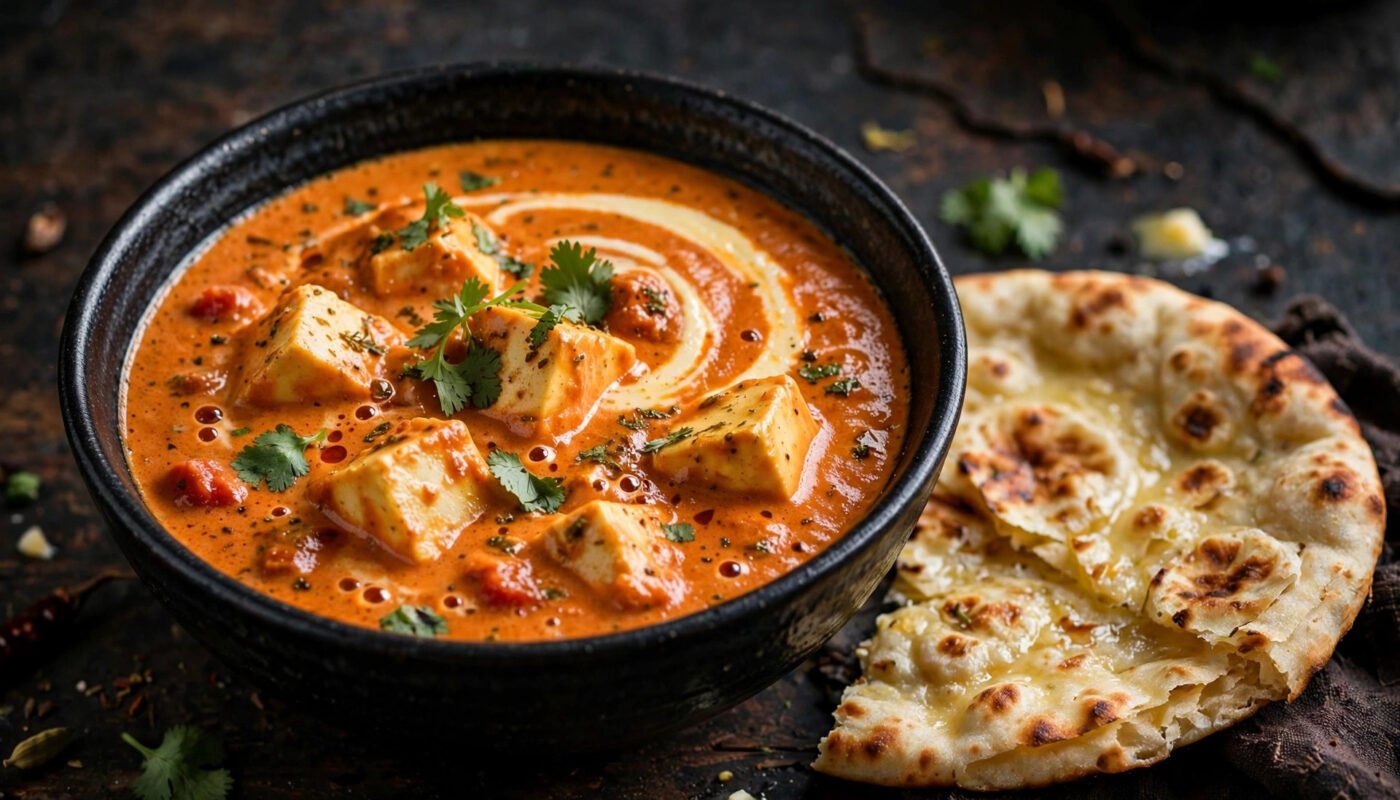
Soft paneer cubes in a velvety tomato-cashew makhani gravy. This restaurant-style paneer butter masala is rich, mildly spiced, and ready in 40 minutes.
Ingredients
- 400g fresh paneer, cut into 1-inch cubes
- 500g (about 4 large) ripe red tomatoes, roughly chopped
- 1 large onion, roughly chopped (about 150g)
- 12-15 cashew nuts, soaked in warm water for 20 minutes
- 1 tbsp ginger-garlic paste
- 1.5 tbsp Kashmiri red chilli powder
- 1 tsp garam masala
- 1/2 tsp turmeric powder
- 50g (about 3.5 tbsp) unsalted butter, divided
- 1 tbsp neutral oil
- 1 tbsp kasuri methi (dried fenugreek leaves)
- 120ml (1/2 cup) fresh cream, plus extra for garnish
- 1 tbsp honey or sugar
- 1 tbsp tomato ketchup (optional, for restaurant gloss)
- 1.25 tsp salt, or to taste
- 2 tbsp fresh coriander leaves, chopped, for garnish
Instructions
- Soften the paneer. Place the paneer cubes in a bowl of hot (not boiling) salted water and let them soak for 15 minutes while you start the gravy. This rehydrates the paneer, making it soft and porous so it drinks up the gravy later. Drain and pat dry before searing; wet paneer will steam instead of browning.
- Sear the paneer golden. Heat 1 tablespoon of butter with 1 tablespoon of oil in a skillet over medium-high heat. Sear the drained paneer cubes in a single layer for 1-2 minutes per side until lightly golden at the edges. Do not overcook; you want a delicate crust, not a hard shell. Remove to a plate immediately. Over-seared paneer turns rubbery, so err on the side of pale.
- Build the gravy base. In a heavy kadhai, melt the remaining butter over medium heat. Add the chopped onion and saute 5-6 minutes until soft and translucent. Stir in the ginger-garlic paste and cook 1 minute until fragrant. Add the Kashmiri chilli powder, turmeric, and half the garam masala, stirring 20 seconds to bloom the spices in the fat.
- Simmer the tomatoes. Add the chopped tomatoes, drained cashews, 1 teaspoon salt, and 250ml (1 cup) water. Bring to a boil, then cover and simmer on medium-low for 15 minutes, until the tomatoes collapse into a thick pulp and the oil shimmers at the edges. The mixture should look jammy and deeply red before you blend.
- Blend silky smooth. Cool for 10 minutes, then blend to a completely smooth puree. Push through a fine sieve back into the pan for a flawless, velvety texture; this removes any stubborn tomato skin or cashew grit and is worth every minute.
- Finish the makhani gravy. Return the strained gravy to low heat. Stir in the honey, kasuri methi crushed between your palms, the remaining garam masala, and the optional ketchup. Pour in the cream and simmer gently for 4-5 minutes until the gravy thickens enough to coat a spoon. Taste and adjust salt and sweetness; the gravy should taste balanced on its own before the paneer goes in.
- Add paneer and serve. Gently fold in the seared paneer cubes and simmer together for just 3-4 minutes, enough for the paneer to heat through and absorb flavour without toughening. Finish with a small knob of butter swirled in and a drizzle of cream. Garnish with coriander and serve hot with naan, jeera rice, or lachha paratha.
Tip: Read through the full post below for step-by-step photos, pro tips, variations and FAQs before you start cooking.
Introduction
If butter chicken is the king of North Indian curries, paneer butter masala is its beloved vegetarian twin, and in many households it is actually the more frequently cooked of the two. Born from the same Moti Mahal kitchens of Delhi that gave us murgh makhani, this dish takes soft cubes of fresh paneer and nestles them into a luscious makhani gravy of tomatoes, butter, cream, and cashews. It is the dish vegetarians order when they want to feel truly indulgent, and the dish non-vegetarians happily eat on meatless days without a moment of regret.
What makes paneer butter masala special is its gentleness. Unlike the fiery kadhai paneer or the rustic palak paneer, this curry is mild, creamy, and slightly sweet, designed to please everyone from children to grandparents. The gravy is the star: silky, glowing orange, fragrant with kasuri methi and garam masala. The paneer plays the perfect supporting role, soaking up the gravy while staying soft and milky. A great paneer butter masala should never have rubbery, chewy paneer; the cubes should yield at the gentlest bite.
This recipe is also one of the most forgiving curries you can make, which is why I recommend it to every beginner. The gravy is blended smooth, so there is no worry about undercooked onions or raw spice flavours. The paneer needs only a quick sear. And the whole dish comes together in about 45 minutes with pantry staples. I will show you my trick for keeping paneer pillowy-soft even after simmering, and the small finishing touches that make this taste like it came from a proper restaurant kitchen rather than a weeknight rush.
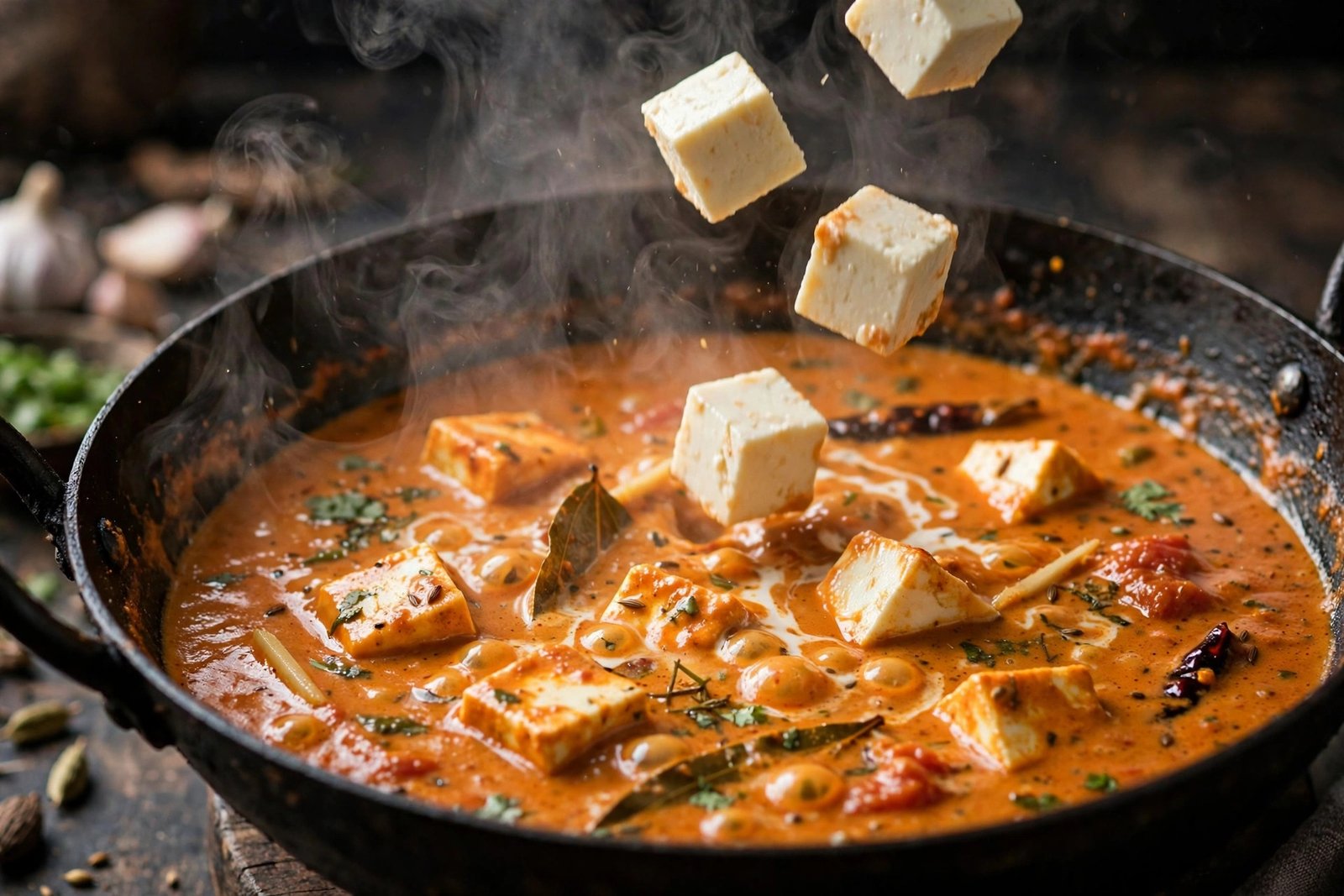
Why You’ll Love This Recipe
- Beginner-friendly: A blended gravy means no advanced technique required; if you can saute and blend, you can make this.
- Ready in 45 minutes: Faster than delivery, and infinitely better tasting.
- Crowd-pleasing mild flavour: Creamy and gently spiced, perfect for kids and spice-sensitive eaters.
- Pillowy paneer guarantee: A simple soaking trick keeps the paneer soft even in leftovers.
- One gravy, many dishes: Master this makhani base and you can spin it into dal makhani-style lentils or veg makhani.
- Vegetarian showstopper: Rich enough for festive dinners and dinner parties.
Key Ingredients Explained
Let us start with the paneer, because it is the ingredient people get wrong most often. Use fresh, soft paneer, either homemade or a good-quality store brand. Fresh paneer is milky and tender; old, refrigerated paneer turns rubbery. If your paneer feels firm, soak the cubes in hot salted water for 15 minutes before cooking; this single step revives even mediocre paneer, making it soft and spongy so it absorbs the gravy. Do not deep-fry paneer for this dish. A quick golden sear in a little butter is enough; deep frying makes it chewy.
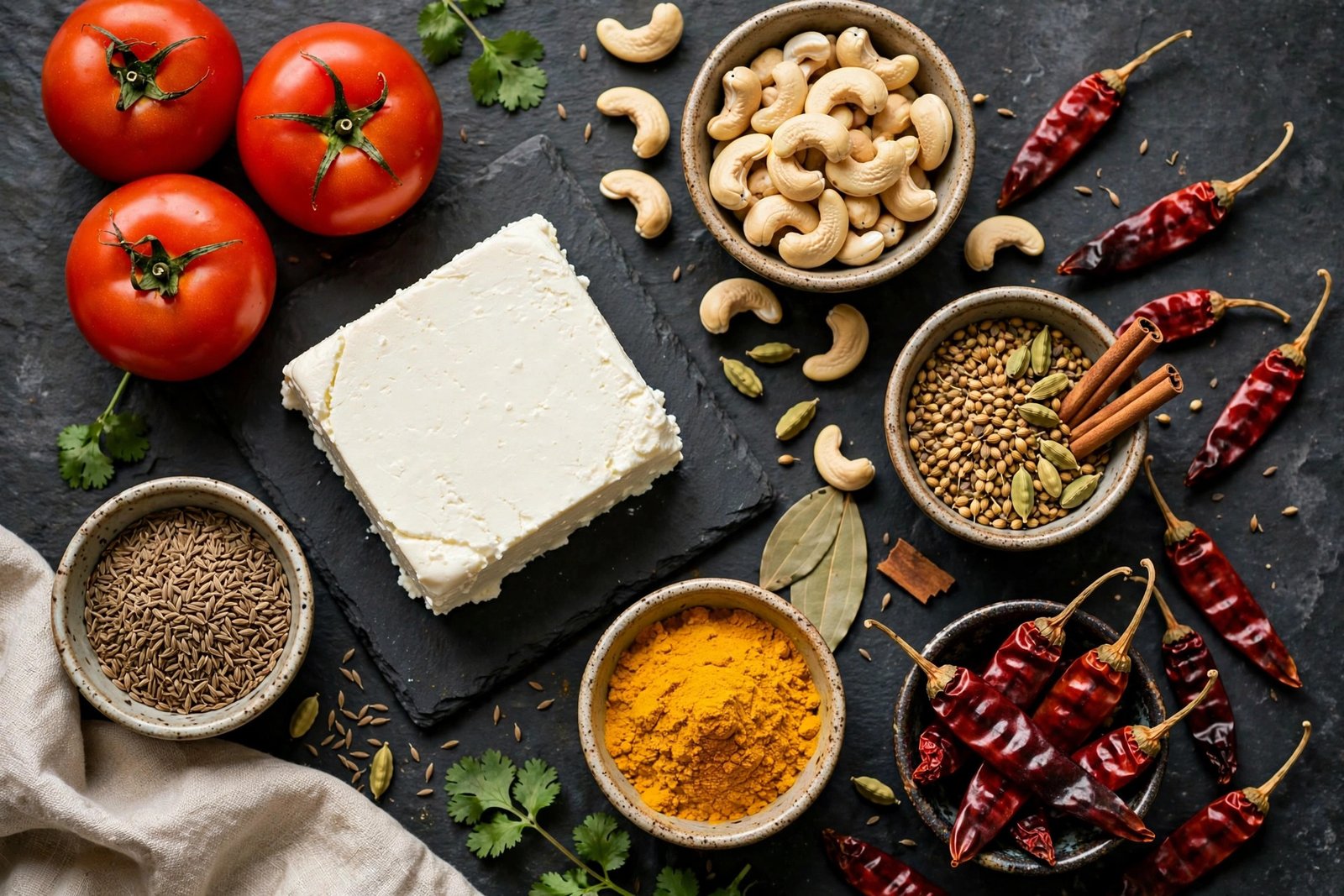
The gravy follows the classic makhani blueprint. Ripe red tomatoes provide the tangy-sweet base; as with butter chicken, tinned crushed tomatoes are a fine winter substitute. Cashew nuts are the thickener and the source of the gravy’s luxurious body; soak them so they blend completely smooth. Some recipes use melon seeds, but cashews are easier and richer. Butter and fresh cream deliver the signature richness; use unsalted butter so you control the salt. Kasuri methi is the soul of the makhani flavour, crushed and added near the end. Kashmiri red chilli powder gives colour without fierce heat, keeping the curry mild and family-friendly. A touch of honey or sugar balances the tomato acidity, and ginger-garlic paste plus garam masala round out the warm spice base. An optional spoon of tomato ketchup is my restaurant-secret addition; it adds a subtle sweetness and gloss that mimics the professional version.
Equipment You’ll Need
- Heavy-bottomed pan or kadhai: For even cooking of the gravy without scorching.
- Blender: For the silky-smooth makhani puree.
- Fine-mesh sieve: Optional, for the most velvety restaurant-style texture.
- Non-stick or cast-iron skillet: For searing the paneer cubes golden.
- Small bowl: For soaking the paneer in hot salted water.
Ingredients
- 400g fresh paneer, cut into 1-inch cubes
- 500g (about 4 large) ripe red tomatoes, roughly chopped
- 1 large onion, roughly chopped (about 150g)
- 12-15 cashew nuts, soaked in warm water for 20 minutes
- 1 tbsp ginger-garlic paste
- 1.5 tbsp Kashmiri red chilli powder
- 1 tsp garam masala
- 1/2 tsp turmeric powder
- 50g (about 3.5 tbsp) unsalted butter, divided
- 1 tbsp neutral oil
- 1 tbsp kasuri methi (dried fenugreek leaves)
- 120ml (1/2 cup) fresh cream, plus extra for garnish
- 1 tbsp honey or sugar
- 1 tbsp tomato ketchup (optional, for restaurant gloss)
- 1.25 tsp salt, or to taste
- 2 tbsp fresh coriander leaves, chopped, for garnish
Instructions
- Soften the paneer. Place the paneer cubes in a bowl of hot (not boiling) salted water and let them soak for 15 minutes while you start the gravy. This rehydrates the paneer, making it soft and porous so it drinks up the gravy later. Drain and pat dry before searing; wet paneer will steam instead of browning.
- Sear the paneer golden. Heat 1 tablespoon of butter with 1 tablespoon of oil in a skillet over medium-high heat. Sear the drained paneer cubes in a single layer for 1-2 minutes per side until lightly golden at the edges. Do not overcook; you want a delicate crust, not a hard shell. Remove to a plate immediately. Over-seared paneer turns rubbery, so err on the side of pale.
- Build the gravy base. In a heavy kadhai, melt the remaining butter over medium heat. Add the chopped onion and saute 5-6 minutes until soft and translucent. Stir in the ginger-garlic paste and cook 1 minute until fragrant. Add the Kashmiri chilli powder, turmeric, and half the garam masala, stirring 20 seconds to bloom the spices in the fat.
- Simmer the tomatoes. Add the chopped tomatoes, drained cashews, 1 teaspoon salt, and 250ml (1 cup) water. Bring to a boil, then cover and simmer on medium-low for 15 minutes, until the tomatoes collapse into a thick pulp and the oil shimmers at the edges. The mixture should look jammy and deeply red before you blend.
- Blend silky smooth. Cool for 10 minutes, then blend to a completely smooth puree. Push through a fine sieve back into the pan for a flawless, velvety texture; this removes any stubborn tomato skin or cashew grit and is worth every minute.
- Finish the makhani gravy. Return the strained gravy to low heat. Stir in the honey, kasuri methi crushed between your palms, the remaining garam masala, and the optional ketchup. Pour in the cream and simmer gently for 4-5 minutes until the gravy thickens enough to coat a spoon. Taste and adjust salt and sweetness; the gravy should taste balanced on its own before the paneer goes in.
- Add paneer and serve. Gently fold in the seared paneer cubes and simmer together for just 3-4 minutes, enough for the paneer to heat through and absorb flavour without toughening. Finish with a small knob of butter swirled in and a drizzle of cream. Garnish with coriander and serve hot with naan, jeera rice, or lachha paratha.
Pro Tips for Perfect Results
- Always soak the paneer. The hot salted water soak is the difference between spongy, gravy-absorbing paneer and rubbery cubes. Never skip it with store-bought paneer.
- Sear, do not fry. A light golden sear adds flavour; deep frying or prolonged searing makes paneer tough and chewy.
- Strain for silkiness. Sieving the blended gravy is what gives you that seamless restaurant mouthfeel with zero graininess.
- Add paneer at the very end. Paneer needs only 3-4 minutes in the gravy. Longer simmering squeezes out moisture and toughens it.
- Keep the heat low after cream. A hard boil will split the cream and ruin the smooth texture. Gentle simmer only.
- Taste the gravy solo. The gravy should taste perfectly balanced before the paneer goes in, since paneer itself is bland and will dilute seasoning slightly.
- Fresh kasuri methi matters. Old, stale kasuri methi smells dusty instead of aromatic. Buy small quantities and crush just before using.
Variations to Try
This makhani gravy is a launchpad. Paneer lababdar is its bolder sibling: keep the gravy chunky instead of strained, add diced capsicum and onion petals, and finish with extra garam masala for a semi-dry restaurant favourite. Shahi paneer leans more royal, with a milder, sweeter gravy enriched with melon seeds and a touch of saffron. For a veg makhani, swap the paneer for mixed vegetables like carrots, beans, peas, and cauliflower simmered directly in the gravy. A smoky version benefits from the dhungar charcoal-smoke method for dhaba vibes. And for a lighter take, replace the cream with cashew cream (blended soaked cashews and water) and cut the butter in half; the cashews already in the gravy keep it rich.
Serving Suggestions
Paneer butter masala was born to be scooped with bread. Butter naan or garlic naan are the classic pairings, their charred bubbles perfect for the creamy gravy. Lachha paratha, with its flaky layers, is another excellent match. If you prefer rice, jeera rice or vegetable pulao work beautifully. Balance the richness with a cucumber raita or a simple kachumber salad, and add pickled onions for sharpness. For a festive thali, serve alongside dal tadka, jeera aloo, and gulab jamun for dessert. A sweet lassi or masala chaas makes the ideal cooling drink.
Storage and Reheating
Paneer butter masala keeps in the refrigerator for up to 3 days in an airtight container, and the flavour deepens overnight. The paneer will firm up slightly when cold; reheat gently in a pan over low heat with a splash of milk or water, stirring carefully so the cubes do not break. Avoid vigorous boiling during reheating. The gravy alone freezes well for up to 2 months; freeze it without the paneer, then thaw and add freshly seared paneer when serving for the best texture. Microwaving works in a pinch: use medium power in short bursts, stirring between, to avoid toughening the paneer.
Frequently Asked Questions
Why did my paneer turn rubbery?
Rubbery paneer comes from overcooking: searing too long, simmering too long in the gravy, or reheating aggressively. Soak it in hot salted water first, sear briefly, add it at the very end for just 3-4 minutes, and reheat gently.
Can I make this without cream?
Yes. Blend extra soaked cashews (about 25) into a smooth cashew cream with water and use it in place of dairy cream. The result is still rich and velvety, and the dish becomes easily vegan if you also swap butter for oil and use tofu instead of paneer.
Can I use homemade paneer?
Absolutely, and it is the best option. Fresh homemade paneer is softer and milkier than any store brand. Press it lightly so it holds its shape when cubed, and you can even skip the soaking step since it is already soft.
How is paneer butter masala different from paneer makhani?
The names are often used interchangeably, and honestly the dishes overlap heavily. Purists say paneer makhani is slightly sweeter and milder with more butter, while paneer butter masala may carry a touch more spice. In practice, most restaurants serve essentially the same dish under both names.
Can I prepare the gravy in advance?
Yes, and you should for parties. Make the gravy through the blending and finishing steps, cool, and refrigerate for up to 3 days or freeze for 2 months. On serving day, reheat the gravy, sear fresh paneer, and combine. It tastes just-made.
My gravy tastes too tangy. How do I fix it?
Excess tang means the tomatoes were very acidic or under-ripe. Stir in another teaspoon of honey or sugar and an extra tablespoon of cream, and let it simmer 5 more minutes. A pinch of baking soda (just a pinch) can also neutralise acidity, but use it sparingly as too much affects flavour.
Paneer butter masala is proof that vegetarian food needs no apology and no compromise. It is rich without being heavy, mild without being boring, and impressive without being difficult. Make it for your next family dinner and watch even the committed carnivores reach for seconds. And remember the golden rules: soak the paneer, strain the gravy, and finish with that final knob of butter. Happy cooking!