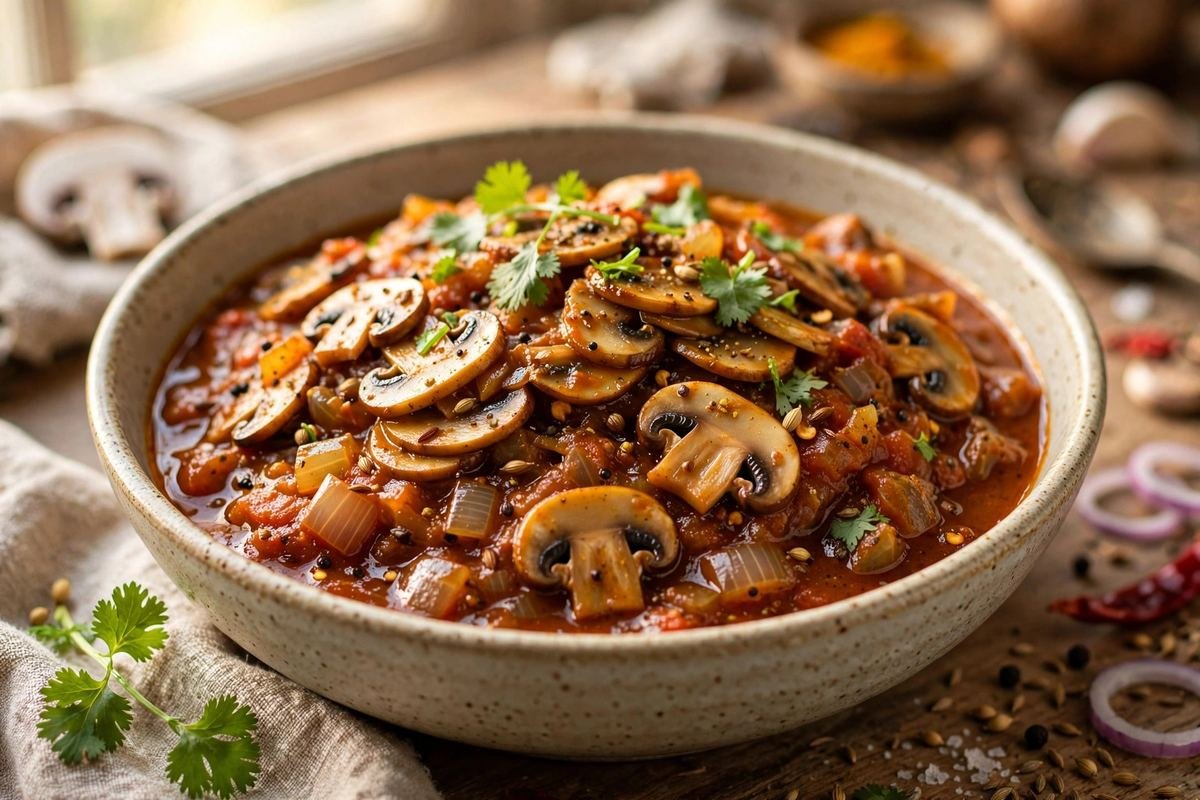
Recipe Card
Juicy mushrooms simmered in a spiced onion-tomato masala. A 30-minute vegetarian curry with real depth, perfect for busy weeknights.
Ingredients
- 500g button mushrooms, wiped clean, quartered or halved
- 2 tbsp oil, plus 1 tbsp butter (or 3 tbsp oil for vegan)
- 1 tsp cumin seeds
- 2 medium onions (about 250g), finely chopped
- 1 tbsp ginger-garlic paste
- 1 green chilli, slit (optional, for extra heat)
- 3 medium tomatoes (about 300g), finely chopped, or 1 cup (240g) canned crushed tomatoes
- 1 tsp Kashmiri red chilli powder
- 1 tsp coriander powder
- ½ tsp turmeric powder
- 1 tsp kasuri methi, crushed
- ¾ tsp garam masala
- 1 tsp salt, or to taste
- ½ tsp sugar (optional, to balance acidity)
- ¾ cup (180ml) warm water
- 3–4 tbsp fresh cream, plus extra for drizzling
- 2 tbsp fresh coriander leaves, chopped
Instructions
- Prep the mushrooms. Wipe the mushrooms clean with a damp cloth — do not soak them. Trim any dry stem ends, then quarter large mushrooms and halve small ones so the pieces are roughly uniform, about 1-inch chunks. Uniform size means even searing. Have everything else chopped and measured before you start, because the cooking moves fast.
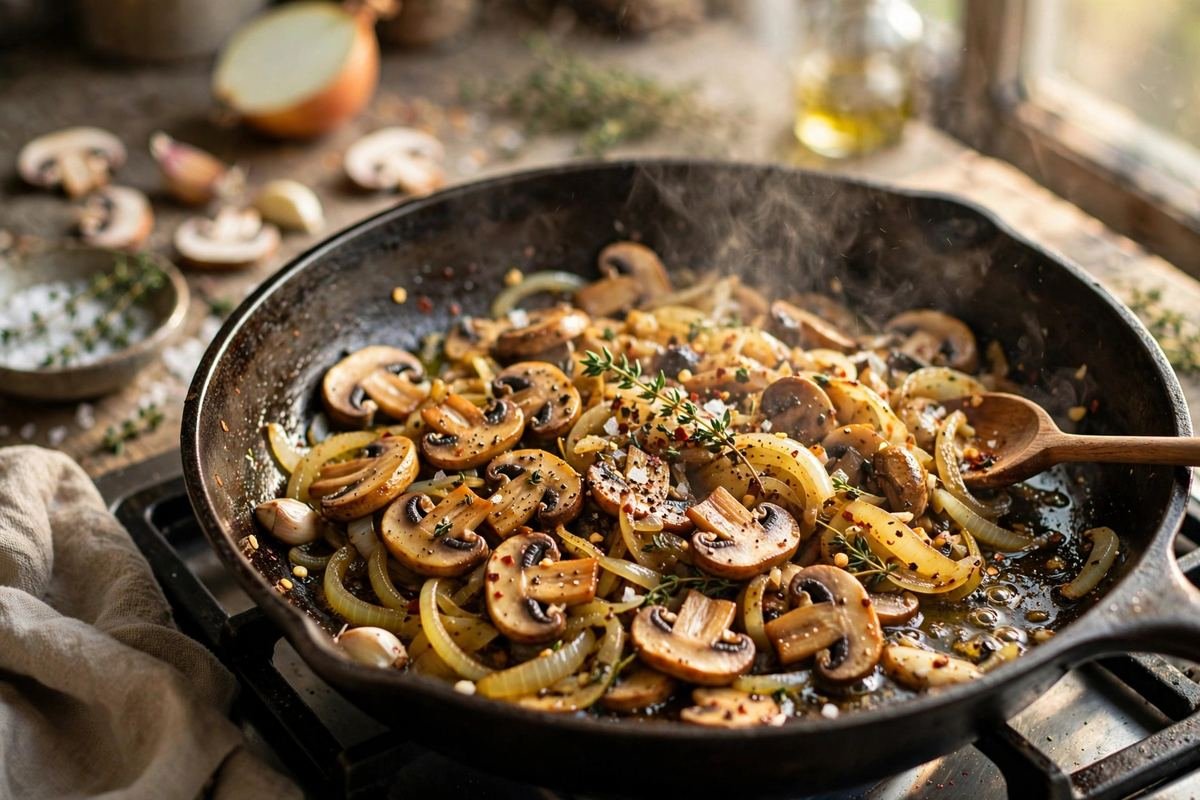
- Sear the mushrooms hard. Heat 1 tablespoon of oil plus the butter in a large kadhai over high heat until shimmering. Add half the mushrooms in a single layer — do not crowd the pan — and leave them undisturbed for 2 minutes so they develop a deep golden crust. Toss and sear 2 minutes more until golden on most sides and their released liquid has evaporated. Transfer to a bowl. Repeat with the remaining mushrooms, adding a touch more oil if needed. Properly seared mushrooms look nutty-brown, not grey and shrunken.
- Bloom the cumin. In the same kadhai (don’t wash it — the browned bits are flavor), heat the remaining tablespoon of oil over medium heat. Add the cumin seeds and let them crackle for 15 seconds until fragrant and a shade darker.
- Brown the onions. Add the chopped onions and cook over medium heat, stirring regularly, for 7–8 minutes until deep golden-brown at the edges. Take your time here — pale onions make a flat masala, while well-browned onions give sweetness and body. Stir in the ginger-garlic paste and slit green chilli (if using) and sauté for 1–2 minutes until the raw aroma disappears.
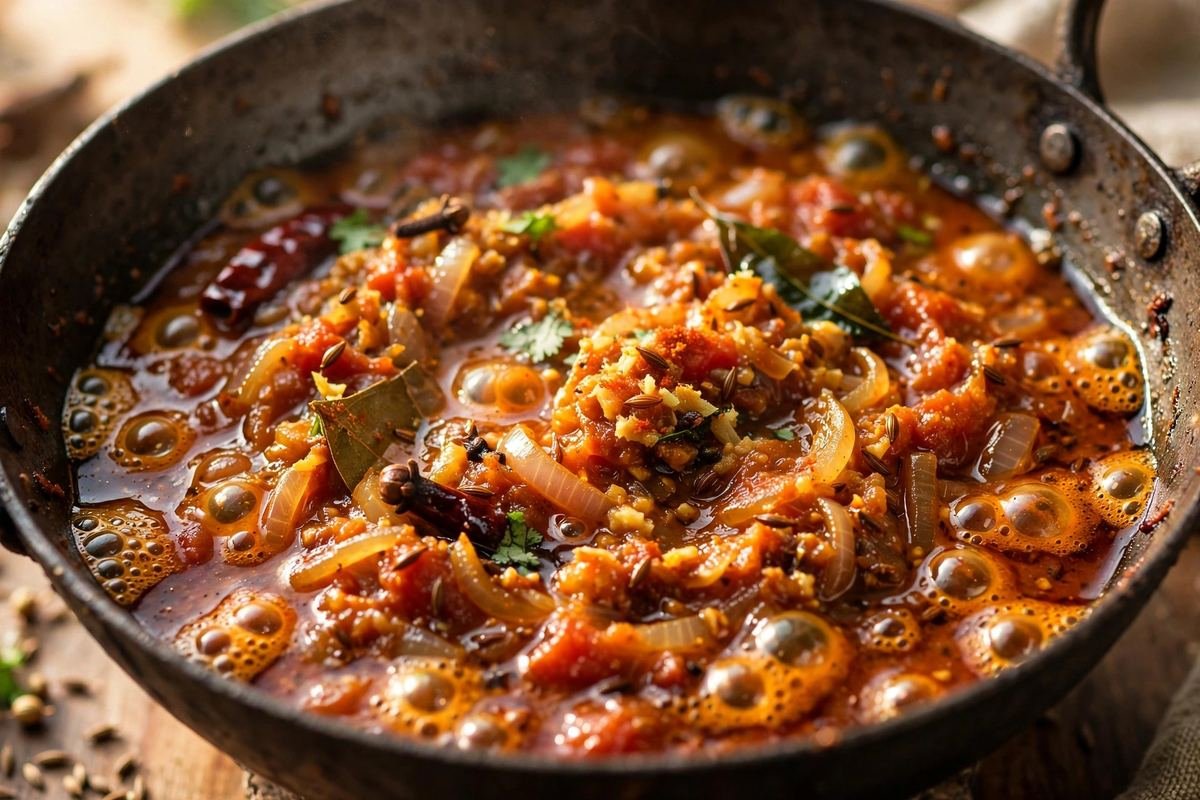
- Cook the tomatoes to a jammy masala. Add the chopped tomatoes, Kashmiri chilli powder, coriander powder, and turmeric. Cook over medium heat for 7–8 minutes, stirring and mashing the tomatoes with your spoon, until they break down completely into a thick, dark paste and you see oil glistening at the edges. This visual cue — oil separating — tells you the masala is properly cooked and the raw acidity is gone.
- Simmer the mushrooms in the gravy. Return the seared mushrooms to the kadhai along with any juices in the bowl. Add the salt, sugar (if using), and ¾ cup of warm water, stirring to coat. Bring to a gentle simmer, then cover and cook on medium-low for 8–10 minutes. The mushrooms will release a little more liquid and then reabsorb the spiced gravy, turning deeply flavored and tender.
- Finish with kasuri methi and cream. Uncover and crush the kasuri methi between your palms directly over the pan. Stir in the garam masala and cook 1 minute. Reduce the heat to low and stir in the fresh cream, simmering gently for 1–2 minutes until the gravy turns glossy and coats the mushrooms thickly. Don’t boil hard after adding cream. Taste and adjust salt and chilli.
- Rest and serve. Switch off the heat, scatter the fresh coriander over the top, and rest covered for 5 minutes. Serve hot with a drizzle of cream and extra coriander.
Tip: Read through the full post below for step-by-step photos, pro tips, variations and FAQs before you start cooking.
Every home cook needs a curry that delivers deep, restaurant-style flavor on a Tuesday night with zero drama. For me, that curry is mushroom masala. In about thirty-five minutes — most of it hands-off simmering — you get juicy button mushrooms folded into a glossy onion-tomato masala, warmed with ginger, brightened with kasuri methi, and finished with a swirl of cream. It tastes like something that took all afternoon. It did not.
Mushrooms are a relatively recent love affair in the North Indian kitchen, arriving with urbanization and the rise of the humble button mushroom, but they have been embraced with characteristic enthusiasm. Their meaty, umami-rich flesh soaks up masala like nothing else, making mushroom masala a favorite at vegetarian dinner parties and dhaba menus alike — the dish non-vegetarians order without feeling like they’re missing out. Unlike paneer, mushrooms need no marination; unlike cauliflower, they need no parboiling. They ask only to be seared hard and fast, then given ten minutes to drink in the gravy.
The secret to great mushroom masala is treating the mushrooms right. Crowd them in the pan and they steam into rubbery grey sadness; sear them in a single layer over high heat and they turn golden, nutty, and intensely savory. The masala itself is a classic North Indian base — onions browned deep, tomatoes cooked to jammy sweetness, ginger-garlic for backbone — but the finishing touches make it sing: crushed kasuri methi for that dhaba aroma, garam masala stirred in off the heat so its fragrance doesn’t cook away, and cream for silk. This is weeknight cooking at its smartest: simple technique, bold flavor, dinner on the table before anyone gets hangry.
Why You’ll Love This Recipe
- Ready in 35 minutes flat. From chopping board to dinner table in about half an hour — genuinely weeknight-friendly.
- Big flavor, minimal effort. A proper sear on the mushrooms plus a well-cooked masala gives you restaurant depth without a long ingredient list.
- Meaty satisfaction, vegetarian plate. Mushrooms’ umami richness makes this a curry even committed carnivores devour.
- One-pan cooking. Sear the mushrooms, build the masala, simmer — all in the same kadhai, so cleanup is trivial.
- Flexible and forgiving. Works with any mushroom variety, adapts to vegan with coconut cream, and reheats beautifully.
- Crowd-pleasing mild-medium heat. Warmly spiced rather than fiery, so the whole family can enjoy it.
Key Ingredients Explained
Use fresh button mushrooms — about 500g, firm, white or lightly cream-colored, with caps that are closed or only slightly open. Avoid slimy, dark-spotted, or shriveled mushrooms; they release too much water and taste muddy. Wipe them clean with a damp cloth rather than soaking them — mushrooms are sponges, and waterlogged mushrooms never sear properly. Quarter large ones and halve small ones so every piece is roughly bite-sized and sears evenly.
The masala base is classic North Indian: onions chopped fine and cooked to a deep golden-brown for sweetness, tomatoes (fresh or canned) cooked until the oil separates for tang without sharpness, and fresh ginger-garlic paste for aromatic backbone. Kashmiri red chilli powder gives color with gentle heat; add regular chilli powder or a chopped green chilli if you want more fire. Coriander powder and turmeric round out the base, while garam masala goes in at the very end to preserve its fragrance.
Two finishing ingredients elevate this from good to memorable. Kasuri methi (dried fenugreek leaves), crushed between your palms and sprinkled in during the last minutes, adds the unmistakable smoky-sweet aroma of dhaba cooking. Fresh cream — just 3–4 tablespoons — gives the gravy its glossy, restaurant-style body. For a vegan version, coconut cream works beautifully and adds a subtle sweetness; for a lighter version, whisked curd or cashew paste can replace the cream. A knob of butter alongside the oil when searing the mushrooms adds nutty richness, but oil alone is fine.
Equipment You’ll Need
- A large, heavy kadhai or skillet — wide enough to sear the mushrooms in a single layer without crowding.
- A sharp knife and chopping board — mushrooms should be cut just before cooking so they don’t oxidize.
- A wooden spoon or spatula — for stirring the masala without breaking the mushrooms.
- A small bowl — for holding the seared mushrooms while you build the masala.
- 500g button mushrooms, wiped clean, quartered or halved
- 2 tbsp oil, plus 1 tbsp butter (or 3 tbsp oil for vegan)
- 1 tsp cumin seeds
- 2 medium onions (about 250g), finely chopped
- 1 tbsp ginger-garlic paste
- 1 green chilli, slit (optional, for extra heat)
- 3 medium tomatoes (about 300g), finely chopped, or 1 cup (240g) canned crushed tomatoes
- 1 tsp Kashmiri red chilli powder
- 1 tsp coriander powder
- ½ tsp turmeric powder
- 1 tsp kasuri methi, crushed
- ¾ tsp garam masala
- 1 tsp salt, or to taste
- ½ tsp sugar (optional, to balance acidity)
- ¾ cup (180ml) warm water
- 3–4 tbsp fresh cream, plus extra for drizzling
- 2 tbsp fresh coriander leaves, chopped
- Prep the mushrooms. Wipe the mushrooms clean with a damp cloth — do not soak them. Trim any dry stem ends, then quarter large mushrooms and halve small ones so the pieces are roughly uniform, about 1-inch chunks. Uniform size means even searing. Have everything else chopped and measured before you start, because the cooking moves fast.
- Sear the mushrooms hard. Heat 1 tablespoon of oil plus the butter in a large kadhai over high heat until shimmering. Add half the mushrooms in a single layer — do not crowd the pan — and leave them undisturbed for 2 minutes so they develop a deep golden crust. Toss and sear 2 minutes more until golden on most sides and their released liquid has evaporated. Transfer to a bowl. Repeat with the remaining mushrooms, adding a touch more oil if needed. Properly seared mushrooms look nutty-brown, not grey and shrunken.
- Bloom the cumin. In the same kadhai (don’t wash it — the browned bits are flavor), heat the remaining tablespoon of oil over medium heat. Add the cumin seeds and let them crackle for 15 seconds until fragrant and a shade darker.
- Brown the onions. Add the chopped onions and cook over medium heat, stirring regularly, for 7–8 minutes until deep golden-brown at the edges. Take your time here — pale onions make a flat masala, while well-browned onions give sweetness and body. Stir in the ginger-garlic paste and slit green chilli (if using) and sauté for 1–2 minutes until the raw aroma disappears.
- Cook the tomatoes to a jammy masala. Add the chopped tomatoes, Kashmiri chilli powder, coriander powder, and turmeric. Cook over medium heat for 7–8 minutes, stirring and mashing the tomatoes with your spoon, until they break down completely into a thick, dark paste and you see oil glistening at the edges. This visual cue — oil separating — tells you the masala is properly cooked and the raw acidity is gone.
- Simmer the mushrooms in the gravy. Return the seared mushrooms to the kadhai along with any juices in the bowl. Add the salt, sugar (if using), and ¾ cup of warm water, stirring to coat. Bring to a gentle simmer, then cover and cook on medium-low for 8–10 minutes. The mushrooms will release a little more liquid and then reabsorb the spiced gravy, turning deeply flavored and tender.
- Finish with kasuri methi and cream. Uncover and crush the kasuri methi between your palms directly over the pan. Stir in the garam masala and cook 1 minute. Reduce the heat to low and stir in the fresh cream, simmering gently for 1–2 minutes until the gravy turns glossy and coats the mushrooms thickly. Don’t boil hard after adding cream. Taste and adjust salt and chilli.
- Rest and serve. Switch off the heat, scatter the fresh coriander over the top, and rest covered for 5 minutes. Serve hot with a drizzle of cream and extra coriander.
Pro Tips for Perfect Results
- Never crowd the mushrooms. Sear in batches in a single layer. Crowded mushrooms steam instead of searing, turning grey, rubbery, and bland.
- Don’t wash mushrooms under running water. They absorb water like sponges. A damp cloth wipe keeps them dry enough to sear instead of steam.
- High heat for the sear, medium for the masala. The initial blast of heat creates the golden, nutty crust; the masala needs gentler heat to brown without burning.
- Cook the masala until the oil separates. This is the universal sign of a well-cooked Indian gravy base. Undercooked tomato masala tastes raw and sharp.
- Add garam masala at the end. Its volatile aromatics fade with prolonged cooking, so stir it in during the final minutes for maximum fragrance.
- Warm water, not cold. Adding cold water to a hot masala shocks it and can dull the flavors; warm water keeps the simmer gentle and even.
- Don’t overcook the mushrooms. Ten minutes in the gravy is plenty. Mushrooms simmered to mush lose their satisfying bite — they should be tender but still distinctly mushroomy.
Variations to Try
Mushroom matar masala: Add ¾ cup (100g) of green peas with the mushrooms for the classic restaurant combination — sweet peas against earthy mushrooms is a winner. Mushroom do pyaza: Add a cup of chunky onion petals (large dice) in the last 5 minutes for extra onion crunch and sweetness. Spicy Kolhapuri style: Replace the garam masala with 2 teaspoons of Kolhapuri masala and add extra chilli for a fiery Maharashtrian version. Creamy shahi version: Blend ¼ cup of soaked cashews into a paste and add with the tomatoes for a richer, Mughlai-style gravy. Mushroom tikka masala: Marinate the mushrooms in curd, tandoori masala, and mustard oil for 20 minutes, grill or air-fry them, then fold into the gravy. Vegan mushroom masala: Use oil instead of butter and coconut cream instead of dairy cream — the coconut adds a lovely subtle sweetness.
Serving Suggestions
Mushroom masala is at its best with hot butter naan or tandoori roti for scooping up every bit of gravy. It also pairs beautifully with jeera rice or plain steamed basmati — spoon the curry generously over the rice and let the gravy soak in. For a complete weeknight thali, add dal fry, a simple cucumber raita, and a green salad. It makes an excellent lunchbox curry with parathas, since the flavors deepen by midday. For entertaining, serve it as part of a vegetarian spread alongside paneer butter masala and dal makhani — guests always go back for the mushrooms. And don’t overlook breakfast: leftover mushroom masala folded into an omelette or spooned over toast is genuinely fantastic.
Storage and Reheating
Cool completely and refrigerate in an airtight container for up to 3 days. Mushrooms continue to absorb gravy, so day-two mushroom masala is arguably even better. Reheat gently in a pan over medium-low heat for 5–6 minutes, adding a splash of water if the gravy has thickened too much; stir carefully to keep the mushrooms intact. The microwave works too (2–3 minutes, stirring halfway). Refresh with a drizzle of cream and fresh coriander. Freezing is possible for up to 1 month, but mushrooms turn slightly spongy after thawing — if you must freeze, slightly undercook the mushrooms so they survive reheating better. This curry is best enjoyed fresh or within a couple of days.
Frequently Asked Questions
Why did my mushrooms turn out rubbery and grey?
Almost certainly overcrowding or low heat during the sear. Mushrooms release a lot of water; if the pan is crowded or not hot enough, they stew in their own liquid instead of searing. Use high heat, a single layer, and batches — and don’t touch them for the first two minutes so a proper crust forms.
Should I wash mushrooms before cooking?
A quick wipe with a damp cloth is enough for cultivated button mushrooms, which grow in clean conditions. Soaking or rinsing under the tap waterlogs them and ruins the sear. If they’re visibly dirty, a very quick rinse followed by thorough patting dry is acceptable.
Can I use other mushroom varieties?
Absolutely. Cremini (baby bella) mushrooms add deeper flavor; a mix of button, cremini, and oyster mushrooms makes a more interesting curry. Denser varieties like shiitake need a slightly longer sear. Avoid delicate enoki, which dissolve into the gravy.
How do I make this vegan?
Swap the butter for oil and the fresh cream for coconut cream or a cashew paste (¼ cup soaked cashews blended smooth). The curry is otherwise plant-based. Coconut cream adds a subtle sweetness that pairs wonderfully with mushrooms.
Can I make mushroom masala ahead for a party?
Yes — make it up to a day ahead and refrigerate. The flavors meld beautifully overnight. Reheat gently on the stovetop, refresh with a swirl of cream and fresh coriander just before serving, and no one will guess it wasn’t made fresh.
My gravy is too thin / too thick. How do I fix it?
Too thin: simmer uncovered for a few extra minutes to reduce, or mash a few mushroom pieces into the gravy to thicken it naturally. Too thick: stir in warm water a few tablespoons at a time until it reaches a coating consistency. Remember the gravy thickens further as it rests.
That’s mushroom masala — proof that a weeknight curry doesn’t have to taste like a compromise. Sear those mushrooms properly, cook your masala until the oil shines, and finish with cream and kasuri methi, and you’ll have a curry that earns a permanent spot in your rotation. Thirty-five minutes, one pan, zero leftovers. Enjoy.