Recipe Card
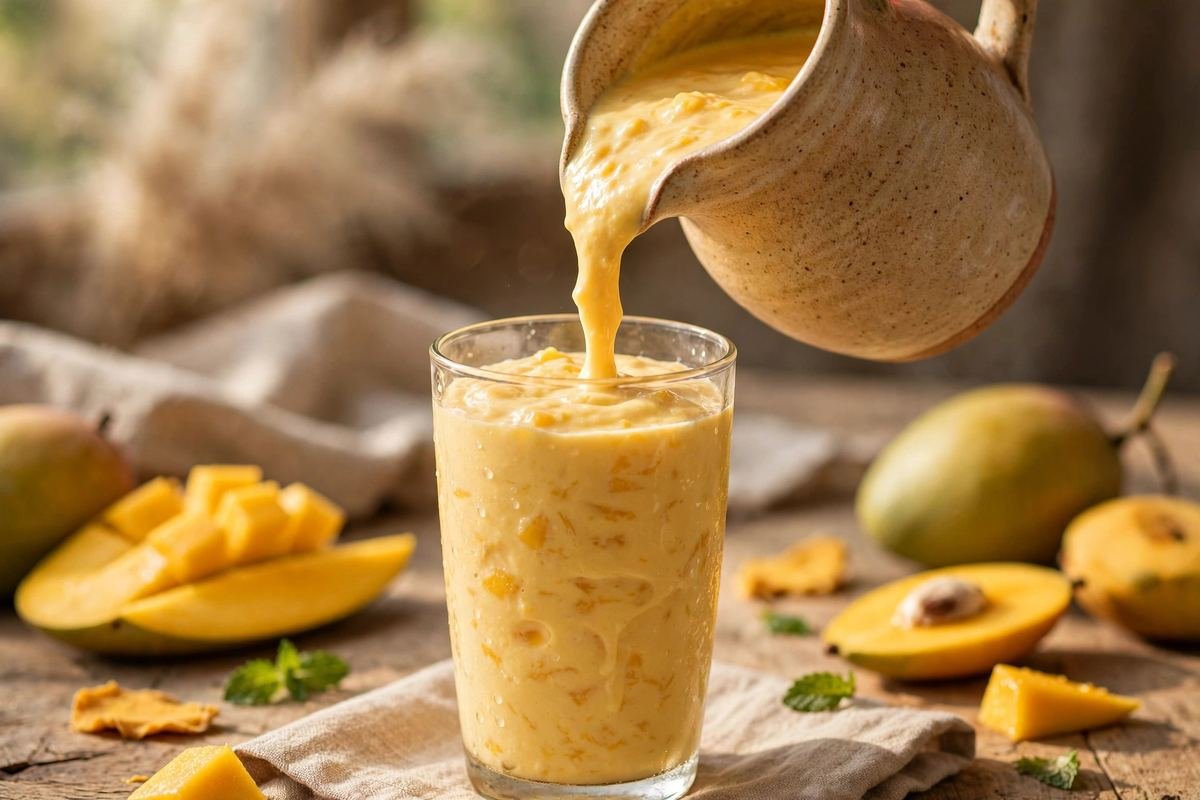
Ripe mangoes blended silky-smooth with creamy yogurt, a whisper of cardamom, and crushed ice — the classic Punjabi mango lassi, thick enough to stand a spoon in.
Ingredients
- 3 large (about 750g) ripe alphonso or kesar mangoes (about 2.5 cups / 500g chopped flesh), plus extra diced mango for topping
- 2 cups (500g) thick full-fat plain yogurt (dahi), chilled
- 1/2 cup (120 ml) chilled milk (adjust for desired thickness)
- 2–3 tbsp sugar, to taste (or honey)
- 1/4 tsp freshly ground green cardamom
- 1 tiny pinch salt
- 8–10 ice cubes (or 1 cup frozen mango cubes)
- 2 tbsp malai (clotted cream) or whipped cream, for topping (optional but traditional)
- 2 tbsp pistachios, chopped, for garnish
- A few saffron strands, for garnish (optional)
Instructions
- Prep the mangoes. Slice the cheeks off each mango, score the flesh in a crosshatch, and scoop out the cubes with a spoon; also cut the flesh from around the stone. You need about 2.5 cups of mango flesh. Reserve a few tablespoons of the prettiest cubes for garnish. Taste a piece — it should be honey-sweet and fragrant. If your mangoes are even slightly underripe or fibrous, blend the pulp and pass it through a sieve before proceeding; this one step rescues the texture completely.
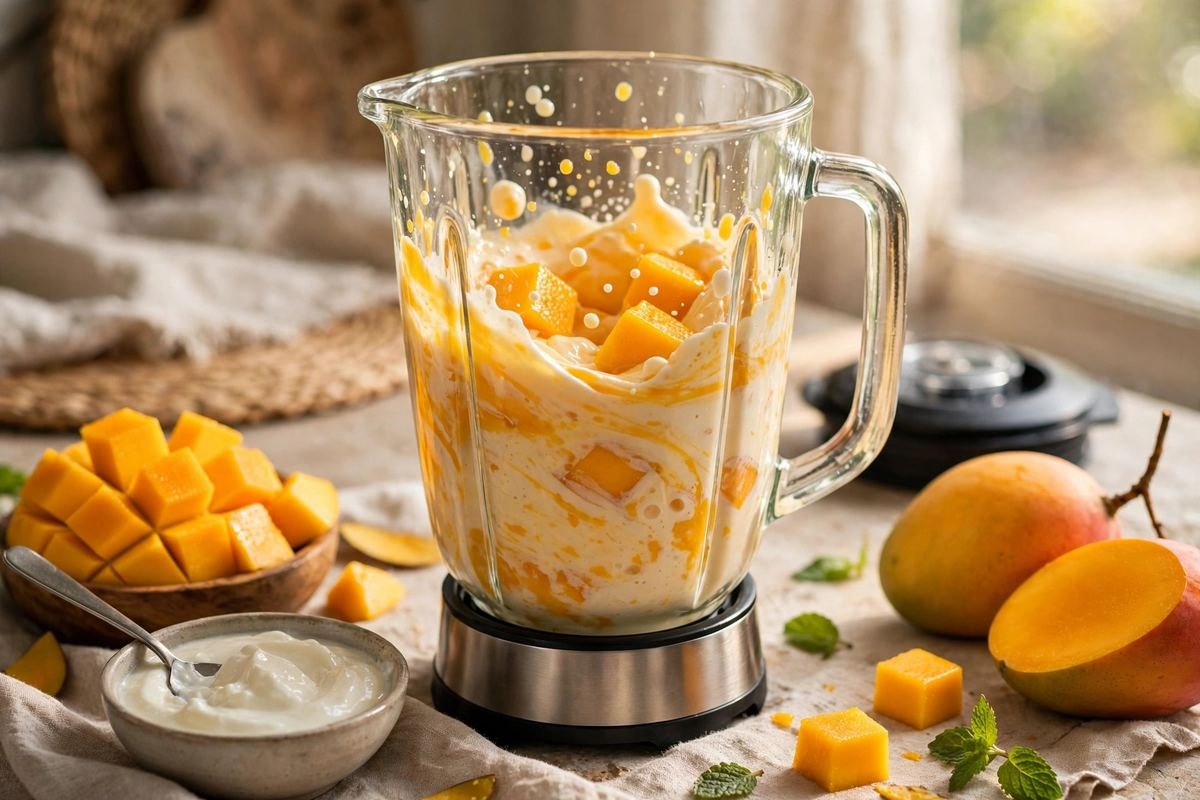
- Blend mango to a silky purée first. Put the mango flesh in the blender with the sugar and blend until completely smooth, about 45 to 60 seconds. Blending the mango alone first (rather than everything at once) guarantees no fibrous bits survive and lets you check the sweetness before the yogurt goes in. The purée should look like velvet — thick, glossy, and uniformly orange with no streaks or lumps.
- Add yogurt, milk, and flavourings. Add the chilled yogurt, half of the milk, the ground cardamom, and the tiny pinch of salt to the mango purée. Blend for 30 to 40 seconds until thick and creamy. Now check the consistency: it should pour in a slow, thick ribbon and coat the back of a spoon. Too thick? Blend in the remaining milk a splash at a time. Too thin? Add a few more spoonfuls of yogurt or a handful of frozen mango cubes and blend again.
- Add ice and blend to frosty perfection. Drop in the ice cubes and blend for another 20 to 30 seconds, just until the ice is crushed through and the lassi turns pale, frothy, and ice-cold. Do not over-blend at this stage — prolonged blending warms the mixture and melts the ice into dilution. Taste once more and adjust: more sugar if the mangoes were mild, a touch more cardamom if you like it fragrant.
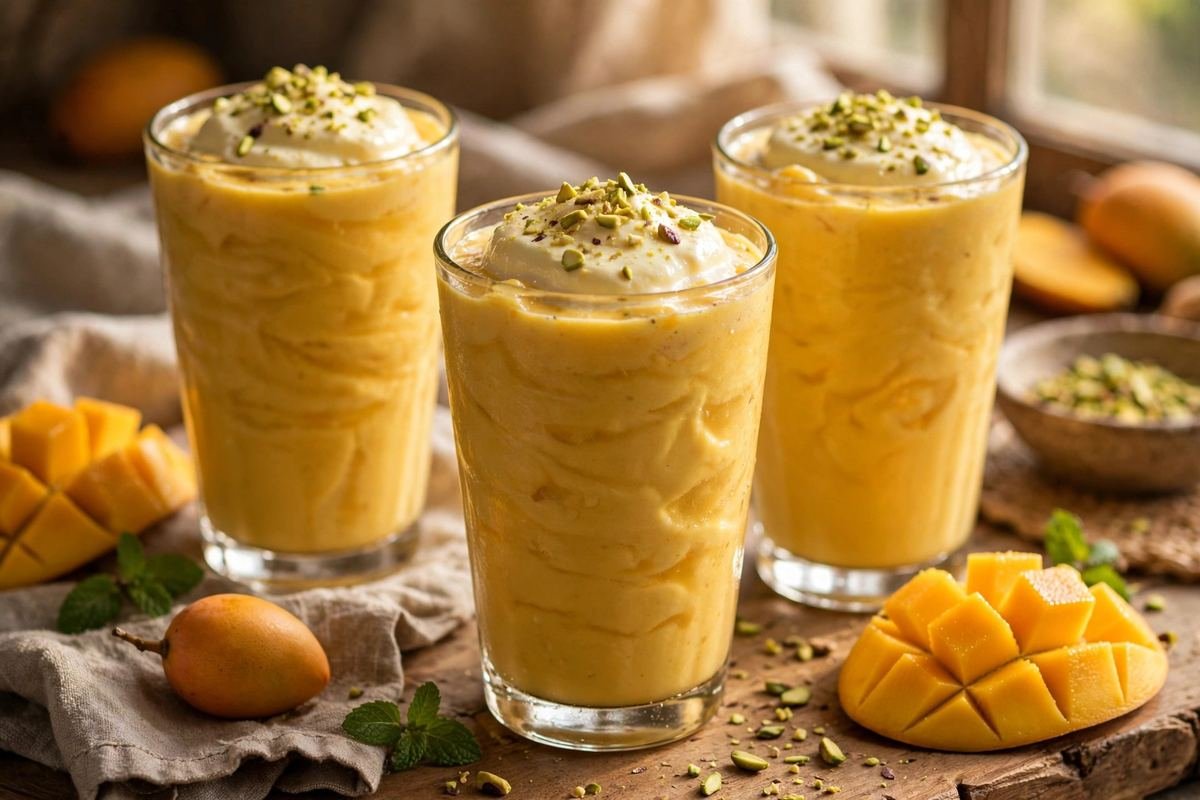
- Serve tall with the traditional crown. Pour into tall chilled glasses. Spoon a tablespoon of malai or whipped cream over the top of each — this is the signature Amritsar finish — then scatter with chopped pistachios, the reserved mango cubes, and a few saffron strands if using. Serve immediately with straws and long spoons; lassi waits for no one and is at its glorious best in the first ten minutes.
Tip: Read through the full post below for step-by-step photos, pro tips, variations and FAQs before you start cooking.
Every summer in India has a taste, and for millions of people that taste is mango lassi. It arrives with the first crates of alphonso and kesar mangoes in April, appears in steel tumblers at every dhaba along the Grand Trunk Road, and becomes the daily afternoon ritual in Punjabi households from Amritsar to Delhi — a drink so thick and satisfying it blurs the line between beverage and dessert. Lassi itself is ancient, one of the oldest beverages in the world, born in Punjab where churned yogurt (the original lassi was made by churning dahi with a wooden madhani, not blending) was the farmer’s answer to brutal summer heat: cooling, filling, and deeply nourishing.
The mango version is the undisputed star of the lassi family. Where plain salted lassi refreshes and sweet lassi comforts, mango lassi transports — the perfume of ripe mango folded into tangy, creamy yogurt creates something greater than either ingredient alone. The great lassi shops of Amritsar serve it in tall glasses with a thick malai (cream) topping and a snowfall of crushed pistachios, so substantial you could nearly eat it with a spoon. It is breakfast, dessert, and heatwave survival in a single glass, and it takes ten minutes to make at home.
The secret to exceptional mango lassi is embarrassingly simple: use genuinely ripe, fragrant mangoes and good thick yogurt, and keep everything else restrained. Mango is the headline act — cardamom, saffron, or rose water are supporting players that should whisper, not shout. The texture should be thick and pourable, coating the glass, never watery; the flavour should taste of mango first, with the yogurt’s tang arriving as a bright finish that makes you want another sip. Too much sugar buries the mango; too much ice dilutes it into sadness. Get the balance right and you have summer in a glass.
This recipe shows you how to pick the right mangoes, get the thickness perfect (with fixes if your yogurt is thin), and finish it like the Amritsar lassi-wallahs do — with that signature malai crown. No cooking, no special equipment beyond a blender, and ten minutes from craving to first sip.
Why You’ll Love This Recipe
- Ready in 10 minutes flat — chop, blend, pour. The fastest impressive drink in the Indian repertoire.
- Only 4 core ingredients — mango, yogurt, a sweetener, cardamom. Summer simplicity at its best.
- Thick, dhaba-style texture — proper spoon-coating body, not the thin juice-bar version.
- Naturally nourishing — protein from yogurt, vitamins from mango; a drink that actually satisfies.
- Kid magnet — the rare healthy-ish drink children ask for by name, again and again.
- Endlessly riffable — saffron, rose, coconut, and salted variations all start from this base.
Key Ingredients Explained
Mangoes are everything here — the variety and ripeness decide whether your lassi is transcendent or merely okay. Alphonso (hapus) is the gold standard: intensely aromatic, honey-sweet, fibreless, with deep orange flesh that gives lassi its sunset colour. Kesar, badami, and dasheri are all excellent alternatives; even ripe champagne/ataulfo mangoes work well outside India. Whatever you use, the mango must be fully ripe — fragrant at the stem end, yielding gently to pressure, with no green patches or sourness. An underripe mango makes a tart, fibrous lassi that no amount of sugar can save. If fresh mangoes are out of season, use good-quality canned alphonso pulp (widely available at Indian grocers) — it makes a very respectable lassi, far better than an unripe fresh mango.
Yogurt should be thick, creamy, and mildly tangy — full-fat plain curd or whole-milk Greek yogurt. The yogurt’s job is body and tang: it should support the mango, not compete with it. Avoid sour or very tart yogurt, which fights the mango’s sweetness; and avoid low-fat yogurt, which makes thin, watery lassi. If your homemade curd is on the thinner side, hang it in muslin for an hour to drain the whey — the same technique as for shrikhand — and your lassi will be dramatically thicker.
Sweetener is a supporting act. Ripe alphonso mangoes often need very little — start with 2 tablespoons of sugar for four glasses and adjust. Powdered sugar blends in most smoothly; honey adds a lovely floral note but can slightly thin the lassi; condensed milk (a tablespoon or two) is the dhaba secret for extra richness and body. Cardamom — just a quarter teaspoon of freshly ground — lifts the mango’s perfume without announcing itself. A pinch of saffron bloomed in warm milk turns it into a festive kesar-mango lassi, and a tiny pinch of salt (barely perceptible) sharpens all the flavours, the way salt sharpens caramel.
Ice deserves a thought: a handful of cubes makes the lassi frosty and refreshing, but too much dilutes it. For the thickest result, chill all your ingredients well in advance and use minimal ice — or freeze mango cubes and blend those in instead, which chills without watering down.
Equipment You’ll Need
- A blender (any standard mixer-grinder or countertop blender works; no need for anything fancy)
- A sharp knife and chopping board for the mangoes
- Measuring cups and spoons
- Tall glasses for serving
- A spoon for the malai topping (optional but traditional)
- 3 large (about 750g) ripe alphonso or kesar mangoes (about 2.5 cups / 500g chopped flesh), plus extra diced mango for topping
- 2 cups (500g) thick full-fat plain yogurt (dahi), chilled
- 1/2 cup (120 ml) chilled milk (adjust for desired thickness)
- 2–3 tbsp sugar, to taste (or honey)
- 1/4 tsp freshly ground green cardamom
- 1 tiny pinch salt
- 8–10 ice cubes (or 1 cup frozen mango cubes)
- 2 tbsp malai (clotted cream) or whipped cream, for topping (optional but traditional)
- 2 tbsp pistachios, chopped, for garnish
- A few saffron strands, for garnish (optional)
- Prep the mangoes. Slice the cheeks off each mango, score the flesh in a crosshatch, and scoop out the cubes with a spoon; also cut the flesh from around the stone. You need about 2.5 cups of mango flesh. Reserve a few tablespoons of the prettiest cubes for garnish. Taste a piece — it should be honey-sweet and fragrant. If your mangoes are even slightly underripe or fibrous, blend the pulp and pass it through a sieve before proceeding; this one step rescues the texture completely.
- Blend mango to a silky purée first. Put the mango flesh in the blender with the sugar and blend until completely smooth, about 45 to 60 seconds. Blending the mango alone first (rather than everything at once) guarantees no fibrous bits survive and lets you check the sweetness before the yogurt goes in. The purée should look like velvet — thick, glossy, and uniformly orange with no streaks or lumps.
- Add yogurt, milk, and flavourings. Add the chilled yogurt, half of the milk, the ground cardamom, and the tiny pinch of salt to the mango purée. Blend for 30 to 40 seconds until thick and creamy. Now check the consistency: it should pour in a slow, thick ribbon and coat the back of a spoon. Too thick? Blend in the remaining milk a splash at a time. Too thin? Add a few more spoonfuls of yogurt or a handful of frozen mango cubes and blend again.
- Add ice and blend to frosty perfection. Drop in the ice cubes and blend for another 20 to 30 seconds, just until the ice is crushed through and the lassi turns pale, frothy, and ice-cold. Do not over-blend at this stage — prolonged blending warms the mixture and melts the ice into dilution. Taste once more and adjust: more sugar if the mangoes were mild, a touch more cardamom if you like it fragrant.
- Serve tall with the traditional crown. Pour into tall chilled glasses. Spoon a tablespoon of malai or whipped cream over the top of each — this is the signature Amritsar finish — then scatter with chopped pistachios, the reserved mango cubes, and a few saffron strands if using. Serve immediately with straws and long spoons; lassi waits for no one and is at its glorious best in the first ten minutes.
Pro Tips for Perfect Results
- Ripe mangoes or nothing. This cannot be overstated: the mango is 70% of the drink. Fragrant, yielding, deep-coloured flesh is the entire game. Out of season, good canned alphonso pulp beats a bad fresh mango every time.
- Chill everything first. Cold yogurt, cold milk, cold mangoes, chilled glasses — starting cold means you need less ice, and less ice means thicker, more intensely flavoured lassi.
- Blend mango alone first. Puréeing the fruit separately guarantees silkiness and lets you fix sweetness and sieve out fibres before the yogurt complicates things.
- Under-sweeten, then adjust. Mango sweetness varies wildly by variety and ripeness. Start with 2 tablespoons of sugar; you can always blend in more, but you cannot take it out.
- Grind cardamom fresh and use it sparingly. A quarter teaspoon is plenty — cardamom should perfume the background, not compete with the mango. Stale pre-ground cardamom tastes dusty and flat.
- The pinch of salt is not optional. You will not taste saltiness; you will taste mango more vividly. It is the same principle as salt in caramel or chocolate.
- Serve immediately. Lassi separates and loses its froth if it sits. Blend, pour, garnish, serve — the whole finale should take under two minutes.
Variations to Try
Kesar Mango Lassi: Bloom a generous pinch of saffron in warm milk and blend it in — golden colour, festive aroma. Rose Mango Lassi: Add 1 teaspoon of rose water and garnish with dried rose petals for a Mughal-garden twist. Coconut Mango Lassi: Replace half the milk with coconut milk for a tropical richness. Mango Banana Lassi: Add one ripe banana for extra body and a smoothie-like thickness kids love. Salted Sweet Lassi Hybrid: Skip the mango, add roasted cumin and black salt for the classic namkeen lassi — the savoury sibling. Vegan Mango Lassi: Use thick coconut yogurt or cashew yogurt; the coconut-mango pairing is genuinely delicious. Mango Lassi Popsicles: Pour the finished lassi into moulds and freeze — the summer dessert that makes children cheer.
Serving Suggestions
Mango lassi is substantial enough to be breakfast on its own — many Punjabi families drink exactly that on summer mornings, sometimes with parathas. As a drink alongside food, it is the perfect cooling partner to spicy meals: serve it with biryani, chole bhature, or a fiery curry, where its creamy coolness tames the heat beautifully. For parties, serve in small kulhads or shot glasses as a welcome drink — it is universally loved and looks gorgeous. It also makes a wonderful dessert alternative after a heavy meal: lighter than ice cream, more interesting than fruit salad. And on a brutal May afternoon, a tall glass with extra ice needs no occasion at all.
Storage and Make-Ahead
Mango lassi is emphatically best fresh, but you can plan ahead smartly. Mango purée base: blend the mango with sugar and refrigerate in an airtight jar for up to 3 days — then just blend with yogurt, milk, and ice when you want lassi in two minutes. Finished lassi: keeps in the refrigerator for up to 24 hours in a sealed bottle; stir or shake well before serving as it will separate, and expect the froth to be gone (still delicious, just less dramatic). Do not add the malai topping or garnishes until serving. You can also freeze mango purée in portions for up to 3 months — future-you will be grateful in December. Never leave lassi at room temperature for more than an hour or two; it is a fresh dairy drink.
Frequently Asked Questions
Which mango variety is best for lassi?
Alphonso (hapus) is the classic choice for its intense aroma, sweetness, and fibreless flesh. Kesar, badami, dasheri, and langra all work well. Outside India, ataulfo/champagne mangoes are the closest widely available equivalent. The variety matters less than ripeness — a perfectly ripe dasheri beats an underripe alphonso.
My lassi is too thin. How do I fix it?
Thin lassi comes from watery yogurt or too much milk/ice. Fix it by blending in more thick yogurt, a handful of frozen mango cubes, or even a tablespoon of milk powder (a dhaba trick that adds body without much flavour change). Next time, hang thin yogurt in muslin for an hour first, and chill everything so you need less ice.
Can I use canned mango pulp instead of fresh mangoes?
Yes — good-quality canned alphonso pulp (such as the well-known Indian brands sold at South Asian grocers) makes excellent lassi, especially out of season. Use about 1.5 cups of pulp for this recipe and reduce the sugar, since canned pulp is usually pre-sweetened. Taste and adjust before adding any sugar at all.
Is mango lassi healthy?
It is genuinely nourishing: yogurt provides protein, calcium, and probiotics, and mango brings vitamins A and C plus fibre. The caveat is sugar — with ripe sweet mangoes you need very little, and the drink is far more wholesome than soda or packaged juice. For a lighter version, use low-fat yogurt and skip added sugar entirely.
Can I make mango lassi without a blender?
The traditional way predates blenders: mango pulp was whisked by hand with a wooden churner (madhani) into churned curd. You can approximate this with very soft, ripe mango mashed thoroughly with a fork, then whisked vigorously with yogurt — it will be a little rustic and textured rather than silky, but delicious. A sieve pass helps smooth it out.
Why does my lassi taste sour?
Either the yogurt was too tart or the mangoes were underripe. Use mild, fresh yogurt (taste it first) and fully ripe sweet mangoes. A little extra sugar and a pinch more cardamom can mask mild sourness, but a strongly sour base is better rebuilt than rescued.
There are few greater summer pleasures than that first cold sip of mango lassi — thick, fragrant, golden — with pistachios crunching on top and the faint perfume of cardamom underneath it all. Make it at the height of mango season, serve it to people you love, and do not be surprised when the blender comes out again the very next day.