Recipe Card
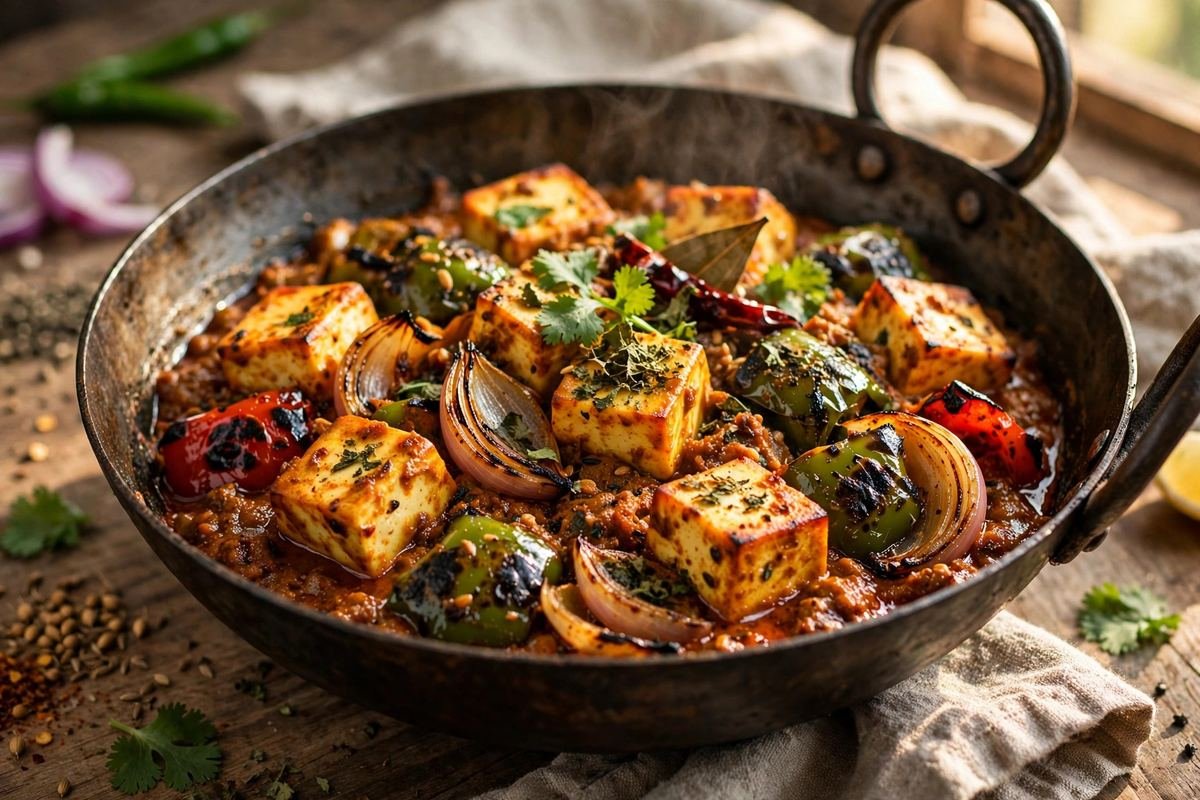
Charred peppers, soft paneer, and a freshly pounded kadhai masala in a smoky tomato gravy. This restaurant-style kadhai paneer brings dhaba magic to your home kitchen.
Ingredients
- 400g fresh paneer, cut into 2.5cm (1 inch) cubes
- 2 medium green capsicums (about 250g), cut into 2.5cm squares
- 1 large onion (about 150g), cut into wedges and separated into petals
- 3 tbsp mustard oil or ghee, divided
- 1 tsp cumin seeds
- 1 tbsp ginger-garlic paste
- 3 large ripe tomatoes (about 350g), pureed smooth
- 0.5 tsp turmeric powder
- 1 tsp Kashmiri red chilli powder
- 1 tsp salt, or to taste
- 120ml (0.5 cup) hot water, plus more as needed
- 1 tsp kasuri methi (dried fenugreek leaves)
- 3 tbsp fresh cream
- 2.5cm (1 inch) piece of ginger, cut into fine juliennes
- 3 tbsp chopped fresh coriander leaves
- 2 tbsp coriander seeds
- 4 to 5 dried red chillies (mix of Kashmiri and hot variety)
- 1 tsp black peppercorns
- 1 tsp fennel seeds
- 0.5 tsp cumin seeds
Instructions
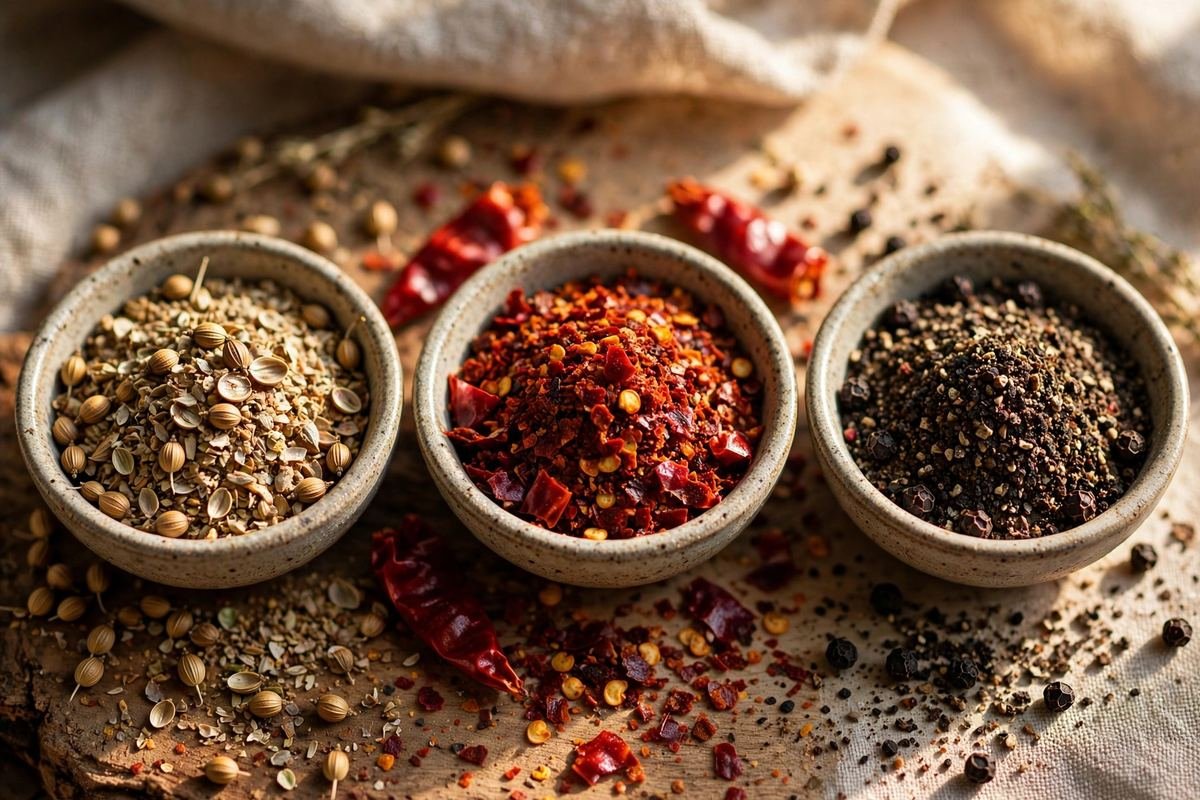
- Make the kadhai masala: Heat a small heavy pan over medium heat and add the coriander seeds, dried red chillies, peppercorns, fennel seeds, and cumin seeds. Dry-roast, shaking the pan constantly, for 2 to 3 minutes until the coriander seeds darken one shade and the whole mixture smells intensely fragrant. Tip onto a plate to stop the cooking, cool for 2 minutes, then crush coarsely in a mortar and pestle or with a few pulses of a spice grinder. You want a rough, pebbly texture with visible flakes — not powder. Set aside.
- Sear the paneer: Heat 1 tablespoon of oil or ghee in your kadhai over medium-high heat until shimmering. Add the paneer cubes in a single layer — work in two batches if needed — and sear for 1 to 2 minutes per side until golden at the edges. Do not move them around constantly; let them sit and develop colour. Transfer to a plate. The centres should still be soft and pale — you are building a crust, not cooking them through.
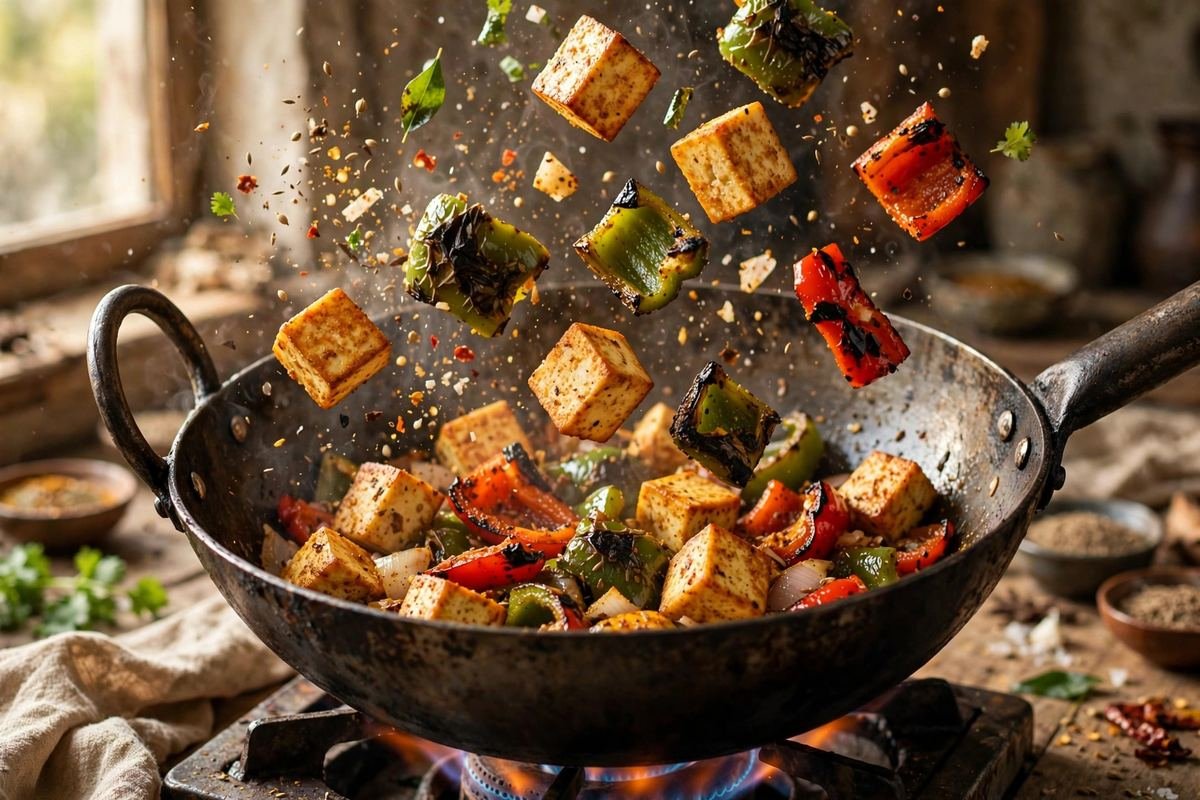
- Char the vegetables: In the same kadhai, add another tablespoon of oil and turn the heat to high. Add the capsicum squares and onion petals and toss fiercely for 3 to 4 minutes until the edges are blackened in spots but the vegetables are still crunchy. You want visible char — those caramelised, smoky bits are the signature of the dish. Remove to the plate with the paneer. If your stove runs cool, do this in two batches so the vegetables sear rather than steam.
- Build the gravy base: Reduce the heat to medium, add the remaining oil, and let it heat for 30 seconds. Add the cumin seeds and let them crackle, then add the ginger-garlic paste and fry for 1 minute until the raw smell disappears. Pour in the tomato puree along with the turmeric, Kashmiri chilli powder, and salt. Cook, stirring regularly, for 8 to 10 minutes until the puree thickens, darkens, and you see oil separating at the edges.
- Add the kadhai masala: Sprinkle in 2 tablespoons of your freshly crushed kadhai masala (reserve the rest for garnish) and stir-fry for 1 minute until intensely aromatic. Pour in 120ml of hot water and simmer for 3 to 4 minutes, letting the spices bloom into the gravy. The gravy should be thick enough to coat the vegetables — kadhai paneer is a clingy, semi-dry curry, not a soupy one.
- Bring it all together: Return the seared paneer, charred capsicum, and onion petals to the kadhai. Toss gently to coat everything in gravy, crushing the kasuri methi between your palms over the top. Simmer on low for 5 minutes so the paneer absorbs the flavours — no longer, or the peppers will lose their crunch and the paneer will toughen.
- Finish with cream and ginger: Stir in the fresh cream off the fiercest heat, then scatter over the ginger juliennes, fresh coriander, and the reserved teaspoon of kadhai masala. Taste and adjust salt and heat. The finished curry should look rustic and glistening, with visible flecks of spice and char.
- Optional dhungar smoke: For true dhaba smokiness, place a small steel bowl in the centre of the kadhai, add a piece of natural charcoal heated until glowing red, drizzle half a teaspoon of ghee over it, and immediately cover the kadhai with a tight lid. Let it smoke for 3 to 4 minutes, then remove the bowl and charcoal. This single step adds an extraordinary tandoor-like depth.
Tip: Read through the full post below for step-by-step photos, pro tips, variations and FAQs before you start cooking.
The Story Behind Kadhai Paneer
Every great paneer curry has a personality. Shahi paneer is the diplomat — smooth, mild, universally liked. Paneer butter masala is the charmer — rich, sweet, impossible to resist. Kadhai paneer is the rebel: bold, smoky, unapologetically rustic, with whole spices you can see and charred vegetables you can taste. It is named not for a region or a royal court but for the vessel it is cooked in — the kadhai, North India’s deep, round-bottomed answer to the wok, where high heat and constant tossing create flavours no ordinary saucepan can match.
The soul of this dish is the kadhai masala — a coarse, freshly pounded blend of coriander seeds, dried red chillies, black peppercorns, and sometimes fennel and cumin, dry-roasted until fragrant and crushed just enough to stay pebbly. That roughness is the whole point: instead of melting anonymously into the gravy, the masala stays present, giving every bite little bursts of toasted spice. Add to that the dhaba technique of searing capsicum and onion petals over fierce heat until their edges blacken and sweeten, and you get a curry with genuine smoke and fire — the kind of flavour people assume only comes from a tandoor.
What I love about making kadhai paneer at home is that it closes the gap between restaurant food and home food better than almost any other curry. The techniques are simple — roast, crush, sear on high heat — but they are the exact techniques restaurants use, which is why homemade versions that skip them taste flat by comparison. This recipe gives you the full treatment: a proper kadhai masala made from scratch in five minutes, vegetables charred, not steamed, and a gravy that is thick enough to cling but light enough to let the spices shout. One optional step — a quick dhungar smoke with a piece of charcoal — takes it fully into dhaba territory, and I will walk you through it.
Why You’ll Love This Recipe
- Real dhaba smokiness — high-heat charring and fresh kadhai masala deliver the smoky depth restaurants charge a premium for.
- Freshly pounded spice blend — five minutes of roasting and crushing beats any store-bought packet, guaranteed.
- Perfect paneer texture — a quick sear gives golden edges while keeping the centres soft and creamy.
- Bold, not heavy — big flavour without the cupfuls of cream that weigh down milder curries.
- One-kadhai cooking — masala, vegetables, and gravy all come together in a single pan.
- Ready in 45 minutes — genuinely weeknight-friendly once the masala is made.
- Customisable heat — you control the chillies, from gentle warmth to full dhaba fire.
Key Ingredients Explained
The kadhai masala deserves its own paragraph because it is the recipe. You will dry-roast 2 tablespoons of coriander seeds, 4 to 5 dried red chillies (a mix of Kashmiri for colour and a hotter variety like guntur for fire), 1 teaspoon of black peppercorns, 1 teaspoon of fennel seeds, and half a teaspoon of cumin seeds until they darken a shade and smell intensely toasty — about 2 to 3 minutes over medium heat. Then crush them coarse in a mortar or spice grinder. Coarse is critical: you want visible flakes and gritty bits, not a fine powder. Make a little extra and store it in an airtight jar — it keeps for a month and transforms everything from aloo parathas to roasted vegetables.
For the paneer, use 400g of fresh, soft paneer cut into generous 2.5cm cubes. Fresh paneer from a dairy or a good brand makes a real difference here because the cubes are seared, and firm, rubbery paneer only gets tougher in a hot pan. If your paneer feels dense, soak the cubes in warm salted water for 15 minutes before cooking — it works miracles. The vegetables are non-negotiable: green capsicum (2 medium, cut into 2.5cm squares) and onion petals (1 large onion, cut into wedges with the layers separated). They must be seared over high heat until charred at the edges but still crunchy — soft, steamed peppers are the most common way home cooks miss the mark with this dish.
The gravy base is simpler than the masala: tomato puree from 3 large ripe tomatoes (about 350g), a little ginger-garlic paste, and ginger juliennes added at the end for fresh bite. Kasuri methi and a modest 3 tablespoons of cream round it out — enough to mellow the spices without turning this into a makhani. Cook the masala in mustard oil if you want authentic dhaba pungency (heat it to smoking first to tame the rawness), or use ghee for a rounder, nuttier flavour. Both are correct; they just tell slightly different stories.
Equipment You’ll Need
- Heavy kadhai or wok — the wide surface is essential for proper searing
- Small heavy pan for dry-roasting the spices
- Mortar and pestle or spice grinder for the kadhai masala
- Flat spatula or wok turner for tossing
- Small steel bowl and a piece of natural charcoal — optional, for the dhungar smoke
- 400g fresh paneer, cut into 2.5cm (1 inch) cubes
- 2 medium green capsicums (about 250g), cut into 2.5cm squares
- 1 large onion (about 150g), cut into wedges and separated into petals
- 3 tbsp mustard oil or ghee, divided
- 1 tsp cumin seeds
- 1 tbsp ginger-garlic paste
- 3 large ripe tomatoes (about 350g), pureed smooth
- 0.5 tsp turmeric powder
- 1 tsp Kashmiri red chilli powder
- 1 tsp salt, or to taste
- 120ml (0.5 cup) hot water, plus more as needed
- 1 tsp kasuri methi (dried fenugreek leaves)
- 3 tbsp fresh cream
- 2.5cm (1 inch) piece of ginger, cut into fine juliennes
- 3 tbsp chopped fresh coriander leaves
For the kadhai masala (makes about 3 tbsp):
- 2 tbsp coriander seeds
- 4 to 5 dried red chillies (mix of Kashmiri and hot variety)
- 1 tsp black peppercorns
- 1 tsp fennel seeds
- 0.5 tsp cumin seeds
- Make the kadhai masala: Heat a small heavy pan over medium heat and add the coriander seeds, dried red chillies, peppercorns, fennel seeds, and cumin seeds. Dry-roast, shaking the pan constantly, for 2 to 3 minutes until the coriander seeds darken one shade and the whole mixture smells intensely fragrant. Tip onto a plate to stop the cooking, cool for 2 minutes, then crush coarsely in a mortar and pestle or with a few pulses of a spice grinder. You want a rough, pebbly texture with visible flakes — not powder. Set aside.
- Sear the paneer: Heat 1 tablespoon of oil or ghee in your kadhai over medium-high heat until shimmering. Add the paneer cubes in a single layer — work in two batches if needed — and sear for 1 to 2 minutes per side until golden at the edges. Do not move them around constantly; let them sit and develop colour. Transfer to a plate. The centres should still be soft and pale — you are building a crust, not cooking them through.
- Char the vegetables: In the same kadhai, add another tablespoon of oil and turn the heat to high. Add the capsicum squares and onion petals and toss fiercely for 3 to 4 minutes until the edges are blackened in spots but the vegetables are still crunchy. You want visible char — those caramelised, smoky bits are the signature of the dish. Remove to the plate with the paneer. If your stove runs cool, do this in two batches so the vegetables sear rather than steam.
- Build the gravy base: Reduce the heat to medium, add the remaining oil, and let it heat for 30 seconds. Add the cumin seeds and let them crackle, then add the ginger-garlic paste and fry for 1 minute until the raw smell disappears. Pour in the tomato puree along with the turmeric, Kashmiri chilli powder, and salt. Cook, stirring regularly, for 8 to 10 minutes until the puree thickens, darkens, and you see oil separating at the edges.
- Add the kadhai masala: Sprinkle in 2 tablespoons of your freshly crushed kadhai masala (reserve the rest for garnish) and stir-fry for 1 minute until intensely aromatic. Pour in 120ml of hot water and simmer for 3 to 4 minutes, letting the spices bloom into the gravy. The gravy should be thick enough to coat the vegetables — kadhai paneer is a clingy, semi-dry curry, not a soupy one.
- Bring it all together: Return the seared paneer, charred capsicum, and onion petals to the kadhai. Toss gently to coat everything in gravy, crushing the kasuri methi between your palms over the top. Simmer on low for 5 minutes so the paneer absorbs the flavours — no longer, or the peppers will lose their crunch and the paneer will toughen.
- Finish with cream and ginger: Stir in the fresh cream off the fiercest heat, then scatter over the ginger juliennes, fresh coriander, and the reserved teaspoon of kadhai masala. Taste and adjust salt and heat. The finished curry should look rustic and glistening, with visible flecks of spice and char.
- Optional dhungar smoke: For true dhaba smokiness, place a small steel bowl in the centre of the kadhai, add a piece of natural charcoal heated until glowing red, drizzle half a teaspoon of ghee over it, and immediately cover the kadhai with a tight lid. Let it smoke for 3 to 4 minutes, then remove the bowl and charcoal. This single step adds an extraordinary tandoor-like depth.
Pro Tips for Perfect Results
- Crush, don’t powder, the masala: A fine powder disappears into the gravy; coarse flakes give kadhai paneer its characteristic texture and bursts of flavour.
- High heat is non-negotiable for the vegetables: If the capsicum and onions are not charring, your heat is too low or the pan is too crowded. Sear in batches rather than steaming in one.
- Sear paneer briefly: Golden edges, soft centres. Over-seared paneer turns chewy and never quite recovers, even in gravy.
- Keep the gravy thick: Kadhai paneer should cling, not swim. Add water sparingly — you can always loosen, but reducing a thin gravy dulls the fresh spice flavours.
- Add cream off high heat: Boiling cream can split, especially with acidic tomatoes. Stir it in after reducing the flame for a silky finish.
- Reserve masala for the finish: That final sprinkle of raw, freshly crushed kadhai masala over the top hits the nose before the first bite — it is the difference between good and memorable.
- Mustard oil matters: If using mustard oil, heat it until it just begins to smoke, then cool for 30 seconds before adding spices. This removes the raw pungency while keeping the characteristic flavour.
Variations to Try
Kadhai Paneer Dry (Sabzi Style): Skip the tomato puree and water entirely. After charring the vegetables, toss everything with the kadhai masala, salt, and a squeeze of lemon for a dry, intensely spiced sabzi that is phenomenal stuffed into wraps or served with dal and rice.
Kadhai Mushroom: Replace the paneer with 400g of quartered button mushrooms, seared hard until golden. Mushrooms love char and drink up the kadhai masala beautifully — this version often converts mushroom sceptics.
Kadhai Tofu (Vegan): Use extra-firm tofu pressed for 20 minutes, cubed, and seared until crisp. Swap cream for cashew cream or coconut cream, and use oil instead of ghee. The bold masala carries the dish, so nobody misses the dairy.
Kadhai Paneer Tikka Masala: Marinate the paneer cubes in hung curd, kadhai masala, and mustard oil for 30 minutes, grill or air-fry until charred, then fold into the gravy. It is a hybrid that tastes like a special-occasion restaurant dish.
Extra-Smoky Party Version: Do the dhungar smoke twice — once for the gravy and once after combining everything. Serve in the kadhai itself at the table for maximum drama.
Serving Suggestions
Kadhai paneer demands bread — this is not a rice curry. Serve it with butter naan, tandoori roti, or lachha paratha, torn and used to scoop up the thick, spice-flecked gravy. The charred peppers and bold masala also pair beautifully with jeera rice if you want a complete plate. On the side, keep things cooling and fresh: sliced onions with lemon, mint chutney, and a simple cucumber raita to balance the heat. For a full dhaba-style spread, add dal tadka and a glass of salted chaas. Garnish the curry at the table with extra ginger juliennes and a final dusting of kadhai masala — it should arrive looking as bold as it tastes.
Storage and Reheating
Kadhai paneer keeps in an airtight container in the refrigerator for 3 days. The peppers will soften a little on reheating — that is unavoidable — so if texture matters to you, store the gravy and the charred vegetables separately and combine while reheating. Warm gently on the stovetop over low heat with a splash of water or milk to loosen the gravy; avoid the microwave, which toughens paneer. It freezes for up to 2 months, though the paneer firms up slightly after thawing — refresh it with a spoonful of cream while reheating. The dry kadhai masala, stored airtight away from light, stays potent for a month; make a double batch and you are halfway to dinner all month long.
Frequently Asked Questions
Can I use store-bought kadhai masala?
You can, but you will lose the defining feature of the dish. Commercial blends are ground fine and often stale, so they melt into the gravy instead of providing those characteristic coarse, toasty bursts. The homemade version takes five minutes and the difference is night and day — this is the one step I would never skip.
Why is my paneer rubbery?
Usually one of three things: the paneer was old and firm to begin with, it was seared too long, or it simmered in the gravy for too long. Use fresh, soft paneer, sear just until golden at the edges, and simmer the finished curry for no more than 5 minutes. The warm-salted-water soak trick also rescues firm paneer.
How do I get the smoky flavour without a tandoor?
Three layers build the smoke: charring the vegetables over the highest heat your stove allows, using mustard oil heated to smoking, and the optional dhungar method with a piece of glowing charcoal and ghee under a lid. Even just the first two give a convincingly smoky result.
Is kadhai paneer very spicy?
It is boldly spiced rather than brutally hot — the warmth comes from black pepper and dried red chillies more than raw chilli heat. You control it completely through the kadhai masala: use mostly Kashmiri chillies for colour with mild heat, or add hotter dried chillies for dhaba-level fire.
Can I make this ahead for a party?
Absolutely. Make the kadhai masala and the gravy base a day ahead and refrigerate. On the day, sear the paneer and vegetables fresh (15 minutes), combine with the reheated gravy, finish with cream, and do the dhungar smoke just before serving. Your guests will think you have been cooking all day.
What is the difference between kadhai paneer and paneer tikka masala?
Kadhai paneer is defined by its coarse, freshly pounded kadhai masala and charred peppers and onions in a rustic, semi-dry gravy. Paneer tikka masala uses marinated, grilled paneer tikka folded into a smoother, creamier, more tomato-forward makhani-style gravy. Both are delicious; kadhai paneer is the bolder, smokier cousin.
There is something deeply satisfying about a curry that does not whisper — and kadhai paneer shouts in the best possible way. Pound that masala fresh, get your kadhai properly hot, and do not be shy with the char. Serve it sizzling with torn naan, and watch it disappear. Happy cooking!