Recipe Card
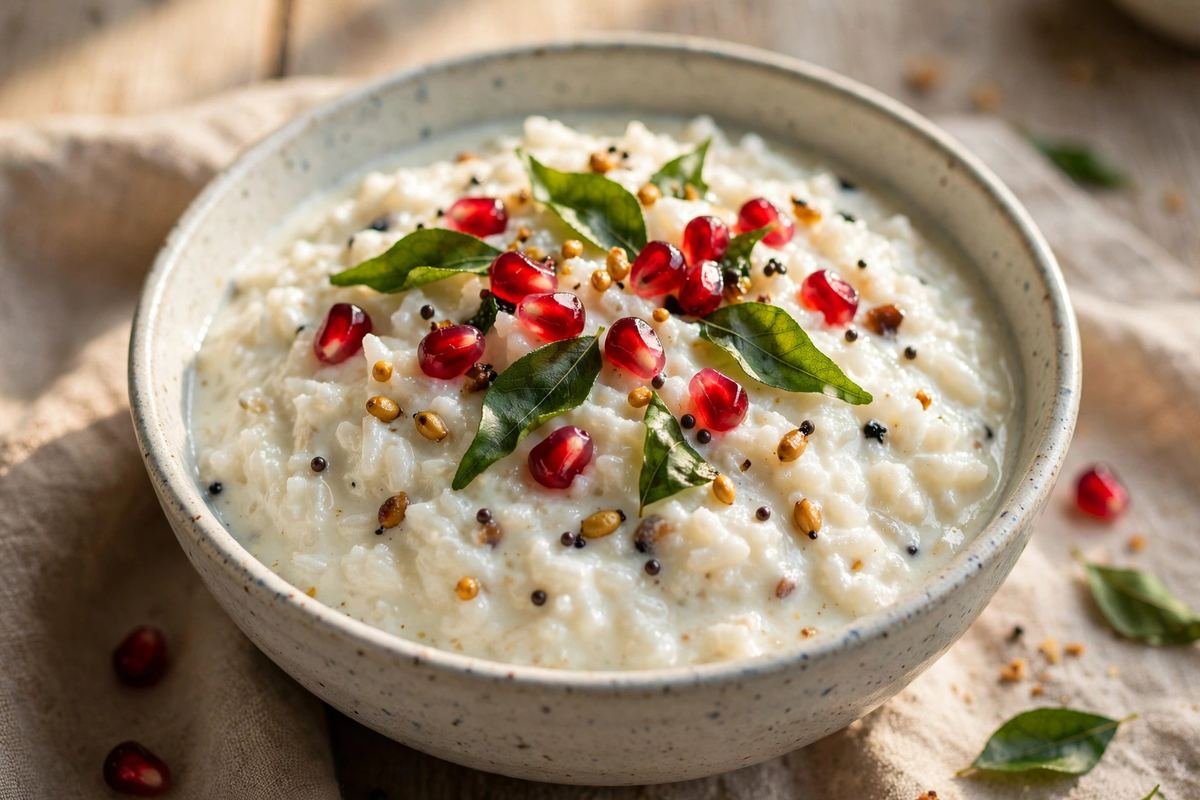
Cool, creamy curd rice — Tamil Nadu’s beloved comfort food with a crackling tempering of mustard seeds, dals and curry leaves. The ultimate cooling meal for hot days and tired evenings.
Ingredients
- 1 cup short or medium-grain rice (200g), such as sona masoori
- 3 1/2 cups water (840ml), for cooking the rice
- 3/4 tsp fine salt, plus more to taste
- 1/2 cup warm whole milk (120ml)
- 2 cups fresh plain curd or whole-milk yoghurt (480g), whisked smooth
- 2 tbsp sesame oil or neutral oil (30ml), for the tempering
- 1 tsp black mustard seeds
- 1 tbsp urad dal (15g)
- 1 tbsp chana dal (15g)
- 1/4 tsp asafoetida (hing), optional
- 3 dried red chillies, broken in half
- 2 green chillies, finely chopped
- 1-inch piece fresh ginger (15g), finely grated
- 12–15 fresh curry leaves (1 large sprig)
- 1/3 cup pomegranate arils (50g)
- 1/2 cucumber, finely diced (about 1/2 cup)
- 1 small carrot, finely grated, optional
- 2 tbsp chopped fresh coriander leaves
Instructions
- Cook the rice extra-soft. Rinse the rice and cook it with the 3 1/2 cups of water — in a pressure cooker for 4 to 5 whistles, in a rice cooker on the regular setting, or in a saucepan brought to a boil then covered and simmered on low for 20 to 22 minutes. You are deliberately overcooking it: the grains should be swollen, split and very soft, with a little starchy water still clinging to them. If the saucepan method leaves it too dry, add 1/4 cup of hot water near the end. This softness is the foundation of creamy curd rice — firm, separate grains will never give you the right texture.
- Mash while hot. Transfer the hot rice to your large mixing bowl and mash it lightly with a potato masher or the back of a sturdy spoon — about 8 to 10 presses. You are not making a purée; you want roughly half the grains broken down into a starchy mass with the other half still recognisable. This mashed starch is what thickens the curd into a creamy sauce rather than a watery pool. Work while the rice is steaming hot, because cold rice resists mashing and turns gluey instead of creamy.
- Loosen with warm milk and salt. Pour the warm milk over the hot mashed rice along with the salt, and fold it through thoroughly. The rice will drink up the milk and turn into a soft, porridge-like mass — this is exactly right. The salt goes in now, while the rice is warm, because warm starch absorbs seasoning far better than cold curd does. Taste: the rice should be pleasantly salty on its own, since the plain curd will dilute the seasoning later.
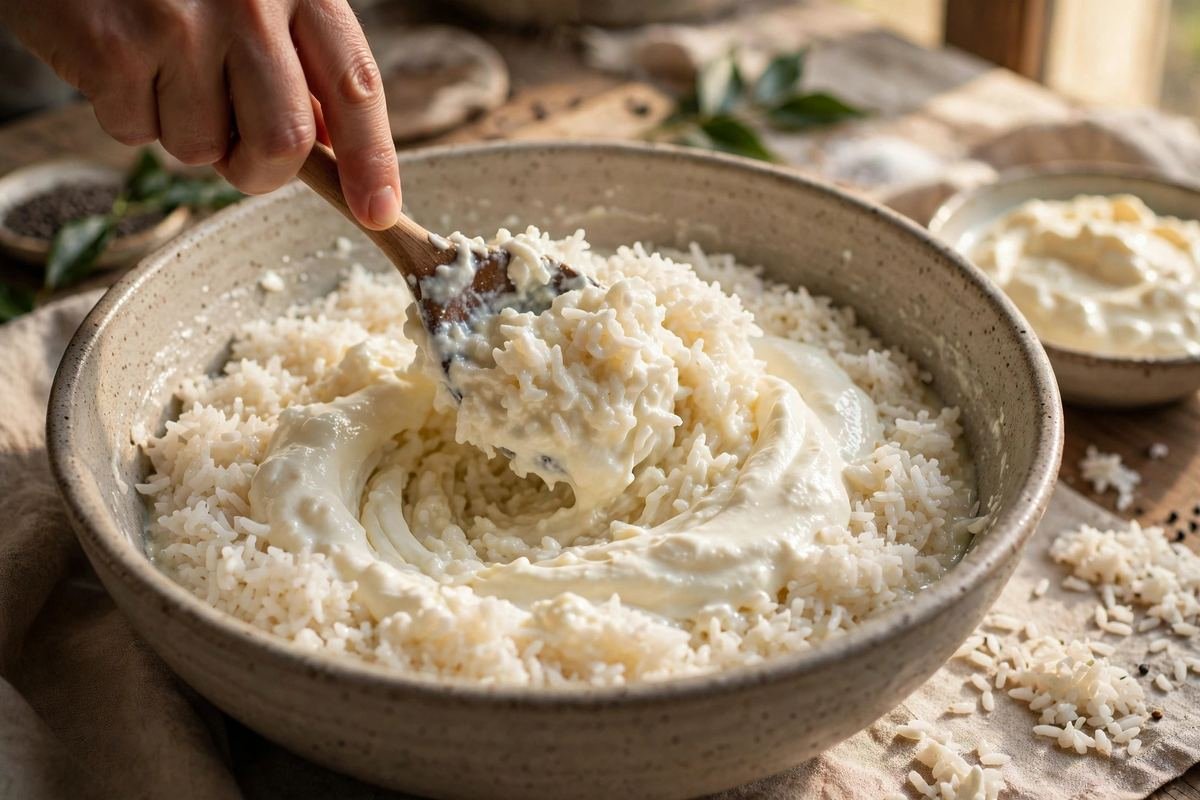
- Cool, then fold in the curd. Let the milky rice cool to lukewarm — about 15 to 20 minutes, or speed it up by spreading it in a wide dish. It must not be hot when the curd goes in, or the curd can split and turn grainy. Add the whisked-smooth curd and fold gently until every bit of rice is coated in a thick, creamy blanket. The consistency should be like a soft, scoopable porridge — it will thicken further as it sits, so err on the looser side. If it looks too thick, stir in 2 to 3 tablespoons of milk.
- Make the tempering. Heat the oil in a small tadka pan over medium heat until it shimmers. Add the mustard seeds and wait for a full, vigorous crackle — about 20 to 30 seconds. Add the urad dal and chana dal and fry, stirring constantly, for 60 to 90 seconds until deep golden and crisp. Add the asafoetida, broken red chillies, chopped green chillies and grated ginger; fry 30 seconds until the ginger turns golden at the edges. Finally toss in the curry leaves — they will sputter — and fry 15 to 20 seconds until crisp and dark. The whole tempering takes about 3 minutes and should smell intensely nutty and aromatic.
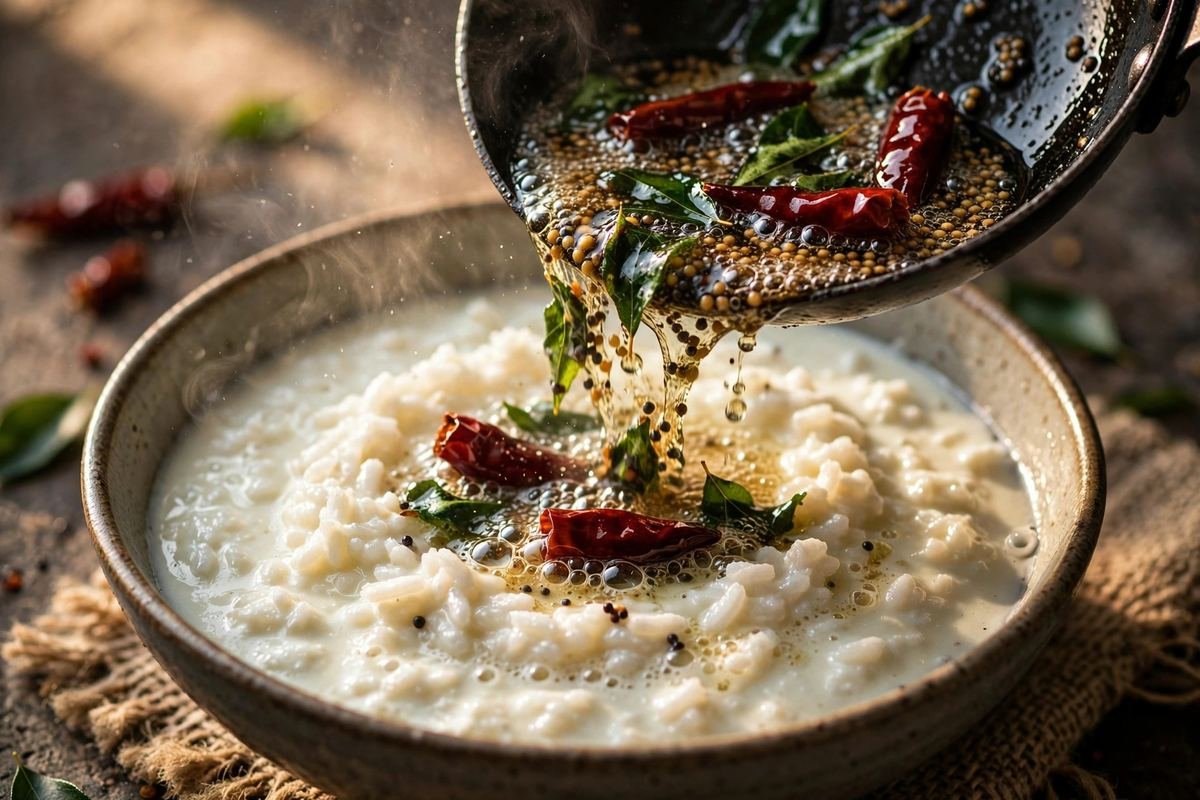
- Pour the sizzling tadka over the top. Immediately — while the oil is still crackling — pour the entire tempering, oil and all, over the curd rice. Do not stir it in completely; give just one or two gentle folds so the golden oil streaks through the white cream in marbled ribbons, leaving plenty of the crisp bits sitting on top. That contrast of hot crisp tempering against cool creamy rice, eaten in the same spoonful, is the signature pleasure of this dish.
Tip: Read through the full post below for step-by-step photos, pro tips, variations and FAQs before you start cooking.
The Story Behind Curd Rice
Ask a Tamilian what they eat when they are sick, heartbroken, exhausted or simply too hot to think, and the answer will almost always be thayir sadam — curd rice. It is the last course of the traditional Tamil meal, the food of convalescence and comfort, the dish mothers press on children and children eventually press on their own children. Where other cuisines reach for chicken soup, South India reaches for a bowl of cool, creamy rice folded through fresh curd, crowned with a crackling tempering and jewelled with pomegranate. It is humble to the point of invisibility and beloved to the point of devotion.
Curd rice belongs to the ancient logic of the South Indian meal, which ends with something cooling and probiotic to settle the stomach after the fire of sambar, rasam and kootu. Ayurvedic thinking has long held that curd calms heat in the body, and modern nutrition agrees that the live cultures in fresh, home-set curd are genuinely good for the gut. Temples have served it as prasadam for centuries — the famous daddojanam of Andhra temples is curd rice elevated with pepper, ginger and pomegranate — and on the hottest afternoons of May, when the whole of Tamil Nadu seems to shimmer, office workers and auto drivers alike swear by a tiffin of curd rice with pickle as the only lunch that does not weigh you down.
What makes curd rice special is its texture and temperature: it must be served cool, never warm, and the rice must be soft enough to almost melt — this is the one rice dish where mushy is not a flaw but the entire point. The creamy base cradles the crunch of the tempering, the pop of pomegranate seeds, the cool dice of cucumber, and the gentle heat of ginger and green chilli. Done right, it is not bland at all — it is soothing the way a lullaby is soothing, with quiet layers of flavour that reveal themselves slowly. This recipe gives you the classic home-style version with every detail that separates transcendent curd rice from the sad, watery stuff: rice cooked extra-soft, curd folded in while the rice is warm, and a tempering poured over at the very end so it stays crisp.
Why You’ll Love This Recipe
- Ultimate comfort food: cool, creamy and gentle — the edible equivalent of a deep breath.
- Ready in 35 minutes: mostly hands-off rice cooking, then ten minutes of mixing and tempering.
- Gut-friendly and light: fresh curd’s live cultures plus a light, hydrating meal that never sits heavy.
- Summer lifesaver: served cool, it genuinely brings your body temperature down on scorching days.
- Kid-approved: mild, creamy and customisable — picky eaters love building their own bowl.
- Endlessly adaptable: pomegranate, cucumber, grapes, carrots — the add-ins are your playground.
- Perfect make-ahead lunch: packs beautifully for tiffins and tastes even better after the flavours meld.
Key Ingredients Explained
Rice — cooked extra soft: Forget everything you know about fluffy, separate grains. Curd rice wants rice cooked with extra water until it is soft, swollen and borderline mushy — short or medium-grain rice like sona masoori is ideal because it breaks down creamier than long-grain basmati. Cook it with roughly 3.5 cups of water per cup of rice, a little more than usual, until the grains have burst and surrendered. Then — and this is the traditional trick — mash it lightly with the back of a spoon while it is still hot. The mashed, starchy rice absorbs the curd and turns the whole dish luxuriously creamy instead of a sad pile of grains floating in thin yoghurt.
Curd — fresh, not sour: The curd makes or breaks this dish. Use fresh, mild, home-set curd or a good plain whole-milk yoghurt — it should taste sweet and clean, never sharp or sour. Sour curd makes sour curd rice, and no tempering can rescue it. Whisk it completely smooth before mixing so there are no lumps. Whole-milk curd gives the richest, creamiest result; low-fat works but the dish will be thinner and less satisfying. If your curd is a day old and turning tangy, stir in a few tablespoons of milk to soften the acidity.
Milk — the anti-sour insurance: A splash of warm milk stirred into the rice before the curd does two quiet jobs: it loosens the mashed rice so the curd coats every grain, and its mild sweetness buffers the curd’s acidity, keeping the dish tasting fresh for hours. This is also what stops curd rice from turning sour in the lunchbox — the milk dilutes the acids and slows further fermentation. Use whole milk for the creamiest result.
The tempering (tadka): Mustard seeds crackled in hot oil, urad and chana dals fried golden, dried red chillies, curry leaves, grated ginger and green chillies — this is where all the excitement lives. The tempering is poured sizzling over the cool curd rice at the very end, and the contrast of hot, crisp, aromatic bits against the cool cream is the whole drama of the dish. Fry everything until truly crisp: pale, chewy dal in curd rice is a texture tragedy.
Pomegranate and cucumber: The classic jewels. Pomegranate arils add bursts of sweet-tart juice that pop against the mild curd, and they make the bowl look like a celebration. Finely diced cucumber adds cool crunch and freshness. Neither is mandatory, but together they lift curd rice from simple to special. Add them just before serving so they stay crisp and bright.
Equipment You’ll Need
- Heavy-bottomed saucepan, pressure cooker or rice cooker for the rice
- Large mixing bowl — wide enough to mash and fold comfortably
- Small tadka pan or small frying pan for the tempering
- Whisk or large spoon for smoothing the curd
- Potato masher or the back of a sturdy spoon for mashing the rice
- Airtight container if packing for lunch
- 1 cup short or medium-grain rice (200g), such as sona masoori
- 3 1/2 cups water (840ml), for cooking the rice
- 3/4 tsp fine salt, plus more to taste
- 1/2 cup warm whole milk (120ml)
- 2 cups fresh plain curd or whole-milk yoghurt (480g), whisked smooth
- 2 tbsp sesame oil or neutral oil (30ml), for the tempering
- 1 tsp black mustard seeds
- 1 tbsp urad dal (15g)
- 1 tbsp chana dal (15g)
- 1/4 tsp asafoetida (hing), optional
- 3 dried red chillies, broken in half
- 2 green chillies, finely chopped
- 1-inch piece fresh ginger (15g), finely grated
- 12–15 fresh curry leaves (1 large sprig)
- 1/3 cup pomegranate arils (50g)
- 1/2 cucumber, finely diced (about 1/2 cup)
- 1 small carrot, finely grated, optional
- 2 tbsp chopped fresh coriander leaves
- Cook the rice extra-soft. Rinse the rice and cook it with the 3 1/2 cups of water — in a pressure cooker for 4 to 5 whistles, in a rice cooker on the regular setting, or in a saucepan brought to a boil then covered and simmered on low for 20 to 22 minutes. You are deliberately overcooking it: the grains should be swollen, split and very soft, with a little starchy water still clinging to them. If the saucepan method leaves it too dry, add 1/4 cup of hot water near the end. This softness is the foundation of creamy curd rice — firm, separate grains will never give you the right texture.
- Mash while hot. Transfer the hot rice to your large mixing bowl and mash it lightly with a potato masher or the back of a sturdy spoon — about 8 to 10 presses. You are not making a purée; you want roughly half the grains broken down into a starchy mass with the other half still recognisable. This mashed starch is what thickens the curd into a creamy sauce rather than a watery pool. Work while the rice is steaming hot, because cold rice resists mashing and turns gluey instead of creamy.
- Loosen with warm milk and salt. Pour the warm milk over the hot mashed rice along with the salt, and fold it through thoroughly. The rice will drink up the milk and turn into a soft, porridge-like mass — this is exactly right. The salt goes in now, while the rice is warm, because warm starch absorbs seasoning far better than cold curd does. Taste: the rice should be pleasantly salty on its own, since the plain curd will dilute the seasoning later.
- Cool, then fold in the curd. Let the milky rice cool to lukewarm — about 15 to 20 minutes, or speed it up by spreading it in a wide dish. It must not be hot when the curd goes in, or the curd can split and turn grainy. Add the whisked-smooth curd and fold gently until every bit of rice is coated in a thick, creamy blanket. The consistency should be like a soft, scoopable porridge — it will thicken further as it sits, so err on the looser side. If it looks too thick, stir in 2 to 3 tablespoons of milk.
- Make the tempering. Heat the oil in a small tadka pan over medium heat until it shimmers. Add the mustard seeds and wait for a full, vigorous crackle — about 20 to 30 seconds. Add the urad dal and chana dal and fry, stirring constantly, for 60 to 90 seconds until deep golden and crisp. Add the asafoetida, broken red chillies, chopped green chillies and grated ginger; fry 30 seconds until the ginger turns golden at the edges. Finally toss in the curry leaves — they will sputter — and fry 15 to 20 seconds until crisp and dark. The whole tempering takes about 3 minutes and should smell intensely nutty and aromatic.
- Pour the sizzling tadka over the top. Immediately — while the oil is still crackling — pour the entire tempering, oil and all, over the curd rice. Do not stir it in completely; give just one or two gentle folds so the golden oil streaks through the white cream in marbled ribbons, leaving plenty of the crisp bits sitting on top. That contrast of hot crisp tempering against cool creamy rice, eaten in the same spoonful, is the signature pleasure of this dish.
- Add the fresh jewels and rest. Scatter the pomegranate arils, diced cucumber, grated carrot (if using) and chopped coriander over the top. Cover and rest for 10 minutes at room temperature — or refrigerate for 30 minutes if you like it thoroughly chilled — so the flavours settle and the rice drinks in the last of the creaminess. Taste once more and adjust salt; cold food needs slightly more seasoning than warm, so do not be shy.
- Serve cool. Spoon into bowls and serve cool or at room temperature — never warm. Curd rice is at its best within a few hours of making, when the curd is fresh and mild and the tempering still has its crunch. Offer extra pomegranate and a lemon wedge on the side for anyone who likes more tang.
Pro Tips for Perfect Results
- Mash the rice while it is hot. This is the difference between creamy curd rice and grains swimming in thin yoghurt. Hot starch breaks down into a silky mass; cold rice just gets gummy when you force it.
- Fresh curd only. Taste your curd before you start. If it makes you pucker, it will make the whole dish sour. When in doubt, cut it half-and-half with fresh milk or use it for kadhi instead and set a fresh batch.
- Cool the rice before adding curd. Hot rice plus curd equals split, grainy curd. Lukewarm is the sweet spot — warm enough to absorb seasoning, cool enough to keep the curd silky.
- Salt the rice, not just the curd. Seasoning the warm mashed rice means the salt penetrates the grains; salting only at the end leaves you with bland rice in salty curd. Season in layers.
- Pour the tadka sizzling. The tempering must go from pan to bowl while it is still crackling. A tadka that has sat and cooled loses its drama — and its crispness — before it ever meets the rice.
- Keep it loose. Curd rice thickens noticeably as it sits, as the rice keeps drinking up moisture. Mix it slightly looser than you think it should be; by serving time it will be perfect. For lunchboxes, pack a small container of milk to stir in before eating.
- The milk trick for the tiffin. That splash of milk is not just for creaminess — it genuinely slows the curd from turning sour over a few hours at room temperature, which is why traditional lunchbox curd rice survives the morning commute.
- Add crunchy things last. Pomegranate, cucumber and the tempering all lose their texture if stirred in too early. Fold them through at the very end, right before the rest, for maximum contrast.
Variations to Try
Daddojanam (temple-style): add 1 teaspoon of coarsely crushed black pepper and an extra inch of grated ginger to the tempering, and finish with more pomegranate — the peppery, gingery Andhra temple classic.
Fruit curd rice: fold in 1/2 cup of diced mango or green grapes along with the pomegranate for a sweet-savoury version kids adore.
Beetroot pink curd rice: stir 1/4 cup of finely grated raw beetroot through the curd for a stunning pink bowl that tastes as fresh as it looks — a lunchbox showstopper.
Oats curd “rice”: replace the rice with 1 cup of cooked steel-cut oats for a high-fibre, wholegrain version — the tempering and method stay exactly the same.
Avarekalu / field-bean curd rice: a Karnataka winter special — fold 1/2 cup of cooked avarekalu (hyacinth beans) through the rice for a nutty, seasonal twist.
Raw mango curd rice: in summer, add 1/4 cup of finely diced raw mango with the cucumber for a tangy, crunchy seasonal version.
Serving Suggestions
Curd rice is traditionally the closing act of the South Indian meal, eaten after sambar-rice and rasam-rice to cool the palate — so if you are serving a full Tamil lunch, it goes last, with a spoon of pickle on the side. As a standalone meal, the non-negotiable partner is pickle: mango, lime or the fiery Andhra avakaya — the sharp, salty pickle against the mild cream is the whole point. Add a crisp papad or vadam for crunch, and a simple poriyal or keerai masiyal if you want vegetables alongside. For tiffins, pack the pickle in a separate tiny box so it does not bleed into the rice. And on the hottest days, serve it in a chilled steel bowl with a tall glass of neer mor (spiced buttermilk) — the definitive South Indian heatwave lunch.
Storage and Reheating
Curd rice is a make-ahead dream, with one rule: never heat it. Refrigerate in an airtight container for up to 2 days; the flavours meld and it tastes even better the next day. It will thicken in the fridge as the rice absorbs moisture — loosen each serving with 2 to 3 tablespoons of cold milk and a pinch of salt, stirred through just before eating. If packing for lunch, keep the pomegranate and cucumber in a separate small box and add at mealtime so they stay crisp, and tuck in a tiny container of milk for loosening. Do not leave curd rice at warm room temperature for more than 3 to 4 hours, and do not freeze it — the curd splits and turns watery on thawing. If your batch has turned a little sour by day two, whisk in extra milk and a pinch of sugar; it will not be perfect, but it will be perfectly edible.
Frequently Asked Questions
Why did my curd rice turn watery?
Two common causes: the rice was not mashed, so there was no starch to thicken the curd, or the curd itself was thin and watery. Mash the hot rice properly, use thick whole-milk curd (drain watery curd through a strainer for 15 minutes if needed), and remember the dish thickens as it rests — what looks loose at mixing time is often perfect ten minutes later.
Can I use store-bought yoghurt instead of home-set curd?
Yes — a plain, whole-milk, unsweetened yoghurt works well. Avoid Greek yoghurt straight up, as it is too thick and tangy; if it is all you have, thin it half-and-half with milk. Whatever you use, taste it first: it should be mild and sweet, never sharp.
How do I keep curd rice from turning sour in the lunchbox?
Three defences: start with very fresh curd, stir warm milk through the rice before adding the curd (it buffers acidity), and keep the box as cool as you can — an insulated tiffin or a small ice pack helps enormously. Mixed this way, curd rice comfortably survives a morning commute and tastes fresh at lunchtime.
Is curd rice healthy?
Genuinely, yes. It is light, hydrating and easy to digest, and fresh curd provides live probiotic cultures, protein and calcium. The tempering adds only a couple of teaspoons of oil per serving. It is one of the few comfort foods that comforts without weighing you down — which is exactly why it is the traditional food of convalescence.
My tempering always burns. What am I doing wrong?
The dals go from golden to burnt in seconds, so the heat is probably too high or you stopped stirring. Keep the tadka pan at medium — not high — heat, stir the dals constantly, and have every ingredient measured and within reach before the mustard seeds go in. If your stove runs hot, pull the pan off the burner for a few seconds between additions.
Can I make curd rice with brown rice or millets?
You can, with adjustments. Brown rice and millets do not break down as creamily, so cook them very soft with extra water and mash more aggressively. Little millet (samai) and barnyard millet (kuthiraivali) are the traditional millet choices for curd-rice style dishes in Tamil Nadu, and they work beautifully once cooked to full softness.
There is a reason curd rice has survived centuries of changing food fashions without changing at all: it does exactly what comfort food should do. It cools you down, settles your stomach, asks almost nothing of the cook, and tastes like someone taking care of you. Keep the rice soft, the curd fresh, the tempering crackling, and a bowl of this gentle, creamy goodness will never let you down — on the hottest afternoon, the longest day, or the evening when only the simplest food will do.