Recipe Card
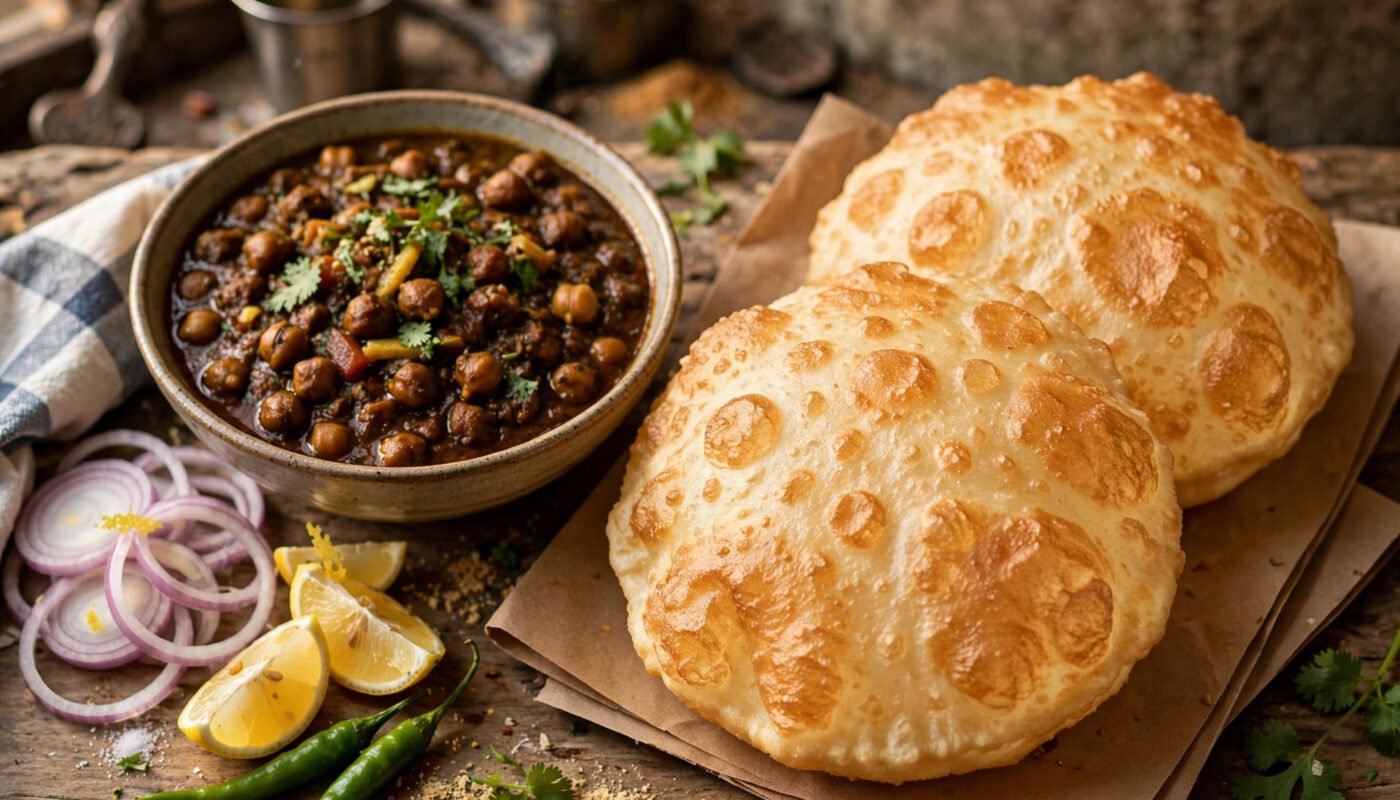
Dark, smoky Amritsari chole with pillowy bhature that puff like balloons. The complete recipe with the tea-bag colour secret and a no-fail bhatura dough.
Ingredients
- 250g (1.5 cups) dried Kabuli chana (chickpeas)
- 1 tsp baking soda, for soaking
- 2 black tea bags
- 2 bay leaves
- 1 black cardamom pod
- 1 cinnamon stick (2-inch)
- 3 cloves
- 3 tbsp mustard oil (or neutral oil)
- 1 tsp cumin seeds
- 2 large onions, finely chopped (about 250g)
- 1 tbsp ginger-garlic paste
- 2 large tomatoes, pureed (about 250g)
- 2 tbsp anardana (dried pomegranate seeds), soaked and ground to a paste
- 2 tbsp chole masala
- 1 tsp Kashmiri red chilli powder
- 1/2 tsp turmeric powder
- 1 tsp garam masala
- 1.5 tsp salt, or to taste
- 2 tbsp fresh coriander leaves, chopped
- 1 inch ginger, cut into juliennes, for garnish
- 3 cups (375g) maida (refined flour), plus extra for dusting
- 2 tbsp fine rava (semolina)
- 1/2 cup thick curd (yoghurt)
- 1 tsp sugar
- 1/2 tsp baking soda
- 1 tsp salt
- 2 tbsp oil, plus more for greasing
- 3/4 cup warm water, approximately, for kneading
- Oil for deep frying
- 1 large onion, sliced into rings and soaked in vinegar with salt for 15 minutes
- 4-5 green chillies, slit
- 1 lemon, cut into wedges
- 2 tbsp mango or mixed pickle
Instructions
- Soak the chickpeas. Rinse the dried chickpeas and soak them in plenty of water with 1 teaspoon of baking soda for 8 hours or overnight. They should double in size and feel plump. Drain and rinse thoroughly to wash off the baking soda; skipping the rinse can leave a soapy aftertaste.
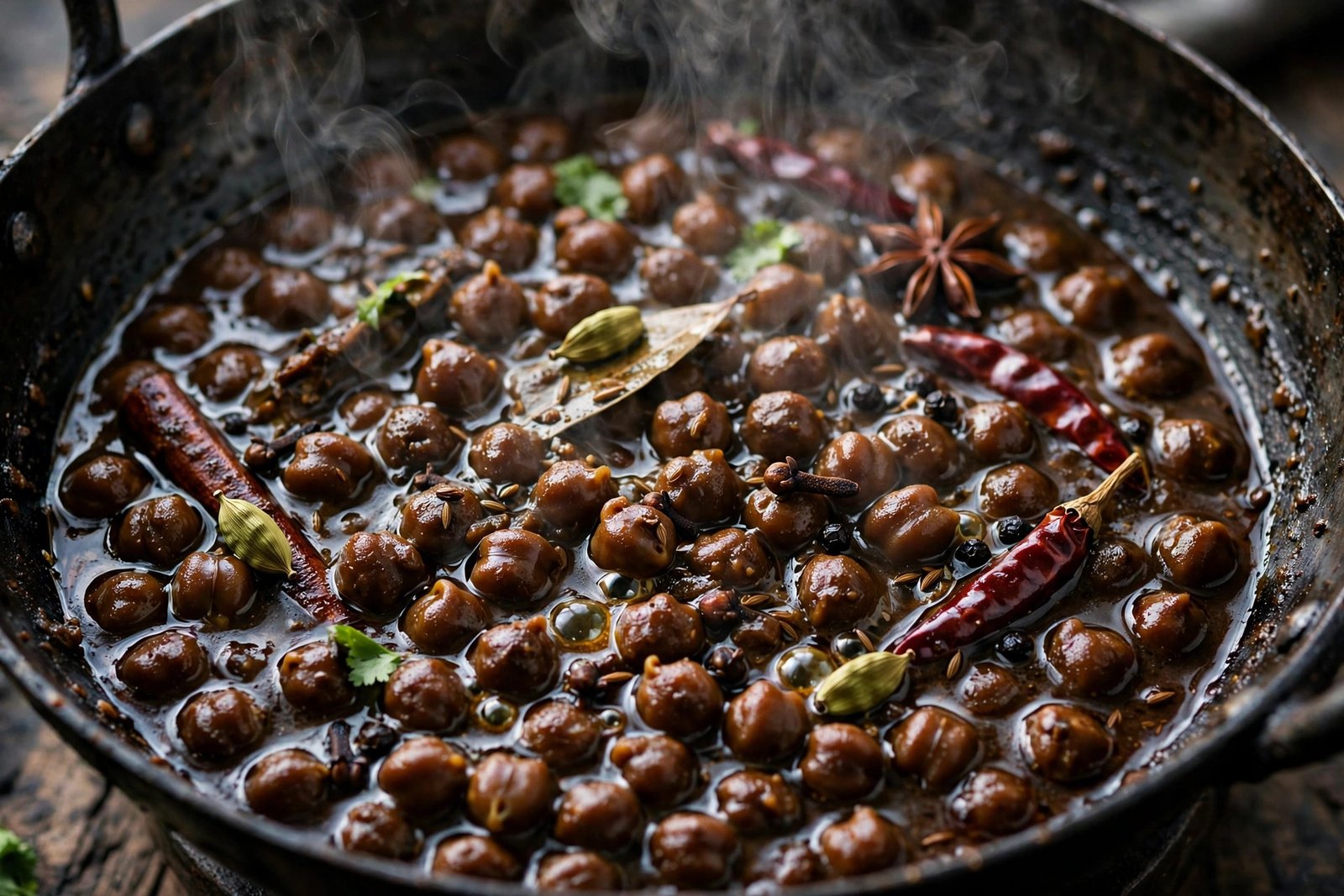
- Pressure-cook with tea. Add the soaked chickpeas to a pressure cooker with 4 cups of fresh water, the 2 tea bags, bay leaves, black cardamom, cinnamon, cloves, and 1 teaspoon salt. Pressure cook for 5-6 whistles on medium-high heat, about 20-25 minutes, until the chickpeas are completely soft and creamy when pressed between your fingers. Let the pressure release naturally. Remove the tea bags and whole spices, but reserve the dark cooking liquor; it is liquid gold for the gravy.
- Make the bhatura dough. While the chickpeas cook, mix the maida, rava, sugar, baking soda, and salt in a large bowl. Add the curd and 2 tablespoons oil, then add warm water a little at a time, kneading for 8-10 minutes into a soft, smooth, pliable dough, slightly softer than chapati dough. Grease the surface with oil, cover with a damp cloth, and rest for at least 2 hours in a warm spot. The rest develops the gluten and activates the leavening; do not rush it.
- Build the masala. Heat the mustard oil in a heavy kadhai until it just begins to smoke, then cool slightly; this removes its pungency. Add cumin seeds and let them crackle. Add the chopped onions and saute 8-10 minutes until deep golden brown, stirring often. Stir in the ginger-garlic paste and cook 1 minute, then add the tomato puree and cook 6-8 minutes until the oil separates and the raw tomato smell is gone.
- Spice and simmer the chole. Add the anardana paste, chole masala, Kashmiri chilli powder, turmeric, and remaining salt to the masala, stirring 1 minute. Add the cooked chickpeas along with 2 cups of their dark cooking liquor. Mash a few chickpeas against the side of the pan with your spoon; this naturally thickens the gravy. Simmer on low for 20-25 minutes, stirring occasionally, until the gravy turns dark, glossy, and clings to the chickpeas. Stir in the garam masala, half the coriander, and the ginger juliennes in the last 5 minutes.
- Roll the bhature. Divide the rested dough into 8 equal balls. Roll each into a 6-inch oval or circle, slightly thicker than a poori, about 3-4mm. Keep the remaining balls covered so they do not dry out. Uneven thickness causes uneven puffing, so roll with light, even pressure.
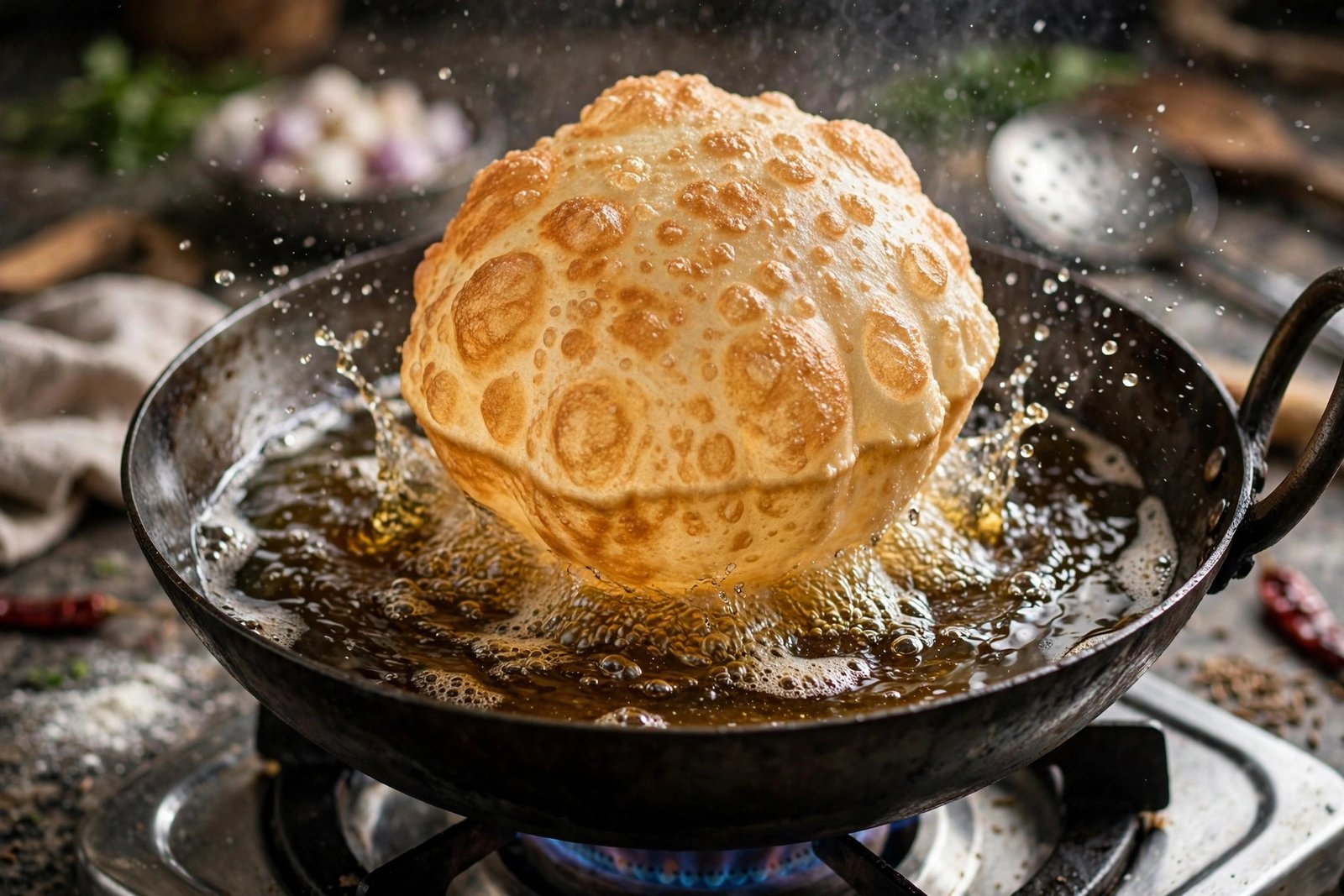
- Fry to a puff. Heat oil in the kadhai to 180-190C; a small piece of dough should sizzle and rise to the surface within 2-3 seconds. Gently slide in one bhatura. It should begin puffing within 10-15 seconds; press lightly with the slotted spoon to encourage the puff and spoon hot oil over the top. Flip once the underside is pale gold, fry 30 seconds more until both sides are golden with blistered spots, then lift out and drain on a rack or paper towels. Fry the rest one at a time, and serve immediately while still puffed.
Tip: Read through the full post below for step-by-step photos, pro tips, variations and FAQs before you start cooking.
Introduction
There is a reason chole bhature has lines outside shops from Amritsar to Delhi to every Indian neighbourhood abroad. It is the ultimate Punjabi comfort plate: a dark, smoky, deeply spiced chickpea curry served with bhature, those magnificent puffy breads that balloon in hot oil and arrive at the table still crackling. Tear a bhatura, scoop up the glossy chole, add a bite of pickled onion and green chilli, and you understand instantly why this dish inspires such devotion.
The chole of Amritsar are distinct from everyday chickpea curries. They are dark, almost black-brown, glossy with oil, and perfumed with anardana (dried pomegranate seeds), whole spices, and a whisper of tea. That famous dark colour traditionally comes from simmering the chickpeas with a potli, a muslin bundle, of black tea leaves or from cooking them in an iron kadhai. The bhature, meanwhile, are a yeasted or yoghurt-leavened fried bread, soft and chewy inside with a blistered golden crust, and deeply satisfying in a way no baked bread can match.
This recipe gives you both halves in full authentic detail: the overnight chickpea method with the tea-bag colour trick, the anardana-based masala that makes Amritsari chole taste like the street carts, and a bhatura dough that puffs reliably every single time. I have also included the troubleshooting for the two things that go wrong most often: pale, bland chole and flat, oily bhature. Get these right and you will be the hero of every weekend brunch.
Why You’ll Love This Recipe
- Authentic Amritsari flavour: The tea-colour trick and anardana masala replicate the famous street-cart taste.
- No-fail bhatura dough: A tested yoghurt-leavened dough that puffs into balloons consistently.
- Pantry-friendly spices: Everything comes from a standard Indian spice box plus dried pomegranate seeds.
- Make-ahead smart: The chole taste better the next day; the dough rests while you cook.
- Complete street-food plate: Includes pickled onions and green chilli accompaniments.
- Naturally vegetarian: Hearty, protein-rich, and satisfying for the whole family.
Key Ingredients Explained
Start with the chickpeas: use Kabuli chana, the large white chickpeas, and buy them whole and dried rather than tinned. Dried chickpeas soaked overnight cook up creamier and absorb the masala far better than tinned ones, which can taste tinny and stay firm. Soak for a full 8 hours or overnight with a teaspoon of baking soda; the soda softens the skins and is the secret to that melt-in-the-mouth texture. Rinse well before cooking.
The signature dark colour and tangy depth come from two heroes: black tea and anardana (dried pomegranate seeds). A couple of tea bags simmered with the chickpeas stain them a gorgeous dark brown and add a subtle tannic depth; this is the widely used restaurant trick. Anardana gives Amritsari chole its characteristic sourness, deeper and more complex than lemon or amchur alone. If you cannot find anardana, use amchur (dried mango powder) plus a little extra, but try to source anardana from an Indian grocer. Whole spices, bay leaves, cinnamon, black cardamom, cloves, do the aromatic heavy lifting, while chole masala, either store-bought or homemade, ties it together. For the bhature, maida (refined flour) gives the classic pillowy chew; a spoon of rava (semolina) adds structure, curd provides the leavening tang, and a little baking soda and sugar help the puff. Knead with warm water and rest the dough at least 2 hours, or the bhature will refuse to balloon.
Equipment You’ll Need
- Pressure cooker: For cooking the chickpeas quickly and deeply.
- Heavy kadhai or deep pan: For frying the bhature safely in hot oil.
- Large mixing bowl: For kneading and resting the bhatura dough.
- Muslin cloth or tea bags: For the tea-colouring potli.
- Slotted spoon: For lifting bhature out of hot oil.
- Rolling pin: For rolling even bhature discs.
Ingredients
For the Amritsari chole
- 250g (1.5 cups) dried Kabuli chana (chickpeas)
- 1 tsp baking soda, for soaking
- 2 black tea bags
- 2 bay leaves
- 1 black cardamom pod
- 1 cinnamon stick (2-inch)
- 3 cloves
- 3 tbsp mustard oil (or neutral oil)
- 1 tsp cumin seeds
- 2 large onions, finely chopped (about 250g)
- 1 tbsp ginger-garlic paste
- 2 large tomatoes, pureed (about 250g)
- 2 tbsp anardana (dried pomegranate seeds), soaked and ground to a paste
- 2 tbsp chole masala
- 1 tsp Kashmiri red chilli powder
- 1/2 tsp turmeric powder
- 1 tsp garam masala
- 1.5 tsp salt, or to taste
- 2 tbsp fresh coriander leaves, chopped
- 1 inch ginger, cut into juliennes, for garnish
For the bhature (makes 8)
- 3 cups (375g) maida (refined flour), plus extra for dusting
- 2 tbsp fine rava (semolina)
- 1/2 cup thick curd (yoghurt)
- 1 tsp sugar
- 1/2 tsp baking soda
- 1 tsp salt
- 2 tbsp oil, plus more for greasing
- 3/4 cup warm water, approximately, for kneading
- Oil for deep frying
For serving
- 1 large onion, sliced into rings and soaked in vinegar with salt for 15 minutes
- 4-5 green chillies, slit
- 1 lemon, cut into wedges
- 2 tbsp mango or mixed pickle
Instructions
- Soak the chickpeas. Rinse the dried chickpeas and soak them in plenty of water with 1 teaspoon of baking soda for 8 hours or overnight. They should double in size and feel plump. Drain and rinse thoroughly to wash off the baking soda; skipping the rinse can leave a soapy aftertaste.
- Pressure-cook with tea. Add the soaked chickpeas to a pressure cooker with 4 cups of fresh water, the 2 tea bags, bay leaves, black cardamom, cinnamon, cloves, and 1 teaspoon salt. Pressure cook for 5-6 whistles on medium-high heat, about 20-25 minutes, until the chickpeas are completely soft and creamy when pressed between your fingers. Let the pressure release naturally. Remove the tea bags and whole spices, but reserve the dark cooking liquor; it is liquid gold for the gravy.
- Make the bhatura dough. While the chickpeas cook, mix the maida, rava, sugar, baking soda, and salt in a large bowl. Add the curd and 2 tablespoons oil, then add warm water a little at a time, kneading for 8-10 minutes into a soft, smooth, pliable dough, slightly softer than chapati dough. Grease the surface with oil, cover with a damp cloth, and rest for at least 2 hours in a warm spot. The rest develops the gluten and activates the leavening; do not rush it.
- Build the masala. Heat the mustard oil in a heavy kadhai until it just begins to smoke, then cool slightly; this removes its pungency. Add cumin seeds and let them crackle. Add the chopped onions and saute 8-10 minutes until deep golden brown, stirring often. Stir in the ginger-garlic paste and cook 1 minute, then add the tomato puree and cook 6-8 minutes until the oil separates and the raw tomato smell is gone.
- Spice and simmer the chole. Add the anardana paste, chole masala, Kashmiri chilli powder, turmeric, and remaining salt to the masala, stirring 1 minute. Add the cooked chickpeas along with 2 cups of their dark cooking liquor. Mash a few chickpeas against the side of the pan with your spoon; this naturally thickens the gravy. Simmer on low for 20-25 minutes, stirring occasionally, until the gravy turns dark, glossy, and clings to the chickpeas. Stir in the garam masala, half the coriander, and the ginger juliennes in the last 5 minutes.
- Roll the bhature. Divide the rested dough into 8 equal balls. Roll each into a 6-inch oval or circle, slightly thicker than a poori, about 3-4mm. Keep the remaining balls covered so they do not dry out. Uneven thickness causes uneven puffing, so roll with light, even pressure.
- Fry to a puff. Heat oil in the kadhai to 180-190C; a small piece of dough should sizzle and rise to the surface within 2-3 seconds. Gently slide in one bhatura. It should begin puffing within 10-15 seconds; press lightly with the slotted spoon to encourage the puff and spoon hot oil over the top. Flip once the underside is pale gold, fry 30 seconds more until both sides are golden with blistered spots, then lift out and drain on a rack or paper towels. Fry the rest one at a time, and serve immediately while still puffed.
Pro Tips for Perfect Results
- Do not skip the overnight soak. Under-soaked chickpeas stay chalky no matter how long you pressure cook them. Eight hours minimum.
- Tea bags are the colour secret. Two black tea bags in the pressure cooker give you the signature dark Amritsari colour without any artificial colouring.
- Mash some chickpeas. Crushing a spoonful against the pan thickens the gravy naturally, giving that clinging, glossy restaurant consistency without any flour.
- Smoke the mustard oil. Heating mustard oil to smoking point tames its sharp pungency. Skip this and the raw mustard flavour will dominate the curry.
- Rest the bhatura dough fully. Two hours minimum. Under-rested dough makes dense, flat bhature that soak up oil instead of puffing.
- Oil temperature is everything. Too cool and bhature turn oily and pale; too hot and they brown before puffing. Maintain 180-190C and fry one at a time.
- Serve bhature immediately. They deflate within minutes. Time your frying so the last bhatura hits the plate as everyone sits down.
Variations to Try
Once you love the classic, explore the family. Pindi chole from Rawalpindi are drier and darker, with no tomato at all, just tea-darkened chickpeas tossed in ghee with anardana and whole spices. Chole kulche is Delhi’s beloved street version: the same chole served with soft, buttered kulcha breads instead of fried bhature, lighter but equally addictive. For a healthier plate, try chole with jeera rice or amritsari chole wraps in whole wheat tortillas with pickled onions. Aloo bhatura stuffs the dough with spiced mashed potato before frying for an even more indulgent bread. And for a quick weeknight fix, pressure-cooker chana masala with tinned chickpeas and a simplified masala gives you 80 percent of the joy in 30 minutes.
Serving Suggestions
Chole bhature is a complete plate on its own, but the accompaniments elevate it. Serve each portion as two puffed bhature with a generous ladle of dark chole, topped with ginger juliennes and coriander. On the side: vinegar-soaked onion rings, slit green chillies, a lemon wedge, and a spoon of mango pickle. A glass of sweet lassi is the traditional drink and the perfect cooling counterpoint to the rich, tangy plate. Some Amritsari shops add a small bowl of imli (tamarind) chutney for drizzling. This is weekend brunch food, best eaten hot, fast, and with your hands.
Storage and Reheating
The chole keep beautifully: refrigerate for up to 4 days, and they taste even better on day two as the spices meld. Reheat in a pan with a splash of water, simmering 5-8 minutes until bubbling. Chole also freeze excellently for up to 2 months; thaw overnight in the fridge before reheating. Bhature, however, are best fresh and do not store well once fried; they turn chewy within an hour. The raw dough keeps in the refrigerator for up to 2 days in an oiled, covered bowl; bring to room temperature for 30 minutes before rolling and frying. You can also freeze portioned dough balls for a month and thaw overnight for fresh bhature on demand.
Frequently Asked Questions
Why are my chole pale instead of dark?
Pale chole mean the tea trick was skipped or the chickpeas were undercooked. Always pressure cook with tea bags, and make sure the chickpeas are fully soft so they absorb the colour. Simmering the finished chole low and long also deepens the colour as the gravy reduces and glosses.
My bhature are not puffing. What am I doing wrong?
The three usual causes are under-rested dough, oil that is too cool, or rolled bhature that are too thin or uneven. Rest the dough a full 2 hours, verify the oil is 180-190C with the dough-scrap test, and roll to an even 3-4mm thickness.
Can I bake bhature instead of frying?
Baking will not give you a true bhatura; the puff comes from the violent steam expansion in hot oil. For a lighter alternative, make kulchas: roll the same dough and cook on a hot tawa like naan, brushing with butter. It is delicious, just a different bread.
What is anardana and what can I substitute?
Anardana is dried pomegranate seeds, giving a fruity sourness unique to Punjabi cooking. The best substitute is amchur (dried mango powder): use 1.5 tablespoons of amchur for the 2 tablespoons of anardana paste, plus a squeeze of lemon at the end.
Can I make chole without a pressure cooker?
Yes, but it takes patience. Simmer the soaked chickpeas in a heavy pot with the tea bags and whole spices for 60-90 minutes until completely soft, topping up water as needed. The pressure cooker is faster and gives a creamier result, but the stovetop works.
Is chole bhature very unhealthy?
It is indulgent, certainly, but not without merit: chickpeas bring protein and fibre. To lighten it, serve the chole with kulcha or jeera rice instead of fried bhature, or fry the bhature in fresh oil at the correct temperature so they absorb minimal oil. Enjoy it as the celebratory weekend meal it is meant to be.
Chole bhature is more than a recipe; it is a celebration on a plate, the taste of Punjabi hospitality at its most generous. Take the time to soak the chickpeas properly, respect the bhatura dough’s rest, and get that oil ripping hot. Then gather your people, fry those balloons one by one, and listen to the happy silence that falls over the table. That silence is the highest compliment a cook can receive.