Recipe Card
Fire-roasted brinjal mashed into a smoky, tomato-rich curry. This Punjabi classic is rustic comfort food at its finest, ready in under an hour.
Ingredients
- 1 large brinjal (eggplant), about 800g–1kg, washed and dried
- 3 tbsp mustard oil (or any neutral oil)
- 1 tsp cumin seeds
- 2 medium onions (about 250g), finely chopped
- 1 tbsp ginger-garlic paste, freshly pounded
- 2–3 green chillies, slit lengthwise (adjust to taste)
- 3 medium tomatoes (about 300g), finely chopped or pureed
- 1 tsp Kashmiri red chilli powder
- 1 tsp coriander powder
- ½ tsp turmeric powder
- ¾ tsp garam masala
- 1 tsp salt, or to taste
- ½ tsp amchur (dry mango powder), optional
- 1 tbsp ghee, for finishing
- 3 tbsp fresh coriander leaves, chopped, plus extra for garnish
Instructions
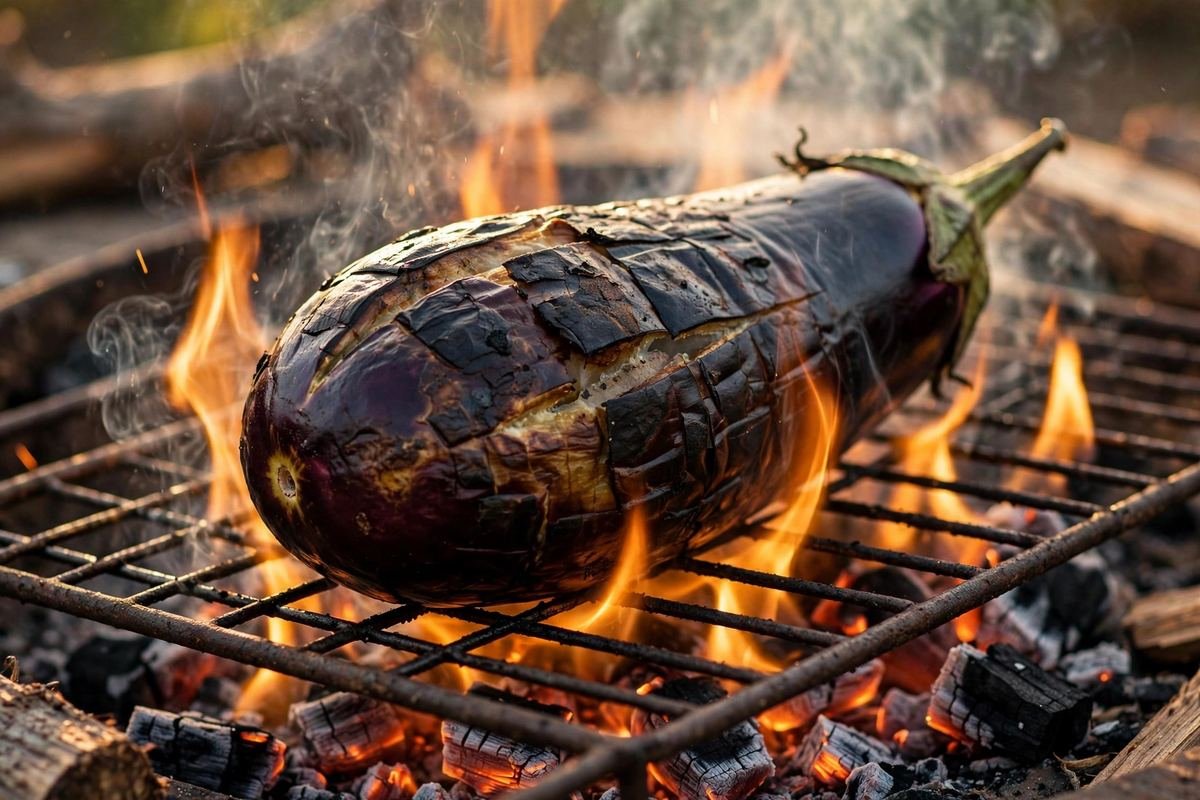
- Roast the brinjal over open flame. Smear the whole brinjal with a few drops of oil — this helps the skin blister evenly. Place it directly on a medium gas flame, ideally on a wire mesh set over the burner. Let it roast for 15–20 minutes, turning every 3–4 minutes with tongs, until the skin is blackened and blistered all over and the flesh feels completely soft and collapsed when pressed. A fork should slide into the thickest part with zero resistance. The brinjal will hiss and drip — that’s normal. If you don’t have a gas flame, broil it in a hot oven (250°C / 480°F) on a foil-lined tray for 25–30 minutes, turning halfway, until charred and soft.
- Peel while still warm. Transfer the roasted brinjal to a bowl and let it cool just until you can handle it, about 5 minutes. Slip off the blackened skin with your fingers under a thin stream of water or by wiping with a damp cloth — it should come away easily. Discard any hard stem cap. Check the flesh carefully for large seed clusters; pick out the toughest seedy bits if the brinjal was mature, since they turn bitter in the curry.
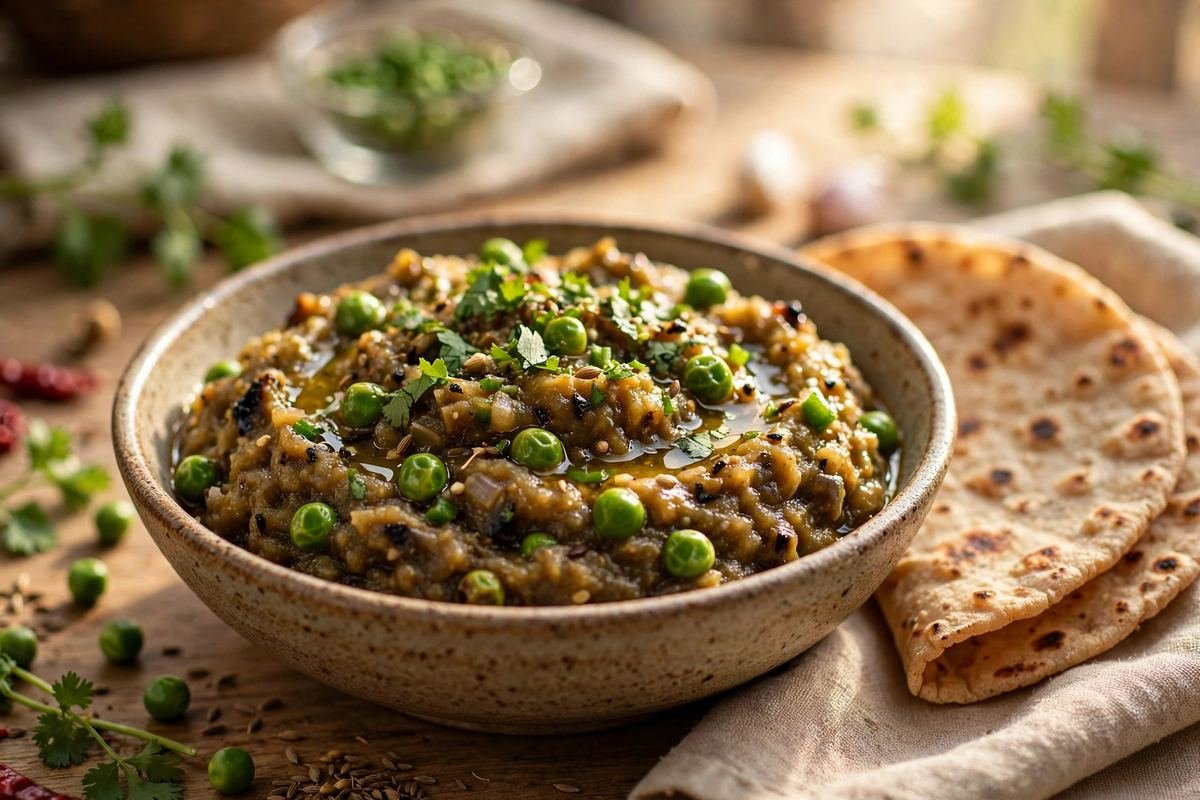
- Mash to a rustic texture. Place the peeled flesh in a bowl and mash it with a potato masher or the back of a large spoon. Aim for a chunky, fibrous mash — not a smooth puree. A few intact ribbons of flesh give bharta its character. Set aside.
- Bloom the spices in mustard oil. Heat the mustard oil in a heavy kadhai over medium-high heat until it reaches its smoking point — you’ll see faint wisps of smoke — then reduce the heat to medium and let it cool for 30 seconds. Add the cumin seeds and let them sizzle and darken for 10–15 seconds until fragrant.
- Brown the onions deeply. Add the chopped onions and cook over medium heat, stirring often, for 8–10 minutes, until they turn a rich golden-brown — not just translucent, but genuinely caramelized at the edges. This deep browning is the backbone of the bharta’s flavor. Stir in the ginger-garlic paste and slit green chillies and sauté for 1–2 minutes more, until the raw smell disappears.
- Cook the tomato masala. Add the chopped tomatoes, Kashmiri red chilli powder, coriander powder, and turmeric. Cook over medium heat, stirring and scraping the base, for 7–8 minutes, until the tomatoes break down completely and you see oil glistening and separating around the edges of the masala. The mixture should look jammy and dark, not watery.
- Fold in the brinjal. Add the mashed roasted brinjal to the kadhai along with the salt. Stir well to coat every bit of flesh in the masala. Cook over medium-low heat for 8–10 minutes, stirring every couple of minutes, letting the bharta sizzle and absorb the flavors. It will darken slightly and thicken — if it sticks, splash in 2–3 tablespoons of water and scrape the base.
- Finish with ghee and garam masala. Stir in the garam masala, amchur (if using), and the chopped coriander leaves. Cook 1 minute more, then switch off the heat and fold in the tablespoon of ghee. Taste and adjust salt and chilli. Cover and rest for 5 minutes — this brief rest lets the smoky flavors settle into the masala.
- Serve hot. Scoop into a serving bowl, dot with an extra knob of butter if you like it dhaba-style, and scatter fresh coriander on top. Serve immediately with hot rotis, parathas, or jeera rice.
Tip: Read through the full post below for step-by-step photos, pro tips, variations and FAQs before you start cooking.
There is a moment, standing over a hissing blue flame in a North Indian kitchen, when a whole brinjal begins to sing. The skin blisters, crackles, and blackens, and through the charred shell a sweet, smoky perfume escapes — the unmistakable aroma of baingan bharta in the making. This is not a curry you simply cook; it is a curry you roast, burn, and coax into being. Across Punjab and Uttar Pradesh, baingan bharta is the dish that appears at dhaba tables at midnight, at harvest-season lunches eaten cross-legged on charpoys, and at home dinners when someone says, “make something comforting.” Its magic is ancient and simple: fire transforms the humble eggplant into something lush, silky, and deeply savory.
The name itself tells you the whole story — baingan is the Hindi word for brinjal, and bharta means a mashed preparation. That is the entire philosophy of the dish: roast the vegetable whole until it collapses, scoop out the soft flesh, mash it, and fold it into a vigorous masala of onions, tomatoes, ginger, and green chillies. What comes out of the kadhai is smoky, tangy, faintly sweet, and utterly moreish. If you have only ever eaten bharta from a restaurant where it tastes like just another brown gravy, you have not yet met the real thing.
This recipe is the home-style Punjabi version my family has made for decades, the kind served with hot tandoori rotis and a dollop of white butter on top. The secret is roasting the brinjal directly over an open flame — on the gas burner, with the grates protected — rather than in the oven. Direct flame gives you the charred, almost barbecued depth that an oven cannot quite match. I will also walk you through an oven-and-broiler method for days when you don’t want the smoke alarm to complain. Either way, you end with a bharta that is smoky first, sweet second, and spiced just enough to keep you going back for another scoop.
Why You’ll Love This Recipe
- That unbeatable smoky flavor. Fire-roasting over an open flame gives the brinjal a barbecued depth no oven roast or pressure cooker can replicate.
- Naturally vegan and gluten-free. The base recipe uses only oil; a swirl of ghee at the end is optional, and the whole dish is plant-based comfort.
- A one-kadhai wonder. Once the brinjal is roasted, everything else happens in a single pan in about fifteen minutes of active cooking.
- Budget-friendly and seasonal. Brinjals are cheap year-round in India and peak in winter, when they are sweetest and most tender.
- Tastes like a dhaba classic at home. Rustic, tangy, and hearty — serve it with rotis and you’ll feel like you’re at a roadside dhaba in Ludhiana.
- Gets better overnight. Leftovers deepen in flavor, so make a double batch and thank yourself tomorrow.
Key Ingredients Explained
The star is a large, firm brinjal — the round purple kind sold for bharta, roughly 800 grams to 1 kilogram. Look for one that feels heavy for its size with tight, glossy skin and a fresh green cap; lightness means the seeds inside are old and bitter. Avoid giant specimens, which tend to be seedy and watery. If you can only find long slender Japanese or Asian eggplants, they work fine too — use four or five of them, and reduce roasting time.
Mustard oil is the traditional cooking fat for bharta, and it matters. Its pungent, nose-tingling character stands up to the smoke of the brinjal and gives the masala its distinctive rustic edge. Heat it until it just begins to smoke and then cool it slightly before adding spices — this tames its raw harshness. If mustard oil is unavailable, use any neutral oil, but know that you are leaving some authenticity on the table.
The masala base is built on finely chopped onions browned deeply, not just softened, because that caramelized sweetness balances the tang of the tomatoes. Use ripe, pulpy tomatoes — desi tomatoes if you can get them — and cook them until the oil visibly separates around the edges; that visual cue tells you the raw acidity is gone. Fresh ginger, garlic, and green chillies are non-negotiable aromatics; grate or pound them rather than chopping for a paste-like base that disappears into the dish. A final flourish of garam masala and fresh coriander keeps the finish bright, and a spoon of ghee stirred in at the very end rounds everything into silk.
For substitutions: coconut oil can replace mustard oil for a milder flavor; onion and tomato can be skipped in no-onion-no-garlic versions served during fasting or religious occasions (simply bloom the spices in ghee and proceed); and kasuri methi, crushed between your palms, can be added with the garam masala for an extra layer of dhaba-style aroma.
Equipment You’ll Need
- A gas burner or grill — for roasting the brinjal directly over flame. A wire mesh or perforated grill pan keeps the grates clean.
- A heavy kadhai or deep skillet — retains heat evenly for the masala.
- Tongs — for turning the brinjal as it chars.
- A large bowl of water — for slipping off the charred skin after roasting.
- A potato masher or fork — for mashing the roasted flesh to a rustic, not pureed, texture.
- 1 large brinjal (eggplant), about 800g–1kg, washed and dried
- 3 tbsp mustard oil (or any neutral oil)
- 1 tsp cumin seeds
- 2 medium onions (about 250g), finely chopped
- 1 tbsp ginger-garlic paste, freshly pounded
- 2–3 green chillies, slit lengthwise (adjust to taste)
- 3 medium tomatoes (about 300g), finely chopped or pureed
- 1 tsp Kashmiri red chilli powder
- 1 tsp coriander powder
- ½ tsp turmeric powder
- ¾ tsp garam masala
- 1 tsp salt, or to taste
- ½ tsp amchur (dry mango powder), optional
- 1 tbsp ghee, for finishing
- 3 tbsp fresh coriander leaves, chopped, plus extra for garnish
- Roast the brinjal over open flame. Smear the whole brinjal with a few drops of oil — this helps the skin blister evenly. Place it directly on a medium gas flame, ideally on a wire mesh set over the burner. Let it roast for 15–20 minutes, turning every 3–4 minutes with tongs, until the skin is blackened and blistered all over and the flesh feels completely soft and collapsed when pressed. A fork should slide into the thickest part with zero resistance. The brinjal will hiss and drip — that’s normal. If you don’t have a gas flame, broil it in a hot oven (250°C / 480°F) on a foil-lined tray for 25–30 minutes, turning halfway, until charred and soft.
- Peel while still warm. Transfer the roasted brinjal to a bowl and let it cool just until you can handle it, about 5 minutes. Slip off the blackened skin with your fingers under a thin stream of water or by wiping with a damp cloth — it should come away easily. Discard any hard stem cap. Check the flesh carefully for large seed clusters; pick out the toughest seedy bits if the brinjal was mature, since they turn bitter in the curry.
- Mash to a rustic texture. Place the peeled flesh in a bowl and mash it with a potato masher or the back of a large spoon. Aim for a chunky, fibrous mash — not a smooth puree. A few intact ribbons of flesh give bharta its character. Set aside.
- Bloom the spices in mustard oil. Heat the mustard oil in a heavy kadhai over medium-high heat until it reaches its smoking point — you’ll see faint wisps of smoke — then reduce the heat to medium and let it cool for 30 seconds. Add the cumin seeds and let them sizzle and darken for 10–15 seconds until fragrant.
- Brown the onions deeply. Add the chopped onions and cook over medium heat, stirring often, for 8–10 minutes, until they turn a rich golden-brown — not just translucent, but genuinely caramelized at the edges. This deep browning is the backbone of the bharta’s flavor. Stir in the ginger-garlic paste and slit green chillies and sauté for 1–2 minutes more, until the raw smell disappears.
- Cook the tomato masala. Add the chopped tomatoes, Kashmiri red chilli powder, coriander powder, and turmeric. Cook over medium heat, stirring and scraping the base, for 7–8 minutes, until the tomatoes break down completely and you see oil glistening and separating around the edges of the masala. The mixture should look jammy and dark, not watery.
- Fold in the brinjal. Add the mashed roasted brinjal to the kadhai along with the salt. Stir well to coat every bit of flesh in the masala. Cook over medium-low heat for 8–10 minutes, stirring every couple of minutes, letting the bharta sizzle and absorb the flavors. It will darken slightly and thicken — if it sticks, splash in 2–3 tablespoons of water and scrape the base.
- Finish with ghee and garam masala. Stir in the garam masala, amchur (if using), and the chopped coriander leaves. Cook 1 minute more, then switch off the heat and fold in the tablespoon of ghee. Taste and adjust salt and chilli. Cover and rest for 5 minutes — this brief rest lets the smoky flavors settle into the masala.
- Serve hot. Scoop into a serving bowl, dot with an extra knob of butter if you like it dhaba-style, and scatter fresh coriander on top. Serve immediately with hot rotis, parathas, or jeera rice.
Pro Tips for Perfect Results
- Never skip the open flame if you can help it. An oven-roasted brinjal is fine, but the direct-flame char is where bharta’s signature smokiness lives. Even a small camping burner works.
- Choose the right brinjal. Heavy, glossy, firm brinjals with fresh green caps have thin skin and fewer seeds. Old, light, wrinkled ones taste bitter no matter how well you cook them.
- Smoke the mustard oil. Heating mustard oil to its smoking point before cooking is essential — skip this and the oil’s raw pungency will overpower the dish.
- Brown, don’t just soften, the onions. Golden-brown onions add caramel sweetness that balances the brinjal’s smoky bitterness. Pale onions make a bland bharta.
- Wait for the oil to separate. When the tomato masala releases oil at the edges, the raw acidity is cooked out. Undercooked tomato masala makes the bharta taste sharp and watery.
- Mash, don’t blend. A food processor or blender turns bharta into baby food. Hand-mashing keeps the fibrous, rustic texture that holds the masala so well.
- Rest before serving. Five covered minutes off the heat lets the smoke, spice, and ghee marry. Bharta served straight from the flame always tastes slightly harsh.
Variations to Try
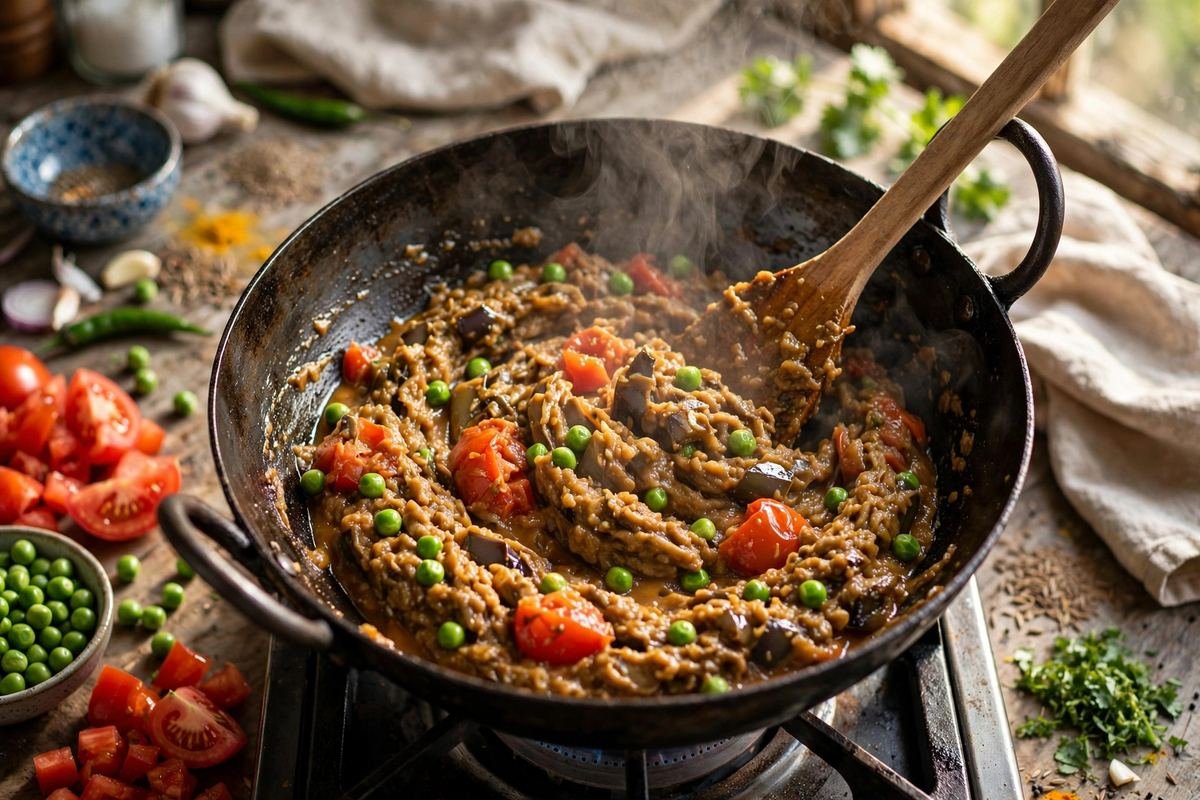
Dhaba-style with peas: Add ½ cup (75g) of boiled green peas along with the mashed brinjal for the classic roadside version — the sweet pop of peas against the smoky mash is wonderful. Bharta with a tempering: For guests, finish with a sizzling tadka of ghee, sliced garlic, dried red chillies, and a pinch of asafoetida poured over the top at the table. Punjabi home-style with curd: Stir in 2 tablespoons of whisked curd at the end for a tangier, creamier bharta — keep the heat low so the curd doesn’t split. Chettinad-style: Add curry leaves to the tempering and replace garam masala with a teaspoon of freshly ground black pepper and cumin for a South Indian twist. Smoky bharta without flame: If roasting in the oven, place a small piece of lit charcoal in a steel bowl set in the kadhai, drizzle with a drop of ghee, and cover for 5 minutes to infuse the dish with dhungar-style smoke. Protein boost: Crumble in 100g of paneer or add a handful of roasted peanuts for extra body.
Serving Suggestions
Baingan bharta belongs with hot tandoori rotis or phulkas — tear, scoop, repeat. It is equally glorious with lachha paratha, whose flaky layers catch the smoky mash beautifully. For a full Punjabi thali, pair it with dal tadka, jeera rice, a kachumber salad, and a glass of chilled chaas or lassi to cool the palate. A wedge of raw onion and a green chilli on the side is the traditional dhaba accompaniment. For lunchboxes, pack it with parathas and a small container of curd — it reheats well and the flavors deepen by noon. Leftover bharta also makes a phenomenal sandwich filling: spread it thick on toasted bread with sliced onions for a desi twist on baba ganoush.
Storage and Reheating
Cool the bharta completely before storing. Refrigerate in an airtight container for up to 4 days — the smoky flavor actually intensifies by day two. To reheat, warm it in a kadhai over medium-low heat with a splash of water, stirring until steaming, about 5–6 minutes; the microwave works too (2–3 minutes, stirring halfway), though the stovetop gives a better texture. Refresh leftovers with a squeeze of lemon and fresh coriander. For longer storage, freeze in portion-sized containers for up to 2 months; thaw overnight in the fridge before reheating. Note that the texture softens slightly after freezing, which honestly suits bharta just fine.
Frequently Asked Questions
Why is my baingan bharta bitter?
Bitterness almost always comes from the brinjal itself — old, seedy, or over-mature specimens are bitter regardless of cooking. Choose heavy, glossy brinjals with fresh caps, and pick out large seed clusters after roasting. Undercooked tomato masala can also taste sharp; make sure the oil separates before adding the brinjal.
Can I roast the brinjal in the oven instead of over a flame?
Yes. Prick it, rub with oil, and broil at 250°C (480°F) for 25–30 minutes, turning halfway, until the skin is charred and the flesh collapses. You’ll get about 80% of the smoky flavor. For the full dhaba effect, add the lit-charcoal dhungar trick described in the variations above.
How do I stop the smoke alarm from going off while roasting?
Turn on your kitchen exhaust fan at full speed before you start, and crack a window. Roast on medium flame rather than high — it takes a few minutes longer but produces less billowing smoke. The oven-broiler method is the safest bet for small, poorly ventilated kitchens.
Can I make baingan bharta without onion and garlic?
Absolutely — this is a common fasting and temple-style version. Bloom cumin seeds, asafoetida, and the powdered spices in ghee or oil, add the tomatoes, cook until the oil separates, then fold in the roasted brinjal. Finish with garam masala and coriander. It tastes different — cleaner and sweeter — but still delicious.
Is baingan bharta healthy?
Very much so. Brinjal is low in calories and rich in fiber and antioxidants like nasunin. This recipe uses modest oil and no cream, coming in around 185 kcal per serving. To lighten it further, use 2 tablespoons of oil and skip the finishing ghee.
What can I do with leftover bharta?
Beyond reheating as a side, spread it on toast, stuff it into parathas, toss it through hot pasta for a smoky desi-italian fusion, or thin it with a little water and use it as a pizza base sauce. It also freezes beautifully for up to two months.
Make this baingan bharta once, and I promise the smell of a brinjal charring over an open flame will live in your kitchen memory forever. It is humble food at its most soulful — fire, smoke, and patience turning one vegetable into a feast. Serve it hot, eat it with your hands, and don’t be surprised when the kadhai is scraped clean.