Recipe Card
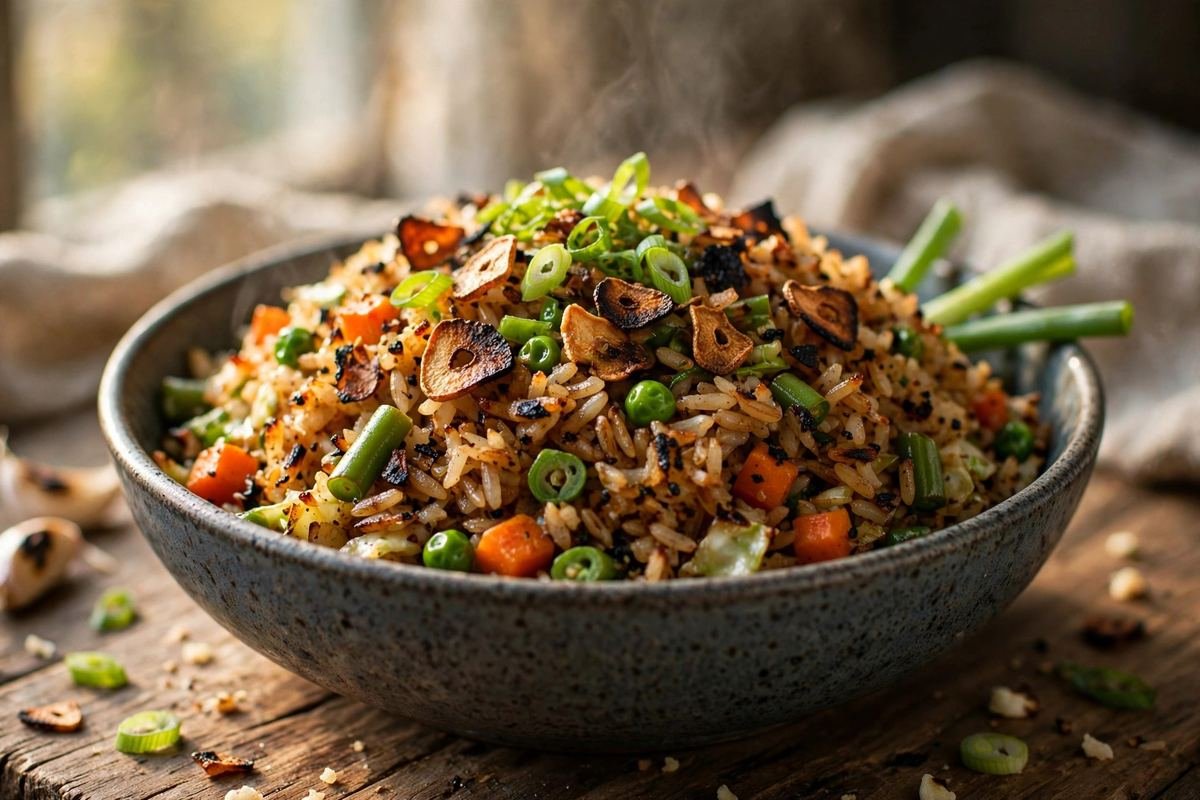
Fluffy day-old rice wok-tossed with crunchy vegetables and spring onions in a light soy seasoning. The secret to restaurant-style fried rice is cold rice and a screaming-hot wok — this recipe nails both.
Ingredients
- 4 cups cooked long-grain rice, refrigerated overnight (from about 1 1/2 cups / 300g raw rice)
- 2 1/2 tbsp neutral oil (groundnut or sunflower), plus 1 tsp sesame oil to finish
- 1 tbsp finely minced garlic (4-5 cloves)
- 1 tsp finely grated ginger (optional)
- 2 green chillies, finely chopped (adjust to taste)
- 4 spring onions, whites and greens separated and chopped
- 1 medium carrot, finely diced (about 1/2 cup)
- 8-10 French beans, finely diced (about 1/2 cup)
- 1 small green capsicum, finely diced (about 1/2 cup)
- 1 cup finely shredded cabbage (optional, about 80g)
- 1/2 cup frozen peas, thawed (optional)
- 1 to 1 1/2 tbsp soy sauce (start with less)
- 1 tsp white vinegar
- 1 tsp white pepper powder
- 1/2 tsp sugar
- Salt to taste (very little — the soy sauce seasons most of it)
Instructions
- Prepare the rice properly — this is 70% of the recipe. Ideally, cook the rice a day ahead: rinse 1 1/2 cups of long-grain rice, cook with 3 cups of water until just tender (slightly firm is better than soft), spread it on a wide tray to release steam for 10 minutes, then refrigerate uncovered or loosely covered overnight. Before cooking, break up any clumps gently with wet fingers or a fork — cold rice should fall into separate grains. If using fresh rice in a hurry, spread it on the widest tray you own and refrigerate for at least 1 hour, or freeze for 20 minutes, until completely cold and the surface feels dry to the touch.
- Chop everything small and keep it ready. Dice the carrot, beans, and capsicum into uniform 1/4-inch pieces — small enough to cook in a minute, large enough to still have bite. Chop the spring onion whites and greens separately. Mince the garlic fine. Measure the soy sauce, vinegar, pepper, and sugar. Lay everything out by the stove in the order you will use it, because once the wok heats up you will be adding ingredients every 30 to 60 seconds with no pauses.
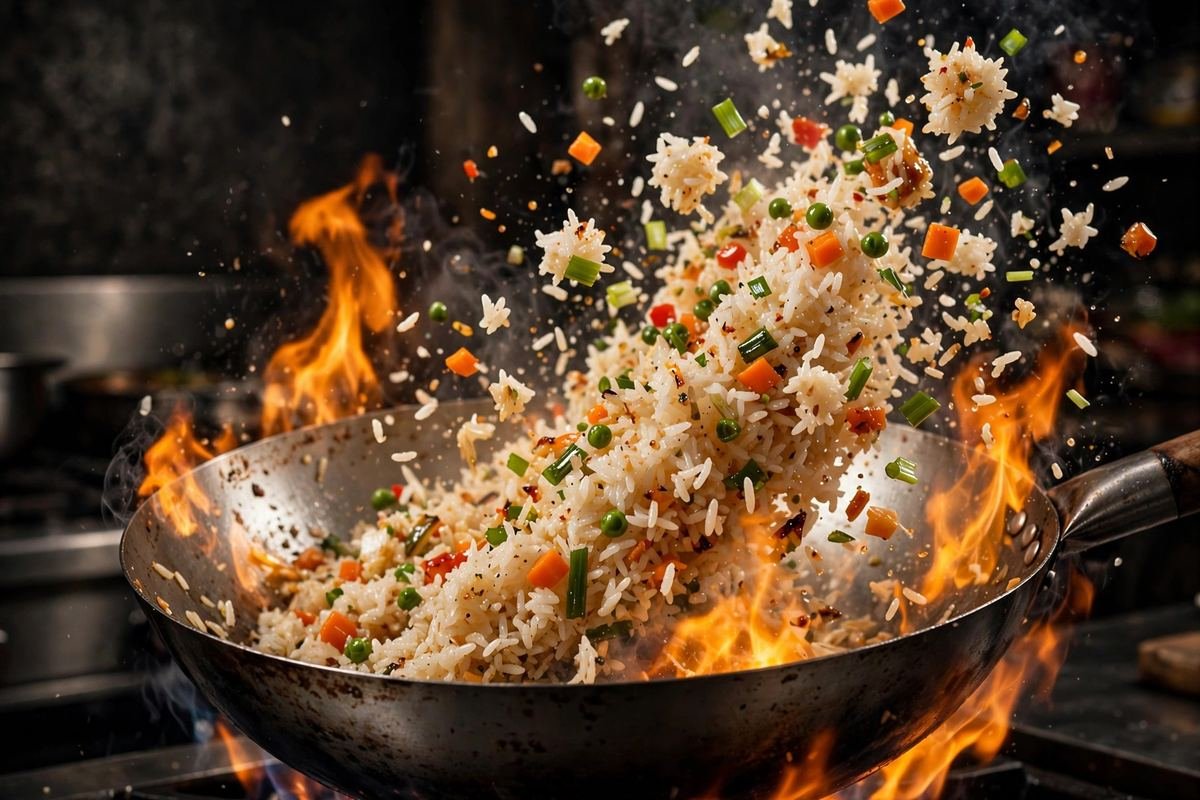
- Heat the wok until it smokes. Place your wok on the highest possible flame for 1 to 2 minutes until wisps of smoke rise from the metal. Add the oil and swirl — it should shimmer instantly and ripple when you tilt the pan. Proper heat is what gives fried rice its smoky wok flavour and keeps the rice grains separate; a timid flame produces steamed, sticky rice, which is the most common home-cook failure. Do not be afraid of the heat — commit to it.
- Sear the aromatics in seconds. Add the minced garlic, ginger, chopped green chillies, and spring onion whites to the smoking oil. Stir-fry for exactly 20 to 30 seconds — you want them intensely fragrant but still pale. The garlic will go from raw to burnt in under a minute at this heat, so keep it moving constantly and move to the next step the moment you smell that gorgeous garlicky perfume.
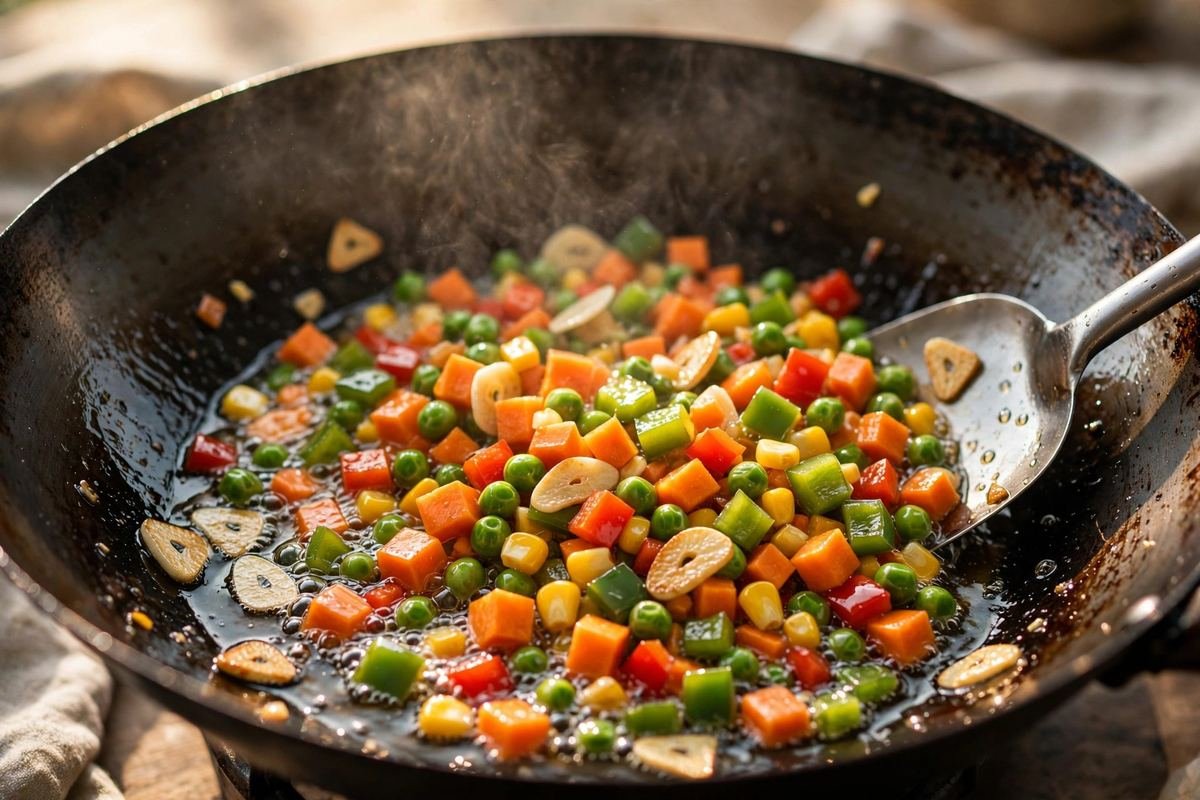
- Cook the hard vegetables first. Add the diced carrot and French beans and toss vigorously for 1 to 1 1/2 minutes. They should turn bright and glossy, softening just slightly while staying crunchy — bite one to check; it should still have a distinct snap. Because the pieces are small, they cook fast, but they need this head start over the quicker-cooking vegetables.
- Add the quick vegetables and peas. Toss in the diced capsicum, shredded cabbage, and thawed peas. Stir-fry for another minute, just until the capsicum turns vivid and the cabbage wilts slightly at the edges. Sprinkle over the white pepper, sugar, and a small pinch of salt, and toss to distribute. The vegetables should look barely cooked — bright, crunchy, and colourful — because the rice is about to join them and everything gets a final minute of heat together.
- Add the rice and fry, don’t stir. Add all the cold rice to the wok, breaking up any remaining clumps with your spatula. Now the technique: spread the rice in a thin layer across the hot wok surface, let it sit undisturbed for 20 to 30 seconds so the bottom grains get a little toasty, then toss and repeat. This press-and-toss rhythm — about 2 to 3 minutes total — is what creates the smoky flavour and separate grains. Drizzle the soy sauce around the edges of the wok (not directly on the rice) so it sizzles on the hot metal, then toss through; add the vinegar the same way. Taste now: add a touch more soy or salt only if needed.
- Finish with freshness and serve. Drizzle the teaspoon of sesame oil over the rice and toss once. Scatter the spring onion greens generously over the top and give one final toss so they wilt just slightly from the residual heat but stay bright green. Transfer to a serving bowl immediately and serve steaming hot. Fried rice waits for no one — it is at its peak in the first ten minutes off the wok, when the grains are still distinct and the vegetables still snap.
Tip: Read through the full post below for step-by-step photos, pro tips, variations and FAQs before you start cooking.
Fried rice might be the most misunderstood simple dish in the world. It looks effortless — just rice tossed with vegetables, right? — and yet so many homemade versions end up sticky, bland, or oddly steamed, nothing like the smoky, separate-grained, deeply savoury fried rice from a good restaurant. The truth is that great fried rice is all technique: cold, dry rice; a violently hot wok; vegetables cut small and cooked fast; and a light hand with the seasoning so the rice shines instead of drowning. Once you understand those four principles, perfect fried rice becomes a ten-minute affair you can pull off on any busy weeknight.
The Indian version of veg fried rice has its own distinct personality, shaped by decades of Indo-Chinese street cooking. It is lighter than the Chinese original — seasoned mainly with soy sauce, white pepper, and a whisper of vinegar, with spring onions doing heavy lifting for freshness. The vegetables are the familiar trio of carrot, beans, and capsicum, diced small so every spoonful has a bit of everything. And it is almost always made from leftover rice, because day-old refrigerated rice is drier and firmer — the single most important ingredient choice in the whole recipe. In many Indian homes, fried rice is not a planned dish at all; it is the delicious answer to the question of what to do with yesterday’s rice.
What makes this recipe special is that it treats fried rice as the technique-driven dish it is, instead of a dumping ground for leftovers. You will learn exactly how to cook and cool the rice for maximum grain separation, how hot the wok needs to be and why, and the order in which everything goes in so the vegetables stay crunchy and the rice picks up that elusive smoky flavour. Follow the method and you will get rice where every grain is separate, glossy, and seasoned through — the kind you normally only get from a restaurant wok burner.
Why You’ll Love This Recipe
- Restaurant-quality grain separation — the cold-rice technique gives you distinct, fluffy grains, never a sticky clump.
- Ten minutes of actual cooking — once the rice is ready and vegetables chopped, the wok work is lightning fast.
- The perfect leftover makeover — transforms yesterday’s plain rice into something the family actively requests.
- One-pan simplicity — everything happens in a single wok, so cleanup is minimal.
- Endlessly adaptable — add egg, tofu, mushrooms, or paneer; swap vegetables with the seasons; adjust the heat to taste.
- Kid-friendly and lunchbox-approved — mild, colourful, and easy to eat, it is a lunchbox hero.
Key Ingredients Explained
The rice deserves its own paragraph, because it makes or breaks the dish. Long-grain rice — basmati or any regular long-grain — cooked, cooled completely, and refrigerated for at least 4 hours (overnight is ideal) is the gold standard. Refrigeration does something magical: it firms up the grains and dries their surfaces through retrogradation of the starches, so they fry up separate and slightly chewy instead of steaming into mush. Freshly cooked hot rice is the enemy of good fried rice — it is too moist and too soft, and no amount of wok skill can fully rescue it. If you are in a hurry, spread freshly cooked rice on a large tray and refrigerate for at least an hour, or even pop it in the freezer for 20 minutes.
Soy sauce is the primary seasoning, and restraint is everything. Too much soy makes the rice dark, salty, and soggy; the right amount gives an amber tint and savoury depth while letting the rice flavour come through. Use 1 to 1 1/2 tablespoons for 4 cups of cooked rice and add more only after tasting. White pepper is the signature Indo-Chinese warmth — gentler and more floral than black pepper, and it seasons without speckling the rice dark. Vinegar, just a teaspoon, brightens everything the way a squeeze of lemon brightens a dal; you will not taste it directly, but you will miss it if it is gone.
The vegetables should be diced small and even — roughly 1/4-inch pieces. Small dice cook in a minute and distribute through the rice so every bite is balanced; big chunks sit on top and feel like a separate vegetable dish. Carrots, French beans, and capsicum are the classic trio, sweet and crunchy. Spring onions are used in two stages: the whites go in with the aromatics for a mild onion base, the greens are tossed in at the end for fresh colour and bite. Cabbage, finely shredded, is a common addition that wilts into sweet ribbons. Minced garlic is essential for that restaurant aroma — just be quick, because it burns in seconds on high heat.
A note on oil: use a neutral oil with a high smoke point — groundnut, sunflower, or rice bran oil all work. You need enough to gloss every grain (about 2 to 3 tablespoons for 4 cups of rice) but not so much that the rice feels greasy. A final drizzle of sesame oil off the heat adds a nutty perfume that screams Indo-Chinese.
Equipment You’ll Need
- A large wok or wide kadai — maximum surface area so the rice spreads thin and fries instead of steaming.
- A long spatula or wok ladle — for pressing, spreading, and tossing the rice.
- A tray or large plate — for cooling freshly cooked rice quickly if you do not have day-old rice.
- Airtight container — for refrigerating cooked rice overnight.
- Small bowls — for pre-measured sauces and chopped vegetables; the cooking is too fast to measure mid-way.
- 4 cups cooked long-grain rice, refrigerated overnight (from about 1 1/2 cups / 300g raw rice)
- 2 1/2 tbsp neutral oil (groundnut or sunflower), plus 1 tsp sesame oil to finish
- 1 tbsp finely minced garlic (4-5 cloves)
- 1 tsp finely grated ginger (optional)
- 2 green chillies, finely chopped (adjust to taste)
- 4 spring onions, whites and greens separated and chopped
- 1 medium carrot, finely diced (about 1/2 cup)
- 8-10 French beans, finely diced (about 1/2 cup)
- 1 small green capsicum, finely diced (about 1/2 cup)
- 1 cup finely shredded cabbage (optional, about 80g)
- 1/2 cup frozen peas, thawed (optional)
- 1 to 1 1/2 tbsp soy sauce (start with less)
- 1 tsp white vinegar
- 1 tsp white pepper powder
- 1/2 tsp sugar
- Salt to taste (very little — the soy sauce seasons most of it)
- Prepare the rice properly — this is 70% of the recipe. Ideally, cook the rice a day ahead: rinse 1 1/2 cups of long-grain rice, cook with 3 cups of water until just tender (slightly firm is better than soft), spread it on a wide tray to release steam for 10 minutes, then refrigerate uncovered or loosely covered overnight. Before cooking, break up any clumps gently with wet fingers or a fork — cold rice should fall into separate grains. If using fresh rice in a hurry, spread it on the widest tray you own and refrigerate for at least 1 hour, or freeze for 20 minutes, until completely cold and the surface feels dry to the touch.
- Chop everything small and keep it ready. Dice the carrot, beans, and capsicum into uniform 1/4-inch pieces — small enough to cook in a minute, large enough to still have bite. Chop the spring onion whites and greens separately. Mince the garlic fine. Measure the soy sauce, vinegar, pepper, and sugar. Lay everything out by the stove in the order you will use it, because once the wok heats up you will be adding ingredients every 30 to 60 seconds with no pauses.
- Heat the wok until it smokes. Place your wok on the highest possible flame for 1 to 2 minutes until wisps of smoke rise from the metal. Add the oil and swirl — it should shimmer instantly and ripple when you tilt the pan. Proper heat is what gives fried rice its smoky wok flavour and keeps the rice grains separate; a timid flame produces steamed, sticky rice, which is the most common home-cook failure. Do not be afraid of the heat — commit to it.
- Sear the aromatics in seconds. Add the minced garlic, ginger, chopped green chillies, and spring onion whites to the smoking oil. Stir-fry for exactly 20 to 30 seconds — you want them intensely fragrant but still pale. The garlic will go from raw to burnt in under a minute at this heat, so keep it moving constantly and move to the next step the moment you smell that gorgeous garlicky perfume.
- Cook the hard vegetables first. Add the diced carrot and French beans and toss vigorously for 1 to 1 1/2 minutes. They should turn bright and glossy, softening just slightly while staying crunchy — bite one to check; it should still have a distinct snap. Because the pieces are small, they cook fast, but they need this head start over the quicker-cooking vegetables.
- Add the quick vegetables and peas. Toss in the diced capsicum, shredded cabbage, and thawed peas. Stir-fry for another minute, just until the capsicum turns vivid and the cabbage wilts slightly at the edges. Sprinkle over the white pepper, sugar, and a small pinch of salt, and toss to distribute. The vegetables should look barely cooked — bright, crunchy, and colourful — because the rice is about to join them and everything gets a final minute of heat together.
- Add the rice and fry, don’t stir. Add all the cold rice to the wok, breaking up any remaining clumps with your spatula. Now the technique: spread the rice in a thin layer across the hot wok surface, let it sit undisturbed for 20 to 30 seconds so the bottom grains get a little toasty, then toss and repeat. This press-and-toss rhythm — about 2 to 3 minutes total — is what creates the smoky flavour and separate grains. Drizzle the soy sauce around the edges of the wok (not directly on the rice) so it sizzles on the hot metal, then toss through; add the vinegar the same way. Taste now: add a touch more soy or salt only if needed.
- Finish with freshness and serve. Drizzle the teaspoon of sesame oil over the rice and toss once. Scatter the spring onion greens generously over the top and give one final toss so they wilt just slightly from the residual heat but stay bright green. Transfer to a serving bowl immediately and serve steaming hot. Fried rice waits for no one — it is at its peak in the first ten minutes off the wok, when the grains are still distinct and the vegetables still snap.
Pro Tips for Perfect Results
- Day-old refrigerated rice is the whole game. If you remember nothing else, remember this: cold, dry rice fries; fresh, moist rice steams. Plan ahead or use the tray-and-freezer shortcut.
- Sauce the wok, not the rice. Drizzling soy sauce onto the hot metal around the edges lets it caramelise slightly before hitting the rice — deeper flavour, better colour distribution.
- Small dice, big difference. Uniform 1/4-inch vegetable pieces cook evenly and mix through the rice so every spoonful is balanced.
- Press, don’t just stir. Letting the rice sit in a thin layer against the hot wok for 20-30 seconds between tosses builds the toasty, smoky flavour that stirring alone never achieves.
- Under-season, then taste. You can always add more soy sauce, but you cannot take it away. Start with 1 tablespoon and adjust after tossing.
- Keep the flame at maximum throughout. From aromatics to finish, high heat is non-negotiable. If your rice is steaming instead of frying, the flame is too low or the wok is overcrowded.
- Greens go in last. Spring onion greens added at the very end stay bright and fresh; added earlier they turn dull and limp.
Variations to Try
Egg Fried Rice: The classic upgrade — push the vegetables aside, pour in two beaten eggs, scramble until just set, then chop and toss through the rice. Adds richness and protein; season the egg with a pinch of salt as it cooks.
Schezwan Fried Rice: Add 1 to 2 tablespoons of schezwan sauce with the soy sauce and throw in some finely chopped celery if you have it. Fiery, garlicky, and deeply satisfying — the street-cart favourite.
Mushroom Fried Rice: Add a cup of sliced button mushrooms with the hard vegetables. They release moisture first, then brown beautifully, adding an earthy depth that makes the rice feel luxurious.
Paneer Fried Rice: Toss in a cup of small, lightly seared paneer cubes at the end for a protein-packed one-bowl meal. The soft paneer against the smoky rice is a wonderful contrast.
Burnt Garlic Fried Rice: Double the garlic and let half of it go a deep golden-brown before adding the vegetables. The nutty, intense garlic flavour defines this restaurant favourite — just keep it golden, never black.
Pineapple Fried Rice: For a sweet-savoury twist, add 3/4 cup of pineapple chunks and a handful of cashews at the end. A Thai-inspired variation that is surprisingly at home in the Indo-Chinese family.
Serving Suggestions
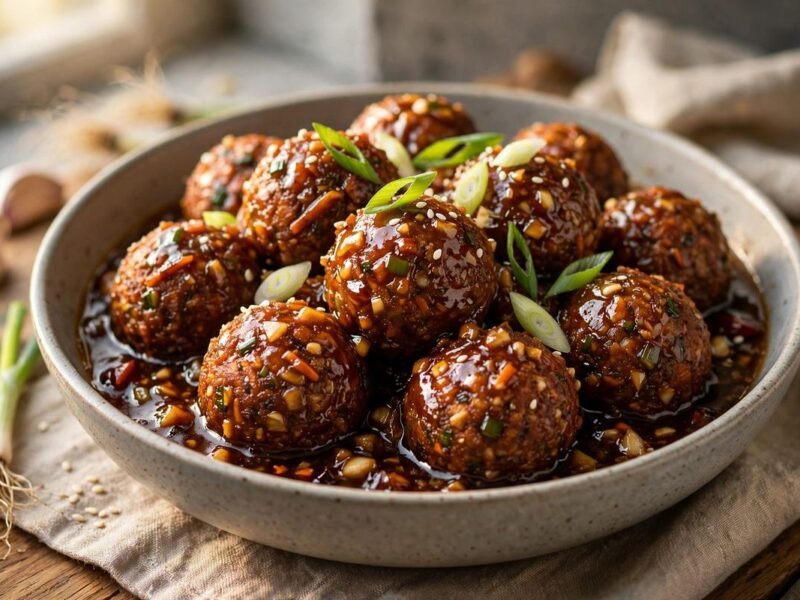
Veg fried rice is a complete meal in a bowl, but it truly sings as part of an Indo-Chinese spread. Serve it alongside chilli paneer, veg manchurian with gravy, or gobi manchurian, and put out small dishes of schezwan sauce and vinegar-soy dip for drizzling. A clear soup — sweet corn, hot and sour, or simple clear vegetable — makes a lovely starter. For a weeknight dinner, fried rice plus a simple stir-fried vegetable or a fried egg on top is more than enough. Garnish with extra spring onion greens, and if you like heat, sliced fresh red chillies on the side. It also packs brilliantly for lunchboxes: the flavours meld nicely by midday, and it reheats well.
Storage and Reheating
Fried rice keeps better than most Indo-Chinese dishes — refrigerate leftovers in an airtight container for up to 2 days. To reheat, the wok is again your best friend: heat a teaspoon of oil until smoking, add the cold rice, sprinkle a tablespoon of water over it, and toss on high heat for 2 to 3 minutes until steaming hot. The microwave works acceptably for fried rice (unlike noodles): sprinkle water over the rice, cover loosely, and heat in 1-minute bursts, fluffing between each. Do not freeze fried rice — the grains turn mushy and the vegetables go watery on thawing. One food-safety note: cool leftover rice quickly and refrigerate within an hour, since cooked rice can harbour bacteria if left at room temperature too long.
Frequently Asked Questions
Why is my fried rice sticky and mushy?
Almost always because the rice was too fresh and moist. Use day-old refrigerated rice, make sure it is completely cold before it hits the wok, and keep the flame at maximum so the grains fry instead of steam. Also check you are not overcrowding the wok — cook in batches if needed.
Can I use basmati rice for fried rice?
Yes, basmati works beautifully — its long grains stay separate and it has a lovely aroma. Just make sure it is cooked slightly firm (not soft) and refrigerated overnight. Short-grain or sticky rice varieties are not suitable; they will clump no matter what you do.
How do restaurants get that smoky flavour?
It comes from wok hei — the char and smoke created when oil and food meet a fiercely hot wok surface, often with flames licking the food itself. At home, the closest you can get is maximum flame, a properly preheated wok, the press-and-rest technique, and not overcrowding. A drop of sesame oil at the end adds to the illusion.
My rice turned dark brown. What went wrong?
Too much soy sauce. For 4 cups of cooked rice, 1 to 1 1/2 tablespoons is plenty. Restaurant fried rice is amber and glossy, not dark brown. Add the sauce gradually and taste — you can always add more, and a lighter hand lets the rice flavour shine.
Can I make fried rice without spring onions?
You can, though you will miss their fresh sharpness. Substitute finely sliced regular onion greens if available, or add a little extra finely chopped onion with the aromatics and finish with fresh coriander — a different flavour, but still delicious.
Is fried rice healthy?
It can be a balanced meal: rice for energy, plenty of vegetables for fibre and vitamins, and you control the oil and salt — all advantages over takeaway. Load up the vegetables, go easy on the oil, and add a protein like egg, tofu, or paneer to make it nutritionally complete.
Fried rice is humble food elevated by technique — proof that the difference between ordinary and extraordinary is rarely the ingredient list, but the care in the cooking. Once the cold-rice habit and the hot-wok rhythm become second nature, you will find yourself making it from whatever the fridge offers, improvising with confidence. That is when a recipe stops being instructions and becomes a skill — and this is a skill worth having for life.