Recipe Card
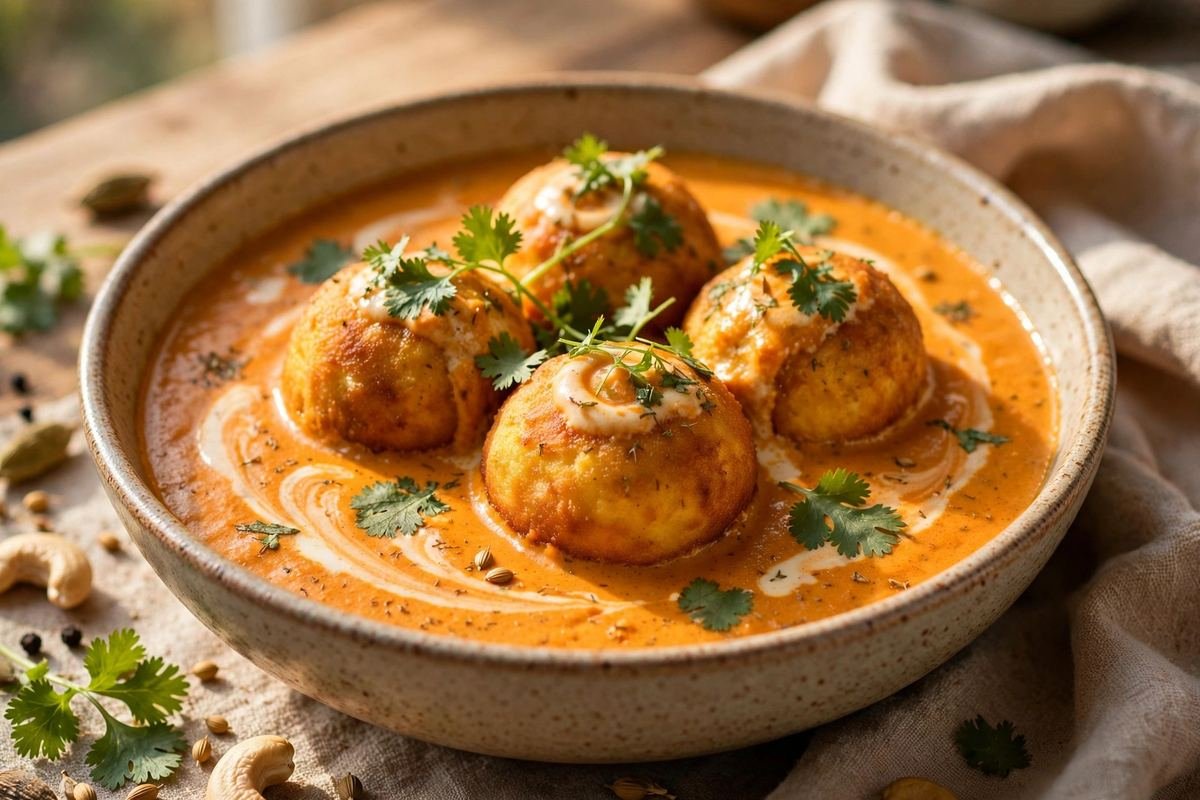
Golden paneer-potato koftas with molten centres, floating in a silky cashew-tomato gravy finished with cream and saffron. The crown jewel of vegetarian celebration cooking.
Ingredients
- 250g fresh paneer, finely grated
- 2 medium potatoes (about 250g), boiled, peeled, and grated
- 3 tbsp cornflour, plus extra for dusting
- 0.5 tsp green cardamom powder
- 0.75 tsp salt, divided
- 2 tbsp finely chopped cashews and raisins mixed
- 500ml neutral oil, for deep-frying
- 60g (0.33 cup) raw cashews, soaked in hot water 20 mins
- 2 tbsp melon seeds (magaz), soaked with the cashews
- 2 tbsp ghee or butter, divided
- 3 green cardamom pods
- 4 cloves
- 2.5cm (1 inch) cinnamon stick
- 1 bay leaf
- 2 large onions (about 250g), roughly chopped
- 1 tbsp ginger-garlic paste
- 3 large ripe tomatoes (about 350g), roughly chopped
- 0.5 tsp turmeric powder
- 0.5 tsp Kashmiri red chilli powder
- 1 tsp coriander powder
- 1 green chilli, slit lengthwise
- 0.5 tsp sugar
- 1 tsp kasuri methi (dried fenugreek leaves)
- 80ml (0.33 cup) fresh cream, plus extra for drizzling
- 1 generous pinch of saffron, steeped in 2 tbsp warm milk
- 250ml (1 cup) hot water, plus more as needed
- 2 tbsp chopped coriander leaves, for garnish
Instructions
- Prepare the kofta mixture: In a large bowl, combine the grated paneer, grated potato, cornflour, cardamom powder, and half a teaspoon of salt. Mix gently with your fingertips — do not knead like dough, which develops starch and makes dense koftas. The mixture should just hold together when squeezed. If it feels wet or sticky, add cornflour a teaspoon at a time; if it feels dry and crumbly, your paneer was too dry — work in a teaspoon of milk.
- Shape and chill the koftas: Divide the mixture into 12 equal portions. For plain koftas, roll each into a smooth, crack-free ball between lightly oiled palms. For stuffed koftas, flatten a portion in your palm, place half a teaspoon of the cashew-raisin mixture (plus a tiny cube of cheese if you like) in the centre, and seal carefully, rolling smooth. Arrange on a plate, cover, and refrigerate for 20 to 30 minutes — this chilling firms them up and is the single biggest insurance against breaking in the oil.
- Start the gravy base: While the koftas chill, heat 1 tablespoon of ghee in a heavy pan over medium heat. Add the cardamom pods, cloves, cinnamon, and bay leaf; fry 30 seconds until fragrant. Add the chopped onions with a pinch of salt and sauté for 8 to 10 minutes until soft, translucent, and just turning pale gold at the edges — do not brown them, or the gravy loses its delicate colour. Stir in the ginger-garlic paste and cook 2 minutes more.
- Cook the tomatoes down: Add the chopped tomatoes, turmeric, Kashmiri chilli powder, and coriander powder. Cook over medium heat for 10 to 12 minutes, stirring often, until the tomatoes collapse completely into a thick, jammy masala and oil begins to separate at the edges. Add the slit green chilli and sugar, then remove from heat and cool for 10 minutes. Fish out the bay leaf and cinnamon stick.
- Blend silky-smooth: Drain the soaked cashews and melon seeds and add them to the blender with the cooled tomato-onion mixture and 120ml of hot water. Blend for a full 2 to 3 minutes until absolutely, velvety smooth — longer than feels necessary. For a guaranteed restaurant finish, strain the puree through a fine-mesh strainer back into the pan, pressing with a spoon. This step separates good malai kofta from great.
- Finish the gravy: Return the strained puree to the pan over low heat. Stir in the remaining hot water to reach a thick but pourable consistency — it should coat a spoon heavily. Crush the kasuri methi between your palms and stir it in, then simmer gently for 8 to 10 minutes, stirring often, until the gravy turns glossy and deepens to a rich orange-ivory. Off the heat, stir in the cream, the saffron milk, and the remaining tablespoon of ghee or butter. Taste and adjust salt and sugar — the gravy should taste rounded, mildly sweet, and aromatic.
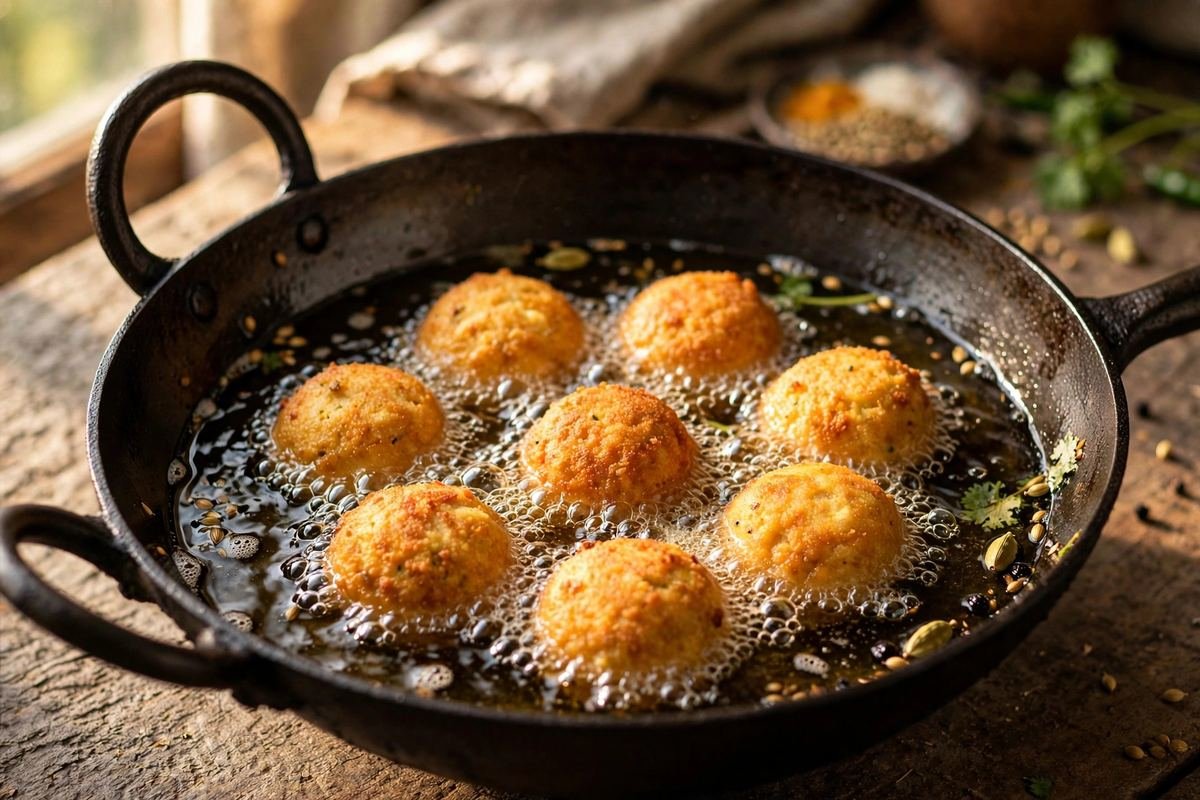
- Fry the koftas: Heat the oil in a kadhai to 170–175°C (medium heat — a small piece of mixture should sizzle gently and rise slowly, not brown instantly). Fry the koftas 3 to 4 at a time, without crowding, for 3 to 4 minutes, turning gently, until deep golden all over. Do not prod them for the first 90 seconds — let the crust set. Lift out with a slotted spoon and drain on a wire rack or kitchen paper. If a test kofta breaks, chill the rest longer and add a touch more cornflour.
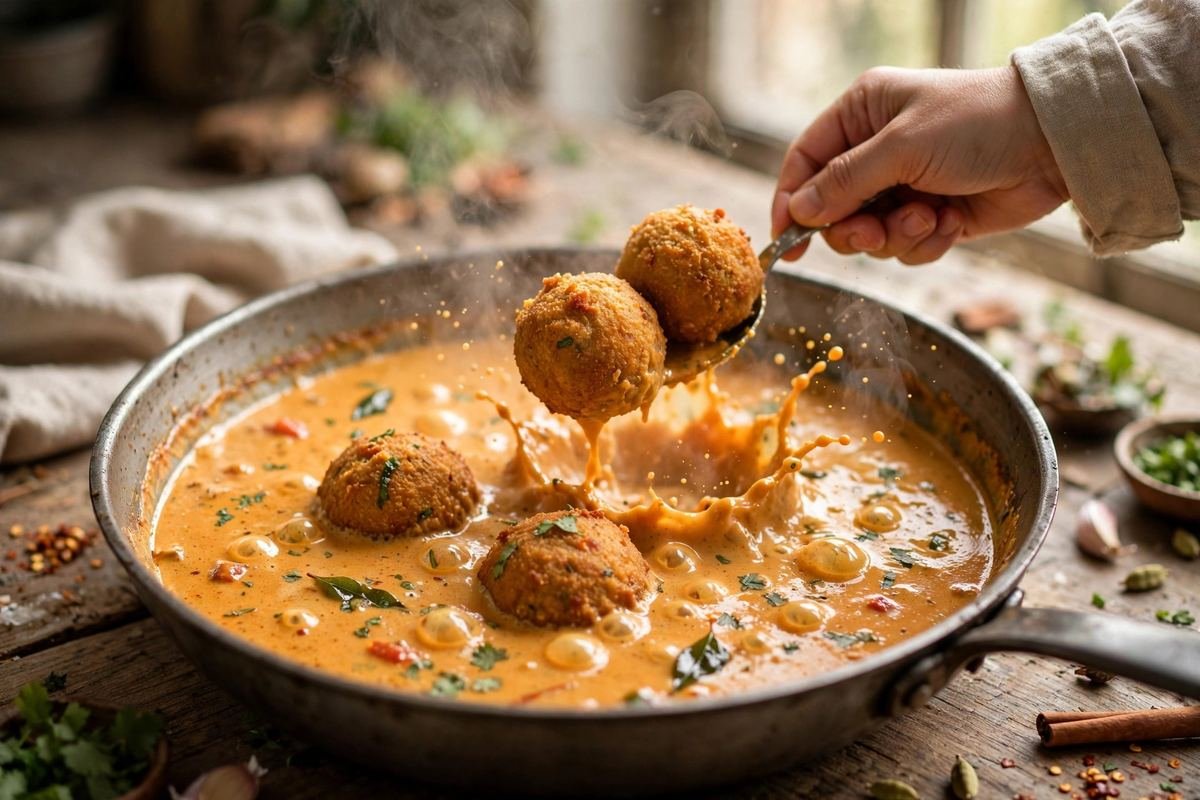
- Assemble and serve: Malai kofta waits for no one — and koftas wait even less. Warm the gravy, ladle it into a serving dish, and nestle the hot, freshly fried koftas into it just before carrying to the table. Drizzle with cream, scatter coriander, and serve immediately, while the koftas are still crisp outside and the contrast is at its peak.
Tip: Read through the full post below for step-by-step photos, pro tips, variations and FAQs before you start cooking.
The Story Behind Malai Kofta
Some dishes are food; malai kofta is theatre. It descends directly from the royal kitchens of the Mughal era, when Persian cooks brought the concept of the kofta — from the Persian koofteh, meaning “pounded” — to Indian courts. The original koftas were pounded meat, but India’s vegetarian genius transformed the idea into something arguably more luxurious: delicate dumplings of fresh paneer and potato, sometimes hiding a molten centre of nuts or cheese, fried to a deep gold and floated in a gravy so silky it is finished with malai — clotted cream — and saffron.
What makes malai kofta the undisputed star of wedding buffets and festive thalis is contrast. Each kofta is crisp outside and cloud-soft inside, mild and milky against a gravy that is rich but never heavy, sweet from caramelised onions and cashews, warmed by cardamom and saffron rather than dominated by chilli heat. It is the vegetarian answer to the grand Mughlai curries, and it demands a little ceremony — which is exactly why so many home cooks save it for Diwali, anniversaries, and the nights when only the most indulgent dinner will do.
I will be honest with you: this is the most technique-sensitive recipe of the four, and it rewards patience. The koftas can break in the oil if the binding is off; the gravy can turn grainy if the cashews are not blended silk-smooth. But every pitfall is preventable, and this recipe walks you through each one — the exact cornflour ratio that holds koftas together, the oil temperature that gilds without greasiness, and the gravy method that produces that mirror-gloss restaurant finish. Master it once, and you will own the most impressive vegetarian curry in your repertoire.
Why You’ll Love This Recipe
- Koftas that never break — the tested paneer-to-potato-to-cornflour ratio and chilling step make frying foolproof.
- Silky, restaurant-gloss gravy — cashews and melon seeds blended ultra-smooth give body without flour or excess cream.
- Molten surprise centres — an optional stuffing of nuts, raisins, and cheese makes each kofta a revelation.
- Balanced Mughlai flavour — aromatic and luxurious with cardamom and saffron, never one-dimensionally rich.
- Festive showstopper — the single most impressive vegetarian curry for guests and celebrations.
- Make-ahead friendly — gravy and koftas are prepped separately and united at serving time.
Key Ingredients Explained
The kofta is a careful balancing act between paneer (250g, finely grated) and potato (2 medium, about 250g, boiled, peeled, and grated — never mashed, which makes them gluey). The paneer brings milky richness; the potato brings structure. The ratio matters: too much potato and the koftas taste like aloo tikki; too much paneer and they lack the body to hold together. The binder is cornflour — 3 tablespoons, no more — plus a pinch of salt, half a teaspoon of cardamom powder, and a tablespoon of finely chopped cashews and raisins folded through or hidden in the centre. Fresh, soft paneer is essential here; dry, crumbly paneer makes dry, crumbly koftas.
The gravy is built on cashews (60g, about a third of a cup) and melon seeds (magaz) (2 tablespoons) — the classic Mughlai thickening duo. Soak them in hot water for 20 minutes, then blend with the cooked onion-tomato base until completely, luxuriously smooth; any graininess here cannot be fixed later, so blend longer than you think necessary and strain if your blender is not high-powered. Onions (2 large, roughly chopped) are sautéed to pale gold — not browned, which would darken the gravy’s prized ivory-orange colour — and tomatoes (3 large, about 350g) add gentle acidity to cut the richness. Whole spices stay delicate: green cardamom, a small cinnamon stick, cloves, and a bay leaf.
The finishing touches are what earn the “royal” in the title: fresh cream (80ml, about a third of a cup) stirred in off the heat, saffron (a generous pinch steeped in 2 tablespoons of warm milk) for colour and aroma, kasuri methi for depth, and a final knob of butter or ghee. A pinch of sugar balances the tomatoes’ acidity — the gravy should taste rounded and harmonious, with no single note shouting. Keep the chilli heat gentle: half a teaspoon of Kashmiri chilli powder for colour and a single slit green chilli for fragrance.
Equipment You’ll Need
- High-speed blender for the ultra-smooth gravy (a regular mixer grinder works — just blend longer and strain)
- Heavy kadhai or deep pan for frying the koftas
- Slotted spoon for lifting koftas from the oil
- Second heavy pan or kadhai for the gravy
- Kitchen thermometer — helpful but optional, for oil temperature
- Fine-mesh strainer — optional, for a guaranteed-silky gravy
- 250g fresh paneer, finely grated
- 2 medium potatoes (about 250g), boiled, peeled, and grated
- 3 tbsp cornflour, plus extra for dusting
- 0.5 tsp green cardamom powder
- 0.75 tsp salt, divided
- 2 tbsp finely chopped cashews and raisins mixed
- 500ml neutral oil, for deep-frying
For the gravy:
- 60g (0.33 cup) raw cashews, soaked in hot water 20 mins
- 2 tbsp melon seeds (magaz), soaked with the cashews
- 2 tbsp ghee or butter, divided
- 3 green cardamom pods
- 4 cloves
- 2.5cm (1 inch) cinnamon stick
- 1 bay leaf
- 2 large onions (about 250g), roughly chopped
- 1 tbsp ginger-garlic paste
- 3 large ripe tomatoes (about 350g), roughly chopped
- 0.5 tsp turmeric powder
- 0.5 tsp Kashmiri red chilli powder
- 1 tsp coriander powder
- 1 green chilli, slit lengthwise
- 0.5 tsp sugar
- 1 tsp kasuri methi (dried fenugreek leaves)
- 80ml (0.33 cup) fresh cream, plus extra for drizzling
- 1 generous pinch of saffron, steeped in 2 tbsp warm milk
- 250ml (1 cup) hot water, plus more as needed
- 2 tbsp chopped coriander leaves, for garnish
- Prepare the kofta mixture: In a large bowl, combine the grated paneer, grated potato, cornflour, cardamom powder, and half a teaspoon of salt. Mix gently with your fingertips — do not knead like dough, which develops starch and makes dense koftas. The mixture should just hold together when squeezed. If it feels wet or sticky, add cornflour a teaspoon at a time; if it feels dry and crumbly, your paneer was too dry — work in a teaspoon of milk.
- Shape and chill the koftas: Divide the mixture into 12 equal portions. For plain koftas, roll each into a smooth, crack-free ball between lightly oiled palms. For stuffed koftas, flatten a portion in your palm, place half a teaspoon of the cashew-raisin mixture (plus a tiny cube of cheese if you like) in the centre, and seal carefully, rolling smooth. Arrange on a plate, cover, and refrigerate for 20 to 30 minutes — this chilling firms them up and is the single biggest insurance against breaking in the oil.
- Start the gravy base: While the koftas chill, heat 1 tablespoon of ghee in a heavy pan over medium heat. Add the cardamom pods, cloves, cinnamon, and bay leaf; fry 30 seconds until fragrant. Add the chopped onions with a pinch of salt and sauté for 8 to 10 minutes until soft, translucent, and just turning pale gold at the edges — do not brown them, or the gravy loses its delicate colour. Stir in the ginger-garlic paste and cook 2 minutes more.
- Cook the tomatoes down: Add the chopped tomatoes, turmeric, Kashmiri chilli powder, and coriander powder. Cook over medium heat for 10 to 12 minutes, stirring often, until the tomatoes collapse completely into a thick, jammy masala and oil begins to separate at the edges. Add the slit green chilli and sugar, then remove from heat and cool for 10 minutes. Fish out the bay leaf and cinnamon stick.
- Blend silky-smooth: Drain the soaked cashews and melon seeds and add them to the blender with the cooled tomato-onion mixture and 120ml of hot water. Blend for a full 2 to 3 minutes until absolutely, velvety smooth — longer than feels necessary. For a guaranteed restaurant finish, strain the puree through a fine-mesh strainer back into the pan, pressing with a spoon. This step separates good malai kofta from great.
- Finish the gravy: Return the strained puree to the pan over low heat. Stir in the remaining hot water to reach a thick but pourable consistency — it should coat a spoon heavily. Crush the kasuri methi between your palms and stir it in, then simmer gently for 8 to 10 minutes, stirring often, until the gravy turns glossy and deepens to a rich orange-ivory. Off the heat, stir in the cream, the saffron milk, and the remaining tablespoon of ghee or butter. Taste and adjust salt and sugar — the gravy should taste rounded, mildly sweet, and aromatic.
- Fry the koftas: Heat the oil in a kadhai to 170–175°C (medium heat — a small piece of mixture should sizzle gently and rise slowly, not brown instantly). Fry the koftas 3 to 4 at a time, without crowding, for 3 to 4 minutes, turning gently, until deep golden all over. Do not prod them for the first 90 seconds — let the crust set. Lift out with a slotted spoon and drain on a wire rack or kitchen paper. If a test kofta breaks, chill the rest longer and add a touch more cornflour.
- Assemble and serve: Malai kofta waits for no one — and koftas wait even less. Warm the gravy, ladle it into a serving dish, and nestle the hot, freshly fried koftas into it just before carrying to the table. Drizzle with cream, scatter coriander, and serve immediately, while the koftas are still crisp outside and the contrast is at its peak.
Pro Tips for Perfect Results
- Grate, never mash, the potato: Mashed potato turns gluey and makes dense koftas. Grating keeps the texture light, and the potato must be completely cool before mixing.
- Chill before frying: Twenty minutes in the fridge firms the koftas’ exterior and is the best defence against breakage — more effective than extra cornflour.
- Control the oil temperature: Too hot and the koftas brown outside while raw inside; too cool and they absorb oil and fall apart. 170–175°C is the sweet spot — a thermometer removes all guesswork.
- Blend the gravy ruthlessly: Grainy gravy is the most common disappointment. Blend for a full 2 to 3 minutes and strain — your patience shows in every spoonful.
- Keep koftas and gravy separate until serving: Koftas soaked in gravy too long turn soggy and lose their crisp-soft contrast. Assemble at the last possible moment.
- Fry one test kofta first: A single sacrificial kofta tells you everything — if it holds, the batch will; if it cracks, chill longer or add cornflour before committing the rest.
- Balance the sweetness: The gravy should be gently sweet, not dessert-like. Sugar is a seasoning here — add a quarter teaspoon at a time until the tomatoes’ acidity rounds off.
Variations to Try
Lauki Kofta: Replace the potato with 250g of grated bottle gourd (lauki), squeezed completely dry in a cloth — this is critical, as lauki holds a lot of water. The koftas turn out lighter and slightly sweet, a beloved home-style variation.
Raw Banana Kofta: Use 2 boiled raw bananas instead of potato for an earthier, firmer kofta with a subtle sweetness that pairs gorgeously with the creamy gravy. A favourite in UP and Bihar households.
Baked or Air-Fried Koftas: For a lighter version, brush shaped koftas with oil and bake at 200°C for 20 to 25 minutes, turning once, or air-fry at 190°C for 12 to 15 minutes. They will not be quite as crisp as deep-fried, but they hold beautifully and the gravy does the heavy lifting.
Shahi Kofta: Enrich the gravy with 2 tablespoons of almond paste and a few drops of kewra water for an even more regal, wedding-style flavour profile.
Vegan Malai Kofta: Use firm tofu in place of paneer, potato as written, and finish the gravy with cashew cream instead of dairy cream and oil instead of ghee. The saffron and cardamom keep it tasting every bit as royal.
Serving Suggestions
Malai kofta deserves bread worthy of it: butter naan, garlic naan, or tandoori roti, served hot enough to steam. The mild, creamy gravy also loves jeera rice or saffron pulao — something fragrant to carry the richness. Because the curry itself is gentle, pair it with brighter companions: a sharp kachumber salad, pickled onions, and mint-coriander chutney for contrast. For a full celebration menu, serve alongside dal makhani, a paneer tikka starter, and finish with gulab jamun. A glass of sweet lassi or rose sherbet completes the royal treatment. Present it in a wide, shallow bowl with the koftas visible above the gravy, cream drizzled in a spiral, and saffron strands on top — this is a dish to show off.
Storage and Reheating
Store the gravy and koftas separately — this is the golden rule. The gravy keeps in an airtight container in the refrigerator for 4 days and freezes beautifully for up to 3 months; thaw overnight in the fridge and reheat gently, whisking in a splash of hot water or milk if it has thickened. Fried koftas keep for 2 days in the fridge but lose their crispness — revive them in a 180°C oven or air fryer for 6 to 8 minutes before serving. Unfried, shaped koftas can be refrigerated for a day or frozen on a tray and then bagged for up to a month; fry from thawed. Never freeze the assembled dish, and never microwave fried koftas unless soggy is your goal. Assembled leftovers are still delicious the next day — just accept a softer kofta and enjoy.
Frequently Asked Questions
Why do my koftas break while frying?
The usual causes are excess moisture, too little binder, warm koftas hitting the oil, or oil that is too cool. Use cool, dry grated potato, measure the cornflour, chill the shaped koftas for 20 to 30 minutes, and keep the oil at 170–175°C. Always fry one test kofta first — it is cheap insurance.
Can I shallow-fry or bake the koftas instead of deep-frying?
Shallow-frying works if you are gentle: use a non-stick pan with about 1cm of oil over medium heat and turn carefully once golden. Baking at 200°C for 20 to 25 minutes (or air-frying at 190°C for 12 to 15 minutes) gives a lighter kofta that is slightly less crisp but still delicious once nestled in gravy.
How do I get the gravy perfectly smooth?
Soak the cashews and melon seeds until soft, blend the cooled base for a full 2 to 3 minutes with hot water, and strain through a fine mesh. Most home blenders need that extra minute beyond when it “looks smooth” — keep going until it ribbons off the spoon.
Can I make malai kofta ahead for a party?
Yes — it is ideal for entertaining. Make the gravy up to 2 days ahead and refrigerate; shape the koftas a day ahead and keep chilled. Fry the koftas fresh (20 minutes), warm the gravy, assemble at the last moment, and garnish. Nobody will guess it was not all done à la minute.
Is malai kofta very sweet?
It is gently sweet, in the Mughlai tradition — the sweetness comes from caramelised onions, cashews, and cream, balanced by tomato acidity and aromatic spices. A pinch of sugar rounds it out, but the finished gravy should taste rich and harmonious, never sugary.
What is the difference between malai kofta and shahi paneer?
Both are creamy Mughlai-style curries, but malai kofta features fried paneer-potato dumplings (koftas) in the gravy, while shahi paneer uses plain paneer cubes in a similar sauce. The koftas — crisp outside, soft inside, sometimes stuffed — are what make this dish special.
Malai kofta is a labour of love, and that is exactly the point — it is the dish you make when you want the people at your table to feel celebrated. Take your time with the gravy, respect the oil temperature, and assemble at the last moment. Then stand back and accept the compliments; you will have earned every one of them. Happy cooking!