Recipe Card
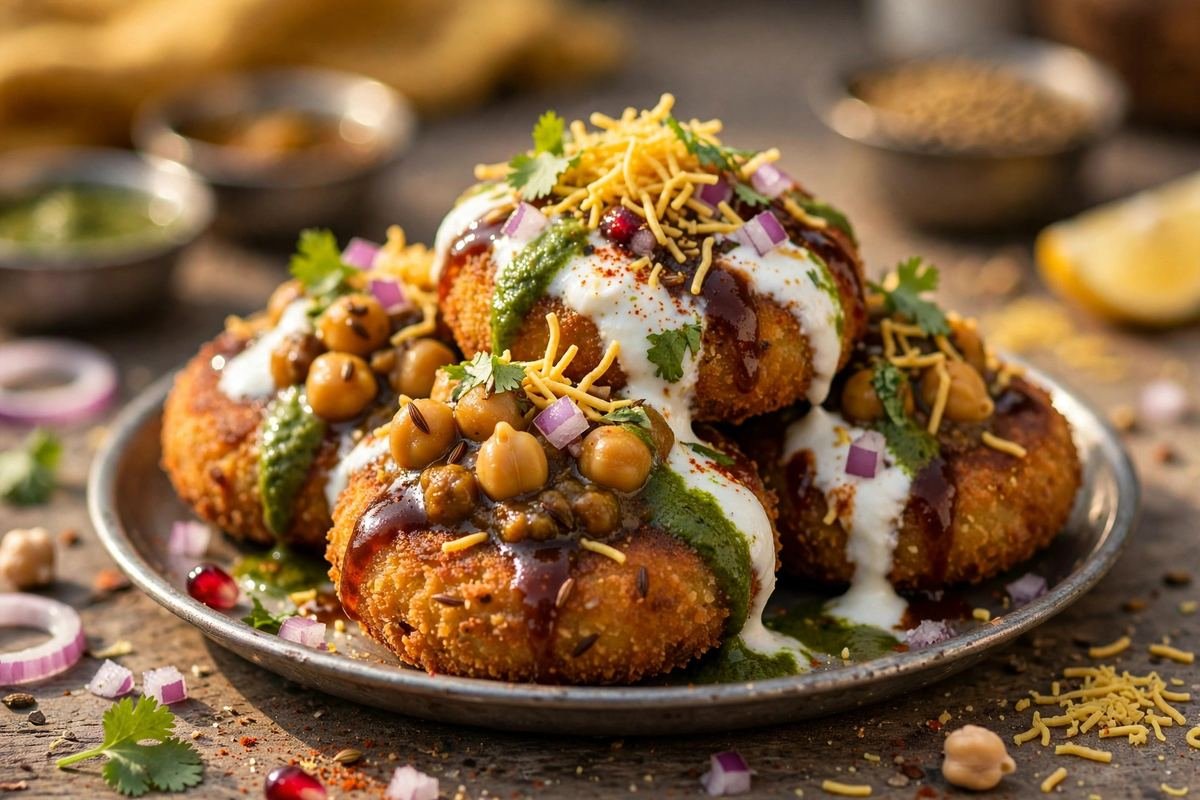
Shatteringly crisp outside, fluffy and spiced inside — these street-style aloo tikkis get their crunch from the right potatoes and a patient shallow fry. Top with chutneys for classic tikki chaat.
Ingredients
- 500g (about 4 medium) starchy potatoes, boiled whole, peeled, and cooled completely
- 3 tbsp cornflour (plus more if needed)
- 1 tsp roasted cumin powder
- 1 tsp amchur (dry mango powder)
- 1 tsp chaat masala, plus more for sprinkling
- ½ tsp red chili powder
- 1 green chili, finely chopped
- 1 tbsp grated fresh ginger
- 3 tbsp finely chopped coriander leaves
- ¾ tsp salt (adjust to taste)
- ¼ cup boiled green peas, lightly mashed (optional)
- Oil for shallow frying (about ½ cup)
- 1 tbsp butter or ghee, for finishing (optional)
- ½ cup whisked yogurt (dahi), lightly sweetened with a pinch of sugar and salt
- 2 tbsp tamarind (imli) chutney
- 2 tbsp green (mint-coriander) chutney
- 2 tbsp finely chopped onion
- 2 tbsp sev (crisp chickpea noodles)
- 1 tbsp pomegranate seeds (optional)
Instructions
- Boil and cool the potatoes. Scrub the potatoes and boil them whole and unpeeled in salted water until completely tender — a knife should slide through the largest one with zero resistance, 20–25 minutes. Drain immediately and let the steam escape for 5 minutes (this dries the surface). Peel while still warm, then refrigerate uncovered for at least 2 hours, or overnight. Cold, dry potatoes are the entire foundation of a crisp tikki.
- Mash coarsely. Mash the cold potatoes with a masher or fork until mostly smooth but with a few small lumps remaining — texture is good here. Never use a food processor or blender; it ruptures the starch cells and turns the potato into sticky glue that will never crisp.
- Mix the tikki dough. Add the cornflour, roasted cumin, amchur, chaat masala, red chili powder, green chili, ginger, coriander, salt, and peas (if using). Mix with your hands until evenly combined. The mixture should hold together when squeezed without sticking excessively to your palms. If it feels wet or slack, add another tablespoon of cornflour. Taste and adjust salt and tang — the raw mixture should taste boldly seasoned, as frying mellows flavors.
- Shape and chill. Divide into 12 equal portions. Roll each into a smooth ball, then flatten into a thick disc about 2.5 inches across and ¾ inch thick — thicker than you think; thin tikkis dry out, thick ones stay fluffy inside. If the edges crack, the mixture is too dry — wet your hands and add a teaspoon of water. Arrange on a plate, cover, and chill for 15–30 minutes. This firms them up and dramatically reduces breakage in the pan.
- Shallow fry — first side. Heat a large tawa or skillet over medium heat with enough oil to coat the base generously (about 3–4mm deep). When the oil shimmers, lay in the tikkis without crowding. Now press each one gently with the spatula to maximize contact with the pan — this is the vendor’s signature move. Fry undisturbed for 4–5 minutes until the underside is a deep golden-brown and crisp. Don’t fiddle with them; constant moving prevents crust formation.
- Flip and crisp the second side. Flip carefully with a wide spatula, press again gently, and fry another 4–5 minutes until equally golden and crisp. The tikki should feel firm and sound hollow-ish when tapped. Add a small knob of butter or ghee to the pan in the last minute and let the tikkis slide through it for a rich, caramelized finish.
- Drain and season. Transfer to a wire rack for a minute — never stack hot tikkis or the steam softens the crust. Sprinkle immediately with chaat masala while the surface is still glistening.
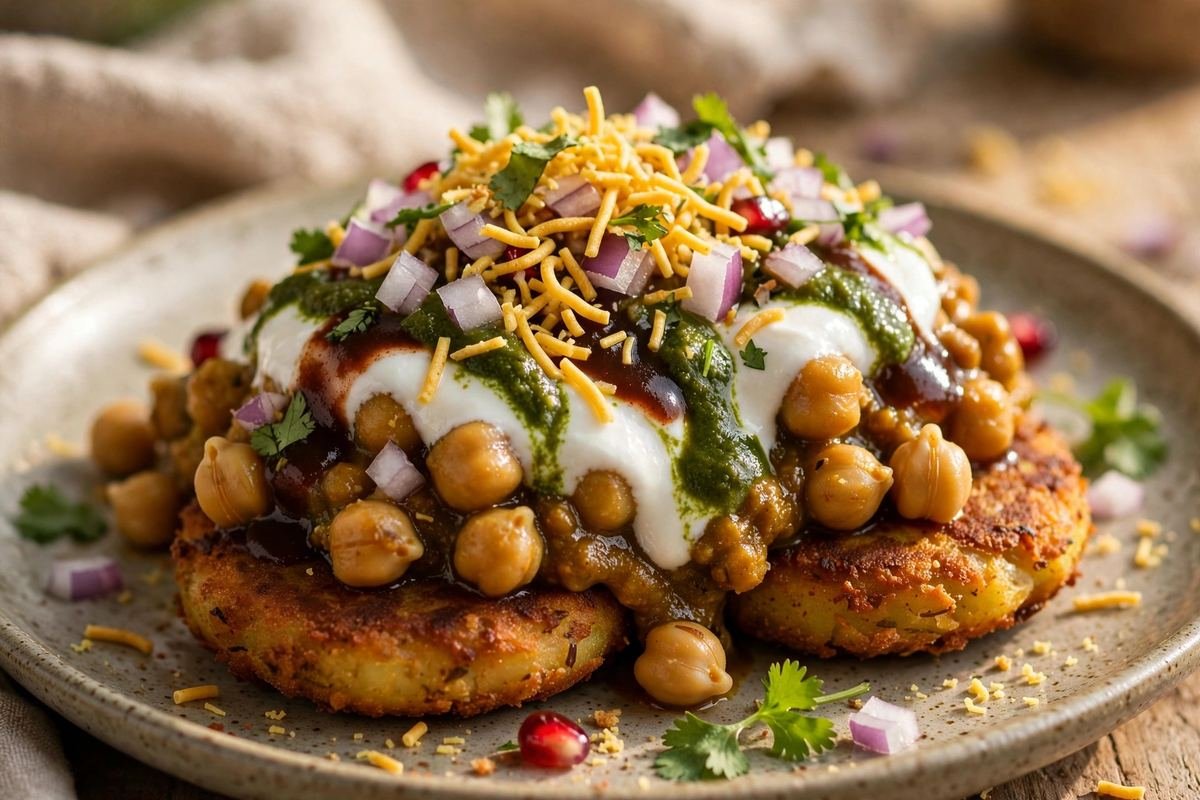
- Assemble tikki chaat (optional but recommended). Place 2–3 hot tikkis on a plate and lightly crush the centers with a spoon. Spoon over the whisked yogurt, drizzle tamarind and green chutneys generously, scatter chopped onions, shower with sev, and finish with pomegranate, extra chaat masala, and roasted cumin. Serve immediately — chaat waits for no one.
Tip: Read through the full post below for step-by-step photos, pro tips, variations and FAQs before you start cooking.
The King of Delhi’s Chaat Lanes
Stand at any busy chaat corner in Delhi — Chandni Chowk, Karol Bagh, Lajpat Nagar — and you will hear it before you see it: the rhythmic slap-slap of potato patties being pressed onto a giant iron tawa, the violent hiss as they hit the hot surface, the vendor’s spatula scraping them into crisp submission. That sound is the heartbeat of aloo tikki, arguably the most beloved street snack in North India. A golden disc of spiced mashed potato, crisped to a deep amber shell with a soft, fluffy, tangy-spiced heart — then loaded with yogurt, tamarind, mint chutney, onions, and sev until it becomes tikki chaat, the full technicolor experience.
What separates a great aloo tikki from a sad, falling-apart one is not exotic technique but potato science. The enemy is moisture. Boiled potatoes that are waterlogged, mashed while hot, or made from the wrong variety will steam themselves apart on the tawa no matter how carefully you shape them. The street vendors know this instinctively: they use starchy, floury potatoes, boil them just until tender, cool them completely (often overnight), and mash them coarse rather than smooth. Then comes the binding — a little cornflour or rice flour, sometimes breadcrumbs — and a patient shallow fry in enough oil to truly crisp the exterior rather than merely warm it.

This recipe recreates the chaat-wallah’s tikki at home, with all the little decisions made explicit: which potatoes to buy, how to boil them so they stay dry, the spice blend that gives that unmistakable tangy Delhi flavor (dry mango powder and roasted cumin are the soul of it), how to shape patties that hold together, and the two-stage crisping method that gives you a shell you can hear. We will also build the classic tikki chaat assembly, because a tikki without its toppings is like a stage without actors — good, but not the show.
One more thing worth saying: aloo tikki is endlessly forgiving once you understand the moisture rule. Every variation — stuffed with dal, mixed with peas, topped a dozen ways — flows from the same foundation. Learn this base recipe well and you own one of Indian street food’s greatest hits forever.
Why You’ll Love This Recipe
- Genuinely crisp shell — the dry-potato method and patient fry give an audible crunch
- Street-style spice blend — amchur, roasted cumin, and chaat masala for authentic Delhi flavor
- Holds together perfectly — no crumbling on the tawa, no falling apart when flipped
- Two dishes in one — crisp tikkis as a snack, or loaded tikki chaat as a meal
- Make-ahead friendly — shape and refrigerate; fry fresh when guests arrive
Key Ingredients Explained
Potatoes are everything here. Choose starchy, floury varieties — the kind sold as good for mashing. In India, the everyday aloo works, but avoid waxy salad potatoes, which stay gluey and wet. Boil them whole and unpeeled: the skin protects the flesh from absorbing water. Start them in cold water, bring to a boil, and cook until a knife slides in with no resistance — usually 20–25 minutes depending on size. Then drain, peel while warm, and — this is critical — cool completely, ideally for a few hours or overnight in the fridge. Cold potatoes mash drier and bind better; warm mashed potato is sticky paste.
Cornflour (cornstarch) is the binder — 2 to 3 tablespoons per 500g of potato. It absorbs residual moisture and fries into a crisp shell. Rice flour works too and gives a slightly grainier crunch; breadcrumbs give a more uniform crust. Don’t overdo the binder or the tikki turns gummy. The spice mix: amchur (dry mango powder) for the signature tang, roasted cumin powder (roast whole cumin and grind fresh — the difference from store-bought is night and day), chaat masala, red chili powder, and finely chopped green chilies and ginger for fresh heat. Coriander leaves add color and freshness. Some vendors add a spoon of boiled green peas mashed in — the classic aloo-matar tikki variation.
For frying, use a neutral oil with a high smoke point, and don’t be shy with it — tikkis need a proper shallow fry (about 3–4mm of oil in the pan) to crisp rather than steam. A final smear of butter or ghee on the tawa in the last minute is the vendor’s secret for that rich, caramelized finish.
Equipment You’ll Need
- A large pot for boiling potatoes
- A potato masher or fork — not a food processor, which makes glue
- A large, heavy tawa, cast-iron skillet, or non-stick pan
- A wide spatula for pressing and flipping
- A wire rack for draining
- 500g (about 4 medium) starchy potatoes, boiled whole, peeled, and cooled completely
- 3 tbsp cornflour (plus more if needed)
- 1 tsp roasted cumin powder
- 1 tsp amchur (dry mango powder)
- 1 tsp chaat masala, plus more for sprinkling
- ½ tsp red chili powder
- 1 green chili, finely chopped
- 1 tbsp grated fresh ginger
- 3 tbsp finely chopped coriander leaves
- ¾ tsp salt (adjust to taste)
- ¼ cup boiled green peas, lightly mashed (optional)
- Oil for shallow frying (about ½ cup)
- 1 tbsp butter or ghee, for finishing (optional)
For tikki chaat assembly (per serving):
- ½ cup whisked yogurt (dahi), lightly sweetened with a pinch of sugar and salt
- 2 tbsp tamarind (imli) chutney
- 2 tbsp green (mint-coriander) chutney
- 2 tbsp finely chopped onion
- 2 tbsp sev (crisp chickpea noodles)
- 1 tbsp pomegranate seeds (optional)
- Boil and cool the potatoes. Scrub the potatoes and boil them whole and unpeeled in salted water until completely tender — a knife should slide through the largest one with zero resistance, 20–25 minutes. Drain immediately and let the steam escape for 5 minutes (this dries the surface). Peel while still warm, then refrigerate uncovered for at least 2 hours, or overnight. Cold, dry potatoes are the entire foundation of a crisp tikki.
- Mash coarsely. Mash the cold potatoes with a masher or fork until mostly smooth but with a few small lumps remaining — texture is good here. Never use a food processor or blender; it ruptures the starch cells and turns the potato into sticky glue that will never crisp.
- Mix the tikki dough. Add the cornflour, roasted cumin, amchur, chaat masala, red chili powder, green chili, ginger, coriander, salt, and peas (if using). Mix with your hands until evenly combined. The mixture should hold together when squeezed without sticking excessively to your palms. If it feels wet or slack, add another tablespoon of cornflour. Taste and adjust salt and tang — the raw mixture should taste boldly seasoned, as frying mellows flavors.
- Shape and chill. Divide into 12 equal portions. Roll each into a smooth ball, then flatten into a thick disc about 2.5 inches across and ¾ inch thick — thicker than you think; thin tikkis dry out, thick ones stay fluffy inside. If the edges crack, the mixture is too dry — wet your hands and add a teaspoon of water. Arrange on a plate, cover, and chill for 15–30 minutes. This firms them up and dramatically reduces breakage in the pan.
- Shallow fry — first side. Heat a large tawa or skillet over medium heat with enough oil to coat the base generously (about 3–4mm deep). When the oil shimmers, lay in the tikkis without crowding. Now press each one gently with the spatula to maximize contact with the pan — this is the vendor’s signature move. Fry undisturbed for 4–5 minutes until the underside is a deep golden-brown and crisp. Don’t fiddle with them; constant moving prevents crust formation.
- Flip and crisp the second side. Flip carefully with a wide spatula, press again gently, and fry another 4–5 minutes until equally golden and crisp. The tikki should feel firm and sound hollow-ish when tapped. Add a small knob of butter or ghee to the pan in the last minute and let the tikkis slide through it for a rich, caramelized finish.
- Drain and season. Transfer to a wire rack for a minute — never stack hot tikkis or the steam softens the crust. Sprinkle immediately with chaat masala while the surface is still glistening.
- Assemble tikki chaat (optional but recommended). Place 2–3 hot tikkis on a plate and lightly crush the centers with a spoon. Spoon over the whisked yogurt, drizzle tamarind and green chutneys generously, scatter chopped onions, shower with sev, and finish with pomegranate, extra chaat masala, and roasted cumin. Serve immediately — chaat waits for no one.
Pro Tips for Perfect Results
- Cool the potatoes completely. Warm potato = sticky paste that falls apart. Cold potato = firm dough that crisps. Overnight in the fridge is ideal.
- Boil whole and unpeeled. Peeled, cubed potatoes absorb water like sponges. The skin is a waterproof jacket — use it.
- Mash by hand, keep some texture. A few small lumps are desirable. Machines make glue; hands make tikki.
- Chill shaped tikkis before frying. Fifteen minutes in the fridge firms the starches and prevents the dreaded mid-flip crumble.
- Don’t skimp on oil. This is a shallow fry, not a dry roast. Too little oil steams the tikki instead of crisping it.
- Press with the spatula. Gentle, firm pressure maximizes pan contact and builds that even, deep crust. This single move separates vendor-style from home-style.
- Leave them alone. Four to five undisturbed minutes per side. Every premature flip costs you crust.
- Season while hot. Chaat masala clings to a glistening hot surface and tastes flat on a cooled one.
Variations to Try
Dal-stuffed tikki: the Old Delhi classic — fill each tikki with a spoonful of spiced chana dal or moong dal before sealing and frying. Aloo-matar tikki: fold a full half cup of mashed peas into the mixture for the green-flecked version. Paneer tikki: replace a third of the potato with grated paneer for a richer, protein-heavy patty. Sabudana tikki: for fasting (vrat) days — use soaked sabudana, potato, peanuts, and sendha namak. Ragda patties (Mumbai style): serve the tikkis topped with hot ragda (white pea curry) instead of yogurt — the Mumbai chaat-wallah’s answer to tikki chaat. Cheese-stuffed tikki: tuck a small cube of mozzarella into each patty for a molten center that kids go wild for. Air-fryer version: brush shaped tikkis generously with oil and air-fry at 200°C for 18–20 minutes, flipping once — crisp outside, lighter overall.
Serving Suggestions
As tikki chaat, this is a complete experience: the crisp patty, cool yogurt, sweet tamarind, fiery green chutney, crunchy onion and sev — every bite hits sweet, sour, salty, spicy, and crunchy at once. Serve it as an evening snack or party starter with masala chai. Plain crisp tikkis (no toppings) make an excellent burger patty in a bun with mint mayo — the desi answer to the veggie burger. They also work as a side with dal-chawal for a comforting weeknight dinner, or tucked into wraps with chutney and onions for lunch boxes. For a chaat platter, serve alongside samosa chaat and bhel puri and let guests build their own.
Storage and Reheating
Shaped, uncooked tikkis keep in the refrigerator for up to 2 days layered between parchment paper — in fact, a longer chill improves their structure. You can also freeze them solid on a tray, then bag them for up to a month; fry from frozen, adding 2–3 extra minutes per side. Cooked tikkis are best eaten within an hour, but leftovers refrigerate for 2 days. Reheat on a hot tawa with a teaspoon of oil, pressing gently, for 2–3 minutes per side — they crisp back up beautifully. The microwave will revive them but sacrifices the crunch; the oven (200°C for 10 minutes) is a decent middle ground. Never assemble chaat ahead — the yogurt and chutneys turn crisp tikkis soggy within minutes.
Frequently Asked Questions
Why do my tikkis break apart while frying?
Too much moisture is the cause 90% of the time — warm potatoes, waxy potato variety, or not enough binder. Use cold, starchy potatoes, add cornflour until the mixture holds, chill the shaped tikkis, and don’t flip until the first side has a proper crust.
Can I bake or air-fry instead of shallow frying?
Yes. Brush generously with oil and bake at 220°C for 25–30 minutes, flipping halfway, or air-fry at 200°C for 18–20 minutes. You’ll get a nicely browned, lighter tikki — but be honest with yourself: the deep crust of a real shallow fry is inimitable.
Which potatoes are best for aloo tikki?
Starchy, floury potatoes — the ones that fall apart when boiled and mash fluffy. Avoid waxy, firm salad potatoes, which stay dense and wet. When in doubt, boil a test potato: if it mashes dry and fluffy, it’s perfect.
Can I make the mixture ahead for a party?
Absolutely — this is the smart way to do it. Boil the potatoes a day ahead and refrigerate. Mix and shape the tikkis in the morning, keep chilled, and fry in batches as guests arrive. Hot, crisp tikkis on demand will make you look like a hero.
What’s the difference between aloo tikki and tikki chaat?
Aloo tikki is the crisp potato patty itself. Tikki chaat is the assembled dish — tikkis topped with yogurt, chutneys, onions, sev, and spices. Same foundation, but the chaat is the full performance.
Why add amchur instead of lemon juice?
Dry mango powder gives tang without adding moisture — critical in a recipe where dryness is everything. Lemon juice would wet the mixture and work against the crispness. Amchur delivers sourness in pure, dry form.
There is a reason the chaat-wallah’s tawa never cools down. Aloo tikki sits at the exact intersection of crisp and comfort, of humble potato and spectacular spice, and once you can make it properly at home — cold potatoes, bold seasoning, patient fry — you will understand why entire Delhi evenings are organized around it. Make a big batch, load them up chaat-style, and listen for that crunch. That sound is dinner calling.