Recipe Card
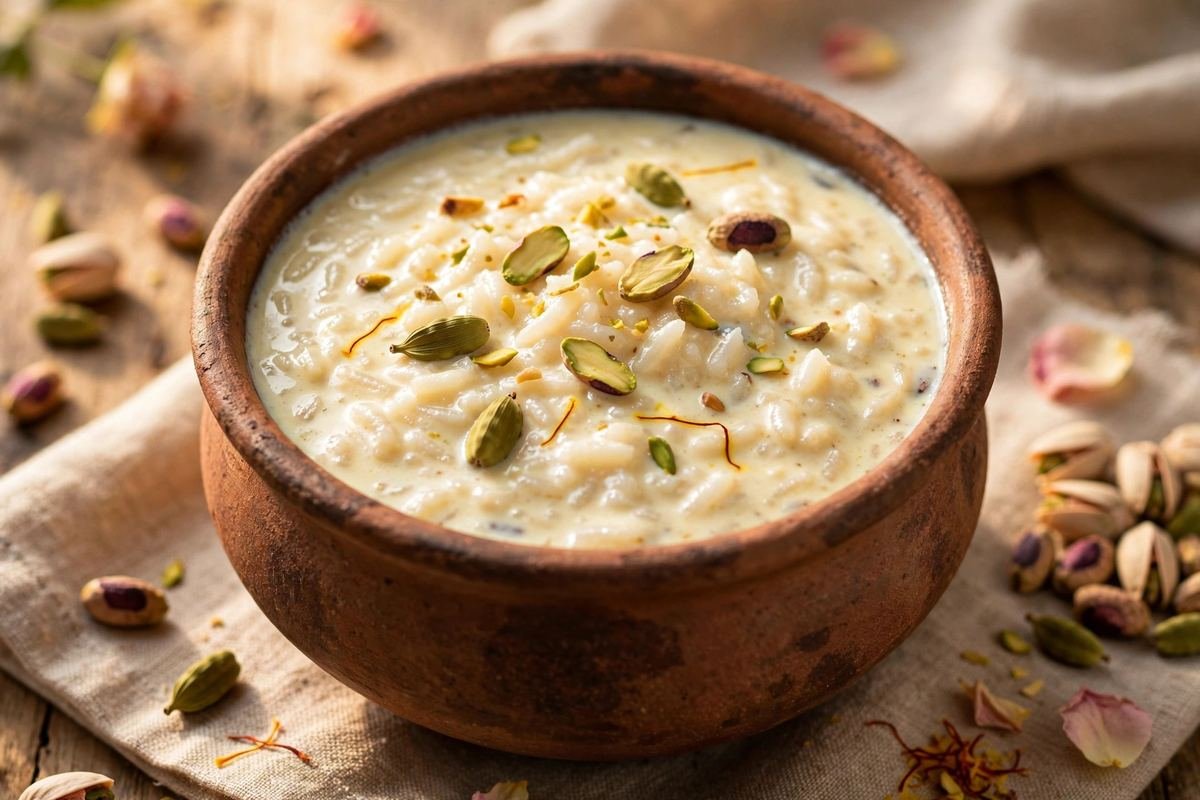
Slow-simmered rice kheer with basmati, reduced milk, cardamom and saffron. A creamy, no-shortcut method for the silkiest kheer you have ever made.
Ingredients
- 1.5 litres full-cream milk
- 1/3 cup (70g) basmati rice, soaked 30 minutes and coarsely crushed
- 3/4 cup (150g) sugar (adjust to taste)
- 1/2 tsp saffron strands, soaked in 2 tbsp warm milk
- 5–6 green cardamom pods, crushed (about 3/4 tsp powder)
- 1 tbsp ghee
- 2 tbsp pistachios, slivered
- 2 tbsp almonds, slivered
- 1 tbsp cashews, chopped (optional)
- 1 tsp rose water or kewra water (optional)
- 2 tbsp raisins (optional)
Instructions
- Prepare the rice. Rinse the basmati rice under cold water until the water runs mostly clear, then soak it in fresh water for 30 minutes. Drain completely, then crush the grains coarsely: rub a handful between your palms, or spread on a plate and press with a rolling pin. You want roughly broken grains — halves and thirds, not powder. This single step dramatically shortens the cooking time and is responsible for the creamy, thick body of the finished kheer.
- Start the milk. Pour the 1.5 litres of full-cream milk into your heavy-bottomed pot and bring it to a boil over medium-high heat, stirring occasionally with a long spoon. The moment it reaches a rolling boil, lower the heat to the gentlest simmer — you should see only lazy bubbles breaking the surface. A fierce boil at this stage will scorch the milk solids and give the kheer a burnt undertone that no amount of cardamom can hide.
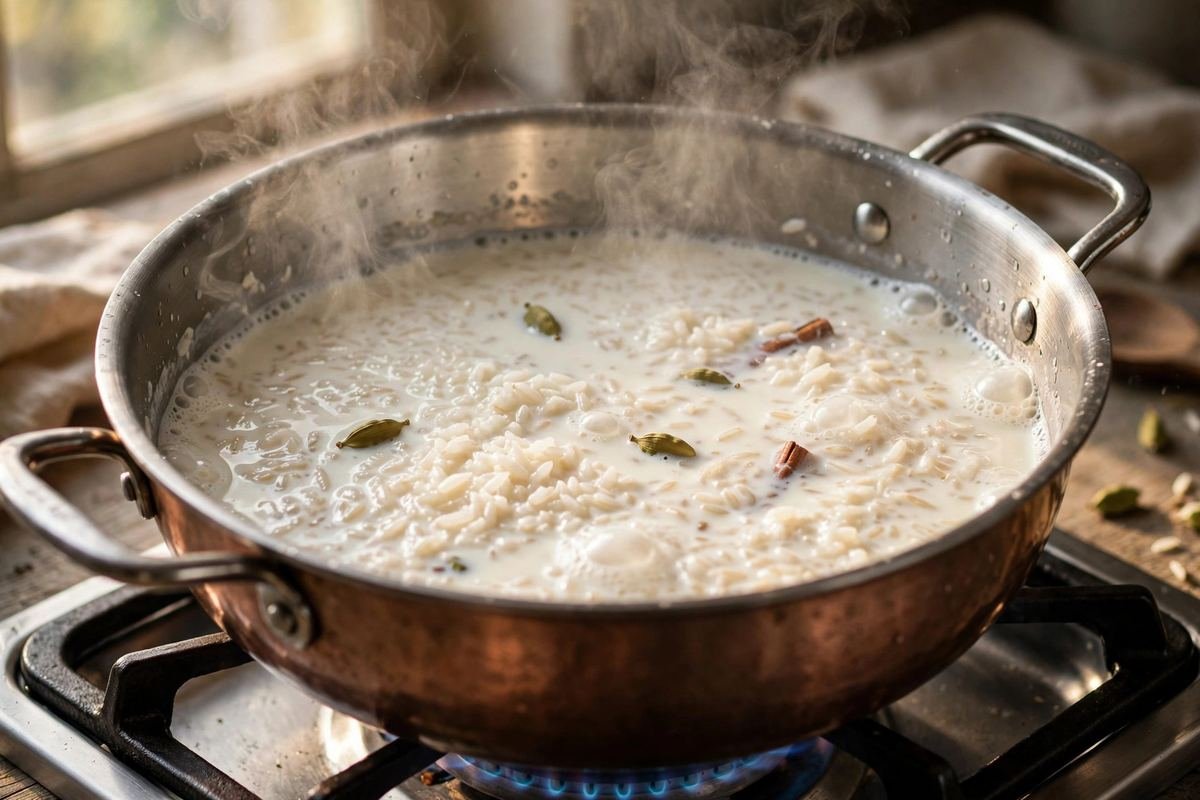
- Add the rice and begin the slow simmer. Stir the crushed, drained rice into the simmering milk along with the crushed cardamom pods. Keep the heat low and stir every 3 to 4 minutes, making sure to scrape the bottom and sides of the pot each time — the rice sinks and sticks, and stuck rice scorches. Within 15 minutes the milk will start to look slightly thicker as the rice releases its starch. Be patient and stay nearby; this is not a walk-away stage.
- Simmer until the rice dissolves into the milk. Continue the gentle simmer for 40 to 50 minutes, stirring every few minutes and scraping the bottom well. You will watch the transformation happen in stages: first the grains swell and soften, then they begin to break apart, and finally they melt into the milk until you can barely distinguish individual grains. The kheer should now coat the back of your spoon thickly and fall off in a slow, reluctant ribbon. If it is still thin and milky after 45 minutes, keep going — under-reduced kheer is the most common disappointment, and 10 more minutes fixes it.
- Add sugar and saffron. Only now, when the kheer is properly thick, stir in the sugar. You will notice the kheer loosens and thins slightly as the sugar melts — this is normal, and it will thicken again within a few minutes of simmering. Add the saffron with its soaking milk and stir well; the kheer will take on a pale golden blush. Simmer 5 more minutes, stirring, until the sugar is fully dissolved and the consistency is once again thick and spoon-coating.
- Finish with ghee and flavourings. Switch off the heat and stir in the tablespoon of ghee — it melts in and gives the kheer a beautiful gloss and rounded richness. Add the rose water or kewra water now, off the heat, so its delicate perfume does not cook away. Stir in half the slivered pistachios and almonds, and the raisins if using. Taste and adjust: a pinch more cardamom if you like it warmly spiced, a spoon of sugar if your sweet tooth demands it.
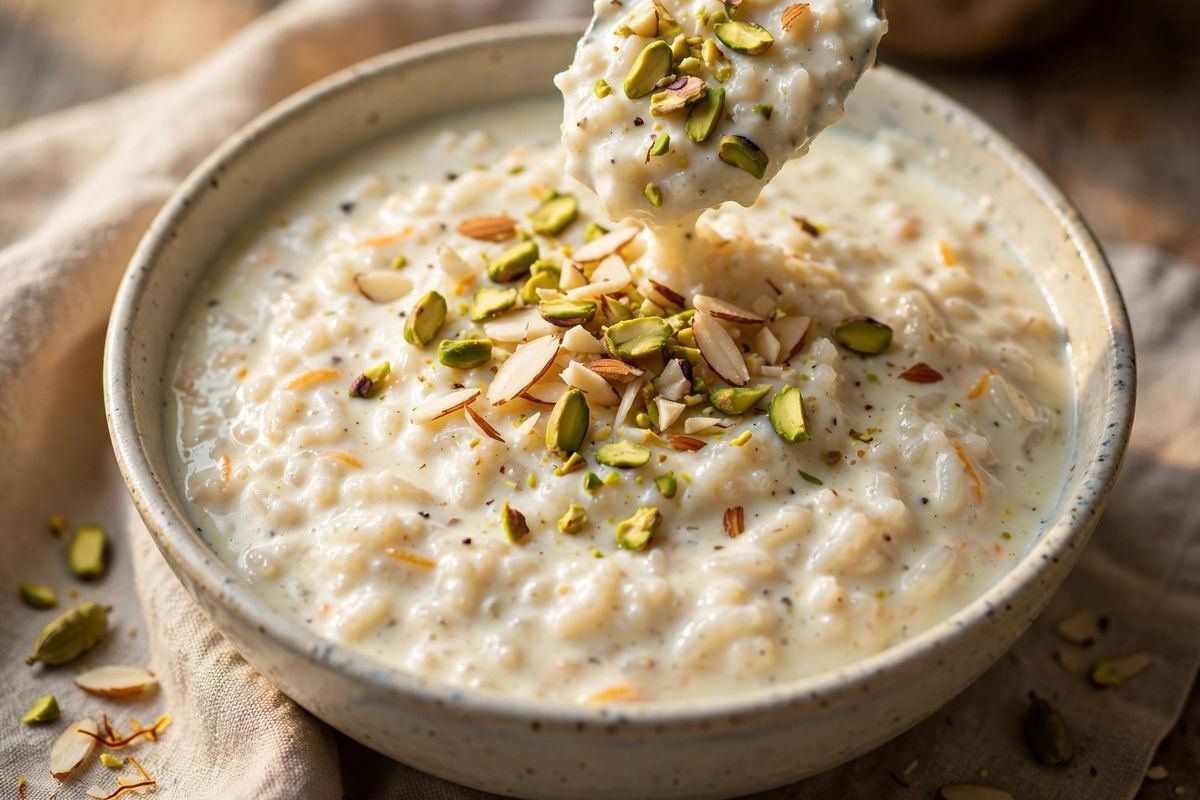
- Rest and serve. Let the kheer rest 10 minutes — it will thicken a little more as it cools, so judge the final consistency accordingly. Serve warm in small bowls topped with the remaining pistachios and almonds and a few saffron strands, or cool to room temperature, cover, and refrigerate for at least 3 hours to serve chilled. Remember that chilled kheer sets thicker; if it becomes too thick after refrigeration, loosen it with a splash of cold milk and stir well before serving.
Tip: Read through the full post below for step-by-step photos, pro tips, variations and FAQs before you start cooking.
The Story Behind Rice Kheer
Few desserts carry the weight of memory the way kheer does. In India, kheer is not merely a sweet — it is the taste of auspicious beginnings. It is cooked when a child is born, when exam results arrive, when a new home is entered, when the harvest is good. The word itself comes from the Sanskrit “kshira,” meaning milk, and versions of this rice-and-milk pudding appear in some of the oldest food references on the subcontinent. South India calls it payasam or paal payasam and serves it on banana leaves at weddings and during Onam and Pongal; the North simmers it into kheer for Diwali, Eid, and every family celebration in between. Wherever it appears, the ritual is the same: rice and milk, patience and a heavy pot, and a dessert that tastes like comfort made edible.
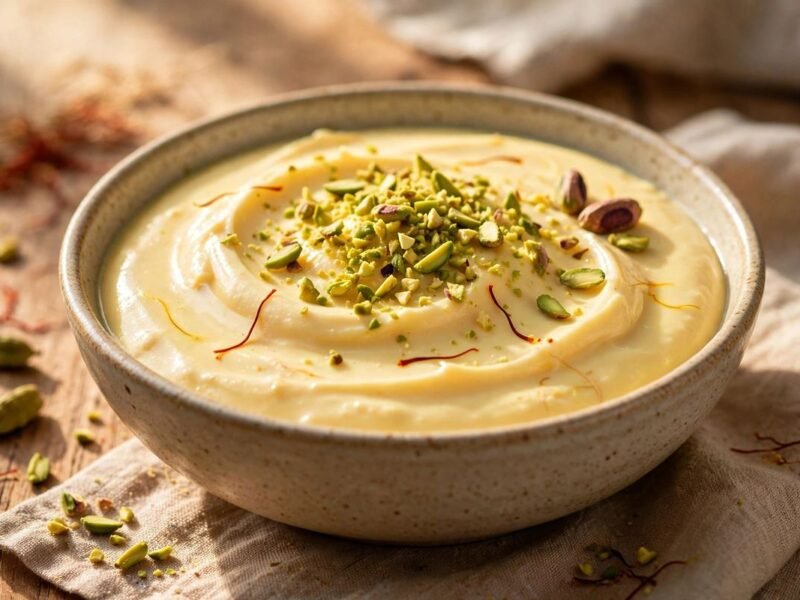
What makes rice kheer special is its deceptive simplicity. The ingredient list is almost embarrassingly short — rice, milk, sugar, cardamom — yet the difference between a mediocre kheer and a transcendent one is entirely technique: the rice must be broken down slowly until its starches melt into the milk, the milk must reduce until it turns faintly caramel and thick enough to coat a spoon, and the whole thing must be stirred with a devotion that borders on meditation. A great kheer is neither soupy nor stodgy; it flows slowly off the spoon, glossy and pale ivory, with grains of rice that have softened into the background and a flavour that is milky and deep rather than merely sweet. It can be served warm, when it feels like a hug, or chilled, when it becomes silk.
This recipe is the traditional slow method — no condensed milk, no shortcuts — because kheer earns its creaminess from time, not from tins. I will walk you through the stirring rhythm, the exact visual cues for doneness, and the small decisions (which rice, when to add the sugar, how to keep it from catching) that separate a good kheer from the one people talk about afterwards. It takes a little over an hour, most of it gentle simmering while you stay nearby, and the result is worth every minute.
Why You’ll Love This Recipe
- Genuinely creamy, no condensed milk: The silkiness comes from slow reduction and rice starch, not shortcuts — the flavour is deeper and more authentic.
- Foolproof technique cues: Exact visual and texture checkpoints tell you when to move to each next step, so there is no guesswork.
- Minimal ingredients, maximum comfort: Rice, milk, sugar, and spices you already own turn into a celebration-worthy dessert.
- Serves a crowd: One pot makes six generous servings, and the recipe scales up beautifully for festivals.
- Warm or chilled, both divine: Serve it fresh and warm on a winter evening or chilled with nuts on a summer afternoon.
Key Ingredients Explained
The rice you choose shapes the kheer more than anything else. Basmati rice is my strong recommendation: its long grains break down into a creamy, fragrant pudding, and its natural aroma adds a layer that short-grain rice cannot. Use 1/3 cup (about 70g) — yes, it seems like very little rice for 1.5 litres of milk, but kheer is a milk dessert, not a rice dessert, and too much rice turns it into porridge. Soak the rice for 30 minutes and then crush it coarsely between your palms or with a rolling pin; the broken grains release their starch faster and cook into the milk more completely, which is the secret to that thick, unified texture without any flour or thickener.
Full-cream milk is essential — 1.5 litres of it. The fat carries flavour and gives the kheer its luxurious mouthfeel; toned milk produces a thin, sad kheer no amount of simmering will fix. Fresh dairy milk is lovely, but good full-cream packet milk works perfectly. Sugar goes in near the end, not at the beginning: adding it early interferes with the milk’s reduction and can make the kheer thin and oddly glossy rather than creamy. Three-quarters of a cup (150g) gives a balanced sweetness; adjust up or down by two tablespoons to your taste, remembering that kheer tastes slightly less sweet when chilled.
For flavour, green cardamom is the classic — crush 5 to 6 pods and add them with the milk so their perfume infuses throughout. Saffron, a generous pinch soaked in warm milk, gives the pale gold colour and floral depth that marks a festive kheer; it is optional but transformative. A tablespoon of ghee stirred in at the end adds a round, rich finish that professional halwais swear by. Pistachios, almonds, and cashews — slivered or chopped — provide the traditional garnish and a pleasant textural contrast, and a teaspoon of rose water or kewra water added off the heat gives a delicate floral lift. If you do not have saffron, increase the cardamom slightly; the kheer will be ivory-white and just as delicious.
Equipment You’ll Need
- Heavy-bottomed deep pot or handi (at least 3-litre capacity) — non-negotiable for even heat and no scorching
- Long-handled wooden spoon or flat spatula for frequent stirring and scraping
- Small bowl for soaking rice and another for blooming saffron
- Ladle for serving
- 1.5 litres full-cream milk
- 1/3 cup (70g) basmati rice, soaked 30 minutes and coarsely crushed
- 3/4 cup (150g) sugar (adjust to taste)
- 1/2 tsp saffron strands, soaked in 2 tbsp warm milk
- 5–6 green cardamom pods, crushed (about 3/4 tsp powder)
- 1 tbsp ghee
- 2 tbsp pistachios, slivered
- 2 tbsp almonds, slivered
- 1 tbsp cashews, chopped (optional)
- 1 tsp rose water or kewra water (optional)
- 2 tbsp raisins (optional)
- Prepare the rice. Rinse the basmati rice under cold water until the water runs mostly clear, then soak it in fresh water for 30 minutes. Drain completely, then crush the grains coarsely: rub a handful between your palms, or spread on a plate and press with a rolling pin. You want roughly broken grains — halves and thirds, not powder. This single step dramatically shortens the cooking time and is responsible for the creamy, thick body of the finished kheer.
- Start the milk. Pour the 1.5 litres of full-cream milk into your heavy-bottomed pot and bring it to a boil over medium-high heat, stirring occasionally with a long spoon. The moment it reaches a rolling boil, lower the heat to the gentlest simmer — you should see only lazy bubbles breaking the surface. A fierce boil at this stage will scorch the milk solids and give the kheer a burnt undertone that no amount of cardamom can hide.
- Add the rice and begin the slow simmer. Stir the crushed, drained rice into the simmering milk along with the crushed cardamom pods. Keep the heat low and stir every 3 to 4 minutes, making sure to scrape the bottom and sides of the pot each time — the rice sinks and sticks, and stuck rice scorches. Within 15 minutes the milk will start to look slightly thicker as the rice releases its starch. Be patient and stay nearby; this is not a walk-away stage.
- Simmer until the rice dissolves into the milk. Continue the gentle simmer for 40 to 50 minutes, stirring every few minutes and scraping the bottom well. You will watch the transformation happen in stages: first the grains swell and soften, then they begin to break apart, and finally they melt into the milk until you can barely distinguish individual grains. The kheer should now coat the back of your spoon thickly and fall off in a slow, reluctant ribbon. If it is still thin and milky after 45 minutes, keep going — under-reduced kheer is the most common disappointment, and 10 more minutes fixes it.
- Add sugar and saffron. Only now, when the kheer is properly thick, stir in the sugar. You will notice the kheer loosens and thins slightly as the sugar melts — this is normal, and it will thicken again within a few minutes of simmering. Add the saffron with its soaking milk and stir well; the kheer will take on a pale golden blush. Simmer 5 more minutes, stirring, until the sugar is fully dissolved and the consistency is once again thick and spoon-coating.
- Finish with ghee and flavourings. Switch off the heat and stir in the tablespoon of ghee — it melts in and gives the kheer a beautiful gloss and rounded richness. Add the rose water or kewra water now, off the heat, so its delicate perfume does not cook away. Stir in half the slivered pistachios and almonds, and the raisins if using. Taste and adjust: a pinch more cardamom if you like it warmly spiced, a spoon of sugar if your sweet tooth demands it.
- Rest and serve. Let the kheer rest 10 minutes — it will thicken a little more as it cools, so judge the final consistency accordingly. Serve warm in small bowls topped with the remaining pistachios and almonds and a few saffron strands, or cool to room temperature, cover, and refrigerate for at least 3 hours to serve chilled. Remember that chilled kheer sets thicker; if it becomes too thick after refrigeration, loosen it with a splash of cold milk and stir well before serving.
Pro Tips for Perfect Results
- Heavy pot or nothing: A thin-bottomed vessel will scorch the milk no matter how carefully you stir. If your heaviest pot is still thin, use a heat diffuser or the smallest burner on its lowest flame.
- Crush the rice, always: Whole grains take far longer to break down and never give the same creamy unity. The 2 minutes of crushing saves 20 minutes of simmering.
- Sugar goes in late: Adding sugar early slows thickening and can make the kheer gluey. Thick first, sweeten second — tattoo it on your stirring arm if needed.
- Scrape, do not just stir: A lazy circle on the surface does nothing. Each stir should sweep the bottom and corners of the pot where rice settles and burns.
- Judge doneness on the spoon: Dip a spoon in and draw a line through the kheer on its back with your finger — if the line holds cleanly for a few seconds, it is done.
- Account for carryover thickening: Kheer thickens noticeably as it cools. Stop cooking when it is just slightly thinner than your ideal serving consistency.
- Never cover while simmering: A lid traps steam, slows reduction, and can make the milk boil over in a spectacular, sticky mess. Simmer uncovered throughout.
Variations to Try
The kheer family is vast, and this base method adapts to all of them. Sabudana kheer replaces the rice with soaked tapioca pearls for a translucent, jewel-like pudding popular during fasting. Seviyan kheer (vermicelli kheer) uses roasted thin vermicelli instead of rice and cooks in just 20 minutes — the weeknight answer to a kheer craving. Makhana kheer folds in ghee-roasted fox nuts for a nutty, protein-rich version. For a mango kheer, cool the base kheer completely and stir in a cup of alphonso pulp, reducing the sugar by a quarter. Chocolate kheer — whisk in two tablespoons of cocoa with the sugar — sounds unusual but wins over every child who tries it. You can also make a jaggery kheer by replacing sugar with grated jaggery, but add it only after switching off the heat and cooling the kheer slightly, since jaggery can curdle hot milk. A pinch of nutmeg instead of cardamom gives a warm, wintery variation lovely with the ghee finish.
Serving Suggestions
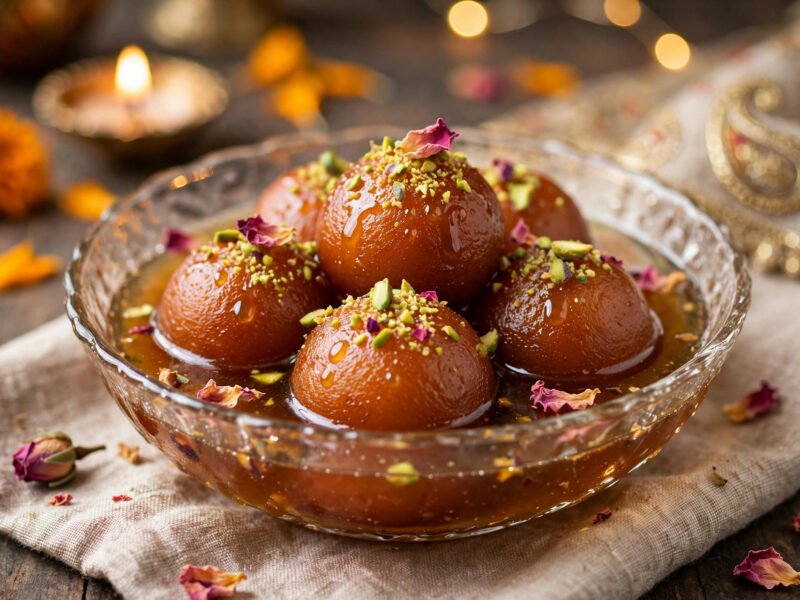
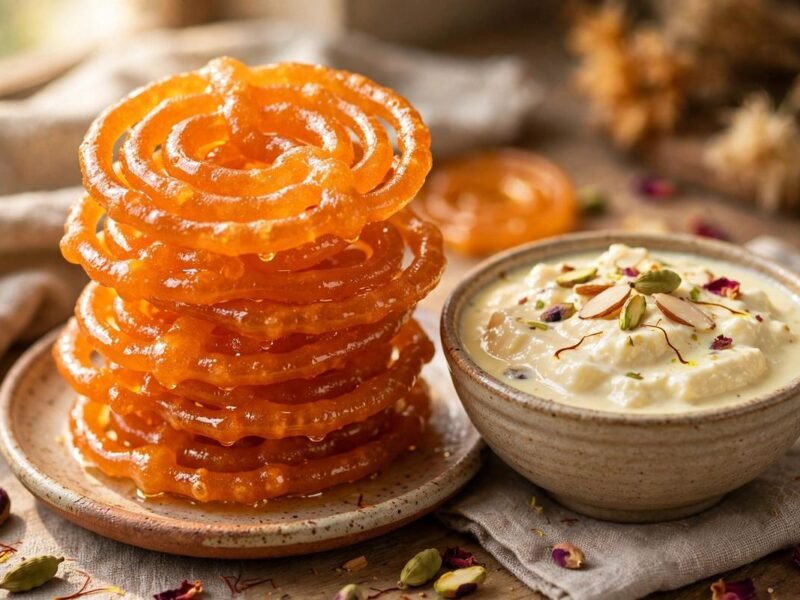
Kheer is traditionally served in small bowls or earthen kulhads, garnished generously with slivered nuts — the kulhad keeps chilled kheer cold longer and adds a faint earthy aroma that is deeply nostalgic. Serve warm kheer as the finale to a winter meal of sarson da saag and makki di roti, or dal-bhaat on a rainy evening; its warmth feels like part of the meal rather than an afterthought. Chilled kheer belongs at festive spreads — Diwali, Eid, Raksha Bandhan — alongside crisp, syrupy sweets like jalebi and gulab jamun, where its cool creaminess balances their intensity. For an elegant plated version, chill the kheer in individual glasses, top with a quenelle of lightly sweetened whipped cream, pistachio dust, and a single saffron strand. It also makes a wonderful breakfast-for-dessert the next morning, eaten cold straight from the fridge — no one will judge.
Storage and Reheating
Cool the kheer to room temperature within an hour of cooking, then refrigerate in an airtight container; it keeps well for 3 to 4 days. It will thicken considerably in the fridge — this is normal. To serve, loosen chilled kheer with a few tablespoons of cold milk and stir until it returns to a flowing consistency. To reheat, warm it gently in a heavy pot over low heat, stirring constantly and adding a splash of milk to restore creaminess; never microwave a large quantity on high, which heats unevenly and can make the rice gummy. Do not freeze kheer: the rice grains turn hard and chalky on thawing and the texture never recovers. Always use a clean, dry spoon when serving from the stored batch, and discard if it smells sour — as a fresh milk dessert, it deserves the same caution as milk itself.
Frequently Asked Questions
Why is my kheer thin and watery even after an hour?
Almost always, the rice was not crushed or the heat was too high, causing the milk to reduce without the rice breaking down. Crush the rice coarsely before cooking, keep the simmer gentle, and give it the full 40 to 50 minutes. Also check that you used full-cream milk — toned milk will never thicken properly.
Can I use condensed milk to speed this up?
You can replace about a third of the milk with condensed milk and reduce the sugar, which cuts 15 to 20 minutes off the simmer. But the flavour is noticeably less deep than the slow-reduced version, and it is much easier to oversweeten. For a festival or guests, the traditional method is worth the time.
My kheer caught at the bottom and tastes slightly burnt. Can I save it?
Do not stir the burnt layer in — that spreads the bitter flavour through the whole pot. Immediately pour the unburnt kheer into a clean pot, leaving every scorched bit behind, and continue from there. A faint smokiness sometimes passes unnoticed under cardamom and saffron, but a truly burnt base cannot be masked.
Why did my kheer curdle when I added jaggery?
Jaggery is acidic and hot milk plus acid equals curdling. Always switch off the heat, let the kheer cool for 5 to 10 minutes, and dissolve the jaggery in a little warm water before stirring it in. Use clean, good-quality jaggery — old or impure jaggery curdles milk more readily.
Can I make kheer in a pressure cooker or Instant Pot?
You can cook the rice-and-milk base under pressure (2 whistles or 8 minutes on high, natural release) to save time, but you must still simmer it uncovered afterwards for 15 to 20 minutes to get the proper reduced, creamy consistency. Milk under pressure also foams and can clog the vent, so never fill the cooker more than half and stay cautious.
How do I keep a skin from forming on top?
That skin is the malai, and many families consider it the best part — traditionally it is stirred back in for extra richness. If you dislike it, press cling film or butter paper directly onto the surface of the kheer while it cools, which prevents the skin from forming.
There is a reason kheer has survived centuries of changing tastes: it asks for nothing fancy and gives back pure comfort. Master this slow method once and you will find yourself making it for every small victory and every festival, stirring the pot the way generations before you did, tasting and adjusting until it is exactly right. That is the whole secret of kheer — not a recipe, but a rhythm. And now it is yours.