Recipe Card
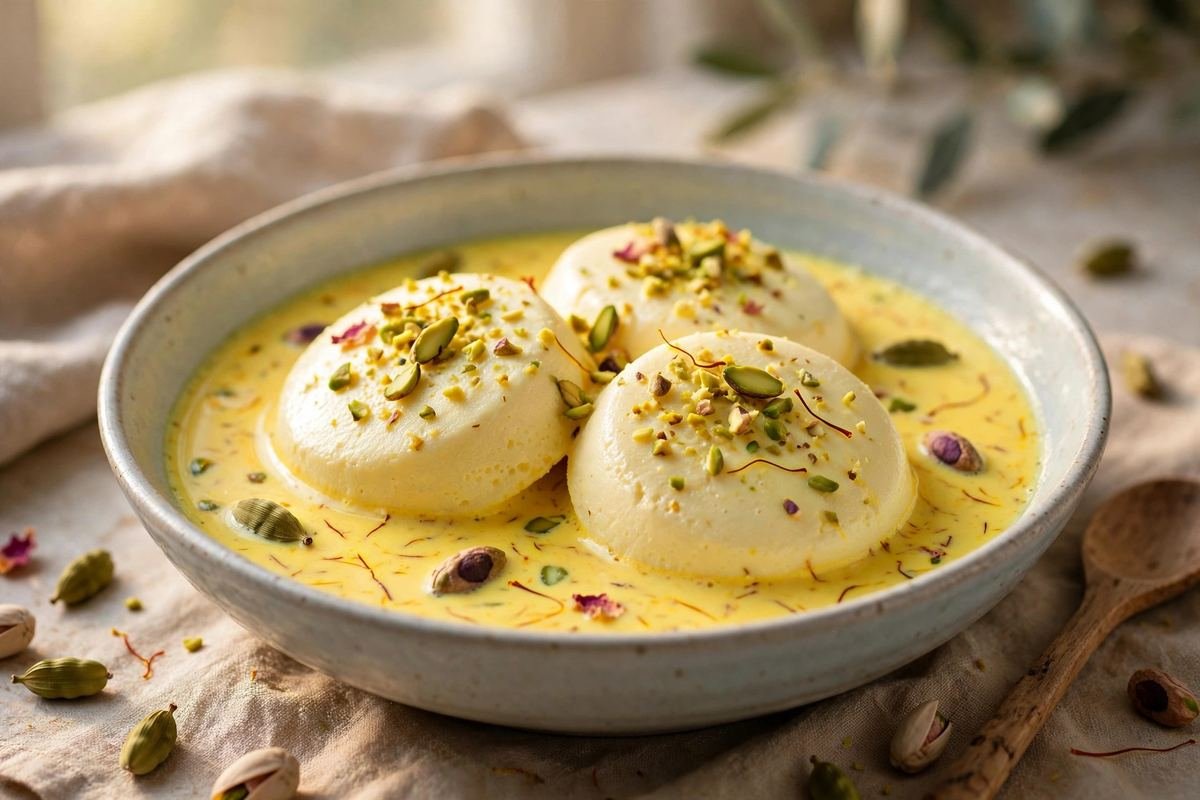
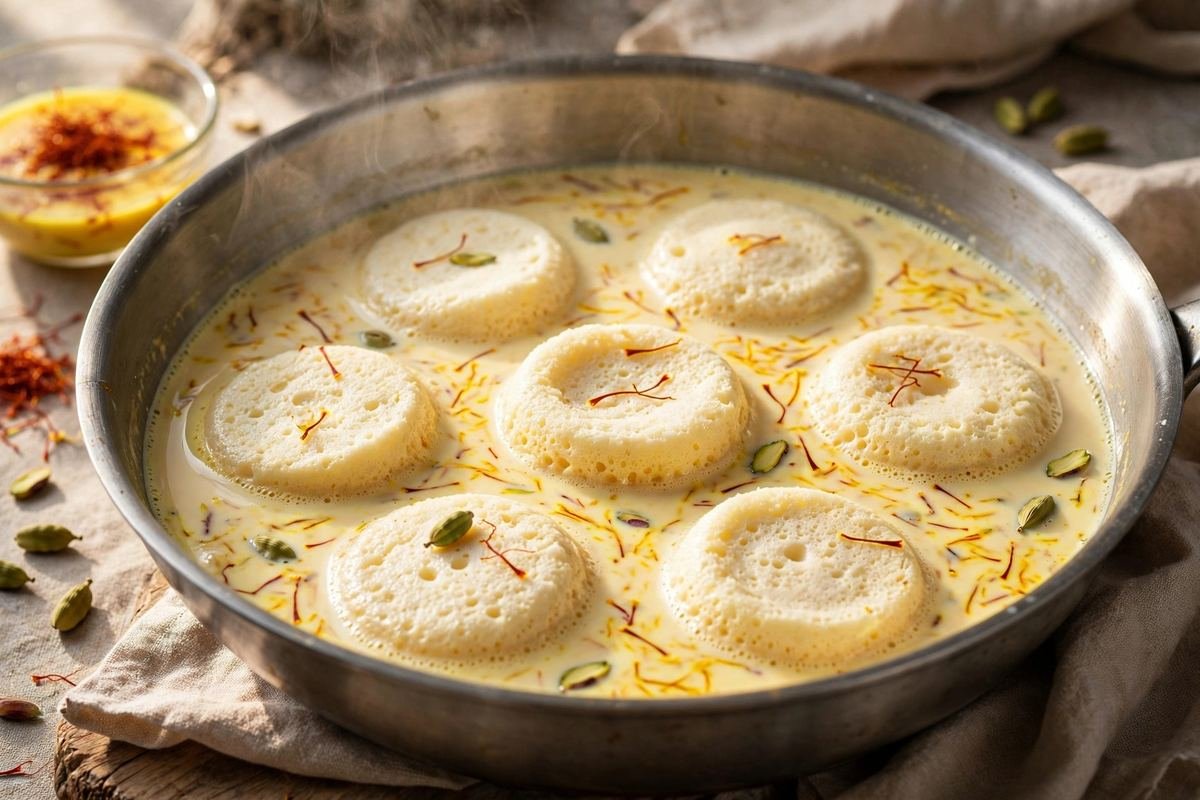
Soft homemade chenna discs soaked in saffron and cardamom-scented rabri milk. A step-by-step rasmalai recipe that stays spongy and juicy, never rubbery.
Ingredients
- 1.5 litres full-cream milk (for chenna)
- 3 tbsp lemon juice or white vinegar, diluted in 1/4 cup water
- 1 tsp cornflour
- 1 litre full-cream milk (for the rabri base)
- 1/2 cup (100g) sugar, for the rabri milk (adjust to taste)
- 1.5 cups (300g) sugar, for the thin cooking syrup
- 5 cups (1.2 litres) water, for the cooking syrup
- 1/2 tsp saffron strands, soaked in 2 tbsp warm milk
- 6 green cardamom pods, crushed (about 3/4 tsp powder)
- 2 tbsp pistachios, slivered
- 1 tbsp almonds, slivered
- 1 tsp rose water (optional)
- 1 tsp dried rose petals, for garnish (optional)
Instructions
- Make the chenna. Bring the 1.5 litres of full-cream milk to a rolling boil in a heavy-bottomed pot, stirring occasionally so it does not catch at the bottom. The moment it boils, switch off the heat and wait 2 minutes so it cools just slightly — adding acid to violently boiling milk makes the chenna tough. Now add the diluted lemon juice a tablespoon at a time, stirring gently after each addition. Within a minute you should see the milk split into soft white curds and clear, pale-green whey. If the whey still looks milky white, add a little more of the acid mixture.
- Strain and rinse the chenna. Line a large strainer or colander with your muslin cloth and set it over the sink. Pour in the curdled milk, then gather the cloth and rinse the chenna under cool running water for 30 seconds, gently tossing it with your hand. This step washes away the lemony tang and stops the cooking, which keeps the discs soft. Squeeze the cloth gently — firmly but not brutally — to press out excess water, then hang it over the tap or a hook for 30 to 40 minutes. The chenna should feel moist and crumbly like fresh paneer, not dripping wet and not dry.
- Knead and shape the discs. Tip the chenna onto a clean, flat plate or countertop and sprinkle over the cornflour. Knead with the heel of your palm for 5 to 7 minutes, pressing and folding until it becomes completely smooth, pliable, and free of grains — it should feel like soft play-dough and hold together when rolled. Divide into 10 equal portions and roll each into a smooth ball with no cracks, then flatten gently between your palms into discs about 5 cm across and 1 cm thick. If the edges crack, the chenna is slightly dry; knead a few drops of water in.
- Prepare the thin cooking syrup. In your largest wide pot, combine the 1.5 cups of sugar with 5 cups of water and bring to a rolling boil, stirring until the sugar dissolves completely. The syrup should be thin and watery — roughly the consistency of sweetened tea. A thin syrup is non-negotiable: it lets the discs expand, bob, and cook through evenly instead of sinking and turning dense.
- Simmer the discs. Gently slide the discs into the boiling syrup one by one — they should have room to float and double in size, so work in two batches if your pot is small. Cover with a lid and cook on medium-high heat for 12 to 15 minutes. The discs will puff up noticeably and bob to the surface; that puffing is exactly what you want. Avoid the temptation to stir, which can break them — if a disc sticks to the bottom, nudge it very gently with the back of a spoon. When done, switch off the heat and let them rest in the syrup for 10 minutes.
- Press out the syrup. Lift the discs out with a slotted spoon onto a plate. Once cool enough to handle, take each disc and press it very gently between your palms (or between two flat plates) to squeeze out the excess syrup. Press firmly enough to expel liquid but not so hard that you crack or flatten the disc into a pancake. Set the pressed discs aside while you finish the milk.
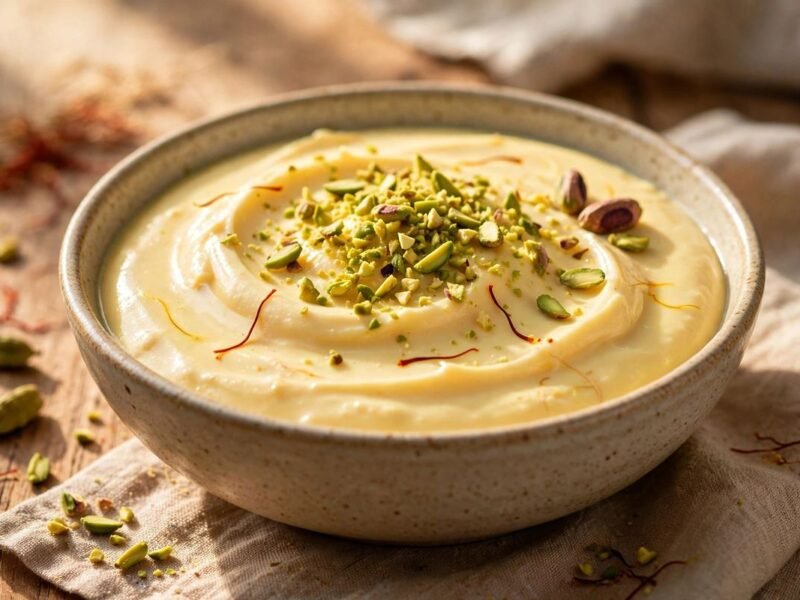
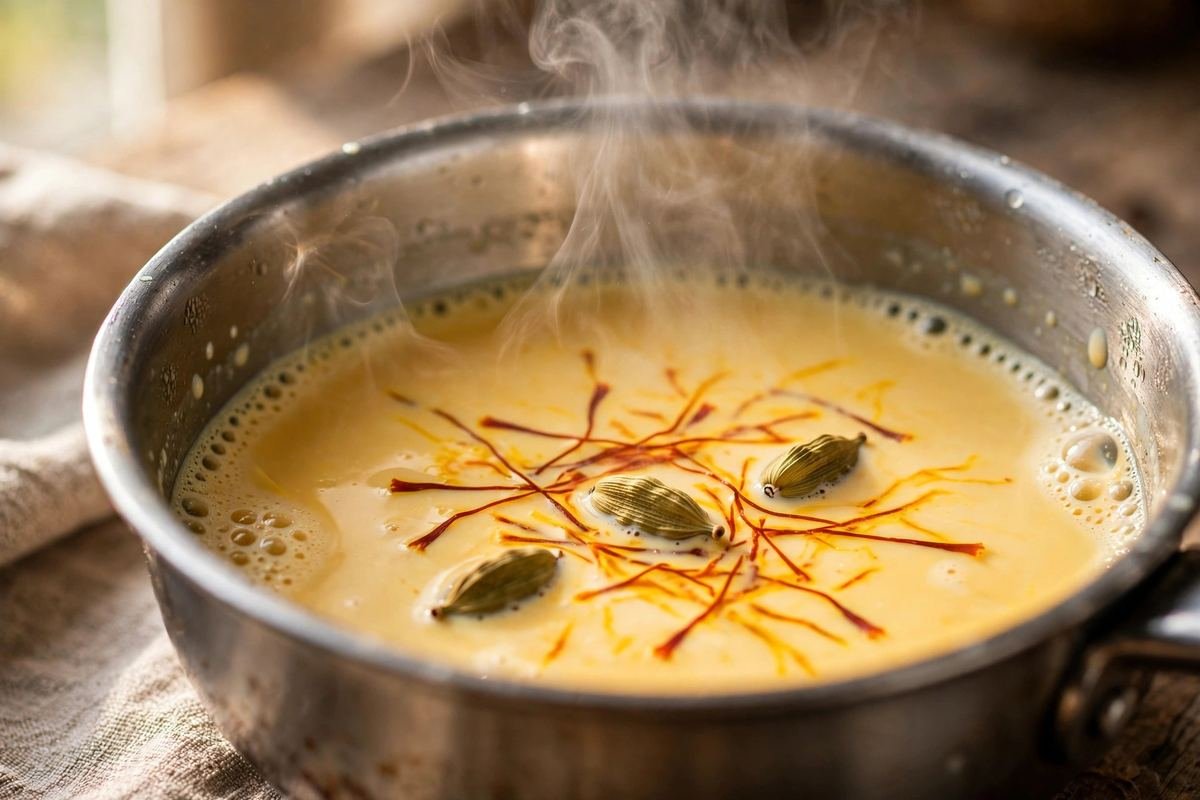
- Reduce the rabri milk. In the second heavy pot, bring the 1 litre of full-cream milk to a boil, then lower to a gentle simmer. Stir frequently, scraping the sides and folding the creamy skin (malai) back into the milk — that skin is flavour. Simmer 25 to 30 minutes until the milk reduces to about 700 ml and lightly coats the back of a spoon. It should be thickened but still pourable, like thin custard, not a heavy rabri. Stir in the 1/2 cup sugar, the saffron with its soaking milk, and the crushed cardamom; simmer 2 minutes more, then add the rose water if using. Taste and adjust sweetness.
- Combine and chill. Let the flavoured milk cool to lukewarm (never pour boiling milk over the discs — it will make them shrink and toughen). Arrange the pressed discs in a wide, shallow serving dish and pour the milk over them so they are fully submerged. Scatter over the slivered pistachios and almonds. Cover and refrigerate for at least 4 hours, ideally overnight. The discs will drink up the saffron milk and become unbelievably juicy.
- Serve cold. Spoon 2 to 3 discs per person into small bowls with plenty of the chilled milk, making sure each serving gets saffron strands and nuts. Garnish with a few dried rose petals if you like. Serve well chilled — rasmalai is at its best icy cold, straight from the fridge.
Tip: Read through the full post below for step-by-step photos, pro tips, variations and FAQs before you start cooking.
The Story Behind Rasmalai
Rasmalai — literally “ras” (juice or essence) and “malai” (cream) — is one of those desserts that seems to arrive at every celebration in India with a kind of quiet confidence. It does not shout for attention the way a platter of glistening gulab jamuns does; instead it waits, chilled and pale gold, in its shallow bowl, trusting that once you taste the first spoonful — the soft, yielding disc of fresh chenna melting into cool, saffron-streaked milk — you will be back for more. Its origins are usually traced to Bengal in the nineteenth century, where the Sen brothers’ legendary K.C. Das sweet shop of Kolkata is often credited with perfecting the dish, though many mithai historians believe similar milk-soaked sweets floated around the region even earlier. What is certain is that rasmalai grew out of Bengal’s deep love affair with chenna — the fresh, crumbly curdled milk that also gives us rasgulla, sandesh, and chamcham — and travelled across the country until it became a fixture at weddings, Diwali parties, and restaurant dessert counters from Delhi to Chennai.
What makes rasmalai special is the contrast it holds in a single bite. The chenna discs themselves are delicately sweet and almost bland on their own, intentionally so, because their real purpose is to drink up the flavoured milk around them. The milk — reduced slowly until it is lightly thickened, perfumed with cardamom, tinted with saffron, and kissed with a little sugar — seeps into every pore of the discs while they chill together. When you press a disc gently against the side of the bowl, it should release a little stream of milky syrup: that is the sign you have done it right. The texture should be spongy rather than dense, soft rather than chewy, and cool rather than room temperature. Served cold, it is one of the most refreshing ways to end a heavy festive meal, because the lightness of the milk keeps it from feeling cloying the way richer desserts can.
Homemade rasmalai has a reputation for being fussy, and honestly it does ask for your attention in two places: the chenna and the flattening. But once you understand that the discs must be kneaded only until smooth — never overworked — and that they must simmer, not boil furiously, in the syrup, the whole process becomes deeply satisfying. This recipe breaks every stage into clear, forgiving steps with the visual cues I look for in my own kitchen, so your rasmalai comes out soft, juicy, and restaurant-worthy on the very first attempt.
Why You’ll Love This Recipe
- Spongy, never rubbery: The kneading and simmering method here is tuned for discs that stay soft and absorbent, not dense and chewy.
- Perfectly balanced sweetness: The chenna discs carry just enough sugar; the rabri-style milk is gently sweetened so saffron and cardamom shine through.
- Made from basic pantry staples: Full-cream milk, sugar, cardamom, saffron, a lemon, and a few pistachios — nothing exotic required.
- Festive make-ahead dessert: Rasmalai tastes even better on day two after an overnight soak, making it ideal for party prep.
- No special equipment: A heavy pot, a muslin cloth or clean kitchen towel, and a slotted spoon are all you need.
Key Ingredients Explained
The entire dessert rests on the quality of your full-cream milk, and this is the one ingredient where compromise will show. You need 2 litres total across the recipe: 1.5 litres for the chenna and 1 litre for the milk base. Toned or low-fat milk simply does not have enough milk solids to produce chenna with body; the discs turn out flat and grainy. If you can get fresh dairy milk, use it, but standard full-cream packet milk works well too. What matters most is that the milk is fresh and has not turned even slightly sour, because acidic milk curdles poorly and gives a crumbly, non-cohesive chenna.
For curdling, lemon juice or white vinegar both work, but they behave slightly differently. Lemon juice is gentler and leaves no detectable aftertaste if you rinse the chenna well; vinegar acts faster and is more predictable in strength. Use about 2 to 3 tablespoons of either, diluted in a quarter cup of water so it does not shock the milk all at once. The goal is a clean separation: clear greenish whey and soft white curds. If the whey is milky, you need a touch more acid; if the curds look tough and the whey is yellow and harsh, you added too much.
Sugar appears in two places: a thin syrup for cooking the discs (this gives them their spongy structure and keeps them from disintegrating) and the flavoured milk. Keeping the cooking syrup thin is important — a heavy syrup will not let the discs puff and will make them dense. For the milk, green cardamom (freshly crushed, pods removed or ground) gives the classic warm perfume, while a generous pinch of saffron soaked in warm milk contributes colour and that unmistakable floral note. Real saffron is worth it here; a few threads go a long way. Pistachios and almonds, slivered or chopped, add the traditional garnish crunch, and a drop of rose water or a few dried rose petals is optional but lovely. If saffron is out of budget, increase the cardamom and add a pinch of turmeric-free yellow food colour — the flavour will still be wonderful even if the colour is paler.
Finally, cornflour — one teaspoon kneaded into the chenna — is the quiet insurance policy of this recipe. Traditionalists sometimes skip it, but it dramatically improves the discs’ ability to hold their shape in simmering syrup without turning chewy. It is not a cheat; many professional halwais use a similar binder.
Equipment You’ll Need
- Heavy-bottomed large pot or kadhai (at least 3-litre capacity) for curdling milk and simmering discs
- Second heavy pot for reducing the flavoured milk
- Muslin cloth, cheesecloth, or a clean thin cotton kitchen towel for straining chenna
- Slotted spoon and a wide, flat plate or thali for shaping discs
- Large bowl with cold water and ice for rinsing chenna
- Fine-mesh strainer
- 1.5 litres full-cream milk (for chenna)
- 3 tbsp lemon juice or white vinegar, diluted in 1/4 cup water
- 1 tsp cornflour
- 1 litre full-cream milk (for the rabri base)
- 1/2 cup (100g) sugar, for the rabri milk (adjust to taste)
- 1.5 cups (300g) sugar, for the thin cooking syrup
- 5 cups (1.2 litres) water, for the cooking syrup
- 1/2 tsp saffron strands, soaked in 2 tbsp warm milk
- 6 green cardamom pods, crushed (about 3/4 tsp powder)
- 2 tbsp pistachios, slivered
- 1 tbsp almonds, slivered
- 1 tsp rose water (optional)
- 1 tsp dried rose petals, for garnish (optional)
- Make the chenna. Bring the 1.5 litres of full-cream milk to a rolling boil in a heavy-bottomed pot, stirring occasionally so it does not catch at the bottom. The moment it boils, switch off the heat and wait 2 minutes so it cools just slightly — adding acid to violently boiling milk makes the chenna tough. Now add the diluted lemon juice a tablespoon at a time, stirring gently after each addition. Within a minute you should see the milk split into soft white curds and clear, pale-green whey. If the whey still looks milky white, add a little more of the acid mixture.
- Strain and rinse the chenna. Line a large strainer or colander with your muslin cloth and set it over the sink. Pour in the curdled milk, then gather the cloth and rinse the chenna under cool running water for 30 seconds, gently tossing it with your hand. This step washes away the lemony tang and stops the cooking, which keeps the discs soft. Squeeze the cloth gently — firmly but not brutally — to press out excess water, then hang it over the tap or a hook for 30 to 40 minutes. The chenna should feel moist and crumbly like fresh paneer, not dripping wet and not dry.
- Knead and shape the discs. Tip the chenna onto a clean, flat plate or countertop and sprinkle over the cornflour. Knead with the heel of your palm for 5 to 7 minutes, pressing and folding until it becomes completely smooth, pliable, and free of grains — it should feel like soft play-dough and hold together when rolled. Divide into 10 equal portions and roll each into a smooth ball with no cracks, then flatten gently between your palms into discs about 5 cm across and 1 cm thick. If the edges crack, the chenna is slightly dry; knead a few drops of water in.
- Prepare the thin cooking syrup. In your largest wide pot, combine the 1.5 cups of sugar with 5 cups of water and bring to a rolling boil, stirring until the sugar dissolves completely. The syrup should be thin and watery — roughly the consistency of sweetened tea. A thin syrup is non-negotiable: it lets the discs expand, bob, and cook through evenly instead of sinking and turning dense.
- Simmer the discs. Gently slide the discs into the boiling syrup one by one — they should have room to float and double in size, so work in two batches if your pot is small. Cover with a lid and cook on medium-high heat for 12 to 15 minutes. The discs will puff up noticeably and bob to the surface; that puffing is exactly what you want. Avoid the temptation to stir, which can break them — if a disc sticks to the bottom, nudge it very gently with the back of a spoon. When done, switch off the heat and let them rest in the syrup for 10 minutes.
- Press out the syrup. Lift the discs out with a slotted spoon onto a plate. Once cool enough to handle, take each disc and press it very gently between your palms (or between two flat plates) to squeeze out the excess syrup. Press firmly enough to expel liquid but not so hard that you crack or flatten the disc into a pancake. Set the pressed discs aside while you finish the milk.
- Reduce the rabri milk. In the second heavy pot, bring the 1 litre of full-cream milk to a boil, then lower to a gentle simmer. Stir frequently, scraping the sides and folding the creamy skin (malai) back into the milk — that skin is flavour. Simmer 25 to 30 minutes until the milk reduces to about 700 ml and lightly coats the back of a spoon. It should be thickened but still pourable, like thin custard, not a heavy rabri. Stir in the 1/2 cup sugar, the saffron with its soaking milk, and the crushed cardamom; simmer 2 minutes more, then add the rose water if using. Taste and adjust sweetness.
- Combine and chill. Let the flavoured milk cool to lukewarm (never pour boiling milk over the discs — it will make them shrink and toughen). Arrange the pressed discs in a wide, shallow serving dish and pour the milk over them so they are fully submerged. Scatter over the slivered pistachios and almonds. Cover and refrigerate for at least 4 hours, ideally overnight. The discs will drink up the saffron milk and become unbelievably juicy.
- Serve cold. Spoon 2 to 3 discs per person into small bowls with plenty of the chilled milk, making sure each serving gets saffron strands and nuts. Garnish with a few dried rose petals if you like. Serve well chilled — rasmalai is at its best icy cold, straight from the fridge.
Pro Tips for Perfect Results
- Test one disc first: Cook a single disc in the syrup as a trial. If it holds shape and puffs, the batch is safe; if it falls apart, knead the remaining chenna 2 minutes longer.
- Cool the milk before acid: Waiting those 2 minutes after boiling before adding lemon juice is the single biggest factor in soft chenna. Boiling-hot milk plus acid equals rubber.
- Do not over-knead: Stop the moment the chenna is smooth and holds together. Over-kneading releases too much fat and makes dense, oily discs.
- Keep the cooking syrup thin: If your syrup reduces too much during the simmer, top up with a cup of hot water. A thick syrup suffocates the discs.
- Lukewarm milk only for soaking: Hot milk tightens the discs’ surface and blocks absorption; lukewarm milk invites it in.
- Chill overnight when you can: Four hours is the minimum, but an overnight rest transforms good rasmalai into great rasmalai as the flavours fully marry.
- Use a wide pot for the discs: Crowding causes uneven cooking and broken discs. Two comfortable batches beat one cramped one every time.
Variations to Try
Once you have the base technique down, rasmalai is a wonderful canvas. Kesar rasmalai doubles the saffron for a deeper golden colour and more pronounced floral flavour — the restaurant classic. Mango rasmalai, a summer favourite, folds half a cup of sweet mango pulp (alphonso if you can get it) into the cooled rabri milk; reduce the sugar slightly to compensate. Chocolate rasmalai sounds like a gimmick but works surprisingly well: whisk two tablespoons of cocoa into the milk while reducing, and garnish with chocolate shavings. For a kesar-pista version, increase pistachios and add a tiny pinch of ground nutmeg. You can also make mini rasmalai by shaping 20 small discs instead of 10 — they look adorable in shot glasses for parties and need only 10 minutes of simmering. A festive paan rasmalai blends one fresh paan leaf into the milk for a cooling, aromatic twist that guests always ask about.
Serving Suggestions
Rasmalai is traditionally served well chilled in small bowls or traditional clay kulhads, which keep it cold and add a lovely earthy note — if you can find kulhads, use them; they also make a beautiful presentation for guests. It is the classic ending to a rich North Indian festive meal of biryani, dal makhani, or shahi paneer, where its cool lightness provides the perfect counterpoint to all that richness. At weddings and Diwali parties, serve it as part of a dessert spread alongside gulab jamun and jalebi so guests can contrast the cool, milky rasmalai against hot, syrupy sweets. For a plated restaurant-style dessert, place two discs in the centre of a shallow bowl, spoon the saffron milk around (not over) them, and finish with pistachio dust, a saffron strand, and a single rose petal. It also pairs beautifully with a simple cup of masala chai served after, rather than with, the dessert.
Storage and Reheating
Rasmalai must be refrigerated and keeps beautifully for 3 to 4 days in an airtight container, with the discs submerged in the milk — in fact, day two is often the best day. Do not freeze rasmalai: freezing destroys the delicate spongy structure of the chenna and the milk can split on thawing, leaving you with a grainy, watery dessert. There is no reheating involved since it is served cold; simply take it out of the fridge 5 to 10 minutes before serving so it is icy-cold but not frosty. If the milk thickens too much after a couple of days in the fridge, stir in a tablespoon or two of cold milk to loosen it before serving. Always use a clean, dry spoon to serve, and never leave rasmalai at room temperature for more than an hour or two, especially in warm weather, since it is a fresh dairy dessert.
Frequently Asked Questions
Why did my rasmalai discs turn out hard and rubbery?
The most common culprit is adding the curdling acid to boiling-hot milk, which seizes the proteins and makes tough chenna. The second is over-kneading or simmering the discs in too thick a syrup. Follow the cooling wait before adding acid, knead only until smooth, and keep the cooking syrup thin and watery.
My discs fell apart in the syrup. What went wrong?
Either the chenna was too wet or it was under-kneaded. After hanging, the chenna should be moist but not dripping; if water pools when you press it, hang it longer. Under-kneaded chenna lacks the cohesion to survive simmering — knead until it is completely smooth with no visible grains, and always test-cook one disc first.
Can I use store-bought paneer instead of making chenna?
Unfortunately, no. Commercial paneer is pressed firm and contains no residual moisture or the right protein structure, so discs made from it will be dense and will not puff in syrup. Rasmalai truly needs fresh, soft homemade chenna. The good news is that making chenna takes only about 10 minutes of active work.
Why are my discs flat instead of puffy?
Flat discs usually mean the syrup was too thick or the heat was too low. The syrup must be thin and at a rolling boil when the discs go in; the vigorous bubbling is what inflates them. Also check that you gave them room — overcrowded discs steam instead of simmer and never puff properly.
Can I make rasmalai ahead for a party?
Absolutely — it is one of the best make-ahead Indian desserts. Prepare it a day before and refrigerate overnight; the discs absorb more flavour and become juicier. Just keep it in an airtight container and garnish with fresh nuts and rose petals right before serving so they stay crisp and vibrant.
Is there a shortcut version with condensed milk?
You can speed up the rabri by replacing half the milk with a 400g tin of condensed milk and reducing the added sugar accordingly, simmering just 10 minutes. The flavour is a touch less nuanced than slow-reduced milk, but it is a fine weeknight shortcut. The chenna discs, however, have no shortcut — they must be made fresh.
Rasmalai rewards a little patience with one of the most elegant desserts in the Indian repertoire — cool, fragrant, and impossibly soft. Make it once for a celebration and it will quietly become the dessert your family requests by name, the one that disappears from the fridge bowl by bowl long before you expected. Keep the chenna soft, the syrup thin, and the milk lukewarm, and you will have a rasmalai worth being proud of every single time.