Recipe Card
Smoky charred chicken folded into a silky tomato-butter gravy – this authentic murgh makhani tastes better than your favourite restaurant. Step-by-step recipe with pro tips.
Ingredients
- 750g boneless chicken thighs, cut into 2-inch pieces
- 150g (about 2/3 cup) thick hung curd or Greek yoghurt
- 2 tbsp ginger-garlic paste, divided
- 2 tbsp Kashmiri red chilli powder, divided
- 1 tbsp lemon juice
- 1 tbsp mustard oil
- 1 tsp ajwain (carom seeds)
- 1 tsp garam masala, divided
- 500g (about 4 large) ripe red tomatoes, roughly chopped
- 60g (4 tbsp) unsalted butter, plus extra for finishing
- 1 tbsp neutral oil
- 1 large onion, finely chopped (about 150g)
- 10-12 cashew nuts, soaked in warm water for 20 minutes
- 1 tbsp kasuri methi (dried fenugreek leaves)
- 120ml (1/2 cup) fresh cream, plus extra for garnish
- 1 tbsp honey or sugar
- 1.5 tsp salt, or to taste
- 2 tbsp fresh coriander leaves, chopped, for garnish
Instructions
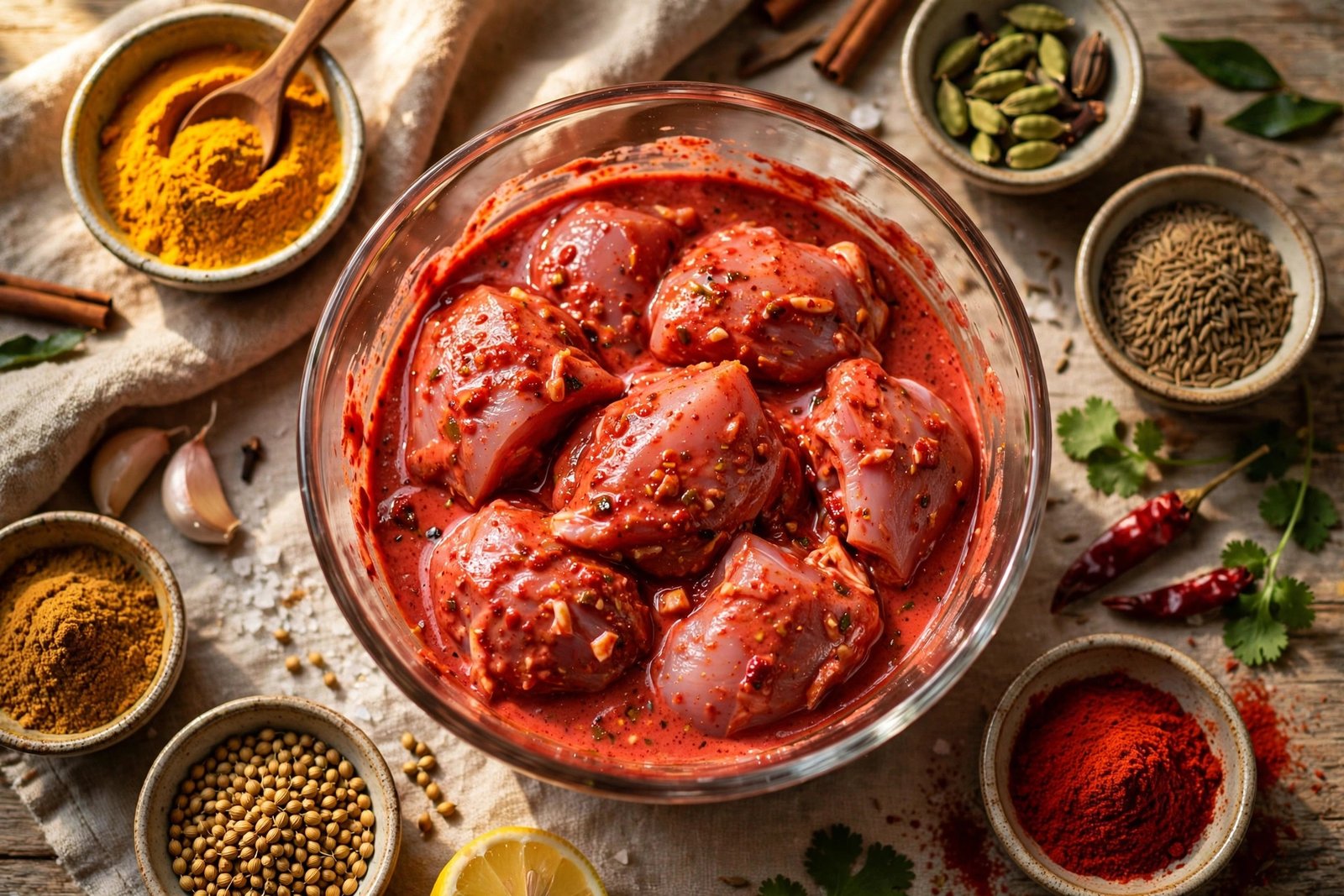
- Marinate the chicken. In a large bowl, whisk together the hung curd, half the ginger-garlic paste (1 tbsp), 1 tbsp Kashmiri chilli powder, lemon juice, mustard oil, ajwain, half the garam masala (1/2 tsp), and 1 tsp salt. Add the chicken pieces and massage the marinade in thoroughly so every piece is coated. Cover and refrigerate for at least 4 hours, ideally overnight. The longer marination makes the chicken noticeably more tender and flavourful, so plan ahead if you can.
- Char the chicken. Preheat your oven grill to its highest setting (around 240-250C). Thread the marinated chicken onto skewers or arrange on a foil-lined tray, shaking off excess marinade. Grill for 10-12 minutes, turning once halfway, until the edges are charred in spots and the chicken is about 90 percent cooked through. You want visible blackened bits; that char is where the smoky flavour lives. If using a cast-iron skillet instead, sear the pieces in batches over high heat for 3-4 minutes per side. Set aside.
- Build the gravy base. Heat the butter and oil in a heavy kadhai over medium heat. Add the chopped onion and saute for 6-8 minutes until soft and golden at the edges. Stir in the remaining ginger-garlic paste and cook for 1 minute until the raw smell disappears. Add the remaining 1 tbsp Kashmiri chilli powder and remaining 1/2 tsp garam masala, stirring for 20 seconds so the spices bloom in the fat without burning.
- Cook the tomatoes down. Add the chopped tomatoes, soaked cashews (drained), and 1/2 tsp salt. Pour in 250ml (1 cup) of water, bring to a boil, then reduce to a gentle simmer. Cover and cook for 15-18 minutes, stirring occasionally, until the tomatoes have completely broken down into a thick, jammy pulp and the oil begins to glisten at the edges. This slow breakdown is what gives the gravy its natural sweetness, so do not rush it.
- Blend until silky. Let the mixture cool for 10 minutes, then blend to a completely smooth puree. For a truly restaurant-grade finish, push the puree through a fine-mesh sieve back into the pan, discarding any skins or seeds. This extra step takes five minutes and is the single biggest difference between good and great butter chicken.
- Finish the gravy. Return the strained gravy to medium-low heat. Stir in the honey, kasuri methi (crushed between your palms), and the cream. Simmer gently for 5 minutes; the gravy should coat the back of a spoon and have a rich orange-red colour. Taste and adjust salt, adding a pinch more honey if the tomatoes were tart. Keep the heat low from here on so the cream never splits.
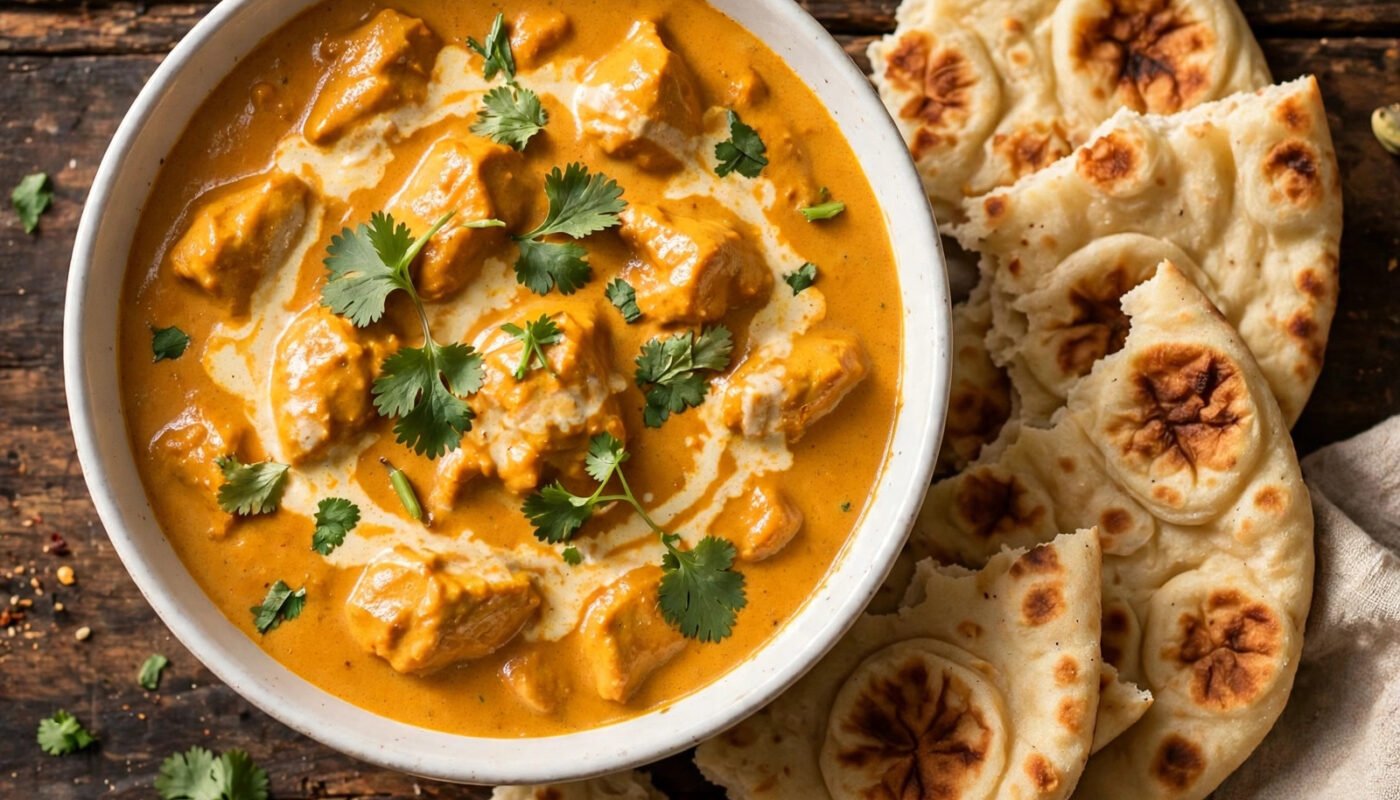
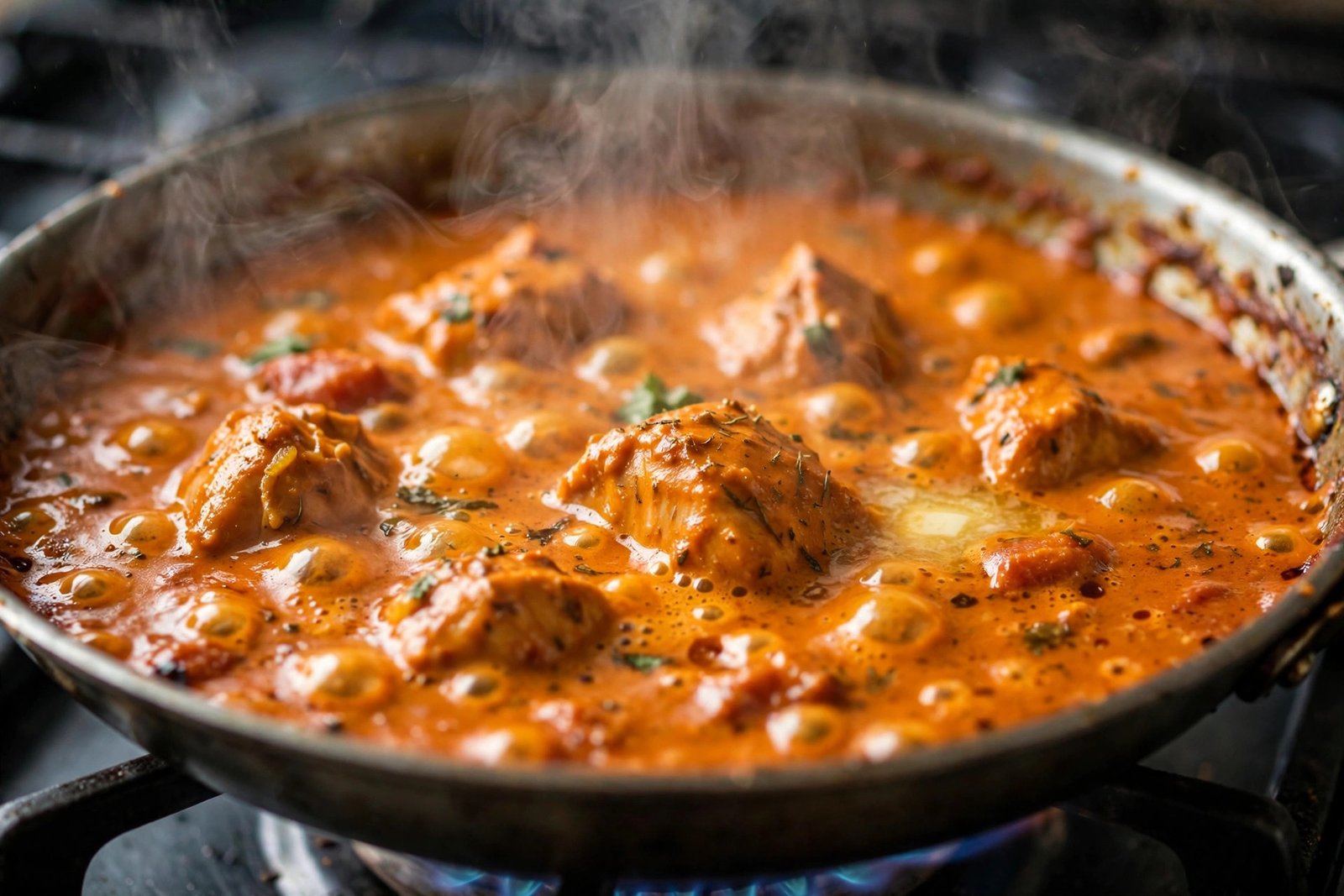
- Combine and serve. Add the charred chicken pieces to the gravy along with any resting juices. Simmer together for 5-7 minutes so the chicken finishes cooking and absorbs the gravy. Finish with a knob of butter swirled through and a drizzle of cream. Garnish with chopped coriander and serve piping hot with naan or jeera rice.
Tip: Read through the full post below for step-by-step photos, pro tips, variations and FAQs before you start cooking.
Introduction
There are curries, and then there is butter chicken. Ask any Indian which dish they would serve to convince a sceptic that Indian food is the greatest cuisine on earth, and nine times out of ten the answer will be murgh makhani. Born in the bustling lanes of Old Delhi in the 1950s, this legendary dish was created at Moti Mahal restaurant by Kundan Lal Gujral and Kundan Lal Jaggi, chefs who had fled Peshawar during Partition. Legend has it they were looking for a way to use up tandoori chicken that had dried out overnight, so they simmered it in a rich tomato gravy enriched with butter and cream. What started as clever kitchen thrift became one of the most famous dishes in the world.
What makes butter chicken so universally loved is its beautiful balance. The gravy is tangy from ripe tomatoes, sweet from butter and a touch of honey, gently warm from spices like garam masala and kasuri methi, and luxuriously silky from fresh cream. The chicken itself carries the smoky char of the tandoor, and that smokiness is the soul of the dish. A good butter chicken should never be just a sweet orange sauce; it should have depth, a whisper of smoke, and a gentle heat that builds at the back of your throat.
I have tested this recipe more times than I can count, tweaking the ratio of tomatoes to cream, the char on the chicken, and the moment the kasuri methi goes in. The result is a version that genuinely rivals the best restaurant butter chicken I have eaten in Delhi, and it comes together in a regular home kitchen with no tandoor and no fancy equipment. The secret, which I will share in full detail below, is a two-step process: marinate and char the chicken first for that irreplaceable smoky flavour, then build the gravy separately so it turns out perfectly smooth every single time. Follow these steps and you will never order butter chicken in again.
Why You’ll Love This Recipe
- True restaurant flavour: The charred chicken and silky strained gravy replicate what you get at a proper Delhi dhaba-style restaurant.
- No tandoor needed: A hot oven grill or even a cast-iron pan gives you all the smoky char you need.
- Make-ahead friendly: The gravy actually tastes better the next day, making this perfect for dinner parties.
- Customisable heat: Easily dial the spice up or down for kids or spice lovers without breaking the recipe.
- Freezer-friendly: The gravy freezes beautifully for up to 3 months, so a quick weeknight butter chicken is always within reach.
- One-pan finish: Once the chicken is charred, everything comes together in a single pan in under 30 minutes.
Key Ingredients Explained
Butter chicken has a short ingredient list, which means every single one matters. Let us walk through the ones that make or break the dish. First, the chicken: use bone-in or boneless thigh pieces rather than breast. Thighs stay juicy through the high-heat charring and the simmer, while breast tends to dry out and turn chalky. If you only have breast, reduce the charring time by a couple of minutes and do not simmer it in the gravy for more than five minutes.
The marinade is where the flavour foundation is laid. Thick hung curd (Greek yoghurt works perfectly) tenderises the chicken, while ginger-garlic paste, Kashmiri red chilli powder, and mustard oil give it that classic tandoori character. Kashmiri chilli is important because it delivers a deep red colour with mild heat; regular hot chilli powder will make the dish fiery without adding the same gorgeous colour. A squeeze of lemon juice helps the marinade penetrate, and a pinch of ajwain (carom seeds) is my secret touch that echoes the tandoor’s aroma.
For the gravy, ripe red tomatoes are non-negotiable. Under-ripe tomatoes make the gravy sour and flat. In winter, when fresh tomatoes are pale, use a tin of good-quality crushed tomatoes instead; they are picked ripe and will give you a sweeter, deeper base. Butter should be unsalted so you control the seasoning, and the cream must be fresh cooking cream or malai. Kasuri methi, dried fenugreek leaves, is the signature finishing spice of makhani gravies; crush it between your palms before adding to release its haunting, slightly bitter aroma. Finally, a small spoon of honey or sugar balances the tomato acidity, and this tiny bit of sweetness is what separates restaurant butter chicken from a merely good homemade attempt. Do not skip it, but do not overdo it either.
Equipment You’ll Need
- Large mixing bowl: For marinating the chicken generously.
- Oven with grill function or cast-iron skillet: For charring the chicken pieces.
- Heavy-bottomed pan or kadhai: For building the gravy without scorching.
- Blender: For a perfectly smooth, velvety gravy.
- Fine-mesh sieve: Optional but recommended for that ultra-silky restaurant texture.
Ingredients
- 750g boneless chicken thighs, cut into 2-inch pieces
- 150g (about 2/3 cup) thick hung curd or Greek yoghurt
- 2 tbsp ginger-garlic paste, divided
- 2 tbsp Kashmiri red chilli powder, divided
- 1 tbsp lemon juice
- 1 tbsp mustard oil
- 1 tsp ajwain (carom seeds)
- 1 tsp garam masala, divided
- 500g (about 4 large) ripe red tomatoes, roughly chopped
- 60g (4 tbsp) unsalted butter, plus extra for finishing
- 1 tbsp neutral oil
- 1 large onion, finely chopped (about 150g)
- 10-12 cashew nuts, soaked in warm water for 20 minutes
- 1 tbsp kasuri methi (dried fenugreek leaves)
- 120ml (1/2 cup) fresh cream, plus extra for garnish
- 1 tbsp honey or sugar
- 1.5 tsp salt, or to taste
- 2 tbsp fresh coriander leaves, chopped, for garnish
Instructions
- Marinate the chicken. In a large bowl, whisk together the hung curd, half the ginger-garlic paste (1 tbsp), 1 tbsp Kashmiri chilli powder, lemon juice, mustard oil, ajwain, half the garam masala (1/2 tsp), and 1 tsp salt. Add the chicken pieces and massage the marinade in thoroughly so every piece is coated. Cover and refrigerate for at least 4 hours, ideally overnight. The longer marination makes the chicken noticeably more tender and flavourful, so plan ahead if you can.
- Char the chicken. Preheat your oven grill to its highest setting (around 240-250C). Thread the marinated chicken onto skewers or arrange on a foil-lined tray, shaking off excess marinade. Grill for 10-12 minutes, turning once halfway, until the edges are charred in spots and the chicken is about 90 percent cooked through. You want visible blackened bits; that char is where the smoky flavour lives. If using a cast-iron skillet instead, sear the pieces in batches over high heat for 3-4 minutes per side. Set aside.
- Build the gravy base. Heat the butter and oil in a heavy kadhai over medium heat. Add the chopped onion and saute for 6-8 minutes until soft and golden at the edges. Stir in the remaining ginger-garlic paste and cook for 1 minute until the raw smell disappears. Add the remaining 1 tbsp Kashmiri chilli powder and remaining 1/2 tsp garam masala, stirring for 20 seconds so the spices bloom in the fat without burning.
- Cook the tomatoes down. Add the chopped tomatoes, soaked cashews (drained), and 1/2 tsp salt. Pour in 250ml (1 cup) of water, bring to a boil, then reduce to a gentle simmer. Cover and cook for 15-18 minutes, stirring occasionally, until the tomatoes have completely broken down into a thick, jammy pulp and the oil begins to glisten at the edges. This slow breakdown is what gives the gravy its natural sweetness, so do not rush it.
- Blend until silky. Let the mixture cool for 10 minutes, then blend to a completely smooth puree. For a truly restaurant-grade finish, push the puree through a fine-mesh sieve back into the pan, discarding any skins or seeds. This extra step takes five minutes and is the single biggest difference between good and great butter chicken.
- Finish the gravy. Return the strained gravy to medium-low heat. Stir in the honey, kasuri methi (crushed between your palms), and the cream. Simmer gently for 5 minutes; the gravy should coat the back of a spoon and have a rich orange-red colour. Taste and adjust salt, adding a pinch more honey if the tomatoes were tart. Keep the heat low from here on so the cream never splits.
- Combine and serve. Add the charred chicken pieces to the gravy along with any resting juices. Simmer together for 5-7 minutes so the chicken finishes cooking and absorbs the gravy. Finish with a knob of butter swirled through and a drizzle of cream. Garnish with chopped coriander and serve piping hot with naan or jeera rice.
Pro Tips for Perfect Results
- Do not skip the sieve. Straining the blended gravy is the difference between homemade-tasting and restaurant-tasting butter chicken. It removes every trace of tomato skin and seed for a velvet texture.
- Char boldly. Timid, pale chicken makes a timid butter chicken. Those blackened edges dissolve into the gravy and provide the smoky backbone the dish is famous for.
- Low heat after cream. Once the cream goes in, never let the gravy boil hard. A fierce boil can split the cream and turn your silky gravy grainy.
- Balance the sweet-sour. Taste before serving and adjust with tiny increments of honey and salt. Tomatoes vary hugely in acidity, so this final balancing act matters more than any fixed measurement.
- Marinate overnight when possible. Four hours is the minimum, but an overnight rest transforms the chicken’s texture, making it almost melt-in-the-mouth.
- Use Kashmiri chilli, not regular. Regular chilli powder will make the dish aggressively hot and dull in colour. Kashmiri gives the signature deep red with gentle warmth.
- Rest before serving. Let the finished curry sit covered for 10 minutes off the heat. The flavours meld and the gravy thickens slightly to the perfect coating consistency.
Variations to Try
Once you have mastered the classic, there are delicious directions to take it. For a smoky dhaba-style version, finish the curry with the dhungar method: place a small steel bowl in the centre of the pan, add a glowing charcoal piece, drizzle a few drops of ghee over it, and cover the pan for 5 minutes. The trapped smoke perfumes the whole dish. For a lighter weeknight version, replace half the cream with whisked low-fat yoghurt added off the heat, and cut the butter to 2 tablespoons; you will lose some richness but keep all the flavour.
A butter chicken pasta fusion has become a modern favourite: toss the finished curry with cooked penne and a handful of parmesan for an Indo-Italian crowd-pleaser. If you love heat, make a spicy Kolhapuri-inspired twist by adding 1 teaspoon of hot red chilli powder and a tempering of curry leaves in ghee at the end. And for vegetarians at the table, the exact same gravy works beautifully with charred paneer or roasted cauliflower instead of chicken; simply follow the paneer butter masala approach of searing the paneer first.
Serving Suggestions
Butter chicken demands bread for scooping. Butter naan is the classic partner; its blistered, buttery surface is made for mopping up every drop of gravy. Garlic naan is a close second and adds another layer of flavour. If you prefer rice, jeera rice or a simple steamed basmati lets the curry shine, while a chicken biryani-style layered rice would be overkill alongside such a rich dish. Keep the sides fresh and simple: a kachumber salad of cucumber, tomato, and onion with lemon, a bowl of plain raita to cool the palate, and pickled onions in vinegar for sharp contrast. A wedge of lemon on the side lets everyone brighten their own plate. For drinks, a mango lassi or a sweet salted chaas pairs wonderfully, cutting through the richness.
Storage and Reheating
Butter chicken stores exceptionally well. Refrigerate leftovers in an airtight container for up to 3 days; the flavours deepen overnight and many people swear it tastes better on day two. The gravy alone (without chicken) freezes perfectly for up to 3 months; portion it into freezer bags, lay flat to freeze, and thaw overnight in the fridge. To reheat, warm gently in a pan over low-medium heat, stirring occasionally and adding a splash of water or milk if the gravy has thickened too much. Avoid the microwave if you can, as it heats unevenly and can make the chicken rubbery. If reheating from frozen gravy, thaw fully first, then simmer and add freshly charred chicken for a just-made taste.
Frequently Asked Questions
Can I make butter chicken without a grill or oven?
Absolutely. A cast-iron skillet or heavy tawa over high heat will char the chicken beautifully. Sear the marinated pieces in batches without crowding the pan, 3-4 minutes per side, until you see blackened spots. You can also use an air fryer at 200C for about 12 minutes, shaking halfway through.
Why is my butter chicken gravy grainy instead of smooth?
Graininess usually comes from two causes: tomato skins and seeds left in the puree, or cream that split from boiling too hard. Always sieve the blended gravy, and once the cream is added, keep the curry at a gentle simmer, never a rolling boil.
Can I make this dairy-free?
You can come close. Replace butter with a neutral oil or vegan butter, use coconut cream instead of dairy cream, and marinate the chicken in coconut yoghurt. The flavour will lean slightly different, more coastal, but still delicious. Skip the honey and use sugar to keep it fully dairy-free.
How do I make it less sweet for my family’s taste?
Simply reduce the honey to 1 teaspoon or omit it entirely, and add an extra squeeze of lemon at the end to brighten the gravy. The small amount of sweetness in the recipe only balances tomato acidity; the dish will not taste like a dessert either way.
Can I use store-bought tandoori masala in the marinade?
Yes, replace the Kashmiri chilli powder, garam masala, and ajwain in the marinade with 2 tablespoons of a good tandoori masala. Check the masala’s salt content first and reduce the added salt accordingly, since commercial blends vary.
Is butter chicken the same as chicken tikka masala?
They are cousins, not twins. Butter chicken (murgh makhani) has a milder, sweeter, creamier tomato-butter gravy with kasuri methi as the signature note. Chicken tikka masala, which evolved in Britain, is typically spicier, more heavily spiced, and often made with a yoghurt-onion base. Both are delicious, but the flavour profiles are distinct.
There you have it, my definitive butter chicken, the recipe I make when I want to remind myself why I fell in love with cooking Indian food in the first place. Take your time with the char, strain that gravy, and do not be shy with the butter at the end. Then gather everyone around the table, tear into some hot naan, and watch the curry disappear. If you make it, come back and tell me how it turned out; nothing makes me happier than hearing this dish brought someone’s table to life.