Recipe Card
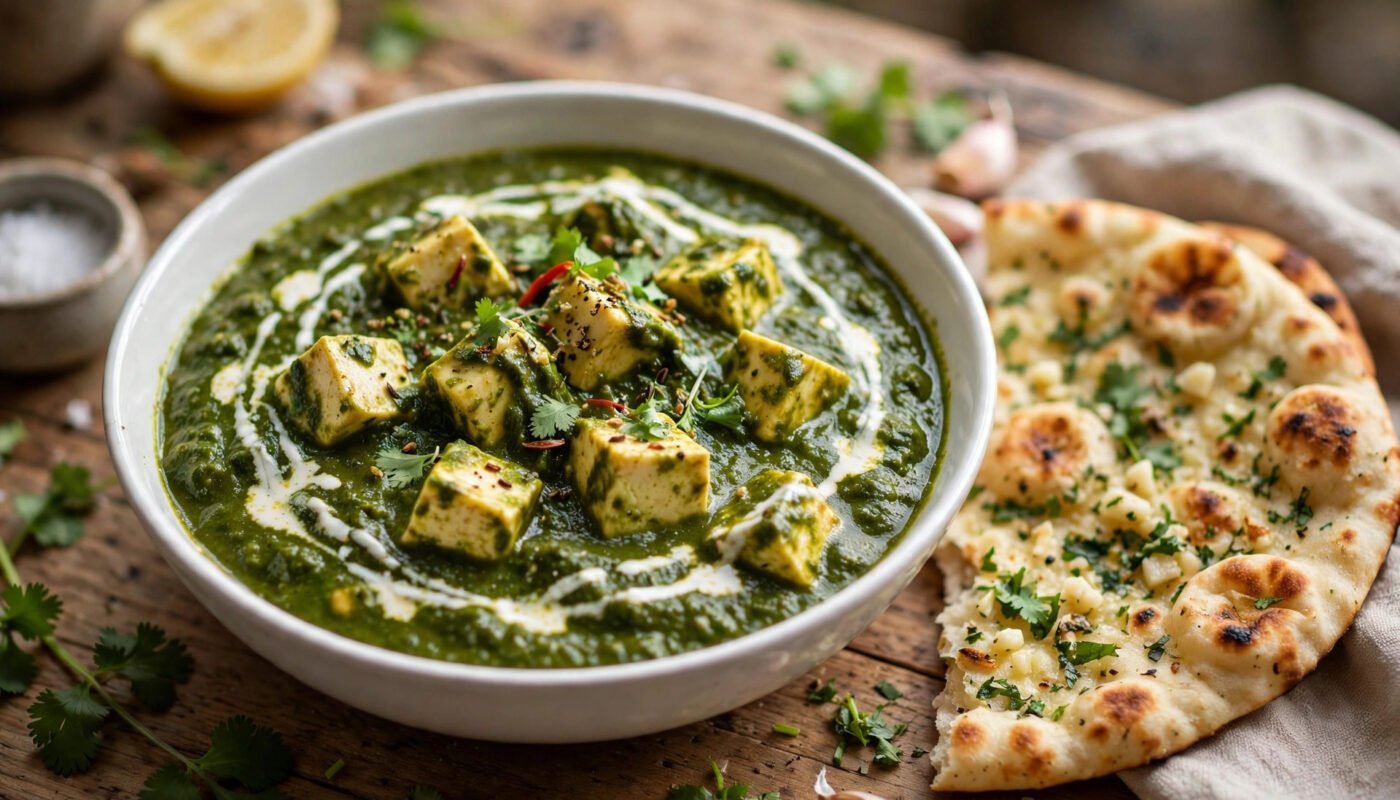
A silky, vibrant green palak paneer with soft paneer cubes in a creamy spinach gravy. This restaurant-style recipe is foolproof and ready in under an hour.
Ingredients
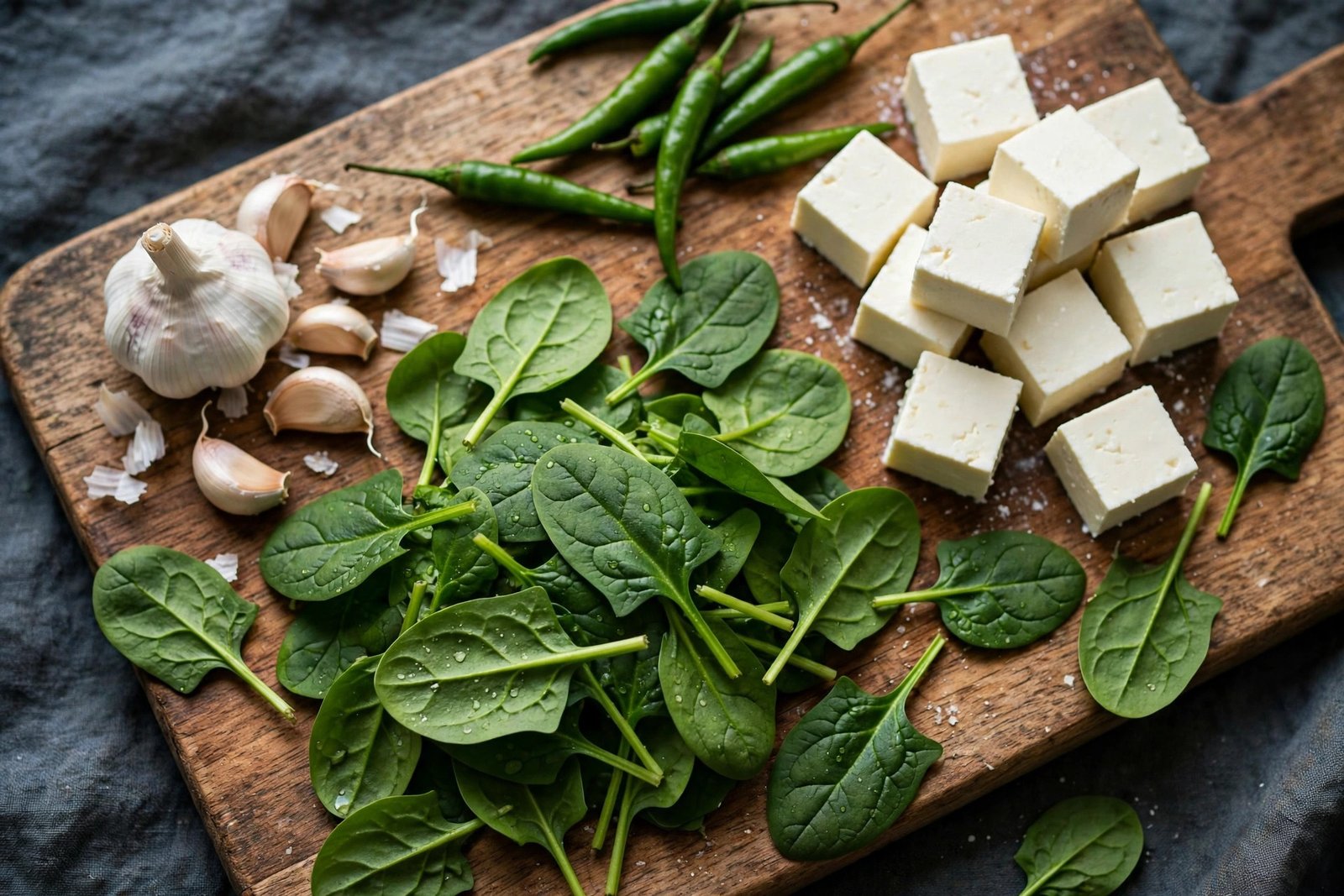
- 500g fresh spinach leaves (about 8 packed cups / 1 large bunch), stems trimmed
- 250g paneer (about 1½ cups cubed), cut into 2.5cm (1-inch) cubes
- 2 tablespoons ghee, divided, plus 1 extra teaspoon for the final tadka
- 1 teaspoon cumin seeds
- 1 large onion (about 150g), finely chopped
- 1 tablespoon grated fresh ginger
- 4 garlic cloves, minced, plus 3 thinly sliced for the tadka
- 2 green chillies, stems removed (adjust to taste)
- 1 medium tomato (about 120g), chopped
- ½ teaspoon turmeric powder
- 1 teaspoon coriander powder
- ½ teaspoon garam masala, plus a pinch more to finish
- 1 tablespoon kasuri methi (dried fenugreek leaves)
- ¼ cup fresh cream (about 60ml), plus more for drizzling
- 1 teaspoon sugar (optional, balances the spinach)
- Salt to taste (about 1 to 1¼ teaspoons)
- ½ cup hot water (120ml), as needed to adjust consistency
Instructions
- Soak the paneer. Place the paneer cubes in a bowl of warm (not hot) salted water — about 500ml water with ½ teaspoon salt — and set aside while you work. This 15–20 minute soak is the single best trick for soft paneer: it hydrates the cubes from the outside in, so they stay pillowy instead of turning rubbery in the hot gravy.
- Blanch the spinach. Bring a large pot of water to a rolling boil and salt it generously, like pasta water. Add the washed spinach in two batches, pushing it down with a spoon. Blanch for just 90 seconds — the leaves will turn a shocking, vivid green. Immediately lift them out with a slotted spoon into a big bowl of ice water. This shocking step locks in the colour. Once cool, squeeze the spinach firmly with your hands to wring out as much water as possible; excess water is the enemy of a thick, clinging gravy.
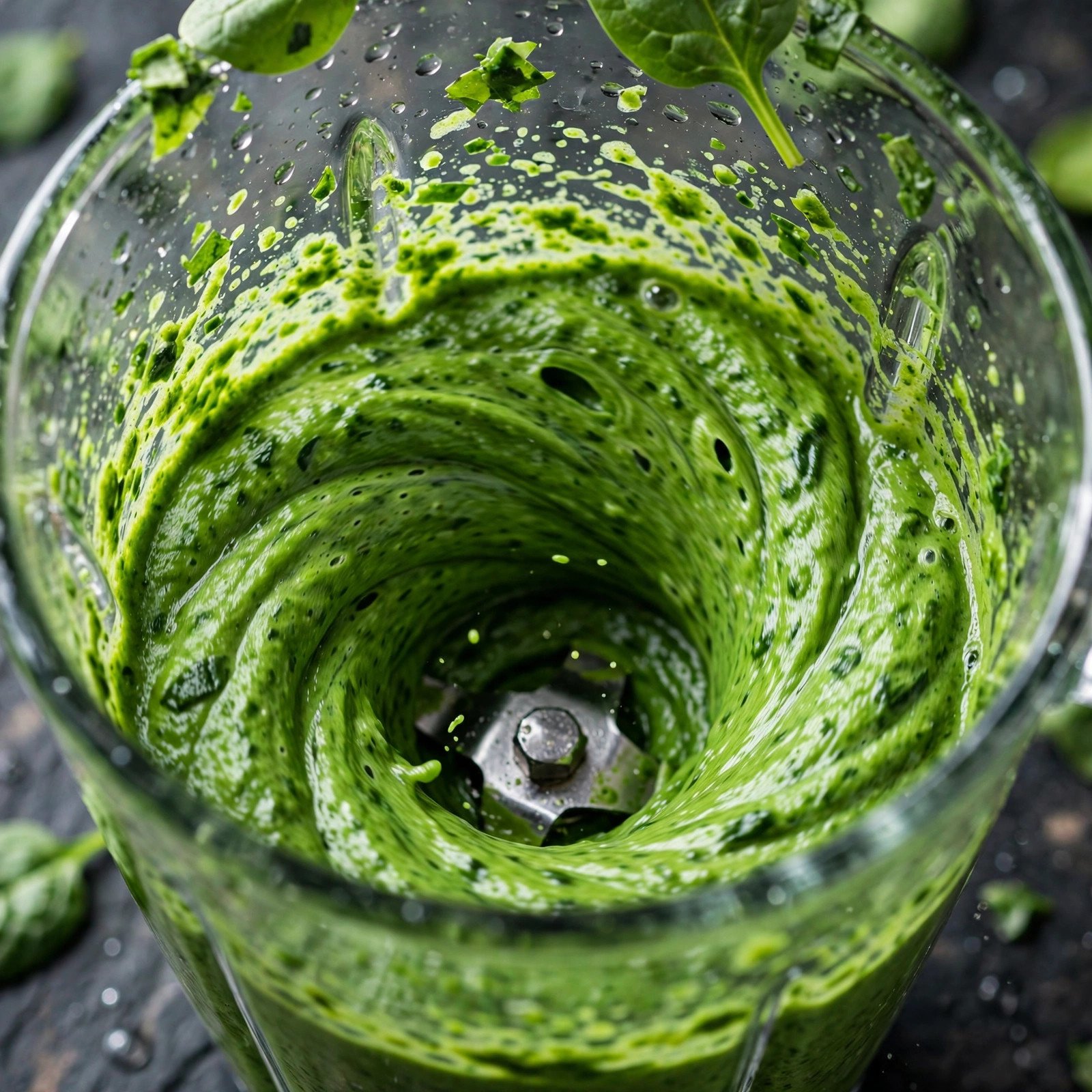
- Blend to a silky puree. Transfer the squeezed spinach to a blender with the green chillies and 3–4 tablespoons of plain water. Blend for a full 60–90 seconds until completely smooth and velvety, with no flecks of leaf remaining. A high-speed blender gives the most restaurant-like texture, but a standard blender works if you give it time. Set the puree aside — do not cook it again on its own, or the colour will darken.
- Build the masala base. Heat 2 tablespoons of ghee in your kadhai over medium heat until it shimmers. Add the cumin seeds and let them sizzle for 20–30 seconds until they darken a shade and smell nutty. Add the chopped onion and cook, stirring often, for 7–8 minutes until soft and golden at the edges. Stir in the ginger and minced garlic and cook for 1 minute more, until the raw smell disappears.
- Add tomato and spices. Add the chopped tomato with a pinch of salt and cook for 4–5 minutes, mashing it with the back of your spoon, until it breaks down into a thick, jammy paste and the ghee begins to glisten at the edges of the pan — that shimmering fat is your visual cue that the base is ready. Stir in the turmeric, coriander powder, and garam masala, and cook for 30 seconds until fragrant. If the mixture catches, splash in a tablespoon of water.
- Combine with the spinach. Pour the spinach puree into the kadhai and stir well to marry it with the masala. Add ½ cup of hot water to loosen it to a thick, flowing consistency — it should coat the back of a spoon without running off like soup. Bring to the gentlest simmer over low heat and cook for 5–6 minutes, stirring occasionally. Keep the heat low; a hard boil will dull the green. Taste and adjust salt, and add the optional teaspoon of sugar if the spinach tastes at all bitter.
- Add the paneer. Drain the soaked paneer and fold the cubes gently into the gravy. Simmer on low for just 3–4 minutes, spooning gravy over the cubes, until they are heated through. Longer simmering makes paneer tough, so resist the urge to cook it further — the residual heat finishes the job. Crush the kasuri methi between your palms and stir it in along with the cream, then take the pan off the heat.
- Finish with a garlic tadka. In a small pan, heat 1 teaspoon of ghee over medium-high heat until hot. Add the sliced garlic and let it turn golden at the edges — about 45 seconds — watching closely because garlic goes from golden to burnt in moments. Pour this sizzling tadka over the palak paneer, cover the kadhai for 1 minute so the aroma infuses, then uncover, drizzle with a little extra cream, and serve hot.
Tip: Read through the full post below for step-by-step photos, pro tips, variations and FAQs before you start cooking.
The Story Behind Palak Paneer
There are curries that feed you and curries that gather you. Palak paneer belongs firmly in the second group. Born in the wheat-growing heartland of Punjab, where winter harvests pile kitchens high with bundles of fresh saag, this dish pairs iron-rich spinach with paneer — the soft, fresh cheese that North India has been pressing in cloth-lined baskets for centuries. Long before it became a menu fixture in every Indian restaurant from Mumbai to Manhattan, palak paneer was a humble farmhouse meal: spinach chopped fine by hand on an okhli, simmered low over a chulha, and enriched with a knob of white butter before paneer cubes were folded through.
What makes palak paneer so beloved is its balance. Spinach on its own can taste flat or faintly metallic; paneer on its own is mild to the point of shyness. Together, with the right treatment, they become something greater than either. The spinach provides a deep, earthy base and that unmistakable jewel-green colour, while the paneer turns silky and absorbent, drinking up every note of ginger, garlic, and garam masala. A swirl of cream at the end rounds the edges, and suddenly you understand why this is one of the most-ordered vegetarian dishes in Indian restaurants worldwide.
This recipe is my faithful, restaurant-style version — the one I make when I want that glossy, vibrant gravy you see in good dhabas rather than the dull, greyish-green spinach curry that puts so many home cooks off. The difference comes down to three small techniques: blanching the spinach briefly so the colour stays bright, blending it with green chillies rather than cooking it to death, and tempering twice — once for the masala base and once more at the very end with ghee and garlic for that final aromatic punch. Follow these steps and you will have a palak paneer that tastes like it came from a kitchen that makes it every single day.
Why You’ll Love This Recipe
- Vibrant restaurant-green colour — blanching the spinach keeps the gravy a beautiful emerald green, never grey or dull.
- Silky, lump-free gravy — blending the blanched spinach with a touch of cashew gives a creamy body without heavy cream overload.
- Soft, never rubbery paneer — a quick soak in warm salted water guarantees tender cubes every time.
- Ready in 45 minutes — genuinely achievable on a weeknight, with most of the time hands-off simmering.
- One-pan comfort — everything after the spinach prep happens in a single kadhai or deep pan.
- Naturally nutritious — a full pound of fresh spinach plus protein-rich paneer in every batch.
Key Ingredients Explained
The heart of this recipe is fresh spinach — about 500g (a large bunch, roughly 8 packed cups of leaves). Fresh matters here: frozen spinach works in a pinch, but it will never give you that bright colour or sweet, clean flavour. Look for small, tender leaves with no yellowing. Wash them very well in two changes of water, because spinach hides grit in its folds, and gritty gravy ruins everything. We blanch the leaves for just 90 seconds in rolling boiling water, then shock them in ice water. This does three things: it sets the chlorophyll so the green stays vivid, it tames the raw oxalic bite, and it wilts the leaves down to a manageable volume for blending.
Paneer is the soul of the dish, and its quality decides whether the curry feels luxurious or pedestrian. Fresh, soft paneer from the dairy section beats the vacuum-packed blocks that sit at room temperature on shelves — but if that is what you have, the warm salted water soak in this recipe will bring even firm paneer back to life. Cut the cubes on the generous side, about 2.5cm (1 inch), so they stay juicy rather than turning chewy. You can lightly sear them in ghee for golden edges, but honestly, I often skip that for the classic dhaba style where the paneer goes in soft and pale, letting it soak up the gravy.
For the masala base, onion, tomato, ginger, and garlic form the familiar North Indian backbone. The trick is proportion: this gravy should taste of spinach first, so the tomato is kept light — one medium tomato, just enough to add body and a whisper of sweetness without drowning the green. Green chillies are blended with the spinach rather than chopped in, which distributes their heat evenly and keeps the colour pure. Kasuri methi (dried fenugreek leaves), crushed between your palms and stirred in at the end, is the secret restaurant note — it adds a faintly bitter, aromatic depth that makes people ask what your secret is. A splash of cream and a final tempering of ghee with sliced garlic finish the dish. If you want to keep it lighter, ground cashews or a tablespoon of white poppy seed paste gives body without dairy heaviness.
Equipment You’ll Need
- Large pot for blanching spinach, plus a big bowl of ice water
- High-speed blender or food processor for the spinach puree
- Heavy-bottomed kadhai or deep frying pan (a Dutch oven works too)
- Slotted spoon or spider strainer
- Small tadka pan or ladle for the final tempering (optional but lovely)
Ingredients
- 500g fresh spinach leaves (about 8 packed cups / 1 large bunch), stems trimmed
- 250g paneer (about 1½ cups cubed), cut into 2.5cm (1-inch) cubes
- 2 tablespoons ghee, divided, plus 1 extra teaspoon for the final tadka
- 1 teaspoon cumin seeds
- 1 large onion (about 150g), finely chopped
- 1 tablespoon grated fresh ginger
- 4 garlic cloves, minced, plus 3 thinly sliced for the tadka
- 2 green chillies, stems removed (adjust to taste)
- 1 medium tomato (about 120g), chopped
- ½ teaspoon turmeric powder
- 1 teaspoon coriander powder
- ½ teaspoon garam masala, plus a pinch more to finish
- 1 tablespoon kasuri methi (dried fenugreek leaves)
- ¼ cup fresh cream (about 60ml), plus more for drizzling
- 1 teaspoon sugar (optional, balances the spinach)
- Salt to taste (about 1 to 1¼ teaspoons)
- ½ cup hot water (120ml), as needed to adjust consistency
Instructions
- Soak the paneer. Place the paneer cubes in a bowl of warm (not hot) salted water — about 500ml water with ½ teaspoon salt — and set aside while you work. This 15–20 minute soak is the single best trick for soft paneer: it hydrates the cubes from the outside in, so they stay pillowy instead of turning rubbery in the hot gravy.
- Blanch the spinach. Bring a large pot of water to a rolling boil and salt it generously, like pasta water. Add the washed spinach in two batches, pushing it down with a spoon. Blanch for just 90 seconds — the leaves will turn a shocking, vivid green. Immediately lift them out with a slotted spoon into a big bowl of ice water. This shocking step locks in the colour. Once cool, squeeze the spinach firmly with your hands to wring out as much water as possible; excess water is the enemy of a thick, clinging gravy.
- Blend to a silky puree. Transfer the squeezed spinach to a blender with the green chillies and 3–4 tablespoons of plain water. Blend for a full 60–90 seconds until completely smooth and velvety, with no flecks of leaf remaining. A high-speed blender gives the most restaurant-like texture, but a standard blender works if you give it time. Set the puree aside — do not cook it again on its own, or the colour will darken.
- Build the masala base. Heat 2 tablespoons of ghee in your kadhai over medium heat until it shimmers. Add the cumin seeds and let them sizzle for 20–30 seconds until they darken a shade and smell nutty. Add the chopped onion and cook, stirring often, for 7–8 minutes until soft and golden at the edges. Stir in the ginger and minced garlic and cook for 1 minute more, until the raw smell disappears.
- Add tomato and spices. Add the chopped tomato with a pinch of salt and cook for 4–5 minutes, mashing it with the back of your spoon, until it breaks down into a thick, jammy paste and the ghee begins to glisten at the edges of the pan — that shimmering fat is your visual cue that the base is ready. Stir in the turmeric, coriander powder, and garam masala, and cook for 30 seconds until fragrant. If the mixture catches, splash in a tablespoon of water.
- Combine with the spinach. Pour the spinach puree into the kadhai and stir well to marry it with the masala. Add ½ cup of hot water to loosen it to a thick, flowing consistency — it should coat the back of a spoon without running off like soup. Bring to the gentlest simmer over low heat and cook for 5–6 minutes, stirring occasionally. Keep the heat low; a hard boil will dull the green. Taste and adjust salt, and add the optional teaspoon of sugar if the spinach tastes at all bitter.
- Add the paneer. Drain the soaked paneer and fold the cubes gently into the gravy. Simmer on low for just 3–4 minutes, spooning gravy over the cubes, until they are heated through. Longer simmering makes paneer tough, so resist the urge to cook it further — the residual heat finishes the job. Crush the kasuri methi between your palms and stir it in along with the cream, then take the pan off the heat.
- Finish with a garlic tadka. In a small pan, heat 1 teaspoon of ghee over medium-high heat until hot. Add the sliced garlic and let it turn golden at the edges — about 45 seconds — watching closely because garlic goes from golden to burnt in moments. Pour this sizzling tadka over the palak paneer, cover the kadhai for 1 minute so the aroma infuses, then uncover, drizzle with a little extra cream, and serve hot.
Pro Tips for Perfect Results
- Never skip the ice bath. Plunging blanched spinach into ice water stops the cooking instantly and is the entire reason restaurant palak paneer stays emerald green while homemade versions turn olive-grey.
- Wring the spinach dry. After shocking, squeeze the leaves in handfuls until no more water drips out. Watery spinach makes a watery gravy, and you can always add water back — you cannot take it out.
- Blend the chillies with the spinach. This distributes heat evenly and avoids little green flecks of raw chilli in an otherwise smooth gravy.
- Keep the flame low after the puree goes in. Spinach darkens with prolonged high heat. Once the puree meets the masala, you are only marrying flavours for a few minutes, not reducing.
- Soak paneer in warm salted water for 15–20 minutes before adding. This is the dhaba trick for soft, juicy cubes, and it works even on firm, store-bought paneer.
- Add cream off the heat (or at the very end on the lowest flame) so it emulsifies smoothly instead of splitting in a boiling gravy.
- Do not overcook the garlic tadka. Golden edges, not brown. Burnt garlic will haunt the whole dish with bitterness.
Variations to Try
Once you have the base technique down, palak paneer is a wonderful canvas. For a smoky dhaba-style version, hold a piece of natural lump charcoal with tongs over an open flame until it glows red, place it in a small steel bowl set on top of the finished curry, drizzle half a teaspoon of ghee over it, and cover the kadhai for 2 minutes. The trapped smoke perfumes the gravy beautifully — this is the classic dhungar method, and it tastes like a highway restaurant at dusk. For a lighter, everyday version, skip the cream entirely and blend 8–10 soaked cashews with the spinach instead; you get a rich body with less dairy. A vegan palak tofu works surprisingly well: press extra-firm tofu, cube it, sear it in oil until golden, and swap the ghee for oil and the cream for coconut cream. If you like heat, add a slit dried red chilli to the final tadka alongside the garlic, or stir in half a teaspoon of black pepper with the garam masala. And for a palak corn twist that kids love, replace half the paneer with sweet corn kernels simmered in the gravy.
Serving Suggestions
Palak paneer demands bread — that is really the whole story. Serve it with hot, blistered tandoori rotis or butter naan for tearing and scooping; the slight char of the bread against the creamy spinach is one of Indian cooking’s great pairings. It is equally at home with jeera rice or plain steamed basmati, where the gravy pools into the grains. To round out a full North Indian meal, add a simple dal tadka, a kacumber-style onion-tomato salad with lemon, and a bowl of plain curd or boondi raita to cool the palate. A wedge of lime squeezed over the curry just before eating lifts the whole dish, and if you are feeding guests, a small dish of mango or lime pickle on the side never goes amiss. Keep portions generous — this is a curry people go back to the pot for.
Storage and Reheating
Palak paneer keeps well, which makes it a strong meal-prep candidate. Cool the curry to room temperature within an hour, then refrigerate in an airtight container for up to 3 days. The gravy will thicken as it sits; loosen it with a splash of hot water or milk when reheating. Reheat gently on the stovetop over low heat, stirring often, for 5–7 minutes until steaming — avoid the microwave if you can, as it tends to make the paneer rubbery and can split the cream. If the colour has dulled slightly in the fridge, a fresh drizzle of cream and a pinch of garam masala before serving brings it back to life. For longer storage, freeze the gravy without the paneer for up to 2 months (paneer turns spongy when frozen); thaw overnight in the fridge, reheat, and add freshly soaked paneer cubes. Freezing in portion-sized containers means a home-style curry is always one quick reheat away.
Frequently Asked Questions
Why did my palak paneer turn dark or grey instead of bright green?
Almost always, the spinach was overcooked. The two moments that matter are blanching (90 seconds, no more) and the final simmer (low heat, 5–6 minutes, never a rolling boil). The ice bath after blanching is what locks in the chlorophyll; skip it and the residual heat keeps cooking the leaves into dullness. Old or frozen spinach also gives a darker result than fresh, tender leaves.
Can I make palak paneer with frozen spinach?
Yes, and it will still taste good, though the colour will be deeper and less vivid. Thaw about 400g of frozen chopped spinach completely, squeeze it very dry, and skip the blanching step — it is already cooked. Blend it with the green chillies as usual and continue from the masala stage. Because frozen spinach is wetter, you may need less added water.
How do I stop my paneer from turning hard and chewy?
Three rules: buy the freshest paneer you can, soak the cubes in warm salted water for 15–20 minutes before cooking, and simmer them in the gravy for only 3–4 minutes. Paneer firms up the longer it sits in heat, so add it at the very end. If your paneer is very firm from the packet, the soak is non-negotiable — it makes a remarkable difference.
Is palak paneer healthy?
It is one of the more nutritious curries you can make. Spinach brings iron, folate, vitamin A, and vitamin K, while paneer adds protein and calcium. This recipe is moderate in fat thanks to measured ghee and a modest ¼ cup of cream for four servings — about 385 kcal per serving. For a lighter version, use the cashew-blend method described in the variations and cut the ghee to 1 tablespoon.
Can I make it ahead for a dinner party?
Absolutely — it is actually better made a few hours ahead, as the flavours meld. Prepare the full curry but hold back the final garlic tadka and cream drizzle. Refrigerate, then reheat gently on the stove, do the tadka fresh, pour it over, cover for a minute, and serve. Your guests will think you cooked it à la minute.
What is the difference between palak paneer and saag paneer?
The two are cousins. Palak paneer uses only spinach (palak), giving a smoother, brighter, milder gravy. Saag paneer traditionally blends spinach with mustard greens (sarson) and sometimes bathua, which makes it more robust, slightly bitter, and coarser in texture — it is the winter-harvest dish of Punjab. In many restaurants outside India the names are used interchangeably, but the classic distinction is spinach-only versus mixed greens.
This is the kind of curry that quietly becomes a house recipe — the one friends ask for by name and the one you find yourself making on grey evenings when only something green, creamy, and comforting will do. Make it once following the steps exactly, then make it yours: a little more garlic in the tadka, an extra chilli, a deeper char on the naan. That is how family recipes are born, one small adjustment at a time. Happy cooking!