Recipe Card
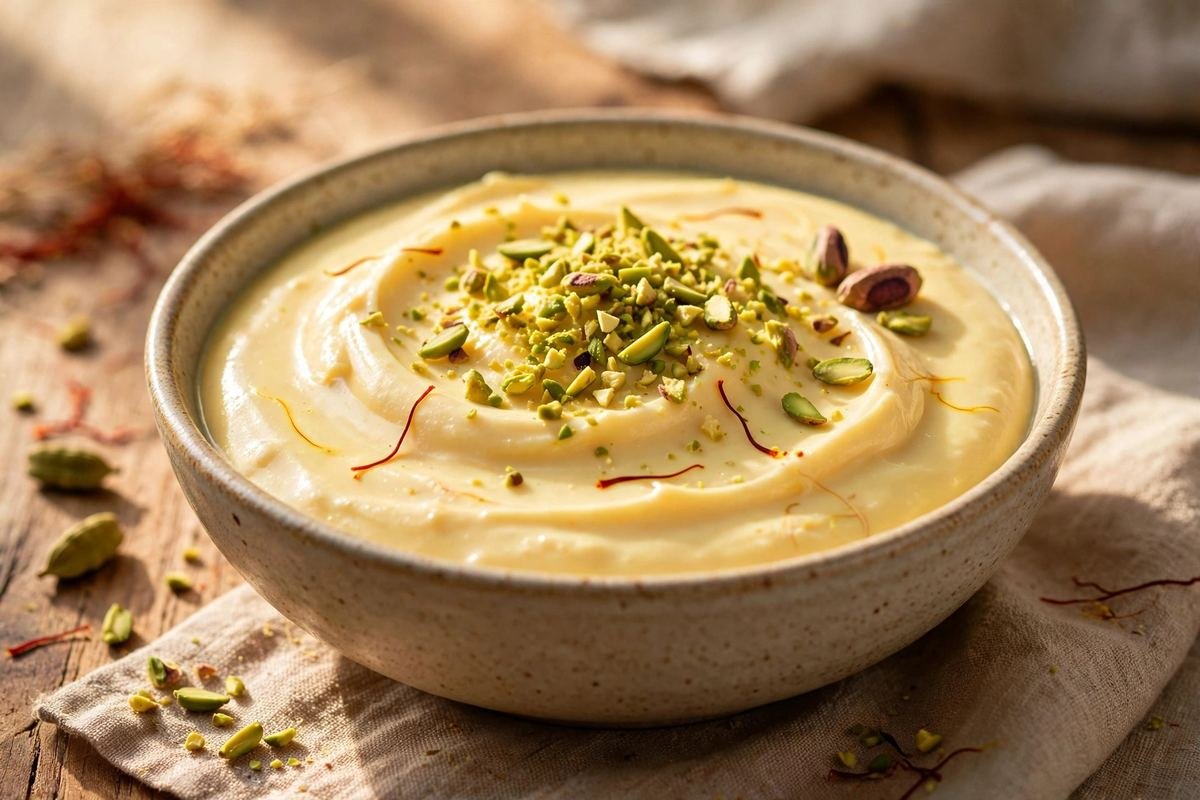
Silky, saffron-kissed hung curd whipped with cardamom and sugar — the classic Kesar Shrikhand, Maharashtra and Gujarat’s beloved festive dessert, made perfectly at home.
Ingredients
- 1 kg (about 4 cups) fresh full-cream curd (dahi), not sour — or 600g plain whole-milk Greek yogurt
- 20–25 strands saffron (kesar)
- 2 tbsp warm milk (for blooming the saffron)
- 100g (1/2 cup) powdered sugar, plus more to taste
- 4–5 green cardamom pods, seeds freshly ground (about 1/2 tsp powder)
- 1 pinch freshly grated nutmeg (optional)
- 2 tbsp pistachios, slivered or chopped, plus extra for garnish
- 1 tbsp almonds, slivered (optional)
- Dried rose petals, for garnish (optional)
Instructions
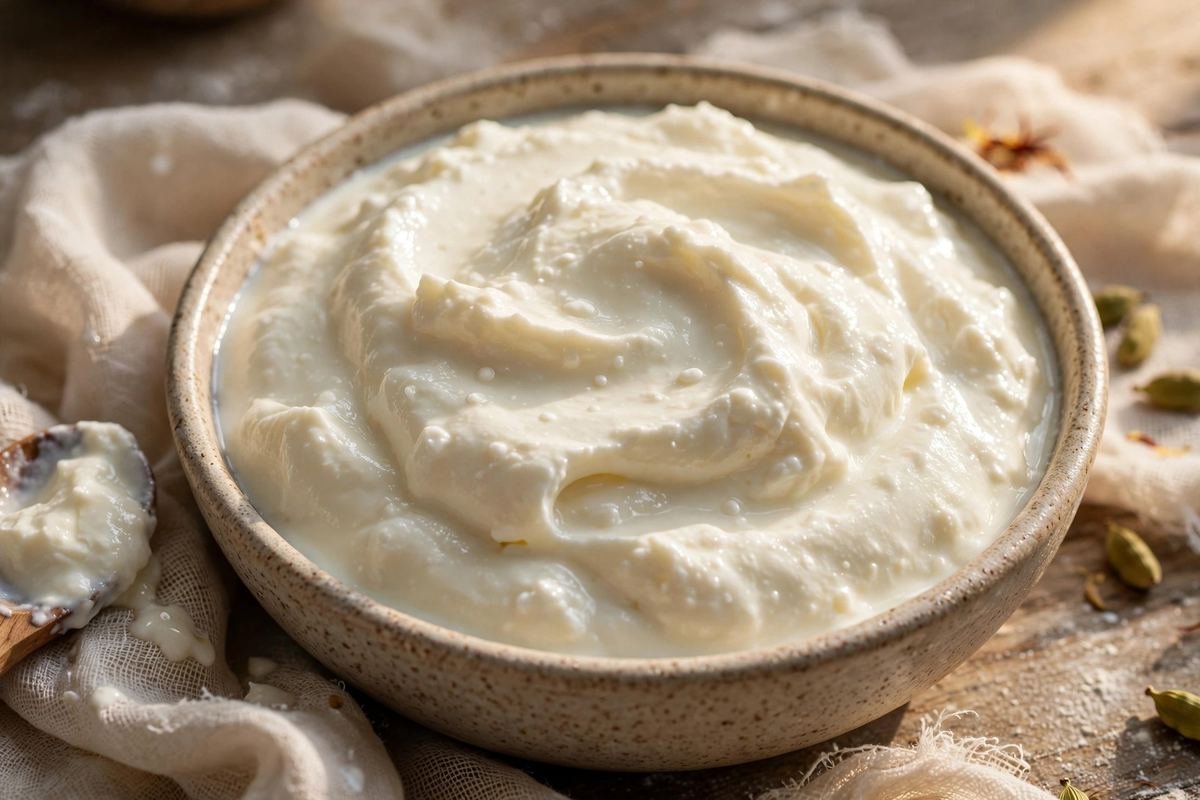
- Hang the curd. Line a deep bowl with your muslin cloth or nut-milk bag and pour in the curd. Gather the cloth edges, twist gently to form a bundle, and tie it securely. Suspend the bundle over the bowl — tie it to a kitchen tap or lay a wooden spoon across the bowl rim and tie the bundle to its centre — so the whey can drip freely. Refrigerate like this for 4 to 6 hours (or overnight). In hot weather, always hang it in the fridge, never on the counter, or the curd will turn sour. You will know it is ready when the bundle feels firm and dense and about 500–550g of thick hung curd remains.
- Bloom the saffron. While the curd hangs, warm 2 tablespoons of milk until it is hot to the touch but not boiling (about 60°C). Drop in the saffron strands, crush them lightly with the back of a spoon, and leave to steep for at least 15 minutes. The milk should turn a rich orange-gold. This step extracts maximum colour and aroma — do not rush it, and do not skip the crushing.
- Strain the hung curd for silkiness. Untie the bundle and scrape the thick hung curd into a large mixing bowl. Push it through a fine-mesh sieve with the back of a spoon, or whisk it vigorously first to break up any lumps. This is the step that separates grainy shrikhand from velvety shrikhand, so take your time — the curd should look completely smooth before anything else goes in.
- Whip in the sugar and saffron. Add the powdered sugar to the smooth curd and whisk with a balloon whisk until it is fully dissolved and the mixture looks glossy — about 2 to 3 minutes of steady whisking. Pour in the saffron milk, including every strand, and whisk again. Then add the freshly ground cardamom and the pinch of nutmeg, and whisk until the colour is an even pale gold with no streaks. Taste and adjust the sugar — remember that chilling dulls sweetness slightly, so it should taste just a touch sweeter than you want at serving time.
- Fold in the nuts and chill. Stir in the slivered pistachios (and almonds, if using), reserving a little for the top. Transfer the shrikhand to an airtight container or individual serving bowls, cover, and refrigerate for at least 2 hours, ideally 4 hours or overnight. This resting time is essential: it lets the saffron and cardamom perfume the curd fully and firms the texture to that perfect spoonable silk.
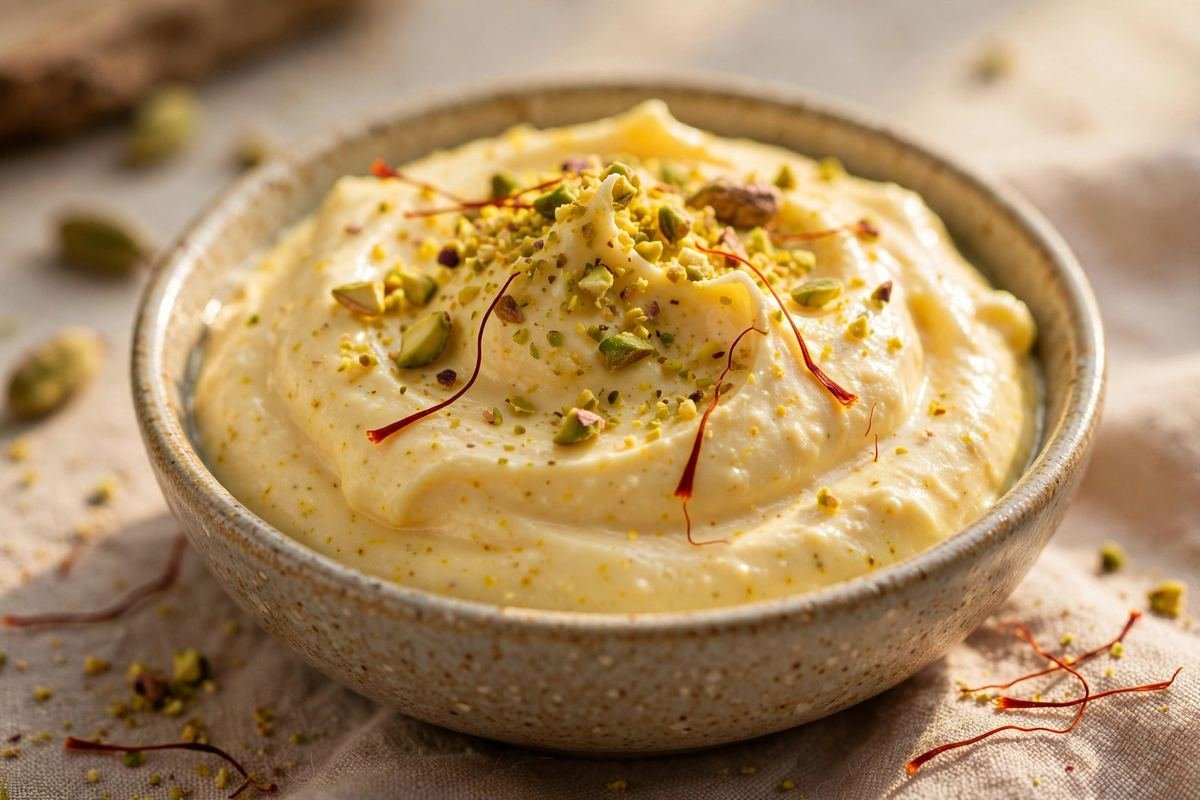
- Garnish and serve cold. Just before serving, top with the reserved pistachios, a few extra saffron strands, and dried rose petals if you like. Serve thoroughly chilled — shrikhand should be cold, never room temperature — in small bowls or traditional katoris, with hot puris alongside for the classic pairing.
Tip: Read through the full post below for step-by-step photos, pro tips, variations and FAQs before you start cooking.
There is a particular kind of magic that happens in a Maharashtrian or Gujarati home the evening before a festival, when a steel bowl of curd is tied into muslin and hung over the kitchen sink. By morning, the watery whey has dripped away and what remains is thick, dense, almost cheese-like curd — the soul of shrikhand, one of India’s most elegant desserts. Shrikhand has been made this way for centuries, with its roots running deep through the western coast and heartland of India, from the temples of Maharashtra where it is offered as prasad, to Gujarati thalis where a small katori of it sits proudly beside puris, to the royal kitchens of old where saffron was whipped into it for celebration.
The name itself tells the story: “shri” (radiance, beauty, or in some readings, milk) and “khand” (a piece or lump), a dish of radiant curd. But what makes Kesar Shrikhand truly special is how it takes the humblest ingredient in the Indian kitchen — plain dahi — and, through nothing but patience and a few fragrant additions, transforms it into something fit for a wedding feast. The saffron, bloomed in warm milk, stains the cream a pale gold and perfumes it with that unmistakable floral warmth. Cardamom adds its cool, sweet spice. A little nutmeg, grated fresh, deepens everything without announcing itself. And the hung curd itself, when whipped properly, turns impossibly smooth — not stiff, not grainy, but like velvet that melts on the tongue.
Unlike so many Indian sweets that demand sugar syrups at precise temperatures, heavy frying, or the careful coaxing of milk solids, shrikhand is refreshingly forgiving. There is no cooking at all. The work is mostly waiting: hanging the curd, chilling the finished dessert so the flavours settle in. Children grow up licking the whisk in homes where shrikhand is made; grandparents insist theirs is the creamiest. It is served chilled, often with hot, puffy puris in the classic combination of shrikhand-puri that no Maharashtrian festive meal is complete without — the contrast of cold, sweet, saffron cream against hot, salty, crisp puri is one of the great pairings of Indian food.
This recipe follows the traditional method with a few tested refinements so your shrikhand comes out silky every single time, with no graininess and no sourness. We will talk about choosing the right curd, hanging it for exactly the right time, blooming saffron so you waste none of its precious flavour, and whipping to that perfect texture. Make it the night before your celebration, and serve it cold to people who will ask you for the recipe before they have finished their bowls.
Why You’ll Love This Recipe
- No cooking required — a true no-cook dessert; the refrigerator does most of the work for you.
- Only a handful of ingredients — curd, sugar, saffron, cardamom, nuts. Nothing exotic, nothing hard to find.
- Festive and impressive — the golden colour and saffron aroma make it look and taste like you spent hours on it.
- Make-ahead friendly — it actually improves overnight as the flavours meld, so it is perfect for entertaining.
- Lighter than most Indian sweets — no ghee-heavy frying or dense milk solids; it is creamy yet fresh.
- Endlessly adaptable — the base technique opens the door to mango shrikhand, chocolate shrikhand, rose shrikhand, and more.
- Kid-approved and elder-approved — gentle flavours that everyone at the table, from toddlers to grandparents, enjoys.
Key Ingredients Explained
The entire success of shrikhand rests on the curd, so let us start there. You need fresh, thick, full-cream curd (dahi) that is not sour. Sour curd will give you sour shrikhand no matter how much sugar you add, because the lactic tang concentrates as the whey drains. If you make curd at home, set it with a small amount of starter in warm milk and do not let it over-ferment — six to eight hours in a warm spot is usually right. If you are buying it, choose plain whole-milk curd or plain whole-milk Greek yogurt; avoid low-fat versions, which drain into very little and taste thin. Greek yogurt is actually an excellent shortcut because it is already strained, though hanging it briefly still improves the texture.
Saffron (kesar) is the second hero. A good pinch — about 20 to 25 strands — is enough for four servings, and how you treat it matters enormously. Saffron’s colour and aroma are locked inside the dried stigmas and release best into warm liquid, so we bloom the strands in two tablespoons of warm milk for at least fifteen minutes, crushing them lightly with the back of a spoon. The milk turns a deep orange-gold and carries every bit of flavour into the dessert. Never add dry saffron strands directly to cold curd; they will sit there as chewy red threads with barely any colour released, which is a waste of one of the world’s most expensive spices.
Cardamom is the classic partner to saffron in shrikhand. Use green cardamom pods, crack them open, and grind the black seeds fresh — the pre-ground powder sold in packets loses its volatile oils quickly and tastes dusty by comparison. About four to five pods, freshly ground, gives a bright, sweet-spicy lift. A pinch of freshly grated nutmeg is the quiet third spice; it rounds out the sweetness and is traditional in many Maharashtrian homes, though you can skip it if you prefer a purer saffron flavour.
For sweetness, fine granulated sugar or powdered sugar both work. Powdered sugar dissolves instantly and is the safer choice if you want zero graininess, especially in humid weather when granulated sugar can be slow to melt into cold curd. Castor sugar is a good middle ground. Avoid honey or jaggery for the classic version — honey thins the texture and jaggery changes the colour and flavour profile, though both are fine if you are intentionally making a variation.
Pistachios and almonds, slivered or chopped, are the traditional garnish and also add a welcome textural contrast to the silk of the curd. A few dried rose petals are optional but beautiful for festive serving. And that is genuinely everything — the restraint of the ingredient list is the point. When there are only five or six ingredients, each one has to be good, and each one gets to shine.
Equipment You’ll Need
- A large piece of muslin cloth, a clean cotton kitchen towel, or a fine nut-milk bag for hanging the curd
- A deep bowl or vessel to hang the curd over, plus something to tie the bundle to (a tap, a wooden spoon laid across the bowl)
- A fine-mesh sieve or strainer
- A balloon whisk (much better than a spoon for silky shrikhand) or an electric hand mixer
- A small bowl for blooming the saffron
- Airtight container or serving bowls for chilling
- 1 kg (about 4 cups) fresh full-cream curd (dahi), not sour — or 600g plain whole-milk Greek yogurt
- 20–25 strands saffron (kesar)
- 2 tbsp warm milk (for blooming the saffron)
- 100g (1/2 cup) powdered sugar, plus more to taste
- 4–5 green cardamom pods, seeds freshly ground (about 1/2 tsp powder)
- 1 pinch freshly grated nutmeg (optional)
- 2 tbsp pistachios, slivered or chopped, plus extra for garnish
- 1 tbsp almonds, slivered (optional)
- Dried rose petals, for garnish (optional)
- Hang the curd. Line a deep bowl with your muslin cloth or nut-milk bag and pour in the curd. Gather the cloth edges, twist gently to form a bundle, and tie it securely. Suspend the bundle over the bowl — tie it to a kitchen tap or lay a wooden spoon across the bowl rim and tie the bundle to its centre — so the whey can drip freely. Refrigerate like this for 4 to 6 hours (or overnight). In hot weather, always hang it in the fridge, never on the counter, or the curd will turn sour. You will know it is ready when the bundle feels firm and dense and about 500–550g of thick hung curd remains.
- Bloom the saffron. While the curd hangs, warm 2 tablespoons of milk until it is hot to the touch but not boiling (about 60°C). Drop in the saffron strands, crush them lightly with the back of a spoon, and leave to steep for at least 15 minutes. The milk should turn a rich orange-gold. This step extracts maximum colour and aroma — do not rush it, and do not skip the crushing.
- Strain the hung curd for silkiness. Untie the bundle and scrape the thick hung curd into a large mixing bowl. Push it through a fine-mesh sieve with the back of a spoon, or whisk it vigorously first to break up any lumps. This is the step that separates grainy shrikhand from velvety shrikhand, so take your time — the curd should look completely smooth before anything else goes in.
- Whip in the sugar and saffron. Add the powdered sugar to the smooth curd and whisk with a balloon whisk until it is fully dissolved and the mixture looks glossy — about 2 to 3 minutes of steady whisking. Pour in the saffron milk, including every strand, and whisk again. Then add the freshly ground cardamom and the pinch of nutmeg, and whisk until the colour is an even pale gold with no streaks. Taste and adjust the sugar — remember that chilling dulls sweetness slightly, so it should taste just a touch sweeter than you want at serving time.
- Fold in the nuts and chill. Stir in the slivered pistachios (and almonds, if using), reserving a little for the top. Transfer the shrikhand to an airtight container or individual serving bowls, cover, and refrigerate for at least 2 hours, ideally 4 hours or overnight. This resting time is essential: it lets the saffron and cardamom perfume the curd fully and firms the texture to that perfect spoonable silk.
- Garnish and serve cold. Just before serving, top with the reserved pistachios, a few extra saffron strands, and dried rose petals if you like. Serve thoroughly chilled — shrikhand should be cold, never room temperature — in small bowls or traditional katoris, with hot puris alongside for the classic pairing.
Pro Tips for Perfect Results
- Start with non-sour curd, always. Taste your curd before hanging. If it is even mildly sour, the shrikhand will be sour, because straining concentrates the tang. When in doubt, use fresh store-bought whole-milk curd or Greek yogurt.
- Do not over-hang the curd. Beyond 8 hours the curd can become chalky and dry rather than creamy. Four to six hours in the fridge is the sweet spot for 1 kg of curd.
- Sieve before sweetening. Pushing the hung curd through a fine sieve before adding sugar is the single biggest texture upgrade. Sugar added to lumpy curd just coats the lumps; sugar added to smooth curd disappears into silk.
- Whisk, don’t beat aggressively. A balloon whisk and steady, patient strokes give gloss and body. An electric mixer on high can over-aerate and thin the mixture.
- Bloom saffron properly or not at all. Warm milk, crushed strands, fifteen minutes minimum. Pale, under-steeped saffron milk gives you colour without aroma — the worst of both worlds.
- Grind cardamom fresh. The difference between freshly cracked green cardamom and stale pre-ground powder is enormous in a dessert this delicate. It takes thirty seconds with a mortar and pestle.
- Chill overnight for the best flavour. Freshly mixed shrikhand is good; shrikhand that has rested overnight is transcendent. The spices bloom through the curd and the texture sets to perfection.
Variations to Try
Mango Shrikhand (Amrakhand): Fold 1 cup of thick, sweet mango pulp (alphonso is traditional) into the finished base, reducing the sugar slightly. This is the beloved summer version and arguably even more popular than the classic. Rose Shrikhand: Replace the saffron milk with 2 teaspoons of rose water and tint pale pink; garnish with rose petals. Chocolate Shrikhand: Whisk in 2 tablespoons of cocoa powder with the sugar and top with chocolate shavings — a modern favourite with children. Kesar Elaichi with Saffron Threads on Top: For weddings and Diwali, double the saffron and finish with a generous thread garnish for dramatic colour. Dry Fruit Shrikhand: Fold in chopped dates, figs, and toasted nuts for a richer, more textured festive version. Low-Sugar Version: Reduce sugar to 60g and add a little extra cardamom; the saffron carries the flavour so you will not miss it much.
Serving Suggestions
The iconic pairing is shrikhand with hot, puffed puris — tear a piece of puri, scoop up cold shrikhand, and eat them together. The hot-cold, salty-sweet contrast is the whole point of the combination and it never gets old. For a festive thali, serve small portions in steel katoris or glass bowls alongside puris, batata bhaji, and amti. As a standalone dessert, shrikhand is wonderful in elegant glass cups layered with crushed pistachios, or piped into small tart shells for a party. It also works beautifully as a topping — a spoonful over warm gulab jamun or beside a slice of plain cake is a quiet revelation. Keep portions modest; its richness means a small katori satisfies.
Storage and Reheating
Shrikhand keeps beautifully in the refrigerator in an airtight container for 3 to 4 days, and the flavour actually deepens over the first day. Press cling film directly onto the surface before lidding to prevent a skin from forming. Do not freeze it — freezing destroys the delicate emulsion and it will split and turn grainy on thawing. There is no reheating involved, of course; shrikhand is always served cold. If it has been sitting out at a party, return it to the fridge within two hours. Give it a gentle stir before serving leftovers, and refresh the garnish with a few fresh pistachios.
Frequently Asked Questions
Why is my shrikhand grainy?
Graininess almost always comes from skipping the sieving step or from adding sugar to lumpy curd. Push the hung curd through a fine-mesh sieve before adding anything, whisk the sugar in until fully dissolved, and use powdered sugar rather than coarse granulated. Over-hanging the curd until it is dry and chalky can also cause graininess that no amount of whisking will fix.
Can I use Greek yogurt instead of hanging curd?
Yes, and it is a very good shortcut. Use plain, whole-milk Greek yogurt with no added thickeners if possible. Give it a brief 1–2 hour hang anyway — even Greek yogurt releases some whey, and that extra draining step noticeably improves the final density. The flavour will be slightly tangier than traditional dahi-based shrikhand, which many people enjoy.
My shrikhand tastes sour. What went wrong?
The curd was sour before you started, or it soured while hanging at room temperature in warm weather. Always hang curd in the refrigerator, taste the curd first, and add a touch more sugar to balance mild tang. If it is strongly sour, it is better to start over — extra sugar cannot rescue it and the result will taste off.
How far ahead can I make shrikhand for a party?
Make it a full day ahead — it is one of the best make-ahead Indian desserts. Mix it in the evening, chill overnight, and garnish just before serving. It holds well for 3 to 4 days refrigerated, so you have a comfortable window.
Can I make shrikhand without saffron?
Absolutely. You will get classic Elaichi Shrikhand (cardamom shrikhand), which is delicious in its own right — just increase the cardamom slightly and skip the saffron milk. The colour will be creamy white rather than golden. Saffron is traditional for the kesar version, but the technique is identical either way.
Is shrikhand gluten-free?
Yes, the dessert itself is naturally gluten-free — it is just strained curd, sugar, spices, and nuts. If you serve it with puris, note that puris are made from wheat flour, so offer it in bowls on its own for gluten-free guests.
There is something deeply satisfying about a dessert that asks so little of you and gives so much back. A bowl of curd, a pinch of the world’s most precious spice, a little patience — and you have a dessert that has graced festive tables for generations. Make this Kesar Shrikhand once, and it will become the recipe people request by name. Serve it cold, garnish it generously, and watch it disappear.