Recipe Card
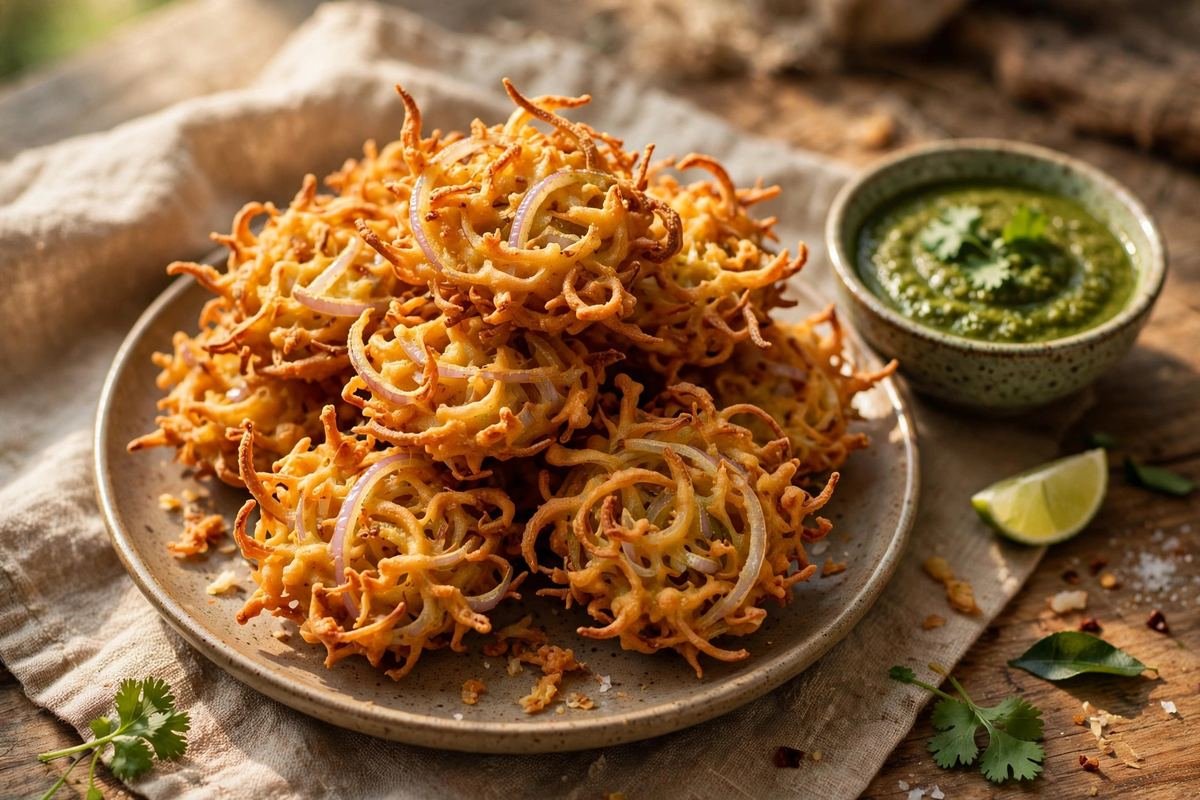
Shatteringly crisp onion pakoras with lacy, crunchy edges and a soft savory center. The secret is no added water and the right oil temperature — perfect with hot chai.
Ingredients
- 3 large (about 500g) red onions, thinly sliced into half-moons
- 1 cup (120g) besan (chickpea flour)
- 2 tbsp rice flour
- 1 tsp ajwain (carom seeds)
- 1 tsp cumin seeds, lightly crushed
- ½ tsp turmeric powder
- 1 tsp red chili powder (adjust to taste)
- 1 tsp salt, plus more to taste
- 2 green chilies, finely chopped (optional)
- 2 tbsp chopped fresh coriander leaves
- 8–10 curry leaves, torn (optional)
- ½ tsp chaat masala, for sprinkling
- Oil for deep-frying (about 4 cups)
Instructions
- Salt and rest the onions. Put the sliced onions in a large bowl, sprinkle over the salt, and toss well with your hands, gently separating the layers as you go. Let them rest for 10–15 minutes. The salt draws out the onions’ juices — you’ll see a pool of liquid at the bottom of the bowl. This onion liquor is liquid gold: it’s what will bind your batter without a drop of added water.
- Mix the batter. Add the besan, rice flour, ajwain, cumin, turmeric, red chili powder, green chilies, coriander, and curry leaves to the onions. Mix with your hand, squeezing gently, until every slice is coated in a thick, sticky batter. The mixture should look barely-bound — more onion than batter, clumping together when squeezed. If it seems too dry and powdery after a minute of mixing, sprinkle in water one teaspoon at a time. Most batches need none at all.
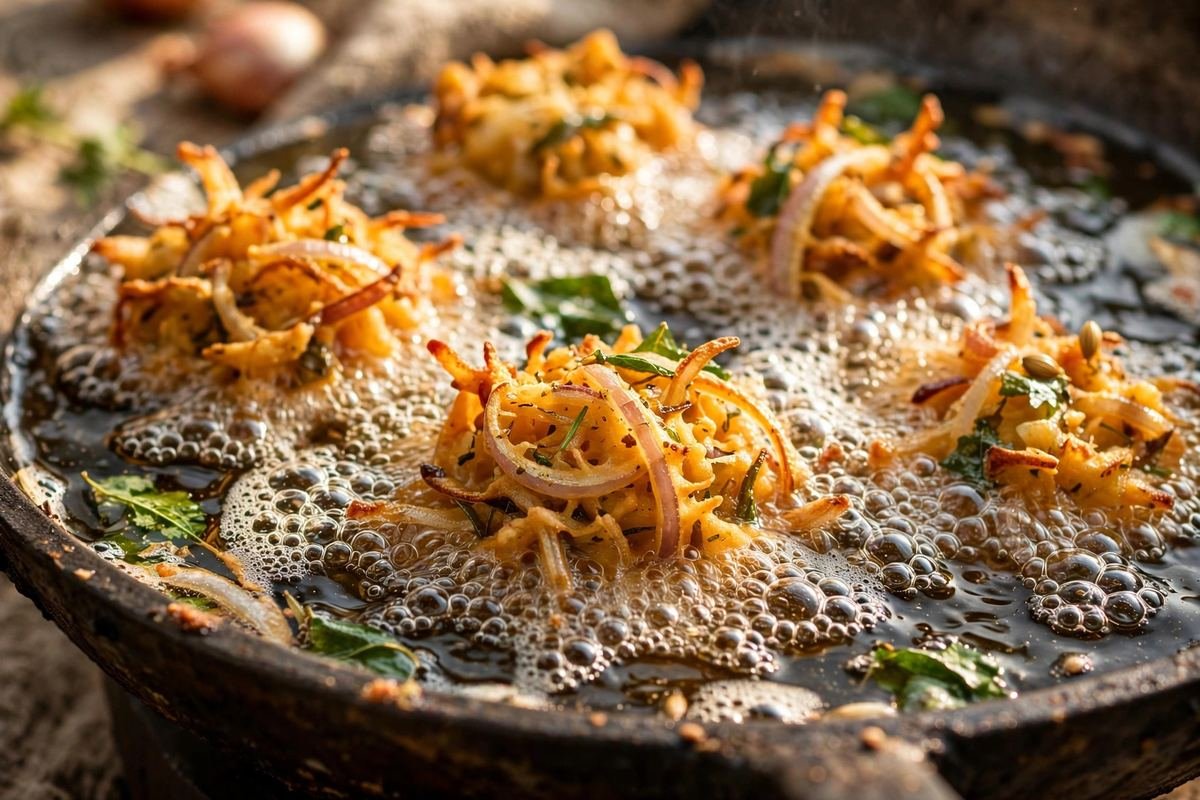
- Heat the oil. Pour oil into the kadhai to a depth of about 2–3 inches and heat over medium-high to 175–180°C (350–355°F). Test without a thermometer: drop in a tiny bit of batter — it should sizzle vigorously, rise to the surface within 2–3 seconds, and turn golden in about a minute. If it browns instantly, the oil is too hot; if it sinks and sits, it’s too cool.
- Fry in small batches. Take small, loose clumps of the onion mixture — about a tablespoon each, letting them stay ragged and craggy rather than packing them into neat balls — and slide them gently into the hot oil. Don’t crowd the kadhai; fry 6–8 at a time so the oil temperature doesn’t crash. Crowding is the number one cause of greasy pakoras.
- Fry to deep golden. Fry for 3–4 minutes, turning occasionally with the slotted spoon, until the pakoras are a deep golden-brown and the sizzling quiets down noticeably. That quieting sizzle is your cue: it means most of the moisture has cooked out, which is exactly what makes them crisp. Pale pakoras are underdone and will go limp within minutes.
- Drain properly. Lift the pakoras out with the spider strainer, let excess oil drip back for a few seconds, and transfer to a wire rack — not paper towels. Paper traps steam underneath and softens the crust you just worked for. Sprinkle immediately with chaat masala and a pinch of salt while they’re hot so it sticks.
- Maintain oil temperature between batches. Let the oil come back up to temperature for a minute before the next batch goes in. Skim out any burnt bits floating in the oil between batches — they’ll make the next round bitter and spotty.
- Serve immediately. Pakoras wait for no one. Pile them on a plate lined with nothing at all, add lemon wedges and green chutney or ketchup alongside, and serve with cutting chai while they’re still crackling. Crispness has a half-life measured in minutes.
Tip: Read through the full post below for step-by-step photos, pro tips, variations and FAQs before you start cooking.
Rain, Chai, and the Humble Onion Pakora
Ask any Indian what they crave when the first monsoon rain hits the hot earth, and a startling number will answer with one word: pakora. There is a reason this craving is practically encoded in our DNA. The petrichor rising from the soil, the drumming of rain on the windows, a steaming glass of chai — and a plate of onion pakoras, crisp enough to shatter, arriving at the table still hissing from the kadhai. It is not just a snack; it is a weather event, a memory, a ritual passed down through generations of rainy afternoons.
Onion pakora — called kanda bhaji in Maharashtra, where it is practically a religion — is the simplest of all pakoras and, when done right, the most addictive. Thin slices of onion are tossed with spiced chickpea-flour batter and deep-fried until golden. The magic of a great onion pakora lies in its texture contrast: lacy, jagged, crunchy edges that give way to a soft, sweet, almost creamy onion center. A bad one is a greasy, soggy lump. The difference between the two comes down to a handful of techniques that are easy to learn and impossible to forget.
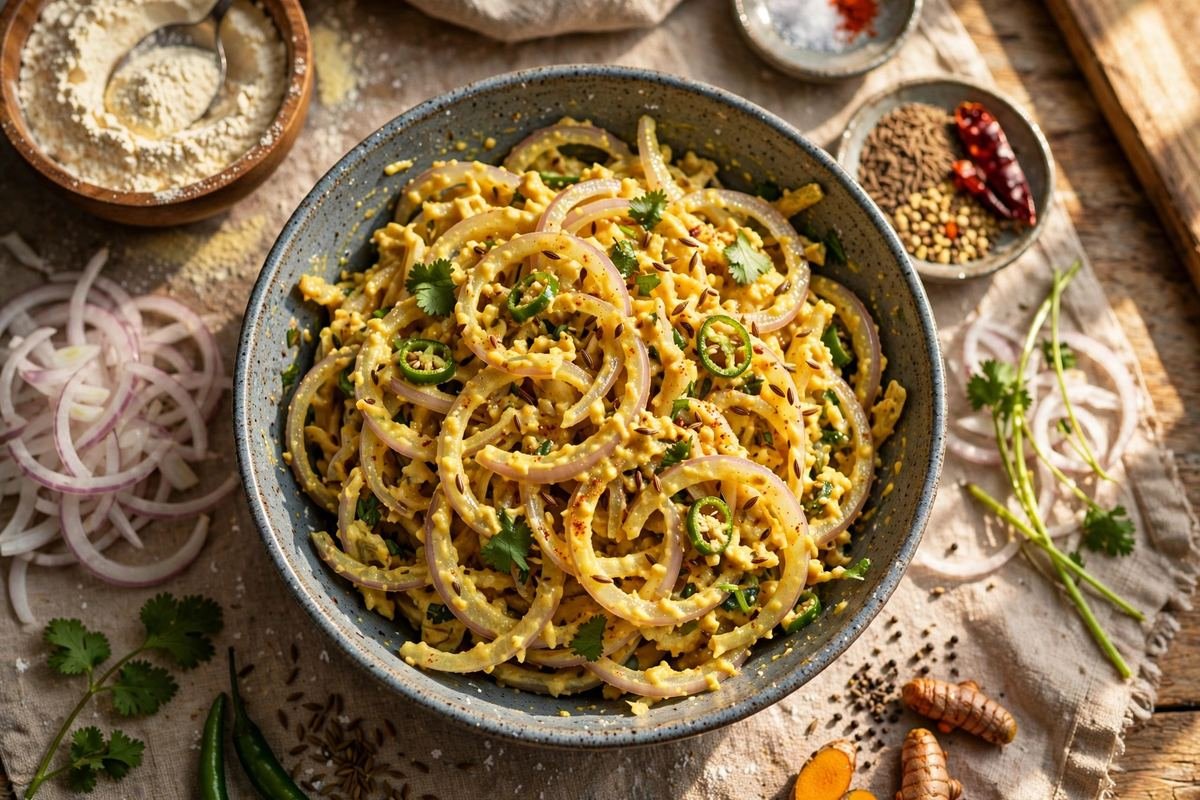
The most important secret, and the one most recipes gloss over, is this: do not add water to the batter — or add barely any. Onions release a surprising amount of moisture when salted, and that onion juice, combined with the chickpea flour, forms a batter that clings to the slices in a thin, craggy coating. Add water and you get a thick, doughy batter that fries up heavy and absorbs oil like a sponge. The second secret is oil temperature: hot enough that the pakoras sizzle aggressively on entry (around 175–180°C), so the exterior sets instantly and stays crisp. Get these two things right and you are 90 percent of the way to pakora perfection.
This recipe also walks you through the little things — slicing the onions thin but not paper-thin, resting the salted onions so they weep their juices, the two-stage fry that guarantees lasting crispness, and the final toss in chaat masala that makes them sing. Make a batch on the next rainy evening, or honestly on any evening, and keep the chai ready. They will not survive long enough to cool.
Why You’ll Love This Recipe
- Shatteringly crisp — the no-water batter technique gives lacy edges that stay crunchy, not soggy
- 15 minutes of prep — slice, mix, rest, fry; that’s the whole recipe
- Pantry ingredients only — onions, besan, and spices you already own
- Monsoon soul food — the definitive chai-time companion, made for rainy days
- Crowd-pleaser — doubles and triples easily for parties; everyone reaches for “just one more”
Key Ingredients Explained
Onions are the star, so slice them right. Cut them pole to pole into thin half-moons, about 2–3mm thick. Too thick and the centers stay raw and harsh; too thin and they disintegrate into mush. Red onions are traditional and give the sweetest result, but white or yellow onions work fine. You want roughly 3 large onions, which looks like a mountain of slices — they shrink dramatically in the fryer.
Besan (chickpea flour) is the batter’s backbone. Use fresh besan; chickpea flour goes rancid faster than wheat flour, and stale besan gives a bitter, musty taste. If your besan has been sitting open for months, taste a pinch raw — it should taste nutty and clean, not bitter. A tablespoon or two of rice flour mixed in is the crispness insurance policy: rice flour fries up glassy-crisp and keeps the pakoras crunchy longer after frying. Corn flour works as a substitute.
The spice blend is classic: ajwain (carom seeds) is the signature pakora spice — its thyme-like pungency cuts through the oil and aids digestion, so don’t skip it. Turmeric for color, red chili powder for heat, cumin seeds lightly crushed for earthiness, and salt — which does double duty, seasoning and drawing moisture from the onions. Chaat masala sprinkled at the end is optional but transformative. A handful of chopped curry leaves or coriander in the batter adds color and aroma. And oil for deep-frying: use a neutral oil with a high smoke point — sunflower, peanut, or refined vegetable oil. Mustard oil is traditional in some regions but needs to be smoked first.
Equipment You’ll Need
- A deep, heavy kadhai or wok — heavy base keeps oil temperature stable
- A slotted spoon or spider strainer for lowering and lifting pakoras
- A kitchen thermometer (helpful but optional — the bread-cube test works too)
- A large mixing bowl
- A wire rack set over a tray for draining (better than paper towels, which trap steam)
- 3 large (about 500g) red onions, thinly sliced into half-moons
- 1 cup (120g) besan (chickpea flour)
- 2 tbsp rice flour
- 1 tsp ajwain (carom seeds)
- 1 tsp cumin seeds, lightly crushed
- ½ tsp turmeric powder
- 1 tsp red chili powder (adjust to taste)
- 1 tsp salt, plus more to taste
- 2 green chilies, finely chopped (optional)
- 2 tbsp chopped fresh coriander leaves
- 8–10 curry leaves, torn (optional)
- ½ tsp chaat masala, for sprinkling
- Oil for deep-frying (about 4 cups)
- Salt and rest the onions. Put the sliced onions in a large bowl, sprinkle over the salt, and toss well with your hands, gently separating the layers as you go. Let them rest for 10–15 minutes. The salt draws out the onions’ juices — you’ll see a pool of liquid at the bottom of the bowl. This onion liquor is liquid gold: it’s what will bind your batter without a drop of added water.
- Mix the batter. Add the besan, rice flour, ajwain, cumin, turmeric, red chili powder, green chilies, coriander, and curry leaves to the onions. Mix with your hand, squeezing gently, until every slice is coated in a thick, sticky batter. The mixture should look barely-bound — more onion than batter, clumping together when squeezed. If it seems too dry and powdery after a minute of mixing, sprinkle in water one teaspoon at a time. Most batches need none at all.
- Heat the oil. Pour oil into the kadhai to a depth of about 2–3 inches and heat over medium-high to 175–180°C (350–355°F). Test without a thermometer: drop in a tiny bit of batter — it should sizzle vigorously, rise to the surface within 2–3 seconds, and turn golden in about a minute. If it browns instantly, the oil is too hot; if it sinks and sits, it’s too cool.
- Fry in small batches. Take small, loose clumps of the onion mixture — about a tablespoon each, letting them stay ragged and craggy rather than packing them into neat balls — and slide them gently into the hot oil. Don’t crowd the kadhai; fry 6–8 at a time so the oil temperature doesn’t crash. Crowding is the number one cause of greasy pakoras.
- Fry to deep golden. Fry for 3–4 minutes, turning occasionally with the slotted spoon, until the pakoras are a deep golden-brown and the sizzling quiets down noticeably. That quieting sizzle is your cue: it means most of the moisture has cooked out, which is exactly what makes them crisp. Pale pakoras are underdone and will go limp within minutes.
- Drain properly. Lift the pakoras out with the spider strainer, let excess oil drip back for a few seconds, and transfer to a wire rack — not paper towels. Paper traps steam underneath and softens the crust you just worked for. Sprinkle immediately with chaat masala and a pinch of salt while they’re hot so it sticks.
- Maintain oil temperature between batches. Let the oil come back up to temperature for a minute before the next batch goes in. Skim out any burnt bits floating in the oil between batches — they’ll make the next round bitter and spotty.
- Serve immediately. Pakoras wait for no one. Pile them on a plate lined with nothing at all, add lemon wedges and green chutney or ketchup alongside, and serve with cutting chai while they’re still crackling. Crispness has a half-life measured in minutes.
Pro Tips for Perfect Results
- No water (or almost none). Let the salted onions release their own juices to form the batter. This is the single biggest factor in crispness.
- Thin, even slices. Aim for 2–3mm half-moons. A mandoline makes this effortless, but a sharp knife and patience work fine.
- Keep the batter onion-heavy. The mixture should look like onions barely held together by batter, not batter with some onion in it. Lacy and craggy fries crisp; thick and doughy fries heavy.
- Oil at 175–180°C. Too cool and they absorb oil; too hot and they brown outside while raw inside. The sizzle-quieting cue tells you they’re done.
- Small batches only. Six to eight pakoras per batch in a standard kadhai. Patience here pays off in crunch.
- Drain on a rack, season hot. A wire rack keeps air circulating; chaat masala and salt cling best to hot, just-fried surfaces.
- Fry to deep golden, not pale. Pull them when they’re a rich amber-brown. Under-fried pakoras steam themselves soggy from the inside.
- Serve within minutes. Pakoras are at their peak for about 15–20 minutes. Time your chai to be ready when the last batch comes out.
Variations to Try
The basic method welcomes endless riffing. Mixed veg pakora: add thinly sliced potatoes, cauliflower florets, or spinach leaves to the onion base — just keep the total vegetable-to-batter ratio the same. Paneer pakora: fold in small cubes of paneer for a richer, protein-packed version. Bread pakora style: sandwich the onion mixture between bread triangles and fry — street-style indulgence. Spicy Andhra style: double the green chilies, add crushed curry leaves generously, and finish with a squeeze of lemon. Baked (lighter) version: spread the mixture in a thin layer on a greased tray and bake at 220°C for 20–25 minutes, flipping once — you lose the deep-fried shatter but gain a guilt-free crunch. Kanda bhaji (Maharashtrian): the classic version skips rice flour and adds a pinch of baking soda for extra puff, served with dry garlic chutney.
Serving Suggestions
Onion pakoras demand hot chai — cutting chai in small glasses is the canonical pairing, the tannic tea cutting through the richness of the fry. Green chutney (coriander-mint) is the classic dip; imli (tamarind) chutney adds sweet-sour contrast, and plain tomato ketchup is the crowd-pleasing third option. Serve with lemon wedges for squeezing and thinly sliced raw onions on the side. For a monsoon platter, pair with bhutta (roasted corn) and masala chai. They also make a fantastic burger-style filling: stuff warm pakoras into pav with chutneys for a makeshift vada-pav-adjacent treat. At parties, serve them in paper cones with a sprinkle of chaat masala — easy to eat standing up, impossible to stop at one.
Storage and Reheating
Let’s be honest: pakoras are meant to be eaten fresh, and no storage method fully recaptures that just-fried shatter. That said, leftovers keep at room temperature for 4–6 hours in a loosely covered container (never sealed airtight while warm — trapped steam is the enemy). To revive, spread on a baking tray and bake at 200°C for 8–10 minutes until crisp again, or air-fry at 190°C for 5–6 minutes. The microwave is forbidden — it turns them rubbery. You can also prep smart: the salted onion-batter mixture holds in the fridge for up to 4 hours, so you can fry fresh batches as guests arrive. Fried pakoras freeze surprisingly okay for up to a month; reheat from frozen in a hot oven.
Frequently Asked Questions
Why are my pakoras soggy and oily?
Almost always one of three things: the oil wasn’t hot enough when the batter went in, the kadhai was overcrowded (which drops the oil temperature), or the batter had too much water. Keep the oil at 175–180°C, fry in small batches, and let the onions’ own juices form the batter.
Can I make the batter ahead of time?
You can mix the salted onions and batter up to 4 hours ahead and refrigerate, but the onions keep releasing water over time, thinning the batter. If it looks watery when you’re ready to fry, sprinkle in an extra tablespoon of besan to tighten it back up. Don’t leave it overnight — the onions turn mushy.
What’s the difference between pakora and bhaji?
Mostly regional vocabulary. In North India, pakora covers all fritters; in Maharashtra, bhaji (as in kanda bhaji) is the common term for the same onion fritters. Recipes vary slightly by region but the soul of the dish is identical.
Can I air-fry onion pakoras?
Yes, with adjusted expectations. Shape the mixture into small patties, spray generously with oil, and air-fry at 190°C for 12–15 minutes, flipping halfway. You’ll get a tasty, crunchy snack with far less oil — but not the lacy deep-fried shatter. Adding the rice flour matters even more here.
Why add rice flour?
Rice flour fries up harder and glassier than chickpea flour, which stays slightly soft. That two-tablespoon addition is what keeps pakoras audibly crisp even 20 minutes after frying. Corn flour or semolina (rava) can substitute in a pinch.
How do I keep pakoras crisp for a party?
Fry them 90% done (pale golden), cool on a rack, then do a second flash-fry at 190°C for 60–90 seconds just before serving. Restaurant kitchens use this double-fry trick constantly. Hold finished batches in a warm oven (120°C) on a rack, never stacked or covered.
Some recipes feed you; this one transports you. The next time clouds gather and the air smells of rain, slice those onions, heat that oil, and let the sizzle be your thunder. Serve them hot, eat them fast, and don’t be surprised when someone asks for the recipe before the plate is empty — that is simply what onion pakoras do to people.