Recipe Card
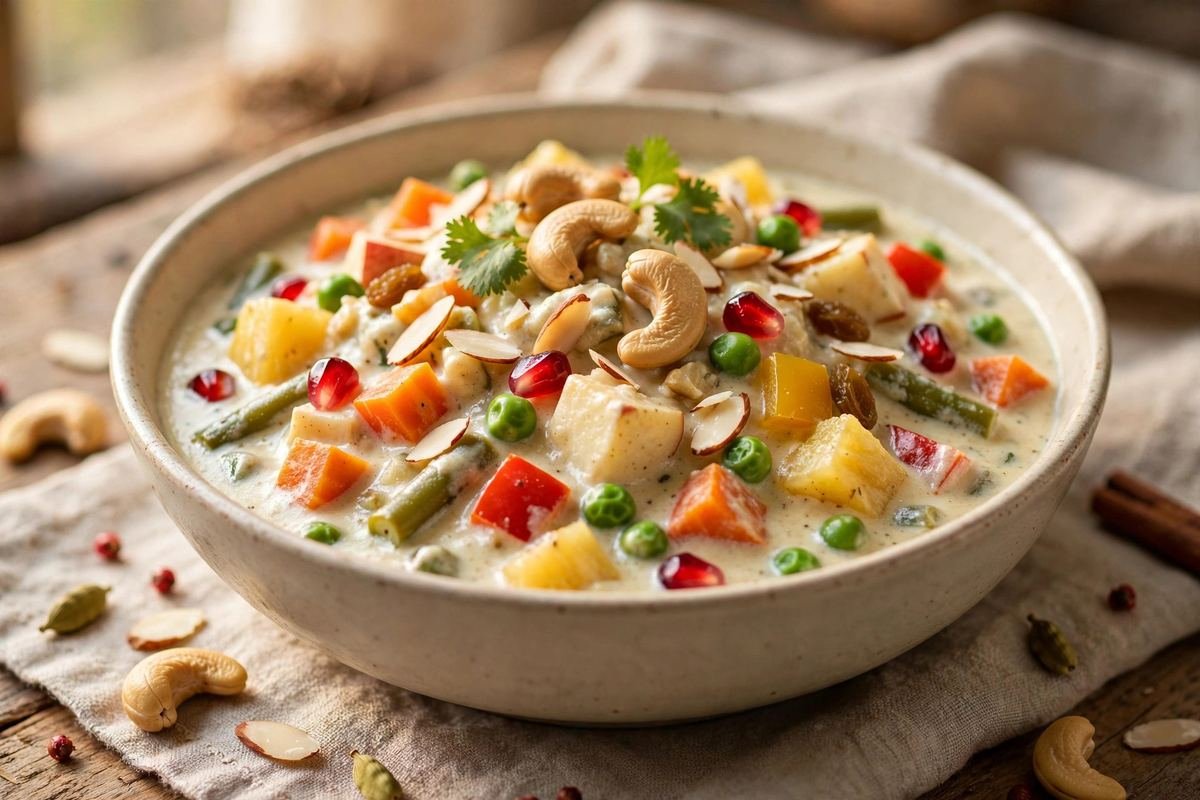
A luxurious Mughlai korma of nine gems — vegetables, fruits, and nuts in a silky cashew gravy. Mild, creamy, and fit for a celebration table.
Ingredients
- 20 cashews, plus 12 more for garnish (as gems)
- 2 tbsp melon seeds (magaz); if unavailable, use 2 tbsp extra cashews
- 3 tbsp ghee, divided
- 4 green cardamom pods, lightly crushed
- 1-inch cinnamon stick
- 4 cloves
- 1 bay leaf
- 1 tsp ginger paste
- 2 green chillies, slit (optional, for gentle warmth)
- 1 medium potato (150 g), peeled and diced
- 1 medium carrot (100 g), diced
- 100 g cauliflower florets, small
- 100 g French beans, cut into 1-inch pieces
- ½ cup (75 g) green peas, fresh or frozen
- 200 g paneer, cut into ¾-inch cubes
- ¾ cup (120 g) fresh pineapple chunks
- 3 tbsp raisins
- 1¼ tsp salt, or to taste
- 1 tsp sugar (adjust to taste)
- ¼ tsp white pepper powder
- 1 pinch saffron strands, soaked in 2 tbsp warm milk
- ¼ tsp freshly grated nutmeg
- ½ cup (120 ml) fresh cream, plus extra for drizzling
- 1½ cups (360 ml) hot water or light vegetable stock
- 3 tbsp pomegranate arils, to garnish
- 2 tbsp chopped coriander leaves (optional), to garnish
Instructions
- Soak and grind the nuts. Soak the 20 cashews and melon seeds in hot water for at least 20 minutes (up to an hour). Drain and grind with 3–4 tablespoons of fresh water to the smoothest possible paste, scraping down the jar twice. Rub a little between your fingers — it should feel like silk, not sand. Set aside; this paste is the entire body of your gravy.
- Blanch the vegetables. Bring a large saucepan of salted water to a rolling boil. Blanch the potato, carrot, and cauliflower for 3 minutes, then add the beans and peas for 2 minutes more. Drain and immediately plunge into cold water to stop the cooking and lock in the bright colours. Drain well — waterlogged vegetables will thin your gravy.
- Fry the paneer and nuts. Heat 1 tablespoon of ghee in a small pan over medium heat. Fry the paneer cubes for 2–3 minutes, turning, until just golden at the edges. Remove to a plate. In the same ghee, fry the 12 garnish cashews until deep golden, about 1–2 minutes, and set aside. (If you like, soak the fried paneer in warm salted water for 10 minutes to keep it soft.)
- Bloom the whole spices. Heat the remaining 2 tablespoons of ghee in your large pan or handi over medium heat. Add the cardamom, cinnamon, cloves, and bay leaf. Sizzle for 30 seconds until intensely fragrant. Stir in the ginger paste and slit green chillies (if using) and cook for 1 minute until the raw smell disappears.
- Cook the nut paste. Add the ground cashew–melon seed paste to the spiced ghee. Cook over low-medium heat for 5–6 minutes, stirring constantly with a flat spatula, until the paste thickens, turns a shade darker, and the ghee begins to separate at the edges. Do not walk away — nut pastes catch and burn quickly, and burnt cashew tastes bitter. If it sticks, lower the heat rather than adding water yet.
- Build the gravy. Pour in 1½ cups of hot water or stock, whisking as you go to keep the gravy lump-free. Add the salt, sugar, and white pepper. Bring to a gentle simmer — never a hard boil, which can split a nut-based gravy — and cook for 5 minutes until slightly thickened. Stir in the saffron milk and the grated nutmeg; the gravy should be pale gold, silky, and coat the back of a spoon.
- Add the nine gems. Gently fold in the blanched vegetables, fried paneer, pineapple chunks, and raisins. Simmer on the lowest heat for 6–8 minutes, stirring occasionally with a light hand, until everything is heated through, the vegetables are fully tender, and the flavours have married. The gravy should be thick enough to coat each gem generously — thin with a splash of hot water if needed.
- Finish with cream and rest. Turn the heat to its lowest, stir in the ½ cup of cream, and warm through for 1–2 minutes without boiling. Taste and adjust salt and sugar — the korma should be gently sweet, delicately spiced, and rich. Turn off the heat, cover, and rest for 10 minutes. Serve garnished with the fried cashews, pomegranate arils, a drizzle of cream, and coriander if you like.
Tip: Read through the full post below for step-by-step photos, pro tips, variations and FAQs before you start cooking.
The Curry of Nine Jewels
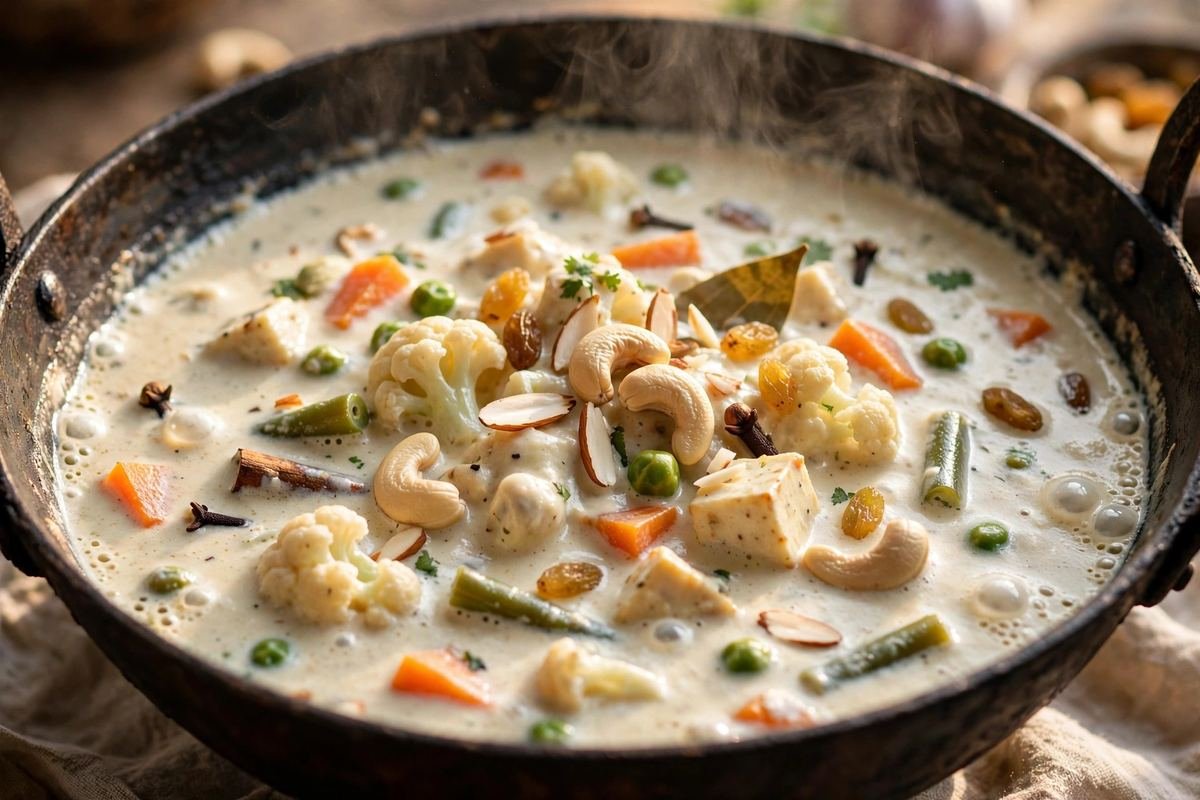
Navratan means “nine gems,” and this is one of the rare dishes whose name is also its recipe. Born in the imperial kitchens of the Mughals, navratan korma was created to dazzle — a curry assembled from nine precious ingredients: jewel-coloured vegetables, sweet fruits, and rich nuts, all bathed in a pale, silken gravy perfumed with saffron and cardamom. It was celebration food, served at weddings and festivals, a dish that announced abundance simply by arriving at the table.
Unlike the fiery curries of the dhaba or the tangy gravies of the south, navratan korma belongs to the refined Mughlai tradition of shahi (royal) cooking. The gravy is deliberately mild — no chilli heat to speak of, just warmth from cardamom, cinnamon, and cloves, sweetness from the fruits, and a luxurious body built on cashews, melon seeds, and cream. The contrast is the point: crisp-tender vegetables, soft paneer, juicy pineapple, and crunchy nuts each keep their identity in the creamy sauce, so every spoonful is a small treasure hunt.
The “nine gems” are traditionally flexible — there is no single canonical list, and royal khansamas varied them by season and occasion. The classic set runs something like: carrots, beans, peas, cauliflower, potatoes, paneer, pineapple, cashews, and raisins, with pomegranate arils scattered over the top like scattered rubies. Our version follows this beloved lineup with a few practical refinements, keeping the spirit of abundance while making sure everything cooks evenly and the gravy stays velvet-smooth.
This is the curry to make when you want to impress without setting mouths on fire — for Diwali dinners, for guests who prefer mild food, for anyone who believes a vegetarian dish can be the star of the table. It takes a little more chopping than a weeknight curry, but the payoff is a dish that looks like jewellery and tastes like a festival.
Why You’ll Love This Recipe
- Truly royal — a Mughlai classic with real history, perfect for festive and celebratory meals.
- Mild and crowd-pleasing — gentle on heat, so kids, elders, and spice-cautious guests all enjoy it.
- Vegetarian showstopper — proves a meat-free main can anchor a dinner party with total confidence.
- Beautiful to serve — the colours of the vegetables and fruits against the pale gravy are naturally stunning.
- Make-ahead friendly — the gravy and the prepared gems can be done separately in advance.
- Balanced nutrition — vegetables, fruit, nuts, and paneer together make a genuinely nourishing one-pot meal.
Key Ingredients Explained
Cashews and melon seeds (magaz): The soul of the gravy. Soaked and ground to a fine paste, they give the korma its signature ivory colour and rich, creamy body without a drop of onion-tomato base. Melon seeds are the traditional Mughlai thickener — they grind silkier than cashews alone and add a subtle sweetness. If you cannot find them, simply use all cashews; the result is still excellent. Soak both in hot water for at least 20 minutes (an hour is better) and grind with minimal water to the smoothest paste your mixer can manage — any graininess will show in the final gravy.
Paneer: One of the nine gems and the protein anchor. Use fresh, soft paneer and cube it evenly so it cooks uniformly. A brief shallow-fry until just golden at the edges firms it up so it does not crumble in the gravy — but do not over-fry, or it turns chewy. Soaking fried paneer in warm salted water for 10 minutes keeps it pillowy.
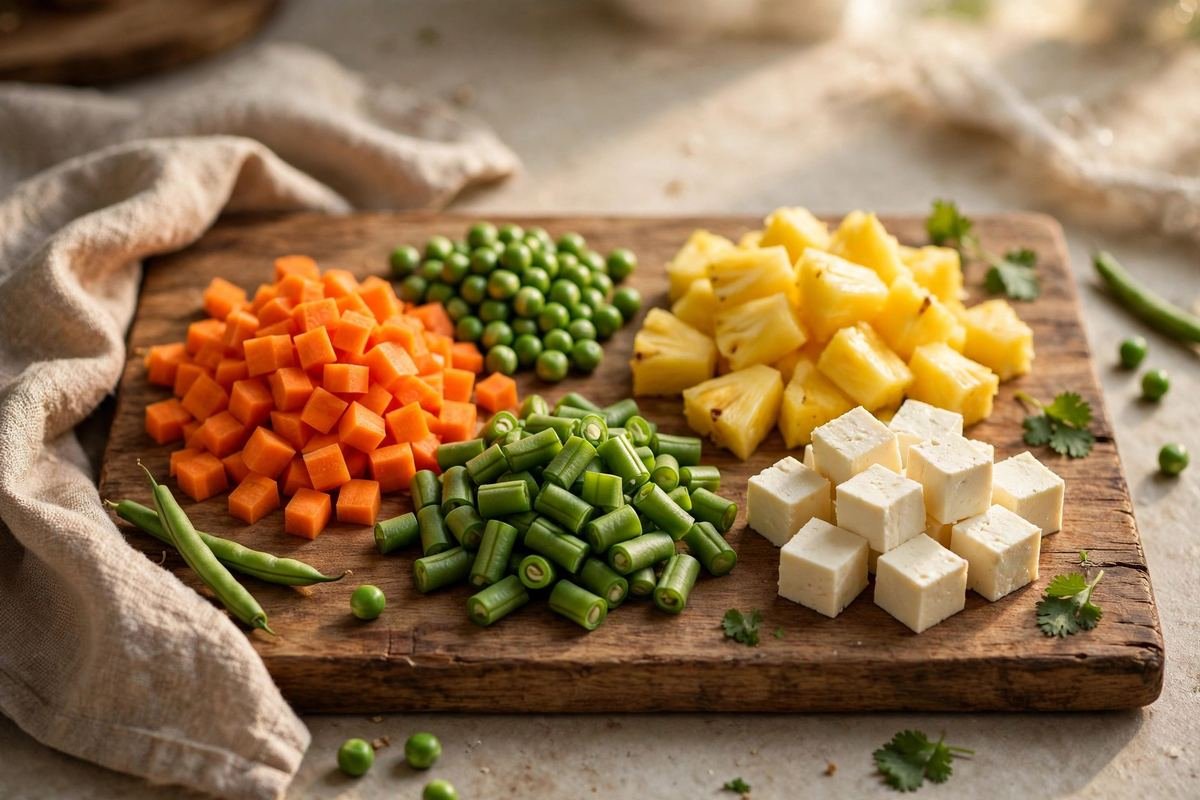
The vegetables: Carrot, French beans, cauliflower, green peas, and potato form the classic vegetable contingent. Cut everything into similar bite-sized pieces so they cook at the same rate, and par-cook the harder vegetables (potato, carrot, cauliflower) before they meet the gravy — undercooked potato in a korma is a tragedy, and overcooked everything else is a close second. Blanching in salted boiling water for 3–4 minutes, then refreshing in cold water, keeps colours vivid.
Pineapple: The surprise gem. Its sweet acidity cuts through the gravy’s richness and is utterly traditional in navratan korma, even if it startles first-timers. Use fresh pineapple if you can; canned works, but drain it well and reduce any added sugar elsewhere.
Raisins and cashews (as gems): Plumped in the gravy, raisins turn into sweet jewels; toasted cashews add crunch. Fry the cashews in ghee until golden before adding — raw cashews taste flat by comparison.
Saffron and cardamom: The royal perfume. A few strands of saffron bloomed in warm milk tint the gravy a pale gold and add unmistakable aroma; green cardamom, used whole and lightly crushed, perfumes the ghee at the start. A tiny pinch of nutmeg at the end is the traditional Mughlai finishing touch.
Cream and ghee: Cream swirled in at the end gives the gravy its final silkiness; ghee is the cooking medium of choice for its nutty richness. Use fresh cream, not ultra-thin cooking cream, for the best texture.
Equipment You’ll Need
- High-speed mixer or grinder — for the silky cashew–melon seed paste (this is non-negotiable)
- Large heavy-bottomed pan or handi — for the gravy and final assembly
- Saucepan for blanching — to par-cook the vegetables
- Small frying pan — for toasting nuts and lightly frying paneer
- Slotted spoon — for lifting blanched vegetables and fried paneer
- 20 cashews, plus 12 more for garnish (as gems)
- 2 tbsp melon seeds (magaz); if unavailable, use 2 tbsp extra cashews
- 3 tbsp ghee, divided
- 4 green cardamom pods, lightly crushed
- 1-inch cinnamon stick
- 4 cloves
- 1 bay leaf
- 1 tsp ginger paste
- 2 green chillies, slit (optional, for gentle warmth)
- 1 medium potato (150 g), peeled and diced
- 1 medium carrot (100 g), diced
- 100 g cauliflower florets, small
- 100 g French beans, cut into 1-inch pieces
- ½ cup (75 g) green peas, fresh or frozen
- 200 g paneer, cut into ¾-inch cubes
- ¾ cup (120 g) fresh pineapple chunks
- 3 tbsp raisins
- 1¼ tsp salt, or to taste
- 1 tsp sugar (adjust to taste)
- ¼ tsp white pepper powder
- 1 pinch saffron strands, soaked in 2 tbsp warm milk
- ¼ tsp freshly grated nutmeg
- ½ cup (120 ml) fresh cream, plus extra for drizzling
- 1½ cups (360 ml) hot water or light vegetable stock
- 3 tbsp pomegranate arils, to garnish
- 2 tbsp chopped coriander leaves (optional), to garnish
Instructions
- Soak and grind the nuts. Soak the 20 cashews and melon seeds in hot water for at least 20 minutes (up to an hour). Drain and grind with 3–4 tablespoons of fresh water to the smoothest possible paste, scraping down the jar twice. Rub a little between your fingers — it should feel like silk, not sand. Set aside; this paste is the entire body of your gravy.
- Blanch the vegetables. Bring a large saucepan of salted water to a rolling boil. Blanch the potato, carrot, and cauliflower for 3 minutes, then add the beans and peas for 2 minutes more. Drain and immediately plunge into cold water to stop the cooking and lock in the bright colours. Drain well — waterlogged vegetables will thin your gravy.
- Fry the paneer and nuts. Heat 1 tablespoon of ghee in a small pan over medium heat. Fry the paneer cubes for 2–3 minutes, turning, until just golden at the edges. Remove to a plate. In the same ghee, fry the 12 garnish cashews until deep golden, about 1–2 minutes, and set aside. (If you like, soak the fried paneer in warm salted water for 10 minutes to keep it soft.)
- Bloom the whole spices. Heat the remaining 2 tablespoons of ghee in your large pan or handi over medium heat. Add the cardamom, cinnamon, cloves, and bay leaf. Sizzle for 30 seconds until intensely fragrant. Stir in the ginger paste and slit green chillies (if using) and cook for 1 minute until the raw smell disappears.
- Cook the nut paste. Add the ground cashew–melon seed paste to the spiced ghee. Cook over low-medium heat for 5–6 minutes, stirring constantly with a flat spatula, until the paste thickens, turns a shade darker, and the ghee begins to separate at the edges. Do not walk away — nut pastes catch and burn quickly, and burnt cashew tastes bitter. If it sticks, lower the heat rather than adding water yet.
- Build the gravy. Pour in 1½ cups of hot water or stock, whisking as you go to keep the gravy lump-free. Add the salt, sugar, and white pepper. Bring to a gentle simmer — never a hard boil, which can split a nut-based gravy — and cook for 5 minutes until slightly thickened. Stir in the saffron milk and the grated nutmeg; the gravy should be pale gold, silky, and coat the back of a spoon.
- Add the nine gems. Gently fold in the blanched vegetables, fried paneer, pineapple chunks, and raisins. Simmer on the lowest heat for 6–8 minutes, stirring occasionally with a light hand, until everything is heated through, the vegetables are fully tender, and the flavours have married. The gravy should be thick enough to coat each gem generously — thin with a splash of hot water if needed.
- Finish with cream and rest. Turn the heat to its lowest, stir in the ½ cup of cream, and warm through for 1–2 minutes without boiling. Taste and adjust salt and sugar — the korma should be gently sweet, delicately spiced, and rich. Turn off the heat, cover, and rest for 10 minutes. Serve garnished with the fried cashews, pomegranate arils, a drizzle of cream, and coriander if you like.
Pro Tips for Perfect Results
- Grind the nut paste to silk. This is the single biggest factor in the gravy’s texture. Soak well, grind long, and test between your fingers — graininess now means graininess forever.
- Never boil a nut gravy hard. High heat splits cashew-based gravies into an oily, curdled mess. Keep everything at a gentle simmer from the moment the paste hits the pan.
- Blanch, don’t fully cook, the vegetables. They finish in the gravy; if they go in fully cooked, they collapse into mush during the final simmer.
- Cut vegetables uniformly. Even pieces cook evenly. A mix of big potato chunks and tiny carrot dice guarantees some pieces raw and some disintegrated.
- Balance sweet, salt, and spice. Taste at the end and adjust: a pinch more salt sharpens the sweetness, a teaspoon of sugar rounds harsh edges. The korma should taste harmonious, not sugary.
- Fry the garnish nuts separately. Golden, ghee-toasted cashews on top add crunch and look magnificent against the pale gravy — raw ones disappear into it.
- Rest before serving. Ten covered minutes lets the gems absorb the gravy and the saffron bloom fully through the dish.
- Warm the serving handi. A warmed serving bowl keeps this rich korma at the perfect temperature through a long festive meal.
Variations to Try
Shahi navratan: Add 2 tablespoons of khoya (reduced milk solids) to the gravy for an even richer, more traditional Mughlai body. Fruit-forward: Add diced apple and halved green grapes with the pineapple for a sweeter, more jewel-like mix — lovely for festive buffets. Koobani twist: Replace raisins with chopped dried apricots soaked in warm water for a Hyderabadi accent. Vegan navratan: Swap paneer for firm tofu (pressed and fried), use coconut cream instead of dairy cream, and cook in oil rather than ghee — the cashew gravy is already plant-based. Savoury-leaning: Reduce the sugar, skip the pineapple, and add mushrooms and baby corn for a version that eats more like a main course and less like a celebration sweet. Royal pulao pairing base: Make the gravy slightly thicker and serve over saffron pulao instead of bread — the rice soaks up the korma magnificently.
Serving Suggestions
Navratan korma demands worthy companions. Naan, sheermal, or warqi paratha — soft, rich breads — are the classic scoops. Saffron pulao or jeera rice make an elegant alternative that lets the gravy shine. For a full festive spread, serve alongside dal makhani, a crisp mixed-vegetable raita, and gulab jamun for dessert — the korma’s mild sweetness bridges beautifully into the meal’s end. A simple kachumber salad with lemon adds the fresh crunch this rich curry loves. Serve in a warmed handi with the pomegranate and cream garnish for maximum table drama.
Storage and Reheating
Refrigerate in an airtight container for up to 3 days. The gravy thickens considerably when cold — this is normal for nut-based sauces. Reheat very gently on the stovetop over low heat, stirring often and adding splashes of hot water or milk to restore the silky consistency. Never microwave on high or boil it hard; both will split the gravy. Freezing is possible for up to 1 month, but the vegetables and paneer soften on thawing, so it is best enjoyed fresh or refrigerated. If making ahead for a party, prepare the gravy and the blanched vegetables separately up to 2 days in advance, then combine and finish with cream on the day.
Frequently Asked Questions
What are the traditional nine gems?
There is no single official list — royal kitchens varied it by season. The most common lineup is carrot, beans, peas, cauliflower, potato, paneer, pineapple, cashews, and raisins, often with pomegranate as a garnish. Feel free to substitute seasonal vegetables; the spirit is abundance and colour.
Can I make it without melon seeds?
Yes. Replace them with an equal quantity of cashews. Melon seeds grind slightly silkier and add a traditional subtle sweetness, but an all-cashew gravy is still delicious and is what most home cooks use.
Why did my gravy split or turn grainy?
Two usual culprits: the nut paste was not ground smooth enough, or the gravy was boiled too hard. Grind to complete silk, keep the heat at a gentle simmer throughout, and add cream only at the very end off high heat.
Is navratan korma supposed to be sweet?
Gently sweet, yes — it is a shahi (royal) dish, and Mughlai royal cooking embraces sweetness in savoury food. It should taste balanced and harmonious, never dessert-like. Adjust the sugar to your family’s preference; the pineapple and raisins already contribute natural sweetness.
Can I make this nut-free?
It is difficult — cashews are the gravy’s foundation. A workable alternative is a base of boiled bottle gourd (lauki) blended with poppy seeds and a little khoya, finished with cream. The flavour will differ, but you will get a similar pale, mild, creamy korma.
What bread goes best with navratan korma?
Soft, rich breads: naan, kulcha, or sheermal. The korma’s delicate flavour gets lost against assertive whole-wheat rotis, so save those for bolder curries and let the korma star with something pillowy.
Navratan korma is a reminder that vegetarian cooking, at its most refined, needs no apology and no imitation of meat — just nine good ingredients, a silken gravy, and the confidence to let sweetness and subtlety lead. Make it for your next celebration, garnish it like the jewel box it is, and watch it disappear first.