Recipe Card
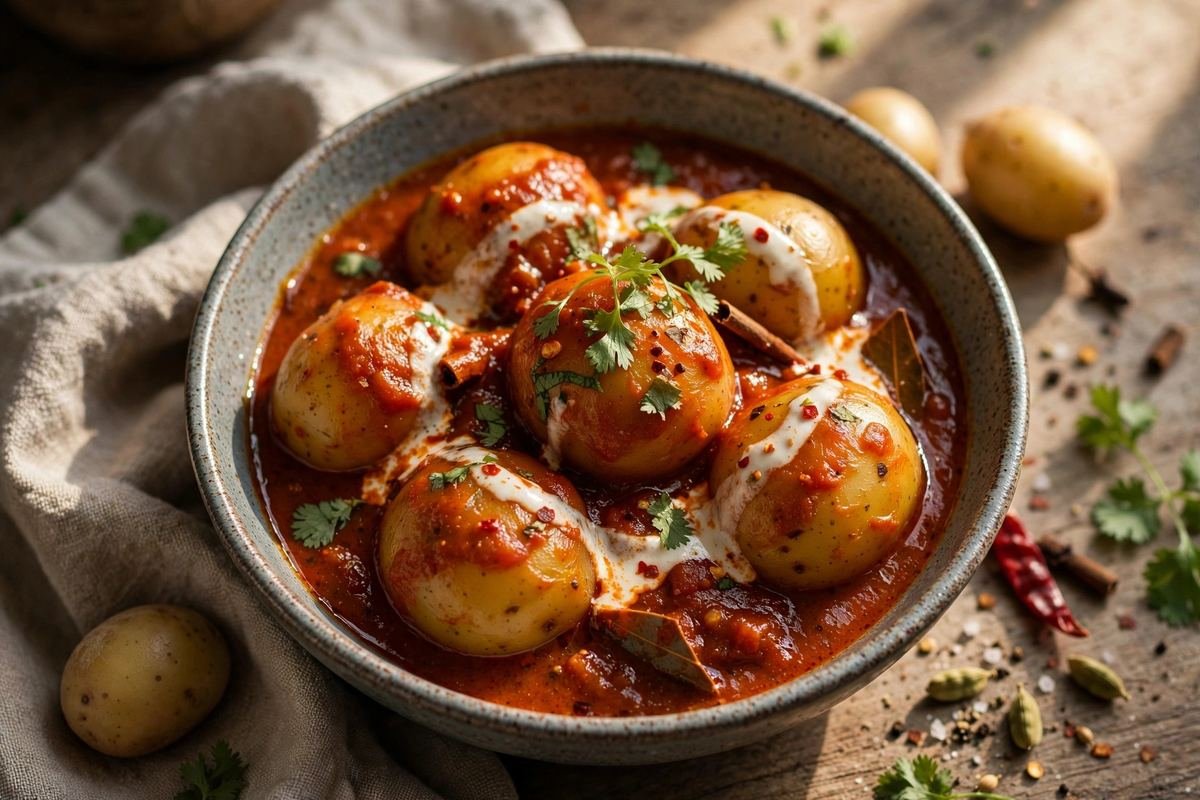
Baby potatoes simmered low and slow in a rich Kashmiri gravy of curd, fennel, and dry ginger. Royal comfort food, without onion or garlic.
Ingredients
- 750g baby potatoes (about 20–24), washed
- 1 tsp salt, for boiling water, plus 1¼ tsp for the curry
- 1 cup (240ml) mustard oil, for frying (or enough to shallow-fry)
- 1 cup (250g) thick full-fat curd (yogurt), at room temperature
- 2 tbsp saunf (fennel seeds), ground to a fine powder
- 1 tsp sonth (dry ginger powder)
- 2 tsp Kashmiri red chilli powder
- ½ tsp turmeric powder
- ¼ tsp hing (asafoetida)
- 1 tsp cumin seeds
- 2 green cardamoms, lightly crushed
- 1-inch cinnamon stick
- 2 cloves
- 1 bay leaf
- 1 tsp garam masala
- 1 tsp kasuri methi, crushed (optional)
- 2 tbsp fresh coriander leaves, chopped, for garnish
- 1½ cups (360ml) warm water
Instructions
- Parboil the potatoes. Place the washed baby potatoes in a large pot, cover with water, and add 1 teaspoon of salt. Bring to a boil and cook for 8–10 minutes, until a knife inserted into the largest potato meets slight resistance — they should be about 80% cooked, firm enough to handle. Drain thoroughly and let them steam-dry for 5 minutes. Peel the skins off with your fingers; they should slip away easily.
- Prick the potatoes all over. Using a fork or toothpick, prick each potato deeply in 8–10 places. This is the single most important step of dum aloo: the holes let hot oil crisp the interior and, later, let the gravy penetrate to the very center of each potato. Skipped pricking gives you bland potatoes floating in good gravy — pricked potatoes become one with the curry.
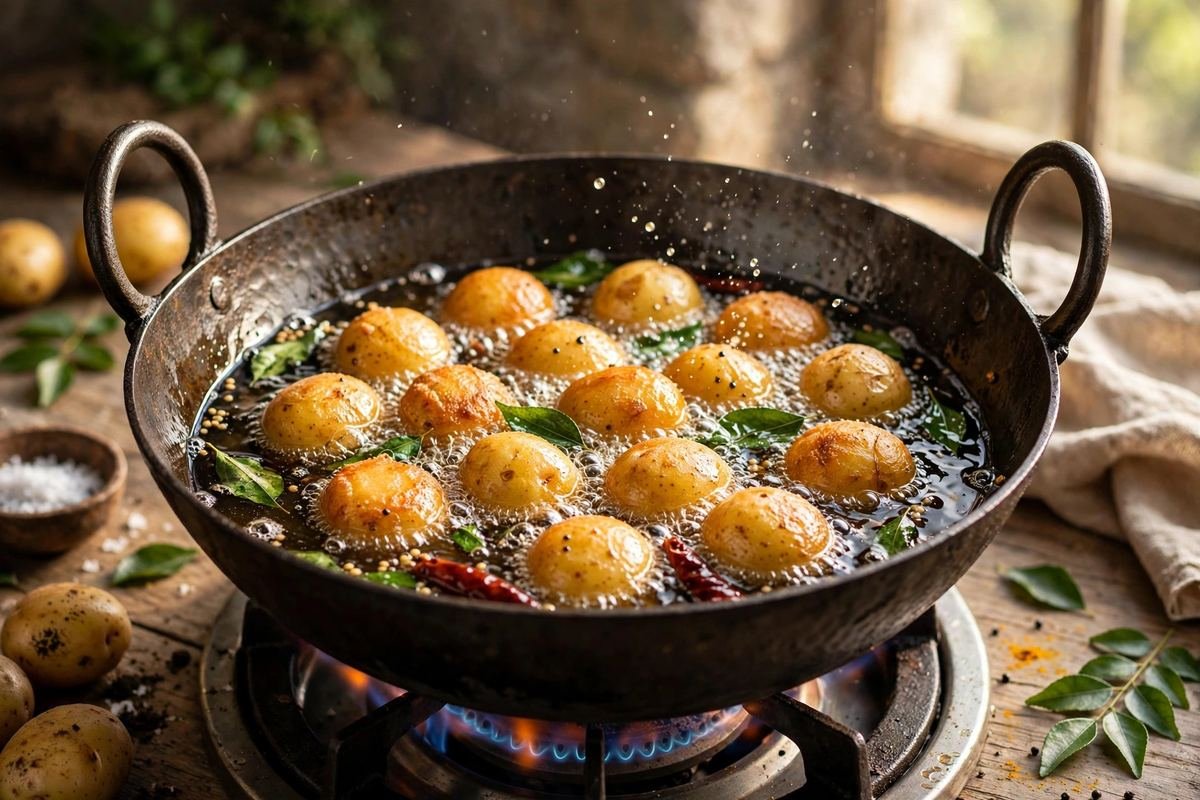
- Fry until deep golden. Heat the mustard oil in a kadhai over medium-high heat until it just begins to smoke, then lower to medium. Fry the potatoes in two batches for 6–8 minutes per batch, turning occasionally, until they are deep golden-brown and crisp all over, with slightly blistered skins. Don’t rush this — the fried crust is what keeps the potatoes intact during the long simmer. Drain on kitchen paper and set aside. Reserve 3 tablespoons of the frying oil for the gravy.
- Prepare the curd mixture. While the potatoes fry, whisk the room-temperature curd in a large bowl until completely smooth and lump-free — this takes a good minute of vigorous whisking. Whisk in the ground fennel, dry ginger powder, Kashmiri chilli powder, turmeric, and 1¼ teaspoons of salt. The mixture should be a smooth, pale pink slurry with no visible lumps. Keep it at room temperature; cold curd splits more easily.
- Temper the whole spices. Heat the reserved 3 tablespoons of mustard oil in a heavy handi over medium heat. Add the cumin seeds, crushed cardamoms, cinnamon, cloves, and bay leaf. Let them sizzle for 20–30 seconds until the cumin darkens a shade and the aroma rises. Stir in the hing and immediately reduce the heat to low.
- Add the curd off the heat. Take the handi off the flame entirely — this is the anti-splitting trick. Pour in the whisked curd-spice mixture in a steady stream, stirring constantly. Return the pan to the lowest possible heat and cook, stirring continuously, for 5–6 minutes. The gravy will thin out, then begin to thicken; keep stirring until you see tiny bubbles at the edges and the raw smell of the spices cooks away. Do not let it boil hard at this stage or the curd will split.
- Add water and potatoes. Pour in 1½ cups of warm water, stirring to make a smooth, thin gravy. Gently slide in the fried potatoes, spooning gravy over them. The gravy will look thin now — that’s correct; it thickens during the dum.
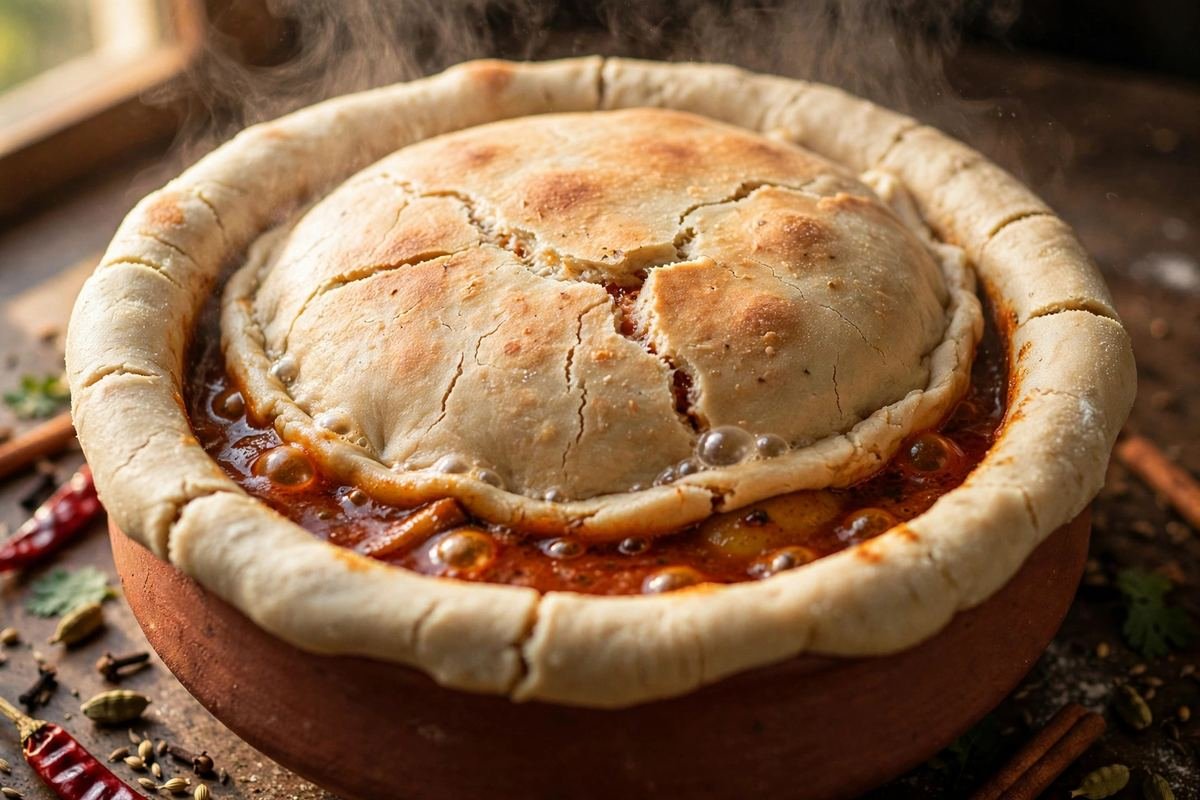
- Cook on dum. Cover the handi with a tight-fitting lid — you can seal the rim with a strip of dough or a clean kitchen towel tucked under the lid for a traditional touch. Cook on the absolute lowest flame for 20–25 minutes. Resist lifting the lid for the first 15 minutes. When you finally check, the gravy should have thickened to a rich, coating consistency, the oil glistening at the edges, and a knife should slide through a potato like butter.
- Finish and rest. Sprinkle over the garam masala and crushed kasuri methi, stirring gently so the potatoes don’t break. Taste and adjust salt. Cover and rest off the heat for 10 minutes — the potatoes drink in the last of the gravy as it settles. Garnish with fresh coriander and serve hot.
Tip: Read through the full post below for step-by-step photos, pro tips, variations and FAQs before you start cooking.
Dum aloo is the dish that proves the potato — the humblest vegetable in the Indian kitchen — can be royal. Originating in the kitchens of Kashmir, where the Pandit community developed a rich cuisine without onion or garlic, dum aloo translates roughly to “potatoes cooked under steam.” Small potatoes are pricked, fried golden, and then simmered dum-style — sealed and cooked on low heat — in a gravy built from whisked curd, fennel powder, dry ginger, and Kashmiri chillies. The result is a curry of startling depth: tangy, warmly spiced, and stained a gorgeous deep red, with potatoes so tender they yield to the lightest pressure of a spoon.
There are many dum aloos across India — the Bengali aloo’r dum with its mustard oil punch, the Banarasi version with tomatoes — but the Kashmiri original is the most distinctive. It uses no onion, no garlic, and no tomato. Its body comes entirely from curd, its sweetness from fennel, its warmth from dry ginger (sonth), and its color from Kashmiri red chillies, which bring vivid color with gentle heat. Traditionally, the word dum means the pot is sealed — with dough around the lid in royal kitchens — and the curry cooks in its own steam on the lowest possible flame. At home, a tight lid and a heavy pan give you the same effect.
What makes this recipe special is patience. The potatoes are pricked all over before frying so the gravy seeps deep into their centers — skip this step and you get bland potatoes in good gravy instead of great dum aloo. The curd must be whisked smooth and added off the heat so it never splits. And the final dum — twenty unhurried minutes on the lowest flame — is where the magic happens: the gravy thickens, the oil glistens at the edges, and every potato becomes a little sponge of spiced curd gravy. Serve it with steamed basmati or Kashmiri naan, and you have a meal that tastes like a celebration.
Why You’ll Love This Recipe
- Authentic Kashmiri flavors. Fennel, dry ginger, and Kashmiri chillies create a gravy unlike any other Indian curry — no onion, no garlic, no tomato needed.
- Festive yet everyday-friendly. It graces wedding menus and Navratri thalis, but the ingredients are humble enough for a weeknight.
- Truly vegetarian comfort food. Naturally vegetarian and gluten-free, with a rich, restaurant-worthy gravy that needs no cream.
- Make-ahead friendly. Like all slow-cooked curries, it tastes even better the next day as the potatoes absorb more gravy overnight.
- Foolproof with the right technique. Once you know the curd-handling trick and the pricking step, this recipe is nearly impossible to mess up.
- Crowd-pleasing mild heat. Kashmiri chillies give spectacular color with gentle warmth, so even spice-shy eaters love it.
Key Ingredients Explained
Start with small baby potatoes — about 750g, roughly the size of a large marble, with thin skins. Uniform size matters because the potatoes must cook through at the same rate during the dum. If you only have large potatoes, cut them into 1½-inch chunks, but baby potatoes give the classic look and texture. Boil them just until a knife meets slight resistance — about 80% cooked — because they finish cooking in the gravy; over-boiled potatoes disintegrate during frying.
The soul of Kashmiri dum aloo is its spice quartet: saunf (fennel seeds, ground), sonth (dry ginger powder), Kashmiri red chilli powder, and hing (asafoetida). Fennel brings a sweet, anise-like freshness that is the signature note of Kashmiri Pandit cooking; dry ginger adds a deep, mellow warmth quite different from fresh ginger’s sharpness; Kashmiri chilli powder gives the gravy its famous ruby color with modest heat; and a pinch of hing stands in for onion and garlic, lending a savory depth. Grind whole fennel seeds fresh if you can — the aroma difference is remarkable.
Thick, full-fat curd (yogurt) forms the gravy’s body, so choose fresh curd that is not sour — sour curd makes the gravy harsh. Whisk it completely smooth with a little water before it meets the pan; any lumps will cook into grainy bits. Mustard oil is the traditional fat, heated to smoking point for its pungent edge, though ghee or neutral oil work too. A final tempering of shah jeera or regular cumin, plus crushed kasuri methi, is optional but adds a lovely finishing aroma. For substitutions: Greek yogurt thinned with water replaces curd; if you can’t find dry ginger powder, use 1 tablespoon of freshly grated ginger plus ½ teaspoon of ground ginger; and in place of fennel, a smaller amount of aniseed works.
Equipment You’ll Need
- A heavy-bottomed pan or handi with a tight-fitting lid — essential for the dum (steam) cooking stage.
- A kadhai or deep pan — for deep or shallow frying the potatoes.
- A fork or toothpick — for pricking the potatoes all over.
- A whisk — for smoothing the curd completely lump-free.
- Slotted spoon and kitchen paper — for draining the fried potatoes.
- 750g baby potatoes (about 20–24), washed
- 1 tsp salt, for boiling water, plus 1¼ tsp for the curry
- 1 cup (240ml) mustard oil, for frying (or enough to shallow-fry)
- 1 cup (250g) thick full-fat curd (yogurt), at room temperature
- 2 tbsp saunf (fennel seeds), ground to a fine powder
- 1 tsp sonth (dry ginger powder)
- 2 tsp Kashmiri red chilli powder
- ½ tsp turmeric powder
- ¼ tsp hing (asafoetida)
- 1 tsp cumin seeds
- 2 green cardamoms, lightly crushed
- 1-inch cinnamon stick
- 2 cloves
- 1 bay leaf
- 1 tsp garam masala
- 1 tsp kasuri methi, crushed (optional)
- 2 tbsp fresh coriander leaves, chopped, for garnish
- 1½ cups (360ml) warm water
- Parboil the potatoes. Place the washed baby potatoes in a large pot, cover with water, and add 1 teaspoon of salt. Bring to a boil and cook for 8–10 minutes, until a knife inserted into the largest potato meets slight resistance — they should be about 80% cooked, firm enough to handle. Drain thoroughly and let them steam-dry for 5 minutes. Peel the skins off with your fingers; they should slip away easily.
- Prick the potatoes all over. Using a fork or toothpick, prick each potato deeply in 8–10 places. This is the single most important step of dum aloo: the holes let hot oil crisp the interior and, later, let the gravy penetrate to the very center of each potato. Skipped pricking gives you bland potatoes floating in good gravy — pricked potatoes become one with the curry.
- Fry until deep golden. Heat the mustard oil in a kadhai over medium-high heat until it just begins to smoke, then lower to medium. Fry the potatoes in two batches for 6–8 minutes per batch, turning occasionally, until they are deep golden-brown and crisp all over, with slightly blistered skins. Don’t rush this — the fried crust is what keeps the potatoes intact during the long simmer. Drain on kitchen paper and set aside. Reserve 3 tablespoons of the frying oil for the gravy.
- Prepare the curd mixture. While the potatoes fry, whisk the room-temperature curd in a large bowl until completely smooth and lump-free — this takes a good minute of vigorous whisking. Whisk in the ground fennel, dry ginger powder, Kashmiri chilli powder, turmeric, and 1¼ teaspoons of salt. The mixture should be a smooth, pale pink slurry with no visible lumps. Keep it at room temperature; cold curd splits more easily.
- Temper the whole spices. Heat the reserved 3 tablespoons of mustard oil in a heavy handi over medium heat. Add the cumin seeds, crushed cardamoms, cinnamon, cloves, and bay leaf. Let them sizzle for 20–30 seconds until the cumin darkens a shade and the aroma rises. Stir in the hing and immediately reduce the heat to low.
- Add the curd off the heat. Take the handi off the flame entirely — this is the anti-splitting trick. Pour in the whisked curd-spice mixture in a steady stream, stirring constantly. Return the pan to the lowest possible heat and cook, stirring continuously, for 5–6 minutes. The gravy will thin out, then begin to thicken; keep stirring until you see tiny bubbles at the edges and the raw smell of the spices cooks away. Do not let it boil hard at this stage or the curd will split.
- Add water and potatoes. Pour in 1½ cups of warm water, stirring to make a smooth, thin gravy. Gently slide in the fried potatoes, spooning gravy over them. The gravy will look thin now — that’s correct; it thickens during the dum.
- Cook on dum. Cover the handi with a tight-fitting lid — you can seal the rim with a strip of dough or a clean kitchen towel tucked under the lid for a traditional touch. Cook on the absolute lowest flame for 20–25 minutes. Resist lifting the lid for the first 15 minutes. When you finally check, the gravy should have thickened to a rich, coating consistency, the oil glistening at the edges, and a knife should slide through a potato like butter.
- Finish and rest. Sprinkle over the garam masala and crushed kasuri methi, stirring gently so the potatoes don’t break. Taste and adjust salt. Cover and rest off the heat for 10 minutes — the potatoes drink in the last of the gravy as it settles. Garnish with fresh coriander and serve hot.
Pro Tips for Perfect Results
- Prick deeply and generously. Shallow pricks don’t count. Push the fork tines well into each potato so the gravy has real channels to travel through.
- Fry to a deep golden, not pale. Pale fried potatoes turn soggy and break in the gravy. The crisp, blistered crust protects them through 25 minutes of simmering.
- Room-temperature curd, whisked smooth. Cold or lumpy curd is the number one cause of split gravy. Take the curd out of the fridge 30 minutes before cooking and whisk it like you mean it.
- Take the pan off the heat before adding curd. Adding curd to a ripping-hot pan guarantees splitting. Off the heat, stir it in, then return to the lowest flame.
- Lowest flame for the dum. If your smallest burner still runs hot, use a tawa (griddle) as a diffuser under the handi. Gentle steam, not aggressive boiling, is the whole point of dum.
- Don’t skip the rest. Ten covered minutes off the heat thickens the gravy and lets each potato absorb flavor to its core. Dum aloo served immediately always tastes slightly unfinished.
- Freshly ground fennel makes a difference. Pre-ground saunf powder loses its volatile oils quickly. Grinding whole fennel seeds just before cooking gives the gravy its signature sweet aroma.
Variations to Try
Banarasi dum aloo: Add 2 pureed tomatoes with the curd and a teaspoon of amchur for a tangier, tomato-based version popular in Uttar Pradesh. Bengali aloo’r dum: Use mustard oil generously, add a paste of ginger and green chillies, and finish with garam masala and ghee — no curd at all. Shahi dum aloo: Stir in ¼ cup (60ml) of fresh cream and a pinch of saffron soaked in warm milk at the end for a restaurant-style royal version. Spicy Rajasthani style: Double the Kashmiri chilli powder and add a teaspoon of Mathania red chilli paste for serious heat. Dum aloo with paneer: Add 200g of lightly fried paneer cubes in the last 10 minutes of dum cooking for a heartier curry. No-fry version: Air-fry or bake the pricked parboiled potatoes at 200°C (400°F) for 20 minutes with a brush of oil — less traditional, but weeknight-friendly and lighter.
Serving Suggestions
In Kashmir, dum aloo is served with steamed basmati rice — the plain rice is the perfect canvas for the rich, tangy gravy. It is equally at home with Kashmiri naan, tandoori roti, or flaky lachha parathas. For a festive spread, pair it with rajma, a simple pulao, boondi raita, and pickled onions; the cool raita balances the gravy’s warmth beautifully. A kachumber salad of cucumber, tomato, and onion adds fresh crunch. For lunchboxes, pack it with jeera rice and a wedge of lemon — the gravy thickens further by noon and tastes even better. And if you have leftovers, mash a few potatoes into the gravy and serve it over toast for a Kashmiri-inspired brunch.
Storage and Reheating
Cool completely and refrigerate in an airtight container for up to 4 days. Dum aloo is one of those curries that genuinely improves overnight — the potatoes absorb gravy and the spices mellow into each other. Reheat gently in a pan over low heat with a splash of water, stirring carefully so the potatoes don’t break, for 6–8 minutes until steaming. Avoid high heat, which can split the curd-based gravy. The microwave works in a pinch (2–3 minutes, stirring halfway). For longer storage, freeze for up to 2 months; thaw overnight in the fridge. The potatoes may soften slightly after freezing but the flavor stays excellent. Always refresh with fresh coriander before serving.
Frequently Asked Questions
Why did my curd gravy split or turn grainy?
Three usual culprits: the curd was cold or lumpy when added, the pan was too hot, or the gravy was boiled hard. Always use room-temperature curd whisked completely smooth, add it off the heat, and cook on the lowest flame while stirring. If it does split, whisk a teaspoon of besan (gram flour) into a little water, stir it in, and simmer gently — it will often come back together.
Can I make dum aloo without frying the potatoes?
You can, but the texture changes. Parboiled potatoes simmered directly in the gravy turn soft and absorbent but lack the crisp-skinned contrast. Air-frying or baking at 200°C (400°F) for 20 minutes is a good middle path — you get a firm exterior with far less oil.
What is the difference between Kashmiri and Punjabi dum aloo?
Kashmiri dum aloo is curd-based with fennel and dry ginger, and uses no onion, garlic, or tomato. Punjabi-style versions typically use an onion-tomato masala base with garam masala and sometimes cream. Both are delicious, but the Kashmiri version’s sweet-anise note is unmistakable.
Is dum aloo very spicy?
Not with Kashmiri chillies — they are prized for color rather than heat, so the curry is warm and flavorful rather than fiery. If you want more kick, add a slit green chilli or two during the dum, or finish with a pinch of black pepper.
Can I use large potatoes instead of baby potatoes?
Yes — cut them into 1½-inch chunks, parboil, prick, and fry the same way. The presentation won’t be as pretty, but the flavor will be just as good. Reduce the dum time by about 5 minutes since chunks cook faster.
Why seal the lid during dum cooking?
Sealing traps steam so the potatoes cook in moist, even heat and the gravy reduces slowly without scorching. A tight lid on a heavy pan works fine at home; the traditional dough seal is theater you can skip, though a towel tucked under the lid helps on loose-fitting lids.
Dum aloo rewards the cook who slows down. It asks for twenty quiet minutes on the lowest flame, a lid you don’t lift, and a little faith — and it pays you back with potatoes that taste like they’ve been marinating for days and a gravy the color of a Kashmiri sunset. Make it on a Sunday, eat it with rice, and save the leftovers for Monday; future you will be very grateful.